Introduction: Why Hermès Heritage Still Matters Today #
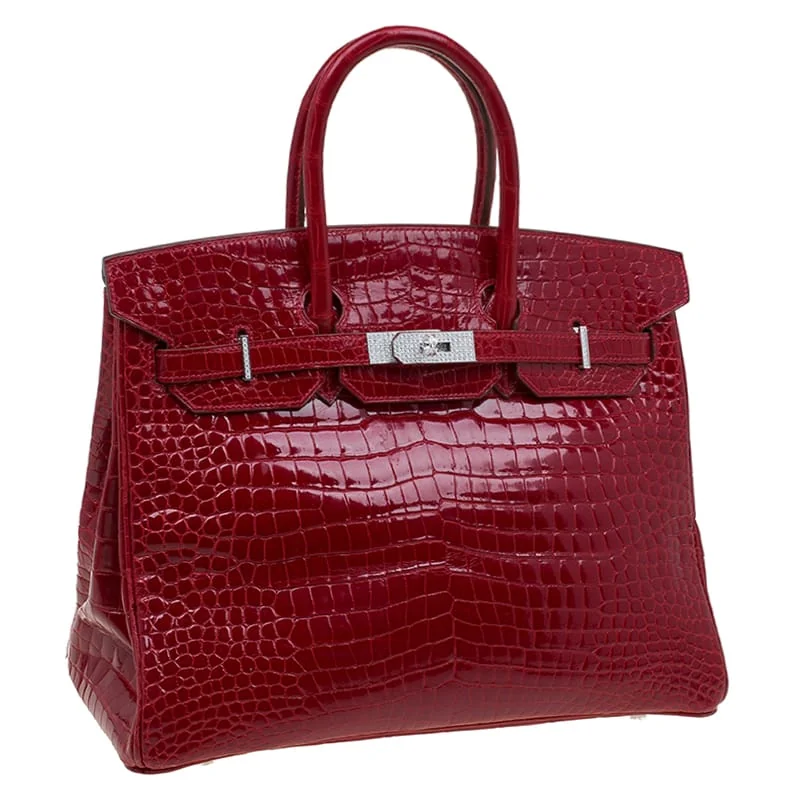
A Birkin bought today carries the fingerprints of a saddle workshop that opened before the French railway network existed. That’s not marketing language — it’s a fact that matters if you’re spending five figures on a handbag. Hermès history isn’t a curiosity for museum catalogues; it’s the reason a 30cm Kelly in Togo leather holds its value better than most stocks, and it’s the reason authentication experts check stitch density and hardware weight against standards set generations ago.
Understanding where Hermès came from changes how you shop for it. Knowing that the house has never mass-produced a bag, and structurally can’t, explains the waitlists. Knowing how the stamping and hardware systems evolved gives you a real toolkit for spotting a fake before you spot a receipt. This isn’t nostalgia — it’s due diligence dressed as heritage.
The Man Behind the Maison: Thierry Hermès and the Saddlery Years (1837–1880) #
Thierry Hermès was born in Krefeld, a German textile town, and arrived in France as a young tradesman rather than a designer with grand ambitions. He trained in leather tooling and settled first near Pont-Audemer before establishing a workshop on rue Basse-du-Rempart in Paris in 1837. The business he built wasn’t fashion — it was equipment. Harnesses, saddles, and bridles for a clientele that needed gear to survive long journeys and hard work, not gear to be photographed in.
What set his workshop apart was consistency of craft. Word travelled among French aristocracy, then across Russian, Central European, and North African courts, that Hermès leather held up under real use. That reputation — built on function, not branding — is the foundation every subsequent generation traded on. It’s worth remembering this when you hear people call Hermès a “fashion house” today; the maison spent its first four decades explicitly refusing to be one.
Moving to Faubourg Saint-Honoré: The Hermès Family Expands (1880–1922) #
Thierry’s son, Charles-Émile Hermès, made the decision that arguably shaped the brand’s entire future: in 1880 he relocated the workshop to 24 rue du Faubourg Saint-Honoré, the address the house still occupies. The location put Hermès in front of a wealthier, more urban clientele just as transportation itself was changing.
The arrival of the motor car forced the third generation to rethink the product line. Saddlery alone had a shrinking customer base; luggage did not. The 1900 “Haut à Courroies” bag — designed, tellingly, to strap a saddle to a car — was the hinge point between equestrian supplier and leather goods house. In 1922, Émile-Maurice Hermès introduced the Sac à Dépêches, a structured document case that would later become famous under a different name. That same period saw Hermès secure exclusive rights to the zip in France, and in 1918 the house made what’s widely cited as the first zippered leather jacket, commissioned by the Duke of Windsor. None of this was aesthetic experimentation — it was a saddlery adapting its skillset to a mechanized world, one commission at a time.
From Scarves to Silk: Hermès Becomes a Fashion House (1920s–1970s) #
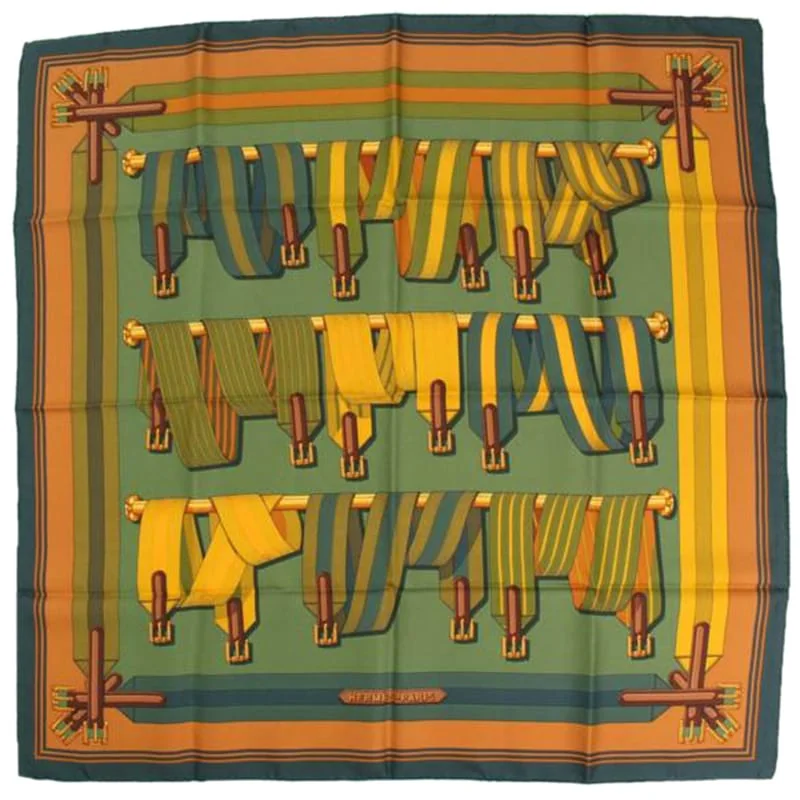
The 1928 launch of the 90x90cm silk carré marked the moment Hermès stopped being purely a leather goods maker. The scarf format — a perfect square, hand-rolled edges, screen-printed in dozens of colors per design — became a category of its own, and it’s still one of the most counterfeited Hermès products on the resale market precisely because it looks simple to replicate. It isn’t; the color separation process alone can take over a year for a single design.
Women’s ready-to-wear followed in 1929. Neckties, watches, and perfumes arrived under the fourth generation, led by Robert Dumas and Jean-René Guerrand, Émile-Maurice’s sons-in-law, both of whom appended Hermès to their own names — a detail that tells you how seriously the family treated brand continuity even before “branding” was a discipline. Each category launch followed the same internal logic as the leather goods had: master a craft completely before selling it. Hermès didn’t chase fashion trends in this period; it built parallel ateliers with their own apprenticeship pipelines, which is part of why the perfume, silk, and leather divisions still operate with distinct technical standards today.
The Icons Are Born: The Kelly and Birkin Story #
The Sac à Dépêches got its second life in 1956, after Grace Kelly used one to shield her pregnancy from photographers, an image Life magazine ran and the public never forgot. Hermès renamed the bag the Kelly shortly after. It remains a structured, top-handle bag with a turn-lock closure, and its silhouette hasn’t changed meaningfully in nearly seventy years — which is exactly why deviations in proportion or hardware are such reliable red flags for authenticators.
The Birkin’s origin story is more anecdotal but well corroborated: Jean-Louis Dumas, seated next to actress and singer Jane Birkin on a flight, watched her struggle to store an overflowing straw bag and sketched a soft, trapezoidal alternative on the spot. The bag launched in 1984 (commonly cited as conceived in 1981, with the family’s own account and prior sources putting design work in the late 1970s) and became the single most recognized status bag in the world — and, unavoidably, the most counterfeited. Genuine Birkins and Kellys carry blind stamps indicating the artisan and year, consistent saddle-stitching with no machine backstitching visible, and hardware that’s noticeably heavier than aftermarket reproductions. If you’re buying secondhand, these three details alone eliminate a large share of counterfeits before you even get to the receipt.
Six Generations of Craftsmanship: What Makes Hermès Hermès #
The atelier model and apprenticeship #
Hermès trains leather artisans through an internal apprenticeship that typically runs two to three years before a craftsperson is permitted to work unsupervised on a Birkin or Kelly. Each bag is assembled start to finish by a single artisan using saddle-stitching — two needles, one thread, pulled through each hole by hand — rather than the assembly-line division of labor most leather goods brands use. This is slower and considerably more expensive to run, but it’s also why a Hermès bag from the 1990s can still be sent back to the house for restoration and come back structurally sound.
Materials and hardware standards #
Leather is sourced from tanneries across France, and exotic skins (crocodile, alligator, lizard) go through their own separate certification and sourcing chain. Hardware — palladium or gold-plated on most current bags — is cast to a weight and finish tolerance that’s difficult to replicate cheaply, which is why counterfeit hardware often feels light or shows plating wear within months.
How Hermès compares to Chanel and [[Louis Vuitton](/brands/louis-vuitton-neverfull-insider-retail-story/)](/buying-guides/replica-vs-pre-owned-bags/) #
It’s useful to place Hermès against its two closest luxury peers rather than treat it in isolation. Louis Vuitton scales production far more aggressively, using coated canvas that’s more durable against daily wear but far less exclusive; a Neverfull isn’t hand-stitched by one craftsperson the way a Birkin is. Chanel sits closer to Hermès in exclusivity theater — deliberate scarcity, controlled retail — but its leather goods are constructed with more machine assistance and its price increases have historically tracked marketing strategy as much as material cost. Hermès is the outlier in that its price growth has tracked genuine production constraints: there are only so many artisans trained to make a Birkin, and that number grows slowly by design.
Authentication markers to check when buying secondhand #
- Blind stamp: a stamped square or shape near the base of the strap indicating artisan code and production year (letters cycled by year since the 1970s)
- Stitching: hand saddle-stitching should look slightly uneven under magnification, never machine-perfect
- Hardware weight and plating: genuine hardware has heft and shows no discoloration at edges after light wear
- Interior stamp: “Hermès Paris Made in France” with consistent font spacing — misaligned or overly bold fonts are a common counterfeit tell
- Leather smell and grain: authentic Hermès leather doesn’t have the chemical smell common in bonded or coated counterfeit leather
None of these checks are foolproof alone. Serious buyers combine several markers or use a paid authentication service before a five- or six-figure purchase.
Resale value and investment perspective #
Kelly and Birkin bags in classic sizes (25, 30, 35) and neutral colors (black, gold, étoupe) have historically appreciated or at minimum held retail value on the resale market, particularly in exotic skins, where auction results regularly exceed original retail. This isn’t universal — seasonal colors, larger sizes, and less commercially popular leathers can sit flat or depreciate. Treating any Hermès bag as a guaranteed investment is a mistake; treating the classic core lineup as a reliably liquid asset is supported by resale data.
From Harnesses to Haute Couture: The Product Evolution #
The line from horse harness to haute couture runs through a series of deliberate, almost cautious expansions rather than a single rebrand. Leather goods came first and never stopped being the technical backbone of the house. Silk followed as a way to use the same obsessive quality control on a completely different material. Ready-to-wear came next, borrowing pattern-cutting rigor from the saddlery tradition.
Beyond bags: Hermès today #
Modern Hermès operates across categories that rarely get mentioned alongside the bags and scarves: fine jewelry and high jewelry collections, a watchmaking division with its own movements, home textiles and tableware, a beauty and fragrance line that now includes color cosmetics, and even a growing furniture and object design catalogue produced with independent designers. This diversification matters commercially — it means Hermès isn’t solely reliant on leather goods demand — but it also means the house’s craft standards get tested in entirely new supply chains each time it enters a category.
Sourcing and sustainability #
Hermès has leaned on vertical integration as its sustainability argument: owning or closely controlling tanneries, silk production (mulberry silk sourced and partly processed through its own Brazilian and French operations since the 1970s), and exotic skin farms gives it more traceability than most luxury competitors, who often outsource sourcing entirely. That said, Hermès has also faced criticism and legal scrutiny over crocodile and alligator farming practices, and the brand has been less publicly transparent about carbon footprint reporting than some European peers. Buyers interested in ethical sourcing should treat Hermès’s vertical integration as a genuine advantage over mass-market brands, not as proof of a flawless supply chain.
The Hermès Family Dynasty and Succession #
Six generations have run Hermès without the house ever leaving family control, which is genuinely rare among luxury conglomerates.
- Thierry Hermès (founder, 1837) established the saddlery
- Charles-Émile Hermès (second generation) relocated to Faubourg Saint-Honoré and pivoted toward luggage
- Émile-Maurice Hermès (third generation) created the Sac à Dépêches and secured the zip patent rights
- Robert Dumas and Jean-René Guerrand (fourth generation, sons-in-law) diversified into ties, watches, perfume, and oversaw the Birkin’s creation era
- Jean-Louis Dumas (fifth generation) globalized retail, expanded the flagship, and moved production to the Pantin atelier outside Paris
- The sixth generation, including Axel Dumas as current executive chairman, now manages a company with more than 300 stores worldwide, roughly half directly owned by the house rather than franchised
The family has also actively defended its independence — most visibly during LVMH’s attempted creeping takeover between 2010 and 2014, which the Hermès family blocked by consolidating shares into a family holding structure. That episode is arguably as important to understanding Hermès today as anything from the founding era: it’s a house that has repeatedly chosen slower, controlled growth over acquisition or outside capital, and that choice is baked into every waitlist and every hand-stitched seam.
Frequently Asked Questions #
Is Hermès older than Chanel or Louis Vuitton? Yes. Hermès was founded in 1837, roughly five decades before Louis Vuitton’s trunk business scaled internationally and nearly a century before Chanel’s founding in 1910.
Why do Hermès bags cost so much more than comparable leather goods? Labor is the main driver — a single artisan hand-stitches an entire bag, apprenticeship training takes years, and production volume is deliberately capped. Material sourcing and in-house tanneries add cost on top of that.
Are older Hermès bags (pre-1980s) worth authenticating and buying? Yes, and vintage Hermès pieces from the Kelly’s early decades are actively collected. Blind stamp systems changed over time, so authentication for vintage pieces requires checking era-appropriate stamping conventions rather than current ones.
Does Hermès repair bags bought secondhand? Hermès boutiques will generally service any authentic Hermès bag regardless of where it was purchased, though turnaround times can run into months and the house won’t authenticate items on request — spa/repair service isn’t the same as an authentication certificate.
Related Articles #
- 5 Iconic Bags Named After Famous Women (Buying Guide)
- How to Spot a Fake Hermès Bag: Authentication Guide
- The History Behind Gucci’s Iconic Flora Print
- How Pre-Owned Luxury Fashion Is Reshaping the Industry
- Mulberry Brand History: The Story Behind the Icon
Related guides
- Online Bag Authentication: What Photos Can and Cannot Prove
- Hermes Oran Sandals Guide: History, Sizing & Authenticity
- Gucci Bamboo Bag: History, Craft & Authentication Guide
- How to Spot a Fake Hermès Birkin: Expert Tips
- How to Buy an Authentic Luxury Bag from China Safely
- New vs Pre-Owned Luxury Bags: Which Route Is Right for You?
- Chanel Bag Guide: What to Know Before You Buy
- Luxury Bag Houses


Keyword index