Introduction: The Timeless Appeal of the Hermes Oran #
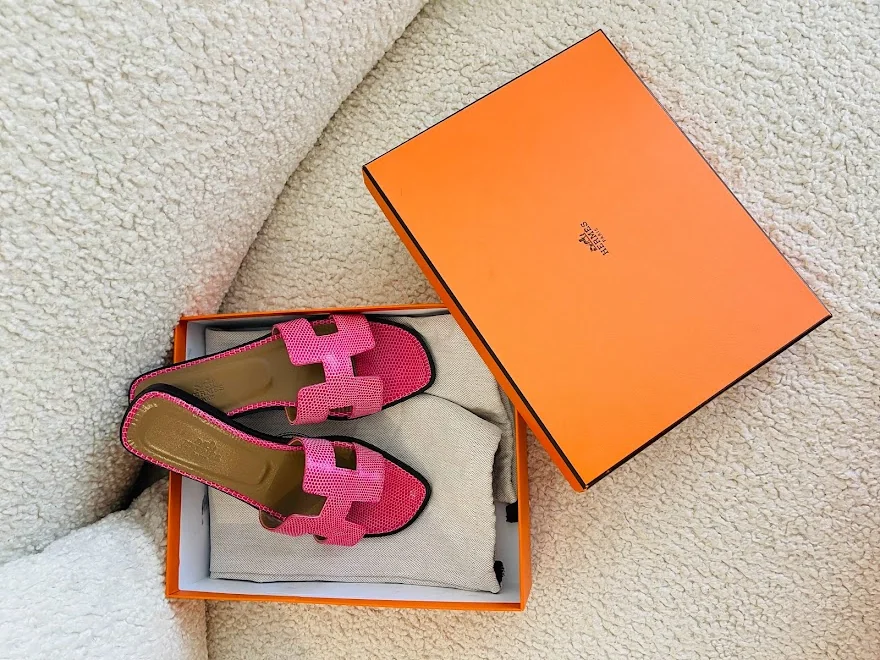
Ask any Hermès devotee to name the one shoe that lives in every rotation, and the answer is almost always the same: the Oran sandal. It’s the rare design that reads as effortless from the outside while representing exacting craftsmanship underneath, which is precisely why it has outlasted every trend cycle since its debut. Unlike the seasonal sandals that flood resale platforms every May and vanish by September, the Oran has built a genuine collector base — buyers who own three, five, sometimes a dozen colorways because the shoe simply performs.
This guide goes beyond admiring the silhouette. We’ll walk through where the Oran actually came from, what separates a well-made pair from a poorly aged one, how to size it correctly, what it costs new versus on the resale market, and — critically for anyone shopping pre-owned — how to authenticate one before you buy. If you’re weighing a first Oran purchase or trying to figure out whether a listing is legitimate, this is the practical breakdown you need.
The Design Story Behind the Oran Sandal #
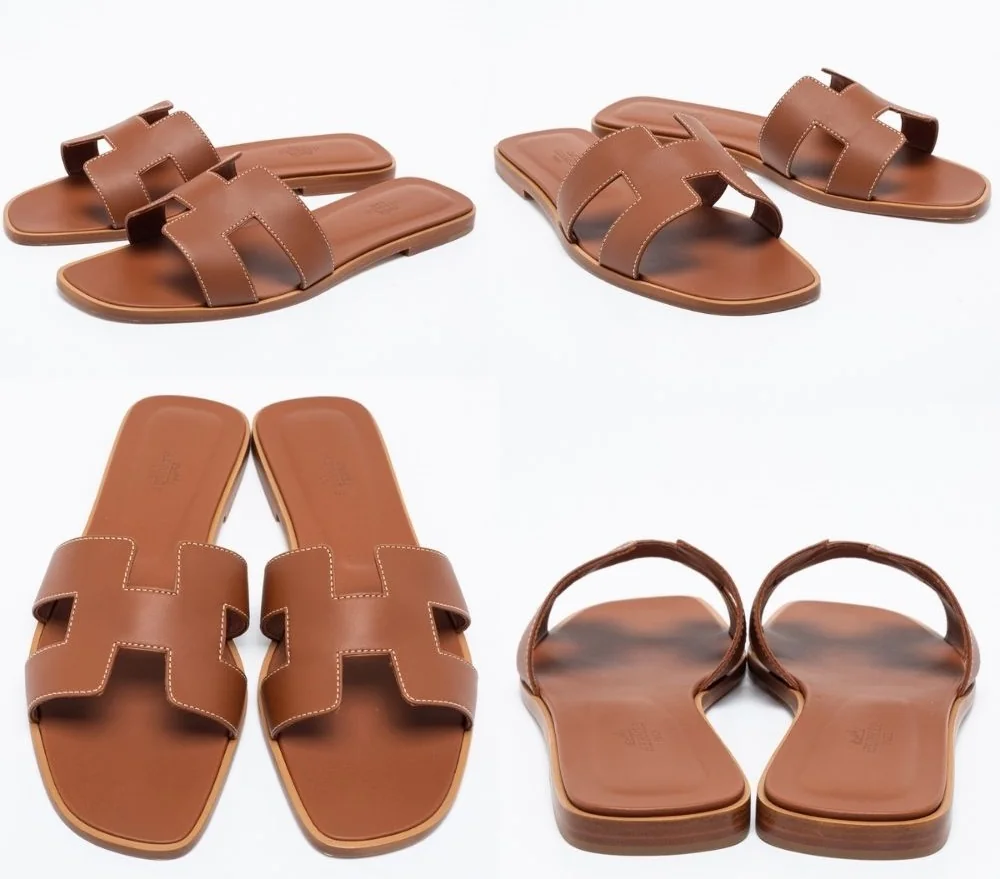
The Oran isn’t a house archive piece dusted off for reissue — it has a specific author and a specific year. Pierre Hardy, the French shoe designer who joined Hermès in 1990, created the Oran in 1997 at a point when the maison’s shoe division was still finding its identity. Hardy had been brought in precisely because Hermès didn’t yet have a defined footwear language, and over his tenure he built several of the house’s most recognizable silhouettes. The Oran is arguably the one that stuck hardest.
His brief to himself was almost architectural in its restraint: design a slide that gives the wearer the sensation of walking barefoot. The now-iconic H cutout wasn’t lifted from the Hermès monogram playbook first — Hardy has cited a graphic pattern from African tribal house painting as his starting inspiration, later reshaped into the house’s initial. That’s a meaningful distinction for anyone interested in design heritage: the H reads as brand signature today, but it began as an abstract graphic motif that happened to resolve into the perfect corporate symbol. Paired with a low, barely-there heel and a single-strap construction, the result was a shoe that felt more like a design statement than a warm-weather accessory — which is exactly why it’s endured alongside the house’s bag icons rather than being treated as a seasonal throwaway.
Craftsmanship and Signature Details #
Strip away the brand name and the Oran is a deceptively simple object: one leather strap, one sole, one cutout. That simplicity is the hard part. There’s nowhere for construction flaws to hide.
The H motif. On leather and patent versions, the H is typically die-cut directly from a single piece of leather rather than appliquéd on top. The edges should be clean, symmetrical, and free of visible glue or fraying — precision here is one of the clearest tells of quality, and it’s the first thing worth examining closely on any pair, new or pre-owned.
Open-toe construction. The strap sits low across the foot with no structural support beyond the strap itself, which is intentional — it’s what creates the barefoot sensation Hardy was after. The tradeoff is that it offers zero coverage or correction if your foot shape doesn’t suit an unstructured slide, which matters more for sizing than most first-time buyers expect.
Sole comfort. The sole is a slightly cushioned, low-profile build designed for extended wear rather than a token flat sole tacked onto a luxury upper. Worn correctly, an Oran should feel walkable for hours, not just photograph well standing still.
Made in Italy. Hermès produces the Oran in Italian ateliers rather than French, which is standard for the house’s shoe division generally. Quality control is consistent, but it also means the manufacturing signatures (stamp placement, stitch density) differ slightly from what you’d expect on a France-made leather good — worth knowing before you assume a stamp discrepancy automatically signals a fake.
How to Style the Oran Sandal Year-Round #
The Oran gets typecast as a beach-bag companion, which undersells it. In practice, it’s one of the more transitional pieces in the Hermès footwear line if you style around the season rather than the shoe.
Warm weather, casual: A white button-front shirt with denim, or a cotton lace summer dress, is the Oran at its most obvious — and it earns that reputation honestly.
Warm weather, elevated: Tailored linen separates or a slip dress push the same sandal into evening territory without changing a thing about the shoe itself.
Transitional (spring/fall): This is where most owners stop experimenting, and it’s a mistake. A structured midi skirt with a fine-knit sweater, or straight-leg trousers with an ankle-baring hem, let the Oran carry into cooler months — the trick is pairing it with pieces that have enough visual weight to balance an open-toe silhouette against heavier fabrics.
Layered / colder months: Paired with cropped wide-leg trousers and thicker socks peeking above the strap (a look that’s genuinely trending rather than a stretch), or under a maxi coat as a deliberate contrast piece, the Oran can hold its own well past summer. It won’t replace a boot for function, but styled with intent it reads as a choice, not an oversight.
Popular Oran Variations: Leathers, Fabrics, and Embroidery #
Part of the Oran’s staying power is how many finishes Hermès has run it through without ever changing the core silhouette. Broadly, pre-owned inventory clusters into a few material families:
Smooth and box leather. The baseline version — calfskin in classic tones like brown or black — is the most common on resale and the easiest to authenticate because the construction is straightforward.
Patent leather. Glossier and slightly more formal, patent Orans (seen in colors like a saturated green) show wear differently than matte leather — scuffs and creasing are more visible, which matters when assessing condition on a pre-owned pair.
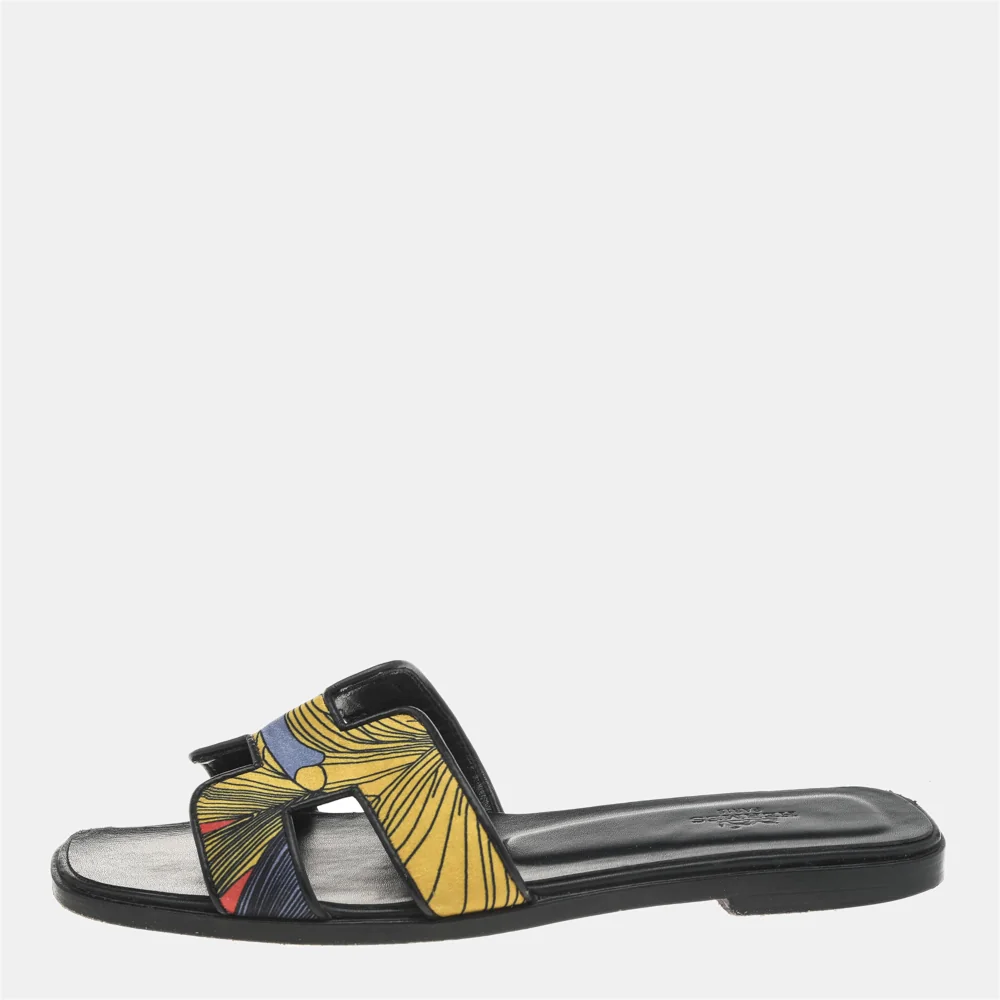
Canvas and printed textiles. Multicolor canvas or printed satin versions (often limited-run) trade durability for pattern variety. These tend to be more delicate day-to-day but are highly sought after specifically because they weren’t produced in the same volume as core leather colors.
Embellished finishes. Glitter, studded suede, and embroidered versions sit at the top of the range. These are constructed with additional appliqué work — beading, studs, or embroidery layered onto the base leather — which adds cost, adds fragility, and adds resale desirability in roughly equal measure.
If you’re shopping pre-owned, material family should drive your condition expectations as much as your color preference does. A studded suede pair with heavy wear is a different proposition than a smooth leather pair with the same amount of use.
Authenticating a Pre-Owned Hermes Oran #
This is where most buyers actually lose money, so it’s worth being methodical rather than relying on gut instinct.
Check the insole stamp. Genuine pairs carry “HERMÈS PARIS MADE IN ITALY” embossed cleanly into the insole leather — the lettering should be crisp, evenly spaced, and pressed (not printed) into the material. Blurry, shallow, or misaligned stamping is a red flag.
Examine the H cutout closely. On leather and patent pairs, the H should be a single die-cut piece with sharp, clean edges and no visible adhesive bleed. Counterfeits frequently use a separately stitched-on or glued H with slightly rounded or uneven edges — a shortcut that’s cheaper to produce but visually gives itself away under close inspection.
Inspect stitching consistency. Authentic Orans have tight, even stitch spacing along the strap edge with no skipped stitches or thread inconsistency. Wandering stitch lines or visibly different thread tension are common on unauthorized copies.
Look at the sole material and wear pattern. Genuine soles are a specific density and texture that wears predictably — even, gradual flattening rather than peeling or cracking after light use. Soles that degrade quickly or feel unusually stiff or spongy are worth treating with suspicion.
Weigh the price against the market. If a “pre-owned Hermès Oran” is priced dramatically below the going resale rate for its material and condition, that gap is information, not a bargain. Authentication issues cluster heavily around underpriced listings.
Buy from platforms with in-house authentication. For pre-owned Hermès specifically, this matters more than with mass-market brands, because the Oran’s simple construction gives counterfeiters fewer opportunities to fumble obvious details — the differences are often small enough that they’re easy to miss without deliberate inspection.
Leather Types and How to Choose #
New retail pricing for a core leather or patent Oran currently runs roughly $780–$850 USD depending on region and exchange rates, while embroidered, studded, or exotic-adjacent finishes can climb well past $1,500, occasionally into the $2,500–$3,500 range for limited materials.
[[[[Resale value](/prices-and-value/luxury-price-hikes-2026-resale-impact/)](/buying-guides/best-time-to-buy-a-luxury-handbag-1/)](/brands/celine-luggage-tote-guide-sizes-history-resale-value-1/)](/brands/celine-luggage-tote-guide-sizes-history-resale-value/) tends to hold surprisingly well for a shoe rather than a bag. Well-maintained core leather pairs commonly resell for 45–65% of current retail, and rarer finishes — discontinued prints, embellished versions, hard-to-source colorways — can command a higher percentage, sometimes approaching retail if the piece is discontinued and in excellent condition. That makes the Oran a reasonable entry point for buyers curious about Hermès resale value without committing to bag-level pricing.
Sizing and fit. The Oran generally runs true to size, but the fit is unforgiving in a way structured shoes aren’t — because there’s no closure or adjustability, a strap that’s even slightly too tight will show as pinching within the first few wears, and one that’s too loose will slip at the heel. Buyers with wider feet often size up half a size rather than going true-to-size, while narrow feet typically do fine at true size. If you’re buying pre-owned and can’t try before purchase, checking the seller’s measurements against your own foot length (not just the labeled size) is the more reliable approach.
Care and cleaning. Smooth leather and patent versions tolerate a damp cloth wipe-down and a leather-specific conditioner every few months, applied sparingly and never on patent finishes, which should be wiped dry immediately after any moisture exposure. Suede and canvas versions need a soft brush for surface dirt and should be kept away from water altogether — a suede protectant spray applied before first wear is worth the five minutes it takes. Embellished pairs (studs, beading, embroidery) should avoid submersion or heavy scrubbing entirely; spot-clean only, and store away from direct friction that could catch on the embellishment. Across all materials, store with cedar shoe trees or stuffed with acid-free tissue to hold shape, away from direct sunlight, which fades leather and patent finishes unevenly over time.
How to choose between materials. If you want one pair that earns its cost per wear, smooth leather in a neutral tone is the practical choice — it’s the easiest to authenticate, the easiest to maintain, and the most versatile stylistically. If you’re buying as a considered collector’s piece rather than a daily shoe, an embellished or limited-print pair holds more resale upside but demands more careful handling and a more cautious authentication process given the higher stakes.
Oran vs Other Hermès Sandal Lines #
| Style | Heel Type | Construction | Best For | Typical New Retail Range |
|---|---|---|---|---|
| Oran | Flat, minimal heel | Single-strap slide, die-cut H | Daily wear, maximum comfort | $780–$850+ (leather) |
| Oasis | Block heel | Slide with raised block heel | Slightly dressier, added height | $850–$950+ |
| Legend | Wedge heel | Slide with wedge sole | Height with stability, casual-formal crossover | $900–$1,000+ |
| Izmir | Flat, minimal heel | Men’s slide, structurally similar to Oran | Men’s equivalent of the Oran | $750–$850+ |
The takeaway: if you love the Oran’s silhouette but want a bit more height, the Oasis and Legend are the direct extensions of the same design language rather than unrelated products — worth trying before assuming the flat Oran is your only option.
FAQ: Everything You Need to Know About the Hermes Oran #
Does the Oran run true to size? Generally yes, but the unstructured strap means fit issues show up faster than on a closed shoe. Wider feet often do better sizing up half a size; narrow feet typically stay true to size.
How much does a Hermès Oran cost new? Core leather and patent versions run roughly $780–$850 USD. Embellished, embroidered, or limited-edition materials can run significantly higher, sometimes into the low thousands.
Do Orans hold resale value? Reasonably well for a shoe. Core leather pairs in good condition commonly resell for 45–65% of retail, with rarer or discontinued finishes performing better.
What’s the easiest way to spot a fake Oran? Start with the die-cut H edge quality, the insole stamp clarity, and stitch consistency along the strap. Underpriced listings relative to current resale averages are also a strong signal worth questioning.
Can I wear Orans outside of summer? Yes — paired with trousers, midi skirts, or socks and heavier fabrics, they transition into cooler months more easily than most open-toe sandals.
How should I clean my Oran sandals? Match the method to the material: damp cloth and conditioner for smooth leather, dry wipe only for patent, soft brush and protectant spray for suede or canvas, and spot-cleaning only for embellished pairs.
Is buying pre-owned Oran sandals a good idea? Yes, provided the seller offers authentication or a clear return policy. Given how much value rests on small construction details, buying through a platform with in-house verification meaningfully reduces risk compared to unverified marketplace listings.
Related Articles #
- YSL Tribute Sandals: Why This Iconic Style Still Reigns
- YSL Tribute Sandals: Why This Iconic Style Still Reigns
- Why the Chanel Crossbody Bag Never Goes Out of Style
- Classic and Chic Handbags: Timeless Style Icons
- Replica vs Pre-Owned Bags: Which Is the Smarter Buy?
Related guides
- Online Bag Authentication: What Photos Can and Cannot Prove
- Gucci Bamboo Bag: History, Craft & Authentication Guide
- How to Spot a Fake Hermès Birkin: Expert Tips
- How to Authenticate a Chanel Bag: 10 Expert Checks
- How to Buy an Authentic Luxury Bag from China Safely
- New vs Pre-Owned Luxury Bags: Which Route Is Right for You?
- Chanel Bag Guide: What to Know Before You Buy
- Luxury Bag Houses


Keyword index