Introduction #
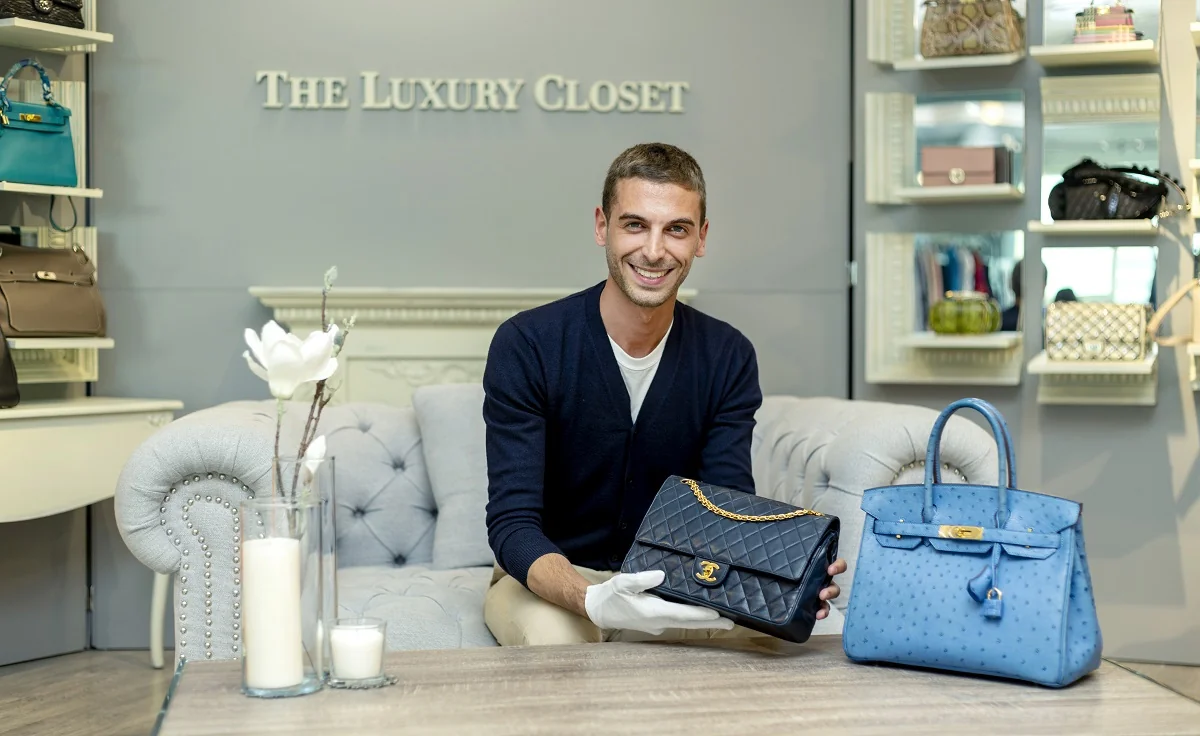
The resale market for designer goods has exploded past $50 billion globally, and with that growth comes an uncomfortable reality: counterfeiters have gotten better too. The World Customs Organization and EUIPO consistently flag counterfeit fashion and leather goods among the top categories seized at borders, and industry estimates put the global trade in fake goods at well over $500 billion a year. Somewhere in that number sits your next handbag purchase, if you’re not careful about where it comes from.
This is where authentication stops being a buzzword and starts being a job. We sat down with Nicola Ghin, Senior Authentication Manager at The Luxury Closet, to understand what actually happens when a bag, a sneaker, or a vintage trunk lands on an authenticator’s desk, and why even trained eyes have to work harder than they did five years ago.
Meet Nicola Ghin, Senior Authentication Manager at The Luxury Closet #
Nicola spends his days surrounded by product: handbags stacked by brand, shoes lined up for inspection, leather accessories waiting their turn under a loupe. As Senior Authentication Manager at The Luxury Closet, he oversees the process that every single item goes through before it’s cleared for resale, and he’s the person other authenticators call when something looks “off” but nobody can pinpoint why.
Gloves on, tools within reach, calendar packed. That’s the daily picture. What follows is a conversation about how he got here, what’s changed in the counterfeit landscape, and exactly how he verifies a Birkin.
From Passion to Profession: Nicola’s Path into Luxury Authentication #
Nicola has spent eight years in the luxury sector, and he traces his interest back further than that, to watching his mother put outfits together with an eye for pattern and color, and his father, a baker, treat food as a craft that demanded precision and patience. That combination, he says, is basically what luxury authentication is: aesthetics and craftsmanship, examined with the same seriousness a chef brings to ingredients.
That interest turned into formal study. Nicola completed a master’s degree in Luxury & Fashion in Italy, a background that gave him the vocabulary and historical context for the brands he now inspects daily, before the hands-on training that only comes from examining hundreds of real and fake items side by side.
Why Spotting Fakes Is Getting Harder #
Ask Nicola how authentication has changed and he doesn’t sugarcoat it: it’s harder now than it was when he started. Authentic luxury goods carry signature markers, stitching patterns, hardware weight, material grain, that used to be nearly impossible to fake convincingly. Counterfeiters study those markers too, and production standards on both sides keep shifting.
The wildcard, in his view, is streetwear. Brands built on drops and hype don’t always have the manufacturing consistency of a house like Hermès, so a genuine piece can look rougher than expected on first inspection, while a well-made fake can look suspiciously clean. That inconsistency cuts against the instinct most people rely on, “does this look well made?”, which is exactly why professional authentication exists.
Red flags that apply across almost every brand #
Regardless of category, Nicola’s team checks for the same broad signals before diving into brand-specific detail:
- Stitching that’s uneven, too perfect, or uses the wrong thread count for the model
- Logos, fonts, or embossing that are slightly the wrong weight, spacing, or depth
- Hardware that feels light, plates that show brassing too early, or engravings that are shallow
- Serial numbers, date codes, or heat stamps that don’t match the claimed production year
- Linings, dust bags, and packaging that use the wrong materials or printing quality
- A price that’s too good relative to the model’s real resale value
None of these alone confirms a fake. Together, and cross-checked against brand-specific archives, they build a picture.
The Most Counterfeited Luxury Brands Right Now #
According to Nicola, streetwear currently tops the list. Balenciaga, Off-White, and Yeezy see demand that far outpaces legitimate supply, and among the volume his team processes daily, flagged pieces in these categories are routine rather than rare.
Classic leather goods houses aren’t exempt either. Hermès, Chanel, and [Louis Vuitton](/authentication/how-to-spot-a-fake-louis-vuitton-bag/) remain heavily counterfeited simply because resale value stays high, which makes faking them profitable even when the counterfeit is expensive to produce. The difference is craftsmanship consistency: a fake Birkin still has to clear a much higher bar of construction detail than a fake streetwear hoodie, which is partly why Hermès pieces, done well, are considered some of the hardest to fake convincingly, and partly why a bad fake is still fairly easy to catch once you know where to look.
How to Authenticate a Hermès Birkin: Key Checkpoints #
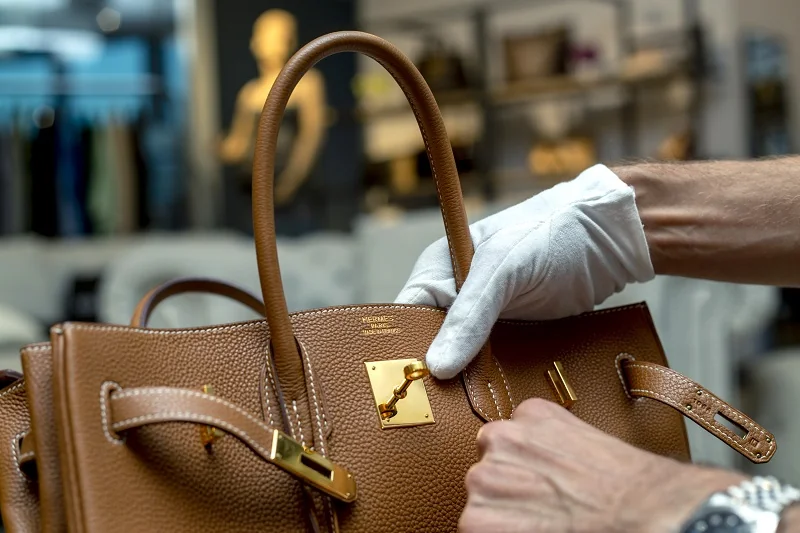
Nicola walks through a Birkin the way a musician reads a score, every detail is a note, and one wrong note gives the whole piece away. Here’s the sequence he follows:
- The Touret. This is the metal piece in the middle of the closure where the lock hooks in. On an authentic bag, it moves smoothly, not too loose, not stiff. A Touret that sticks or wobbles is an early warning sign.
- Stitching. Hermès uses a saddle stitch, hand-pulled, with even tension and consistent spacing on both sides of the leather. Machine-perfect, overly uniform stitching is often a tell of a fake, not a sign of quality.
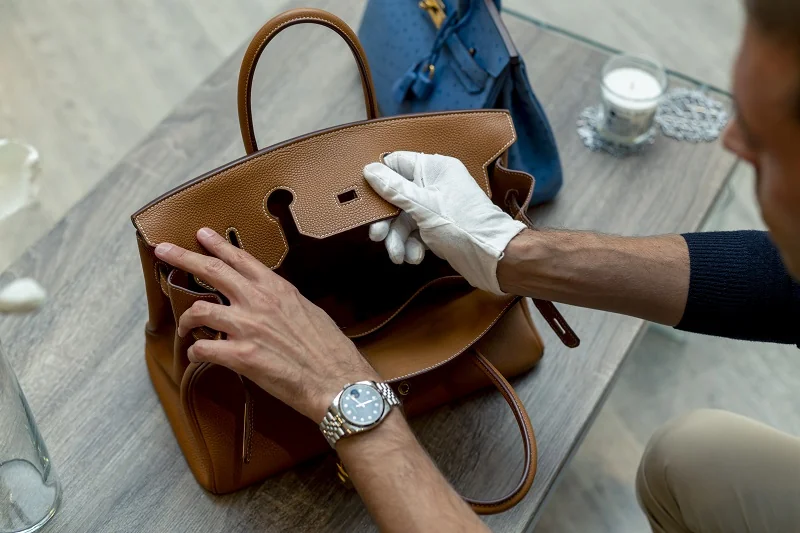
- Serial and date stamp. The blind stamp (craftsman’s mark) and the date code inside the bag need to match the leather type and colorway used during that specific production year. Counterfeiters routinely get this wrong, pairing a leather with a year it was never produced in.
- Hardware. Weight, plating thickness, and engraving depth on the padlock, keys, and clochette should feel substantial and precise, not hollow or lightly etched.
- Leather grain and smell. Genuine Hermès leathers (Togo, Epsom, Clemence) have consistent, brand-specific grain patterns and a distinct smell that’s difficult to replicate at scale.
- Symmetry and proportions. Handle drop, base dimensions, and flap alignment follow tight tolerances. Fakes often drift slightly off, even when everything else looks convincing.
No single checkpoint is definitive on its own. It’s the combination, cross-referenced against Hermès production records, that gives a confident verdict.
The Authenticator’s Process: What Happens When a Bag Comes In #
Every item at The Luxury Closet goes through the same intake before it ever reaches a listing page. Nicola’s team logs the piece, photographs it under controlled lighting, and starts the physical inspection: loupe for stitching and grain, UV light for certain leather and hardware finishes, and a tactile check that no camera or algorithm can fully replicate, the weight of hardware in hand, the give of the leather, the smell of the material.
This is where the physical-versus-tech comparison matters. AI-based image recognition tools have gotten genuinely useful for flagging obvious fakes quickly, wrong logo placement, mismatched fonts, incorrect packaging, at scale, and they’re a helpful first filter for high-volume categories like sneakers and streetwear. But they still struggle with the details that require touch and smell: leather grain authenticity, hardware weight, stitch tension, the feel of a Touret’s movement. Nicola treats tech tools as a first pass, not a final verdict. The physical inspection by a trained human is what closes the case, especially for handbags and vintage pieces where craftsmanship nuance is everything.
Vintage items add another layer. Nicola checks for signs of modern manufacturing techniques on a piece claiming to be decades old, glue where there should be stitching, replaced hardware, cheap repairs, or any material that wasn’t in use during the claimed production era. It’s also the category he finds most rewarding, since a genuine vintage piece is effectively a physical record of how a brand’s construction evolved over time.
Once a piece clears every checkpoint, The Luxury Closet issues it with an authentication guarantee: buyers get a certificate confirming the item passed the full inspection process, backed by a money-back policy if anything is later found inconsistent. That guarantee exists specifically because resale buyers can’t run the loupe-and-UV-light check themselves, so the certificate is meant to carry that verification forward.
FAQ: Common Questions About Luxury Authentication #
Is it actually safe to buy [[pre-owned designer bags](/buying-guides/replica-vs-pre-owned-bags-smarter-buy/)](/buying-guides/replica-vs-pre-owned-bags/) online? Yes, as long as the platform has a genuine, human-led authentication process rather than a rubber-stamp check. Ask what the authentication guarantee actually covers before buying.
Can AI alone verify a Birkin or other high-value bag? Not reliably yet. AI tools are strong at catching obvious mismatches, logos, fonts, packaging, but details like leather grain, hardware weight, and stitch tension still require a trained authenticator’s hands-on inspection.
What happens if an authenticated item turns out to be fake? Reputable resale platforms back their authentication with a guarantee, meaning the buyer is entitled to a refund if the item is later proven inauthentic. Confirm this policy exists and read the terms before purchasing.
Why do handbags take longer to authenticate than other categories? Handbags have longer checklists, stitching, hardware, stamps, leather grain, lining, than most other categories. Sneakers and vintage pieces come with their own complications, but bags generally require the most granular inspection.
Is a lower price always a red flag? Not always, but it’s a signal worth investigating. Combined with inconsistent stitching, wrong hardware weight, or a mismatched serial code, an unusually low price should prompt a closer look, not an impulse buy.
Which brands should buyers be most cautious with right now? Streetwear labels like Balenciaga, Off-White, and Yeezy currently see the highest counterfeit volume due to demand outpacing supply, but classic houses like Hermès, Chanel, and Louis Vuitton remain heavily targeted because of their sustained resale value.
Related Articles #
- How to Spot a Fake Chanel Flap Bag: Authentication Guide
- How to Spot a Fake Burberry Bag: Full Guide
- How to Spot a Fake Hermès Bag: Authentication Guide
- Hermès Replica vs Pre-Owned: Which Is Worth It?
- How Pre-Owned Luxury Fashion Is Reshaping the Industry
Related guides
- Online Bag Authentication: What Photos Can and Cannot Prove
- How to Authenticate a Chanel Bag: 10 Expert Checks
- Fake Goyard Bag Guide: How to Spot Real vs Fake (2026)
- How to Spot a Fake Chanel Flap Bag: Authentication Guide
- How to Buy an Authentic Luxury Bag from China Safely
- New vs Pre-Owned Luxury Bags: Which Route Is Right for You?
- Chanel Bag Guide: What to Know Before You Buy
- Luxury Bag Houses


Keyword index