Introduction#
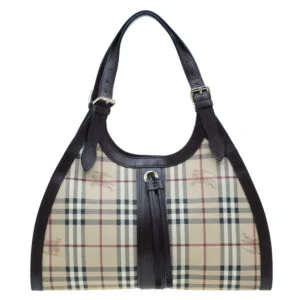
Burberry’s check pattern is one of the most recognisable motifs in fashion, which is exactly why it’s also one of the most copied. Between the brand’s global resale value and the sheer volume of secondhand listings on marketplaces like eBay, Poshmark, and Facebook groups, counterfeiters have had decades to refine their fakes. Some are laughably bad. Others are convincing enough to fool a casual shopper, especially in low-resolution listing photos.
Having handled genuine Burberry pieces across different eras (the check has shifted subtly over the years, and so has the hardware and tagging), I can tell you that spotting a fake usually comes down to a handful of consistent tells: the pattern itself, the stitching, the interior plaques and tags, and a few smaller details like hardware weight and serial numbers. None of these checks require special equipment. You just need to know what to look for, and where counterfeiters tend to cut corners.
This guide walks through each of those checks in order, from the most obvious (the pattern) to the more granular (font details on a stamp). By the end, you’ll have a practical framework for authenticating a Burberry bag before you commit to a purchase, whether you’re buying from a private seller or a resale platform.
Know Your Patterns: Classic Check vs Nova Check#
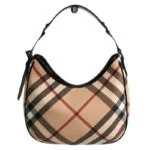
Burberry has produced several check variations over the years, but two show up most often in the resale market: the Classic Check and the Nova Check. They look similar at a glance, which is exactly what counterfeiters count on. Look closer and the differences are clear.
The Classic Check runs on a camel/tan background with a grid of black, white, and red lines running both horizontally and vertically. The detail most people miss is the faded equestrian knight logo, which appears as a subtle watermark at select intersections of the red lines. It’s not bold or high-contrast, it’s meant to look like a ghosted print. If you see it printed crisp and dark, or not at all where it should be, that’s a flag.
The Nova Check swaps the tan base for a warmer, light yellow undertone, and the red lines take on a pinkish or dusty rose cast rather than a true red. Unlike the Classic Check, the Nova Check does not carry the faded knight insignia at all. So if you’re looking at a bag with a yellow-toned background and you spot a knight watermark, something is off, that combination doesn’t exist on an authentic piece.
Beyond colour and the knight detail, pay attention to line spacing and thickness. On genuine Burberry, the checks are printed with tight, consistent proportions. Counterfeit versions often have checks that are slightly too large, unevenly spaced, or printed with colours that look almost right but not quite (a red that leans orange, or a tan that looks more grey than warm). If the pattern doesn’t align cleanly at seams, or the check “jumps” oddly where two panels meet, walk away.
Check the Stitching#
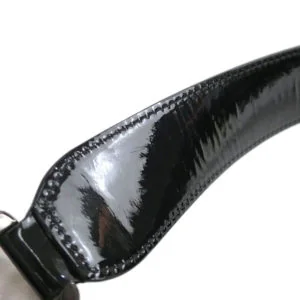
Stitching is one of the fastest tells, and it’s also one of the easiest to check from photos if you’re buying online, so don’t skip asking a seller for close-up shots.
On an authentic Burberry bag, stitching should be straight, tight, and evenly spaced along every seam, including the handles, the base, the zipper tape, and the interior lining. Thread tension should be consistent throughout; you shouldn’t see any puckering, loose loops, or thread that’s visibly fraying at the ends. Genuine construction also tends to use a matching or deliberately contrasting thread colour with purpose, not a mismatched thread that looks like it was grabbed off whatever spool was closest.
Counterfeits tend to fail here because hand-finishing and stitching precision are expensive to replicate at scale. Common flaws include: crooked stitch lines that wander instead of running parallel to the seam, stitches that are too far apart (a sign of a faster, cheaper machine pass), stray threads left uncut, and glue visible peeking out from under the stitching, which shouldn’t be there at all on a well-made bag. If the handle attachment points look like they’re straining or the stitching there looks sparse, that’s a structural red flag as much as an authenticity one, since handle stitching takes the most stress over the bag’s life.
Inspect Interior Plaques and Tags#
Once you’re past the exterior, the interior is where a lot of counterfeits fall apart, literally in terms of quality and figuratively in terms of the story they’re telling.
Authentic Burberry bags carry either a metal plaque or a leather tag stamped inside, and both should match the bag’s overall hardware finish. If the exterior hardware is gold-tone, the interior plaque should be gold-tone too, not a mismatched silver. The plaque or tag should read “Burberry” (older pieces may also include “London”) in the brand’s house font, which has a few distinctive quirks worth memorising: the left stroke of the U sits slightly wider than expected, the Y has a similar wider left-leaning stroke, and the R features a small tail flick at the base of its leg. These are subtle, but counterfeiters consistently get the spacing and weight of this font wrong, often making it look slightly too bold, too thin, or just generically “sans-serif” rather than Burberry’s specific cut.
On leather tags, you’ll often see “Made in Italy” stamped on the reverse. It’s worth noting Burberry also manufactures some smaller bags and accessories in China, so a “Made in China” stamp is not automatically a red flag; it depends on the specific style and production line. What matters more is whether the stamp is crisp, evenly pressed, and correctly spelled, since counterfeiters frequently botch the depth or alignment of the embossing, or use a font that’s close but not identical to Burberry’s own.
Check for an even, deep, consistent embossing or engraving. A stamp that looks shallow, smudged, or slightly off-centre inside a bag that’s otherwise well made is one of the more reliable signs something’s wrong.
Other Authentication Red Flags#
Beyond pattern, stitching, and tags, a few other details round out a proper authentication check.
Hardware is a big one. Genuine Burberry hardware (zippers, clasps, feet, D-rings) has real heft to it and a smooth, even plating with no visible seams or rough edges. Fakes often use lightweight metal or plastic-core hardware that feels hollow and shows plating wear quickly, sometimes within weeks of use. Zipper pulls in particular are worth testing: they should glide smoothly with no snagging, and branded zipper pulls should have the logo cleanly stamped, not blurry or misaligned.
Serial numbers and date codes are another useful check, though Burberry’s approach has changed over the years and not every style carries a visible one, so treat this as supporting evidence rather than a standalone test. If a bag has a serial code, it should be cleanly printed or stamped, not handwritten-looking or smudged, and it should be consistent with the bag’s production era. When in doubt, cross-reference the code style with the bag’s other visible details rather than relying on it alone.
Dust bags and included packaging can offer a hint too. Burberry’s dust bags use a specific fabric weight, drawstring style, and printed logo placement. A dust bag that feels like thin, cheap felt, or has a logo print that looks stretched or off-centre, doesn’t necessarily prove the bag itself is fake (dust bags do get swapped or lost), but it’s worth noting as part of the full picture.
Finally, and honestly this is the check most buyers ignore: price. If a bag is listed well below its typical resale range for that style and condition, that’s not a lucky find, it’s a warning sign. Genuine Burberry bags hold reasonably strong resale value precisely because they’re well made and consistently in demand; a “too good to be true” price usually means it is.
Where to Buy an Authentic Burberry Bag Safely#
The safest way to buy is directly from Burberry’s own boutiques or official website, where authenticity is guaranteed and you’re paying full retail. But most shoppers researching authentication are looking at the secondhand market for better value, and there are reliable options there too.
Established resale platforms that authenticate items before listing, such as The RealReal, Vestiaire Collective, Rebag, and Fashionphile, are worth the (usually modest) premium over marketplace listings. These platforms employ trained authenticators who physically inspect items using many of the same checks covered above, plus additional proprietary methods. It’s not a guarantee of perfection, mistakes happen even at reputable authenticators, but it significantly reduces your risk compared to buying blind.
If you’re buying through a general marketplace like eBay, Poshmark, or a local consignment shop, ask for detailed close-up photos of exactly the areas covered in this guide: the pattern, stitching, interior plaque or tag, hardware, and any serial code. A legitimate seller with a genuine bag will have no problem providing these. Hesitation, blurry photos, or a seller who refuses to show the interior tag closely is itself a red flag worth taking seriously.
It’s also worth checking whether the seller can provide original proof of purchase, a receipt, or an authentication certificate from a recognised third party. None of these are strictly required for a genuine bag, but they add confidence and can help with resale later if you decide to sell the piece yourself.
FAQ#
Is there one single check pattern that Burberry uses today? No. Burberry has used several check variations over the decades, with the Classic Check and Nova Check being the most common in resale listings. Newer collections have also introduced updated or reimagined check prints, so pattern alone shouldn’t be your only test, pair it with the stitching and tag checks above.
Does a “Made in China” stamp mean a Burberry bag is fake? Not necessarily. Burberry manufactures some smaller bags and accessories in China as part of its regular production. What matters is whether the stamp itself is crisp, correctly spelled, and consistent with genuine tagging, not the country of origin alone.
Can I authenticate a Burberry bag from photos alone? Partially. Pattern alignment, stitching quality, hardware finish, and tag/font details are all visible in good, well-lit close-up photos. However, some checks (like hardware weight and how the leather feels and smells) require handling the item in person or through a professional authentication service.
Are serial numbers a reliable way to verify authenticity? They’re useful supporting evidence but not a standalone test, since Burberry’s serial and date code systems have changed over time and not every style carries one. Treat a clean, well-placed serial code as one data point among several.
Is it safe to buy a secondhand Burberry bag on eBay or Facebook Marketplace? It can be, but the risk is higher than on curated resale platforms since there’s no built-in authentication step. Ask for detailed photos of the pattern, stitching, interior tag, and hardware before buying, and be wary of sellers who won’t provide them.
What’s the biggest giveaway that a Burberry bag is fake? In my experience, it’s usually a combination of small things rather than one obvious flaw: a check pattern that’s slightly the wrong hue, stitching that’s a bit too loose or uneven, and a tag font that’s close but not quite right. Counterfeiters can nail one or two details convincingly, but rarely all of them at once.
Related Articles#
- How to Spot a Fake Neverfull: Authentication Guide
- How to Spot a Fake Michael Kors Bag: Key Signs
- Authentic vs Fake Hermès Kelly Bag: How to Tell
- How to Spot a Fake Goyard Bag: Expert Guide
- How to Authenticate a Balenciaga Bag: Full Guide
Related guides
- Online Bag Authentication: What Photos Can and Cannot Prove
- Fake Goyard Bag Guide: How to Spot Real vs Fake (2026)
- How to Spot a Fake Chanel Flap Bag: Authentication Guide
- How to Spot a Fake Hermès Birkin: Expert Checklist
- How to Buy an Authentic Luxury Bag from China Safely
- New vs Pre-Owned Luxury Bags: Which Route Is Right for You?
- Chanel Bag Guide: What to Know Before You Buy
- Luxury Bag Houses


Keyword index