Introduction#
I’ve handled enough Balenciaga bags across enough seasons to know one thing for certain: the fakes have gotten good. Really good. The days of spotting a counterfeit from across the room by its cheap zipper pull are mostly over. Today’s replicas get the silhouette right, the leather grain close enough to fool a glance, and sometimes even a passable “Lampo” stamp on the zipper.
That’s exactly why a proper authentication process matters more than ever, whether you’re buying a brand-new Classic City from a boutique or bidding on a pre-loved Hourglass from a resale site. This guide walks through how to authenticate a Balenciaga bag using the same details I check first: the main label, the interior stamping, the hardware, and the leather itself. None of this requires special equipment. It requires patience, good lighting, and knowing what genuine Balenciaga craftsmanship actually looks and feels like.
Why Balenciaga Bags Are a Prime Target for Counterfeits#
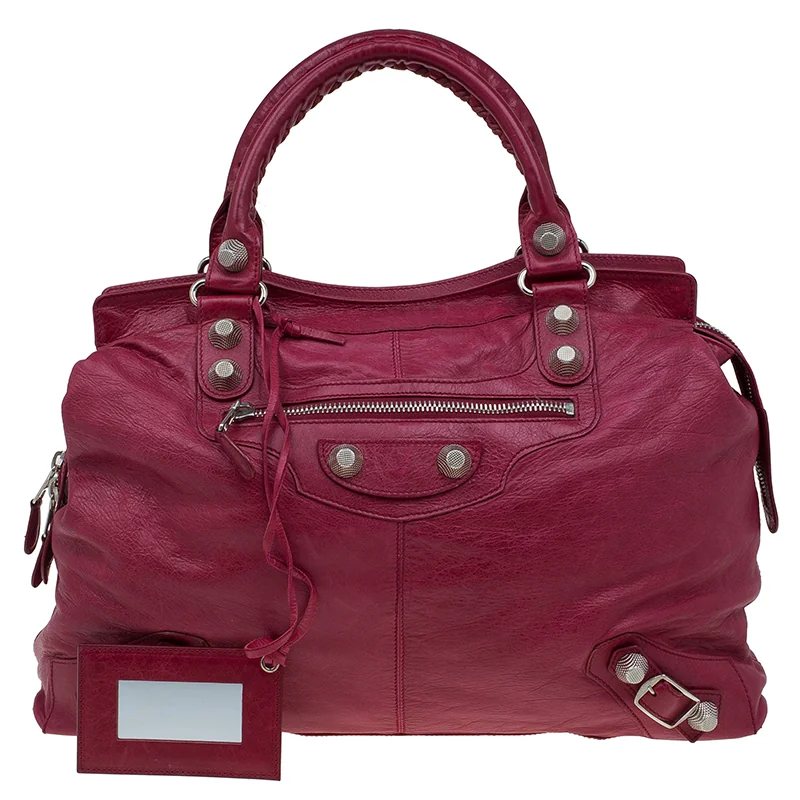
Balenciaga earned its cult following honestly. The Classic City bag (still commonly called the “Motorcycle” bag by longtime fans) practically defined early-2000s It-bag culture, and pieces like the Hourglass top handle, the Neo Classic City tote, and the All Afternoon bag have kept the brand relevant with a new generation of buyers. That popularity, combined with genuinely strong resale value on well-kept pieces, makes Balenciaga one of the more attractive “investment” handbag brands outside the obvious [[Chanel](/brands/luxury-brands-founded-by-women/)](/brands/devil-wears-prada-2-fashion-style-guide/) and Hermès tier.
It also makes Balenciaga one of the most heavily counterfeited brands on the secondhand market. Unlike a Birkin, where the waitlist and price point alone deter casual counterfeiters, Balenciaga’s relative accessibility means fakes get produced at every quality level, from obviously wrong to genuinely convincing. I’ve seen counterfeit Classic City bags with correct-looking hardware, decent leather, and a label that would fool anyone who hasn’t handled the real thing side by side.
This is the part sellers rarely mention: authentication isn’t a one-and-done check. It’s a pattern of small details that all need to line up. Get one detail wrong and it might still be genuine (Balenciaga isn’t perfectly consistent). Get several details wrong at once, and you’re almost certainly looking at a fake.
Checking the Main Label: Style Numbers and Text Details#
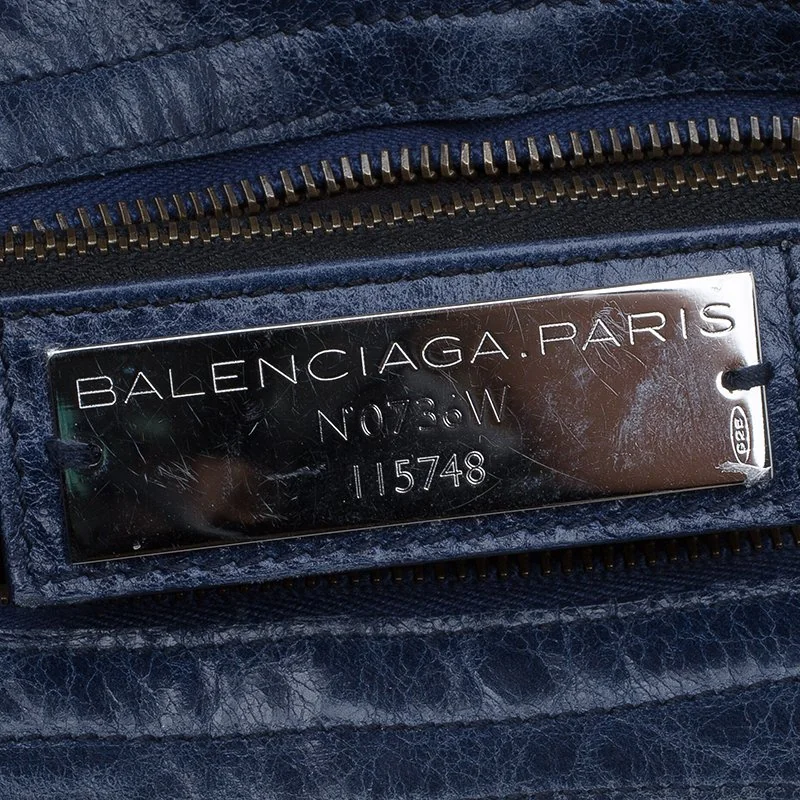
Start with the main label, usually found on a leather tab near the zipper or attached to the interior. Every Balenciaga bag carries a style number etched into a metal plate, and that number corresponds to a specific bag design. A quick search of the style number should confirm it matches the silhouette you’re holding. This is one of the easiest checks and one of the most telling: I’ve come across counterfeits carrying a completely unrelated style number, or worse, a string of digits that don’t correspond to any real Balenciaga catalogue entry at all.
The text and material of the label itself also date the bag, which matters when you’re verifying authenticity against a seller’s claimed production year:
- Before 2005, the main label read “Balenciaga_Paris” with an underscore between the words. From 2005 onward, that underscore was replaced with a period, so “Balenciaga.Paris.”
- Before 2008, the metal plate was sterling silver and stamped “925.” From 2008 on, Balenciaga switched to nickel plates.
If a seller tells you the bag is from 2010 but the label still shows the underscore and a “925” stamp, that’s a real problem, not a quirk. Mismatched eras between the label and the claimed production date are one of the most reliable signs of either a fake or a seller who doesn’t actually know what they’re selling.
Interior Label and Stitching Quality#
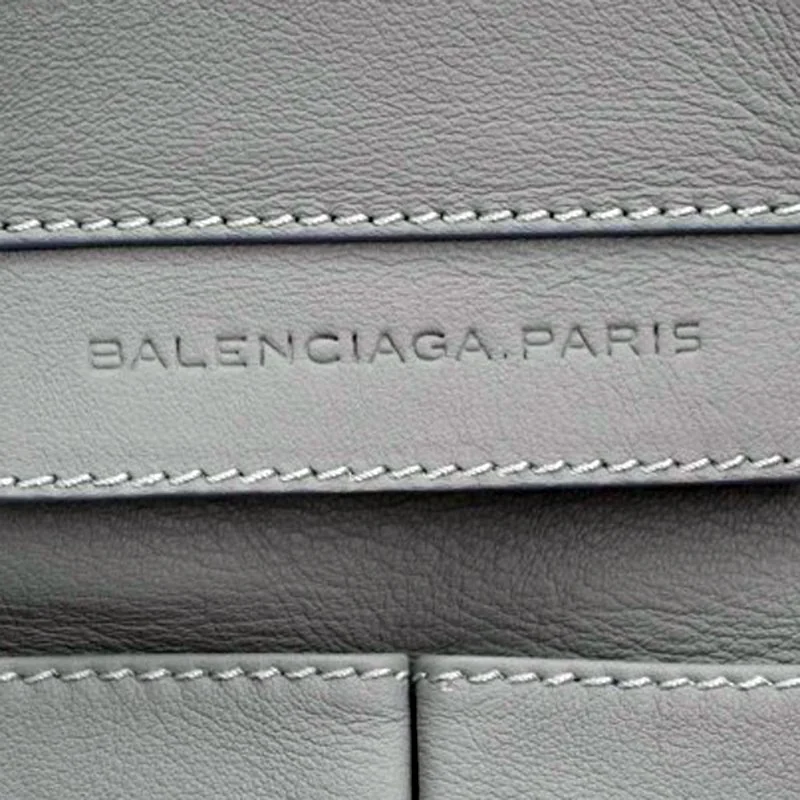
Open the bag and look at the interior nameplate. Depending on the era, this is either an etched metal plate or a stamp pressed directly into the leather lining. On a genuine bag, that stamping is clean, sharp, and evenly pressed, no smudging, no uneven depth, no letters that look slightly melted into the leather. Counterfeiters can replicate the font reasonably well, but consistently crisp stamping across the entire label is harder to fake convincingly, especially under close inspection.
Stitching is the other tell I check immediately, and it’s a simple one: Balenciaga uses black thread across every bag, regardless of the leather color. A pink bag with pink or tonal stitching, a navy bag with navy thread, these are giveaways of a replica. On an authentic bag, the stitching should also be even, tight, and free of loose threads or skipped stitches. Sloppy or inconsistent stitch length is a manufacturing shortcut you won’t find on a genuine piece, since Balenciaga’s leather goods are still largely handworked.
Reading the Hardware: Zippers, Metal Finish and Era-Specific Codes#
Hardware is where I spend the most time, because it’s genuinely difficult for counterfeiters to nail every detail at once. A few things to check:
- The zipper pull. It should be soldered cleanly, with no visible gap or rough seam, and marked with “Lampo,” the Italian zipper manufacturer Balenciaga has historically used. A missing Lampo mark, or one that’s poorly stamped, is a red flag.
- The bales (the rounded metal loops connecting the shoulder strap). These should be smoothly rounded and properly finished, not sharp-edged or crudely cast.
- The finish. Genuine hardware has a slightly muted, brushed quality. Fakes tend to run too shiny, almost chrome-like, because cheaper plating reflects light differently than Balenciaga’s actual finish.
Balenciaga also uses a hardware code system that’s worth knowing, both for authentication and for understanding what you’re actually buying:
- RH – Regular Hardware, made from brass
- FBH – Flat Brass Hardware, the earliest style and rarely seen in circulation today
- PH – Pewter Hardware, used mainly on 2003–2004 bags
- RGGH – Rose Gold Giant Hardware
- GSH / SGH – Silver Giant Hardware
- GCH – Giant Covered Hardware, where the metal studs are wrapped in leather rather than left exposed
Size matters too. The original Giant hardware (G21) was the largest studded hardware Balenciaga produced and has since been discontinued in favor of the smaller G12. There’s also a Mini Giant Hardware size, sitting between G21 and the standard Regular Hardware. If you’re evaluating a bag described as “Giant 21 Gold City” or “Giant 12 Silver City,” those are the modern names for what used to be called RGGH G21 and GSH G21, respectively.
One firm date to remember: Balenciaga has not produced rose gold hardware since Spring/Summer 2013. If someone is selling you a “new” rose gold Balenciaga bag with a recent production date, that’s not a small inconsistency, it’s disqualifying.
Leather, Craftsmanship and Overall Build Quality#
This is the section where genuine experience with the bags pays off, because leather is genuinely hard to describe accurately in a listing photo. Balenciaga’s signature leather is intentionally distressed. It’s soft, almost buttery, but still structurally sturdy, and it carries a natural veining pattern that you can feel with your fingers, not just see. That veining can develop light white marks or creasing over time, which isn’t damage, it’s the leather aging the way it’s supposed to.
Counterfeits frequently get this wrong in one of two ways: the leather is unnaturally smooth with no texture at all, or the veining has been printed onto the surface rather than occurring naturally in the hide. Printed veining tends to look too uniform and repetitive once you know to look for it.
A few more construction details worth checking against a genuine reference:
- Handles. Balenciaga uses sueded leather on the handles, which has a raw, slightly matte feel rather than a glossy, coated finish. If the handles feel plasticky or overly protected with a coating, be suspicious.
- Shoulder strap. It should be cut from a single, solid piece of leather with openings only at the ends where the hardware attaches. A detachable strap should already be connected to the bag, not wrapped in plastic and stuffed inside a pocket, which is a common shortcut on fakes and, frankly, on some careless resale listings too.
- Front pocket lining. Since 2005, the front pocket has been partially lined in leather. Unzip it, and you should not see the black canvas lining underneath. If that canvas is visible, the construction is off.
- The mirror. Most Balenciaga bags for women include a small mirror with a leather frame, typically clipped to the handle and tucked into the exterior pocket. On a genuine new bag, that mirror arrives already attached, not loose in bubble wrap inside the bag.
- Tassels. The zipper tassels should feel as soft and supple as the rest of the bag’s leather, and the color should match exactly. Stiff, hard tassels, or noticeably short and sparse ones, are consistent with counterfeit production.
None of these details alone is conclusive proof either way. Balenciaga’s leather is naturally variable, which is part of its appeal, but taken together, these are the tactile cues that separate the real thing from a well-photographed fake.
Buying with Confidence: Where to Purchase Authenticated Balenciaga Bags#
My honest advice: if you’re buying secondhand, buy from a platform that puts its own authentication process behind the listing, not just a seller’s word. Established luxury resale marketplaces that physically inspect items before listing them are worth the added confidence, even if the price is occasionally a touch higher than a marketplace free-for-all. Independent third-party authentication services are also a legitimate option if you’re buying peer-to-peer and want a second opinion before you commit.
A few red flags I’d walk away from every time:
- Sellers unwilling to provide close-up photos of the main label, interior stamping, and hardware markings
- Listings with vague or shifting descriptions of the bag’s production year
- Prices dramatically below the going resale rate for that style and condition, with no clear explanation
- Stock photos instead of photos of the actual item being sold
- Sellers who get defensive or evasive when asked direct authentication questions
If a bag checks out on the label, the stitching, the hardware, and the leather, and the seller has no issue answering specific questions, that’s a good sign you’re dealing with the genuine item and a trustworthy transaction.
Frequently Asked Questions About Balenciaga Authentication#
How can I authenticate a Balenciaga bag without professional help? Work through the checklist in order: style number against the design, label text and metal type for the correct era, interior stamping clarity, black stitching, hardware markings and finish, and leather texture. If everything lines up consistently, you can be reasonably confident. If in doubt, a professional authentication service is worth the small fee for a high-value purchase.
What is the easiest way to spot a fake Balenciaga bag? Hardware and stitching are usually the fastest tells. Off-color stitching, missing or poorly stamped “Lampo” markings, and overly shiny hardware finish are among the most common counterfeit mistakes, even on otherwise convincing fakes.
Does every genuine Balenciaga bag have a style number? Yes. Every authentic bag has a style number etched into the metal main label, corresponding to a specific design. A missing style number, or one that doesn’t match the bag’s silhouette, is a strong indicator of a counterfeit.
Why did the Balenciaga label change over the years? The brand shifted from an underscore to a period between “Balenciaga” and “Paris” around 2005, and moved from sterling silver (stamped “925”) to nickel plates around 2008. These changes are useful for cross-checking a bag’s claimed production date.
Can a genuine Balenciaga bag have rose gold hardware? Only if it was produced before or during Spring/Summer 2013. Balenciaga has not released rose gold hardware since that season, so any bag claimed to be newer with rose gold hardware should be treated as suspect.
Is distressed or uneven leather a sign of a fake Balenciaga bag? No, quite the opposite. Balenciaga’s leather is intentionally distressed with natural veining that can develop light white marks over time. Leather that’s unnaturally smooth or has printed-on veining is more likely to indicate a counterfeit.
Related Articles#
- Luxury Fashion Investment: Why Pre-Loved Pays Off
- How to Spot a Fake Burberry Bag: Full Guide
- How Pre-Owned Luxury Fashion Is Reshaping the Industry
- Replica vs Pre-Owned Bags: Which Is the Smarter Buy?
- Authentic vs Fake Hermès Kelly Bag: How to Tell
Related guides
- Online Bag Authentication: What Photos Can and Cannot Prove
- Fake Goyard Bag Guide: How to Spot Real vs Fake (2026)
- How to Spot a Fake Chanel Flap Bag: Authentication Guide
- How to Spot a Fake Hermès Birkin: Expert Checklist
- How to Buy an Authentic Luxury Bag from China Safely
- New vs Pre-Owned Luxury Bags: Which Route Is Right for You?
- Chanel Bag Guide: What to Know Before You Buy
- Luxury Bag Houses


Keyword index