Introduction #

On January 1, 2026, at New York City’s mayoral swearing-in ceremony, the most interesting fashion statement wasn’t a designer name — it was a phrase buried in the credits: “on loan.” Rama Duwaji, standing beside newly sworn-in Mayor Zohran Mamdani at the midnight ceremony held in a decommissioned subway station, wore a vintage Balenciaga wool coat rented from the Albright Fashion Library, shorts borrowed from The Frankie Shop, vintage earrings, and Mista Shelley boots — also on loan. Nothing about it read as compromise. The look was composed, deliberate, and quietly confident.
I’ve spent years covering how luxury pieces hold or lose value after they leave the boutique, and that credit line struck me as more telling than anything said on a runway this season. While fashion houses spend heavily on sustainability messaging, some of the most meaningful shifts in how people relate to luxury are happening outside the brand’s control entirely — in rental libraries, resale platforms, and vintage archives. This piece looks at what that shift actually means, where the “[[sustainable luxury](/buying-guides/best-luxury-casualwear-brands-effortless-style-2025/)](/brands/best-luxury-designer-clothing-brands/)” narrative holds up, and where it doesn’t.
Key Points #
A few things are worth separating out here, because they get conflated a lot in coverage of this story.
What was actually worn matters less than how it was sourced. Every piece in Duwaji’s outfit — the coat, the shorts, the boots — was either rented or borrowed. That’s a deliberate choice for a moment guaranteed to get photographed and archived, and it signals that visibility no longer requires newness.
“On loan” is a status signal, not a budget decision. Ownership has traditionally been the marker of luxury access. What’s shifting is that discernment — knowing what to rent, what to buy, what to keep in circulation — is starting to carry its own kind of cachet, particularly among people who already have access to plenty of new product.
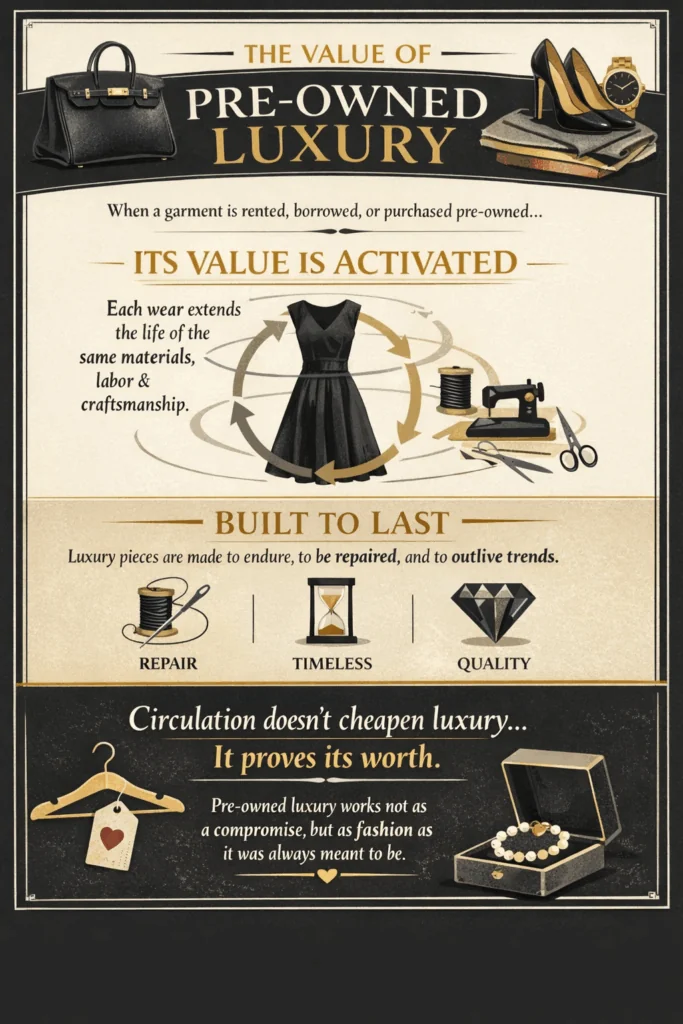
Circulation activates value that’s already there. A well-made coat or bag doesn’t lose craftsmanship value by being worn by multiple people. Every additional wear gets more use out of the same materials and labor. Luxury goods are arguably better suited to this than any other product category, because they’re built to be repaired and to outlast trends rather than seasons.
Luxury brands are under real pressure on sustainability, and it’s broader than fast fashion scrutiny. Stakeholders are pushing houses to rework materials sourcing, modernize production, improve supply-chain transparency, treat artisans and garment workers fairly, and cut environmental impact — all without diluting the craft that justifies the price tag. That’s a long list, and shortcuts show up.
Greenwashing has recognizable patterns, and they’re worth knowing before you take a brand’s sustainability claims at face value:
- Fibbing — claims that sound credible but aren’t accurate
- Vagueness — “eco-friendly” or “clean” with no specifics behind it
- No proof — environmental claims with nothing to verify them
- Lesser evils — a sustainability halo on a product that’s still fundamentally harmful
- Hidden trade-off — one green feature highlighted to distract from everything else
- Irrelevance — touting the avoidance of materials that were never used or already banned
Analysis and Insights #

Here’s where I’ll push back on the tidy version of this story, because it’s not as simple as “renting and reselling good, buying new bad.”
I’ve watched the resale market for handbags and watches closely enough to know that circulation isn’t automatically sustainable or automatically smart for the buyer. A Hermès Kelly or a [Chanel Classic Flap](/buying-guides/vintage-chanel-finds-top-picks/) holds value because of scarcity, consistent craftsmanship, and controlled production — not because it changed hands five times. Buying one new, with the intent to actually keep and eventually resell it, is still a legitimate strategy, arguably a better one than renting if you care about long-term value retention. Renting gets you the moment; it doesn’t build equity.
Where rental and pre-owned genuinely shine is in categories with faster style turnover — coats, evening wear, statement pieces you’ll wear once for a specific occasion. That’s exactly the category Duwaji’s outfit falls into. It’s a smart use case, not a universal one. Jewelry and watches, by contrast, are rarely rented in any meaningful volume; they’re bought to keep, worn in, and passed down or resold years later. The “rental over ownership” framing that gets applied to fashion broadly doesn’t map cleanly onto every product category this blog covers.
There’s also a second layer of greenwashing risk that doesn’t get enough attention: resale and rental platforms can overstate their own environmental impact too. “Circular fashion” claims without lifecycle data behind them are just as vague as a brand claiming its production is “eco-conscious.” If a rental library or resale marketplace can’t tell you how many times a garment circulates before it’s retired, or what happens to it afterward, that’s the same absence of proof that shows up on the greenwashing checklist above — just from a different side of the industry.
What I’d actually tell someone shopping at the level this blog covers: treat resale potential as a factor at the point of purchase, not as an afterthought once you’re tired of a piece. Buy pieces with a track record of value retention if investment matters to you. Rent or borrow for the one-off, high-visibility moment where owning doesn’t make financial sense. And read brand sustainability claims the way you’d read a spec sheet — looking for numbers and third-party verification, not adjectives.
Conclusion #
The “on loan” credit at a mayoral swearing-in wasn’t a fashion statement so much as a quiet demonstration of where luxury status is heading: toward discernment rather than accumulation. That doesn’t mean buying new is obsolete, and it doesn’t mean every rental or resale platform is inherently more sustainable than the brands it sources from — some of the same vague claims and unverified impact numbers show up on both sides. What it does mean is that circulation, whether through rental, resale, or considered long-term ownership, is where the real value of a well-made piece gets proven. If you’re weighing a high-value purchase, that’s the lens worth applying before you look at the price tag.
Related Articles #
- 10 Best Designer Handbags Worth the Investment (2026)
- Designer Handbag Trends 2025: What’s Actually Worth Buying
- Best Investment Handbags to Buy in 2026 (Expert Guide)
- 10 Designer Handbags That Hold Their Value (2026)


Keyword index