Top 10 Designer Must-Have Bags For Your Closet#
Introduction: What Makes a Designer Bag a True Wardrobe Essential?#
Not every expensive handbag deserves a place in your wardrobe, and not every wardrobe essential needs to carry a five-figure price tag. After years of handling, buying, and obsessing over luxury handbags — examiningstitching under torchlight, tracking resale prices across platforms, and watching trends cycle in and out — the bags that earn the title of true wardrobe essential share a short list of qualities: construction that outlasts fashion cycles, design logic that improves with age, and a secondary market that reflects genuine demand rather than manufactured hype.
That distinction matters more than ever. The luxury handbag market has matured. Buyers are smarter, the pre-owned market is sophisticated, and the era of buying anything emblazoned with a logo and expecting it to appreciate is over. What remains is a smaller, more selective group of bags that genuinely justify their price — whether you’re measuring that in cost-per-wear, resale return, or both.
This guide focuses on that shortlist. It covers the bags editors, collectors, and stylists repeatedly reach for, explains what makes each one worth the investment (and where each one falls short), and gives you the information you need to buy well — whether that means new from a boutique or pre-owned from a trusted reseller.
The Blue-Chip Classics: Chanel, Hermès, and Louis Vuitton#
These three houses occupy the highest tier of the luxury handbag market — not because of marketing, but because their flagship bags have demonstrated consistent demand and verifiable resale performance over decades.
[Chanel Classic Flap](/buying-guides/vintage-chanel-finds-top-picks/)#
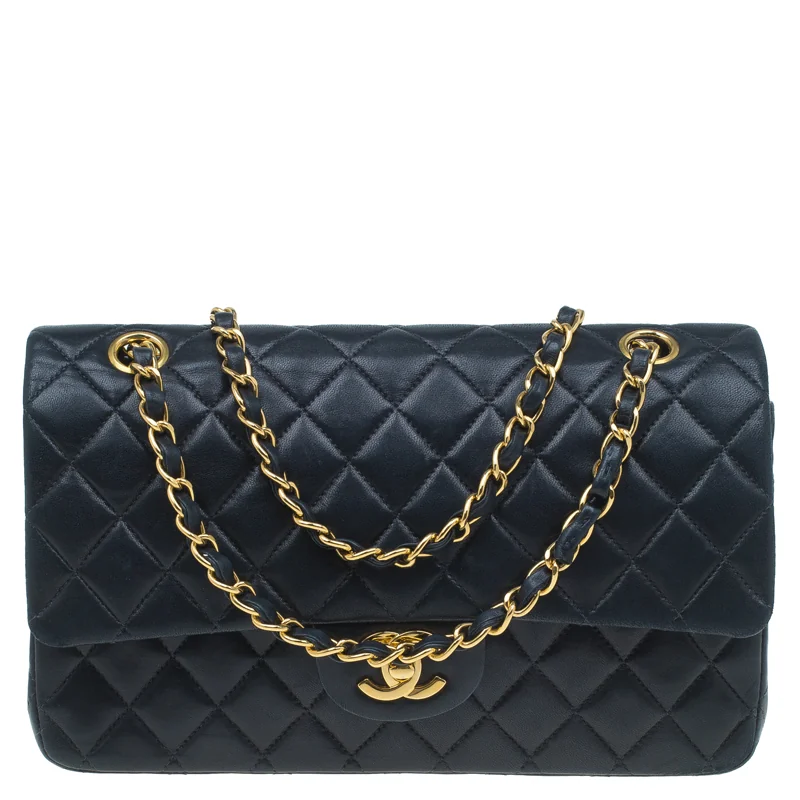
Introduced by Karl Lagerfeld in 1955as a reinterpretation of Coco Chanel’s 2.55, the Classic Flap is arguably the most analysed bag in the secondary market. Chanel has raised retail prices repeatedly — the medium Classic Flap in caviar leather now retails at approximately £8,200 in the UK, up from roughly £2,900 a decade ago. That trajectory has created a meaningful secondary market, particularly for pre-2021 pieces purchased below current retail.
The honest assessment: Caviar leather is the practical choice — it resists scratches, holds its shape, and ages gracefully. Lambskin is beautiful in photographs and in a boutique, but it marks easily and requires fastidious care. For a bag you intend to use regularly, caviar is the correct answer regardless of what anyone tells you about lambskin’s superior softness.
Sizing genuinely matters here. The Mini and Small are fashion pieces; they look extraordinary but carry very little. The Medium (also called the Medium/Large) is the most versatile and the most liquid on the resale market. The Jumbo has a devoted following but is larger than most women need for daily use.
Resale status: Appreciating (pre-2021 pieces purchased at old retail offer the strongest upside; current retail purchases are roughly break-even at resale)
Pros:
- Recognised globally; transcends trends
- Caviar leather is genuinely durable
- Strong secondary market liquidity
Cons:
- Current retail price limits new-purchase upside
- Lambskin requires excessive care for a working bag
- Counterfeit market is vast — authentication is non-negotiable pre-owned
Hermès Birkin and Kelly#
No bag on this list occupies quite the same investment-grade territory as the Birkin. Hermès controls supply with almost surgical precision, and the waitlist model — which requires an established purchase history at a boutique before you’re offered a bag — creates genuine scarcity rather than artificial hype. The Birkin 25 in Togo leather with gold hardware retails at approximately £8,500 in the UK. On the open resale market, the same bag trades for £15,000 to £25,000. Exotic-skin Birkins regularly exceed £50,000.
The Kelly, slightly more structured and historically associated with Grace Kelly, commands comparable prices and has a strong appreciation trajectory of its own, particularly in Sellier construction.
The honest assessment: If you can access a Birkin or Kelly through Hermès directly, it is one of the few luxury purchases that functions as a genuine store of value. If you’re buying on the secondary market at a significant premium, the calculus changes — you’re paying for immediacy rather than investing intelligently. The bag itself, however, is extraordinary: Hermès leathers are unmatched in quality, and the construction is built to be re-soled, re-stitched, and spa-treated indefinitely.
Resale status: Strongly appreciating (neutrals in Togo/Epsom with gold hardware are most liquid; exotic skins appreciate fastest but have a narrower buyer pool)
Pros:
- Genuine investment-grade appreciation on primary market purchases
- Hermès leather quality is category-defining
- Fully repairable and refurbishable by Hermès
Cons:
- Boutique access requires significant relationship-building
- Secondary market premiums reduce investment logic
- Size, leather, and hardware combinations affect value significantly — research before buying
Louis Vuitton Speedy and Neverfull#
Louis Vuitton’s Monogram canvas pieces occupy a different tier. The Neverfull MM — a simple, unstructured tote in Monogram canvas — retails at around £1,320 and remains one of the best-selling luxury bags in the world. The Speedy, introduced in 1930and later popularised by Audrey Hepburn, is the brand’s most storied silhouette.
The honest assessment: Neither the Speedy nor the Neverfull is an investment bag. Both depreciate from retail and trade on the secondary market at a discount. What they are is excellent value propositions: Monogram canvas is virtually indestructible, both bags are immediately recognisable, and the price of entry is genuinely accessible relative to comparable luxury houses. If you want a functional, durable, brand-legible bag that will last decades with minimal care, the Neverfull or Speedy makes complete sense. If you expect it to hold or grow its value, adjust those expectations.
Resale status: Depreciating (expect20–40% below retail on the secondary market; limited-edition collaborations are an exception)
Pros:
- Monogram canvas is remarkably durable
- Accessible entry point into blue-chip luxury
- Widely available pre-owned at significant discounts
Cons:
- Monogram is highly copied — authentication matters
- No meaningful appreciation; purely a wear-value purchase
- Dated styling for some buyers
Modern Icons Worth Owning: Dior, Bottega Veneta, and Loewe#
These bags have moved beyond trend status into genuine icon territory within the last two decades. Each offers a different entry point and a different resale story.
Lady Dior#
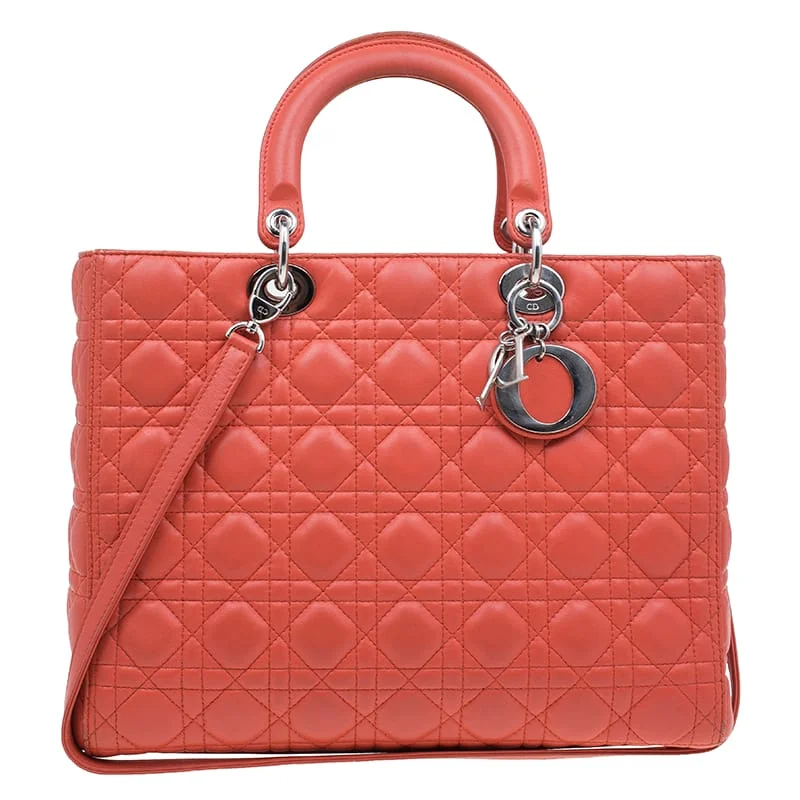
Originally named the Chouchou when introduced in 1994, the Lady Dior was renamed after Princess Diana received one as a gift from France’s First Lady and was photographed carrying it throughout the world. That provenance gave the bag an extraordinary cultural resonance that has never fully dissipated. The cannage-quilted exterior, D-I-O-R letter charms, and structured silhouette are immediately recognisable — and the bag has remained in continuous production for over 30 years.
Available in four sizes (Micro, Mini, Medium, Large) across lambskin, patent leather, and seasonal skins, the Lady Dior rewards careful size selection. The Medium is the most balanced proportion; the Micro is a pure fashion accessory. Retail starts at approximately £3,500 for the Mini.
Resale status: Stable (holds value reasonably well but doesn’t appreciate significantly; classic colours in lambskin are most liquid)
Pros:
- Exceptional cultural provenance
- Strong brand recognition globally
- Micro and Mini versions work as evening bags
Cons:
- Lambskin marks easily; patent leather shows scratches over time
- Less versatile silhouette than the Classic Flap for daily use
Bottega Veneta Intrecciato Bags (Cassette, Jodie, Andiamo)#
Bottega Veneta’s Intrecciato weave — strips of leather woven together by hand — is one of the few luxury design signatures that requires genuine skill to produce and cannot be convincingly replicated at a lower price point. The house experienced a dramatic resurgence under Daniel Lee (2018–2021), and bags from that era — particularly the Cassette and Pouch — have appreciated significantly on the secondary market.
The current Matthieu Blazy era has shifted the aesthetic slightly, with the Andiamo tote and refined leatherwork becoming the new focal points. For investment purposes, Lee-era Cassettes in neutral woven leather remain the most sought-after pieces.
Resale status: Appreciating (Lee-era pieces specifically; current-season pieces are more stable)
Pros:
- Intrecciato weave is genuinely beautiful and technically demanding
- No visible logo — appeals to stealth-wealth buyers
- Leather quality is exceptional across the range
Cons:
- No-logo aesthetic means lower brand recognition in some markets
- Woven leather can loosen over time with heavy use
- Strong aesthetic identity limits versatility for some wardrobes
Loewe Puzzle Bag#
The Puzzle deserves more investment attention than it currently receives. Designed by Jonathan Anderson (who joined Loewe in 2013), the Puzzle’s origami-like geometry and exceptional Spanish leather quality have given it a following among buyers who care more about craft than logo hierarchy. The bag folds flat, holds its shape impeccably, and ages beautifully in grained calfskin.
Anderson’s departure from Loewe to Burberry in 2024 has, if anything, sharpened collector interest in pieces from his tenure. Expect his signature pieces — Puzzle, Flamenco, Amazona — to receive closer secondary-market scrutiny in coming years.
Resale status: Stable to appreciating (Anderson-era pieces are increasingly collected; neutral grained calfskin colours are most versatile)
Pros:
- Exceptional leather quality; crafted in Spain
- Distinctive design that doesn’t rely on logo recognition
- Potential upside as Anderson’s Loewe tenure is contextualised
Cons:
- Geometric shape requires adjustment in terms of packing
- Lower immediate brand recognition than Chanel or Dior
Underrated Picks: The Bags Editors Reach for Over Everything Else#
These aren’t the bags that dominate Instagram or appear in every gift guide. They’re the ones that disappear first when editors pack for a trip.
Celine Classic Box and Luggage Tote#
The Celine Box Bag — designed under Phoebe Philo — is experiencing a quiet but consistent resale appreciation. Philo’s aesthetic philosophy, which prioritised functionality and restraint, created bags that are genuinely timeless. Pre-Philo Celine pieces have become collector’s items; the Classic Box in smooth calfskin is among the most sought-after.
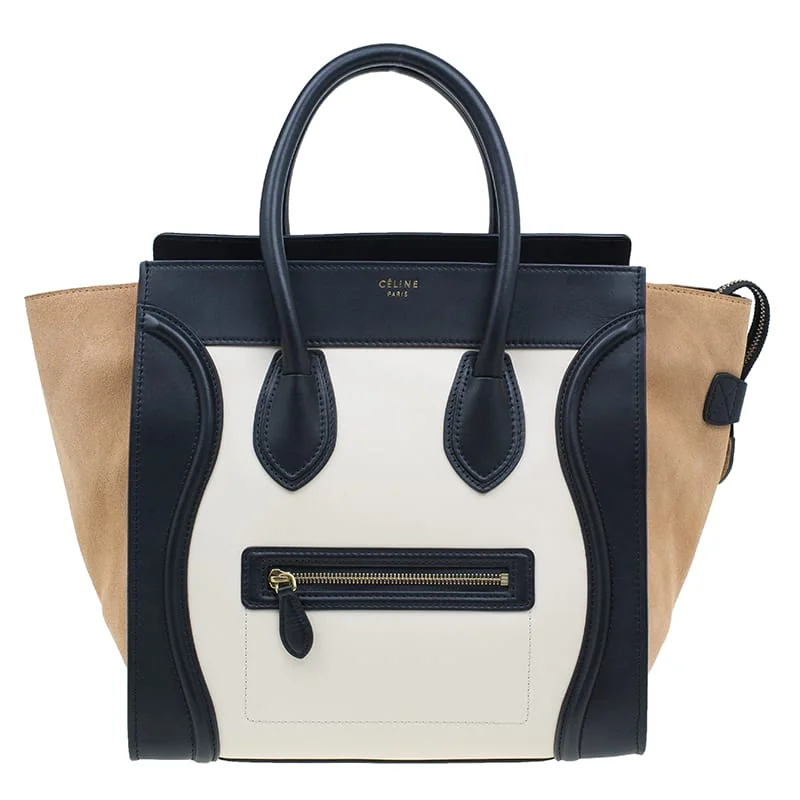
The Luggage Tote offers a different proposition: substantial size, sculptural handles, and distinctivestitched eyes that give the front face its character. Available in calfskin, pony hair, and exotics, it’s an excellent work bag with personality.
Balenciaga City#
Introduced in the early 2000s, the City Bag launched the motorcycle-bag category and spent a decade as the off-duty bag of choice for stylists and editors. Its relaxed structure, tassel details, and deliberately imperfect aesthetic made it the anti-luxury luxury bag. Pre-owned City Bags — particularly in rare seasonal colours from the Ghesquière era — hold genuine collectible value. More recent seasons are more affordable but less distinctive.
Saint Laurent Lou and Sac de Jour#
Saint Laurent offers strong style-to-cost ratios compared to Chanel or Dior. The Lou Camera Bag is compact, genuinely versatile, and well-constructed; the Sac de Jour is a structured tote that competes credibly with the Celine Box for clean minimalist design. Neither appreciates meaningfully, but both offer excellent value as wear-every-day luxury bags.
Investment vs. Style: Which of These Bags Actually Hold Their Value?#
Honest answers, based on secondary market data:
| Bag | Approx. Retail (UK) | Typical Resale Range | Value Trend | Best Use Case |
|---|---|---|---|---|
| Hermès Birkin 25 (Togo, PHW) | £8,500+ | £15,000–£28,000+ | ✅ Strongly Appreciating | Investment + collector |
| Hermès Kelly28Sellier | £8,000+ | £12,000–£22,000+ | ✅ Strongly Appreciating | Investment + collector |
| Chanel Classic Flap Medium (Caviar) | £8,200 | £6,500–£9,000 | ➡️ Stable / Modest Appreciation | Everyday luxury + investment |
| Lady Dior Medium | £3,800 | £2,200–£3,000 | ↘️ Stable/Mild Depreciation | Style purchase |
| Bottega Veneta Cassette (Lee era) | £2,800 | £2,500–£3,800 | ✅ Appreciating | Style + emerging investment |
| Loewe Puzzle (Anderson era) | £2,500 | £1,800–£2,600 | ➡️ Stable to Appreciating | Style + collector interest |
| LV Neverfull MM | £1,320 | £800–£1,050 | ↘️ Depreciating | Everyday use |
| LV Speedy 30 | £1,100 | £650–£900 | ↘️ Depreciating | Everyday use |
| Celine Classic Box (Philo era) | £2,200 (original retail) | £1,800–£3,500 | ✅ Appreciating (vintage) | Collector |
| Balenciaga City (Ghesquière era) | £1,200 (original retail) | £900–£2,000+ | ✅ Appreciating (vintage) | Collector |
| Saint Laurent Sac de Jour | £2,100 | £1,200–£1,600 | ↘️ Depreciating | Style purchase |
The straightforward conclusion: Hermès is the only house whose primary-market purchase reliably outperforms retail on the secondary market. Chanel is roughly break-even on recent purchases but strong on pre-2019 pieces. Everything else should be evaluated as a style purchase, not an investment — which is fine, as long as you’re clear about what you’re buying.
How to Choose the Right Bag for Your Wardrobe and Lifestyle#
Before shortlisting by brand, answer these questions honestly:
How much do you actually carry? A Hermès Kelly or Lady Dior is a considered choice — you’re selecting what goes in it. A Louis Vuitton Neverfull or Celine Luggage Tote is designed for people who carry more. Buying a beautifully structured small bag when you habitually carry a laptop, sunglasses, wallet, and water bottle creates frustration.
What is your wardrobe’s colour palette? Black leather and neutral canvas integrate anywhere. Caramel tan and warm browns are highly versatile. Bright colours and seasonal shades require a more committed wardrobe. For a single investment bag, black caviar or a warm neutral is almost always the correct answer.
What hardware suits your existing jewellery? Gold hardware reads warmer and is more forgiving with age; palladium or silver hardware reads cleaner and more contemporary. Mixing hardware is a personal choice, but a mismatch between bag hardware and your primary jewellery tone will irritate you more than you expect.
What occasions are you buying for? An evening-only bag should be small and impractical — that’s the point. A daily driver needs genuine organisation, comfortable carry, and leather that tolerates contact with coat lining, desk surfaces, and the occasional rain shower. Caviar leather, Togo leather, Epi leather, and coated canvas are all reasonable daily-use choices. Lambskin, smooth calfskin, and suede are not.
Leather type quick guide:
- Caviar (Chanel): Pebbled, scratch-resistant, holds shape, ideal for daily use
- Togo (Hermès): Soft pebbled, supple, highly durable
- Epsom (Hermès): Smooth, structured, scratch-resistant but stiffer
- Grained calfskin (Loewe, Celine, SYL): Versatile, moderate durability
- Lambskin (Chanel, Dior): Luxurious texture, requires careful handling
- Monogram/Damier canvas (LV): Virtually indestructible; not leather
New vs. Pre-Owned: Where and How to Buy Safely#
The [pre-owned luxury](/buying-guides/best-luxury-casualwear-brands-effortless-style-2025/) market is now large enough, and professional enough, that buying authenticated pre-owned is a sensible first choice rather than a compromise — particularly for Chanel and Hermès, where current retail prices are genuinely high and pre-owned condition-A pieces offer equal quality at a discount (or, for Hermès, below current market price if you find the right source).
Authentication: What to check
For Chanel: Verify the hologram sticker and authentication card (note that post-2021 bags use a different chip-based system). Examine the quilting alignment at seams — it should be consistent and deliberate. The CC turnlock should operate smoothly. Stitching is typically burgundy on black bags and matching on others.
For Hermès: The blind stamp (inside the strap or under the flap) identifies the craftsperson and year. The stitching is saddle-stitched by hand and should be perfectly even. Hermès leather has a specific smell and texture that’s difficult to replicate; if something feels waxy or artificial, trust that instinct.
For Louis Vuitton: Date codes (transitioning to microchips in recent production) confirm manufacture date and location. The LV monogram should never be cut at seams arbitrarily — patterns are aligned with intention. Heat stamps on the tab should be clean and centred.
Condition grading — what the labels mean in practice:
- Mint / Never Used: Essentially retail equivalent; expect to pay close to retail
- Very Good / Excellent: Light signs of use, no significant flaws; sweet spot for value
- Good: Visible wear, may require spa treatment; appropriate price reduction expected
- Fair / Worn: Significant use or damage; fine for a bag you plan to wear heavily, not appropriate for investment
Trusted pre-owned channels: Look for resellers with in-house authentication teams, detailed condition reports with high-resolution photography, and clear returns policies. For Hermès especially, verify that hardware stamps, blind stamps, and leather type match the claimed specification exactly. Browse our authentication guidance here and explore verified pre-owned bags by brand here.
FAQ: Designer Handbag Buying Questions Answered#
Are designer handbags a good investment? Some are; most aren’t. Hermès Birkins and Kellys purchased through the boutique at retail represent a genuine asset class with documented appreciation. Pre-2019 Chanel Classic Flaps are break-even to modestly appreciating. Most other luxury bags should be treated as style purchases that depreciate — the same way a car does. Buy what you’ll use and love; treat appreciation as a bonus rather than a strategy.
Which designer bag is the best first investment? A pre-owned Chanel Classic Flap in caviar leather — specifically a Medium in black or neutral with silver or gold hardware — is the most accessible entry point into genuine investment-grade handbags. It has deep secondary market liquidity, a recognisable design that doesn’t date, and caviar leather that tolerates real-world use.
What is the most durable designer handbag leather? Hermès Togo and Epsom leathers, and Chanel’s caviar leather, are the most practical for regular use. Louis Vuitton’s coated canvas is essentially indestructible. Avoid lambskin, smooth calfskin, and suede if durability is a priority.
How do I tell if a Chanel bag is authentic? Key markers: consistent quilting alignment, burgundy lining, matching serial number between hologram sticker and authentication card (pre-2021), a CC turnlock that operates without resistance, and clean, even stitching. Post-2021 bags use an embedded microchip rather than a sticker system. When buying pre-owned, always use a professional authentication service if you have any doubt — platforms like Authenticate First, Real Authentication, or Entrupy offer reliable third-party verification.
What size Chanel Classic Flap should I buy? The Medium (sometimes listed as Medium/Large, approximately25.5 cm) is the most versatile and the most liquid on the resale market. The Mini is a fashion accessory rather than a practical bag. The Jumbo suits buyers who carry more but is larger than most wardrobes need daily.
Is it better to buy a designer bag new or pre-owned? For most bags, pre-owned is the rational choice: you avoid the initial depreciation hit, often access better value per condition point, and can sometimes acquire discontinued styles. The exception is Hermès — where the boutique relationship required to purchase a Birkin at retail is itself valuable, and retail prices are below secondary market.
Which bags have increased in value the most? Hermès exotic-skin Birkins have shown the most dramatic appreciation. Within non-exotic leather, the Birkin 25 and Kelly 25 in neutral Togo or Epsom with gold hardware have performed strongest. Chanel Classic Flaps purchased before 2016 at significantly lower retail prices have also performed well. Phoebe Philo-era Celine pieces are an emerging collector category with growing secondary market interest.
What is the best designer bag to buy for everyday use? The Louis Vuitton Neverfull or Speedy in Monogram canvas for pure durability; the Chanel Classic Flap in caviar for something that combines everyday practicality with investment logic; the Loewe Puzzle or Saint Laurent Sac de Jour for clean, understated luxury. The honest answer depends entirely on how much you carry and what your wardrobe looks like.
How should I care for a designer leather handbag? Store bags stuffed with tissue paper in their dust bags, away from direct sunlight. Clean caviar and grained leather with a dry cloth; condition twice yearly with a leather-appropriate conditioner. Avoid getting lambskin or smooth calfskin wet — keep a dust bag or wrap in a scarf if you’re caught in rain. For significant soiling, scratching, or hardware tarnish, Hermès offers their Spa service, and Chanel boutiques can often direct you to approved leather restoration. Most major houses have authorised repair services; use them rather than independent restoration for warranty-relevant repairs.
Related Articles#
- Designer Handbag Trends 2025: What’s Actually Worth Buying
- Best Investment Handbags to Buy in 2026 (Expert Guide)
- Luxury Resale Condition Grades: Fair to Pristine Guide
- 10 Designer Handbags That Hold Their Value (2026)
Related guides
- Online Bag Authentication: What Photos Can and Cannot Prove
- Fake Goyard Bag Guide: How to Spot Real vs Fake (2026)
- How to Spot a Fake Chanel Flap Bag: Authentication Guide
- How to Spot a Fake Hermès Birkin: Expert Checklist
- How to Buy an Authentic Luxury Bag from China Safely
- New vs Pre-Owned Luxury Bags: Which Route Is Right for You?
- Chanel Bag Guide: What to Know Before You Buy
- Luxury Bag Houses


Keyword index