Introduction#
Something has changed in how people buy luxury. A decade ago, the goal was often more: more bags, more shoes, more seasonal drops. Now the more interesting conversation happens around what stays. Buyers are asking whether a piece will hold its shape, its relevance, and increasingly, its price, five or ten years from now.
[[[Pre-owned luxury](/buying-guides/best-pre-owned-luxury-watch-brands/)](/buying-guides/best-luxury-casualwear-brands-effortless-style-2025/) fashion](/buying-guides/y2k-fashion-2026-pre-owned-luxury-looks/) sits right in the middle of that shift. It’s no longer the discount aisle for people who “can’t afford new.” Auction houses, dedicated resale platforms, and even the brands themselves now treat the secondary market as a serious, permanent part of how luxury circulates. I’ve spent years buying, selling, and evaluating pre-owned pieces, and the change in quality, transparency, and buyer sophistication over just the last five years has been genuinely striking.
This piece looks at why that’s happening, which categories are proving to be durable stores of value, what a buyer actually needs to check before committing serious money to a second-hand piece, and how brands are responding to a market they no longer fully control.
A Shift in How Luxury is Valued#
Luxury used to run on a fairly simple engine: newness. A bag mattered because it was this season’s bag. Once the next collection landed, last year’s piece lost some of its shine, at least in the eyes of the industry selling it to you.
That engine is losing power. Bain & Company and BCG have both tracked the resale segment growing faster than the primary luxury market for several years running, and the driver isn’t just price sensitivity. It’s a different definition of value. Buyers are increasingly weighing a piece against how it will perform over a decade, not a season, which is a fundamentally different question than “is this new.”
I’d add a point the reports don’t always spell out clearly: this shift has made buyers more literate. People researching a pre-owned Birkin or a vintage Cartier piece today are comparing hardware finishes, stitch counts, and serial number formats the way car buyers compare mileage and service history. That’s a level of scrutiny the primary market never had to survive, because newness alone used to be enough. Pre-owned luxury fashion doesn’t get that shortcut. Every piece has to justify itself on its own terms, which is exactly why the ones that do hold up mean something.
Why Certain Designs Continue to Hold Relevance#
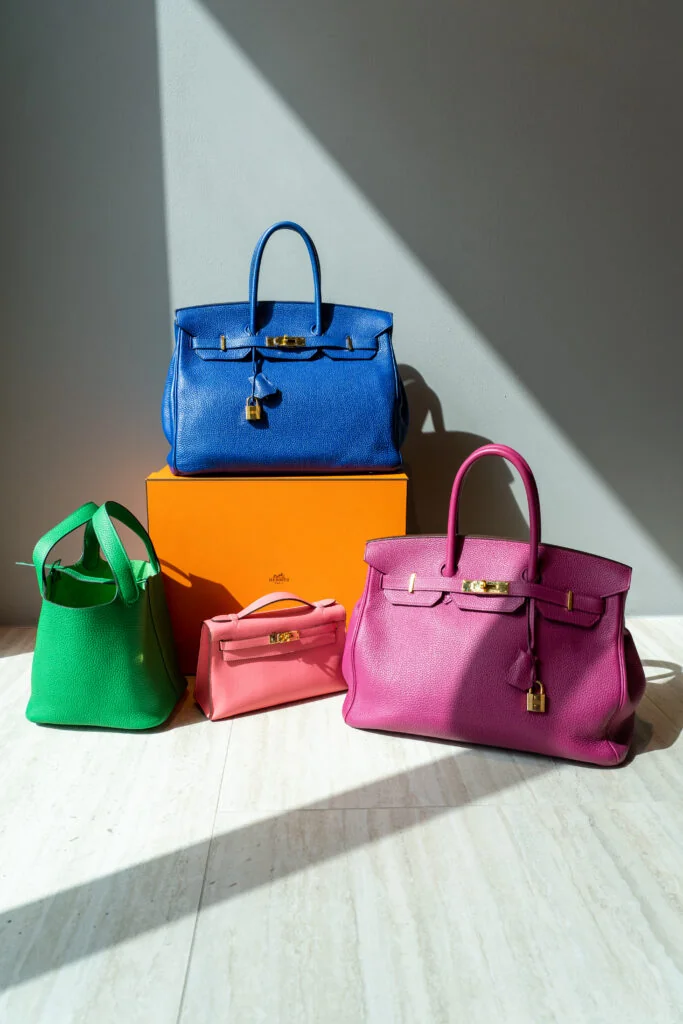
Some designs stay in circulation for decades not because of nostalgia, but because they were never built around a single season to begin with. The Chanel 2.55, introduced in 1955, still moves through resale channels seven decades later. Hermès pieces like the Birkin and Kelly retain both cultural weight and financial value in a way few other bags do. The Gucci Jackie, Dior Lady Dior, and Louis Vuitton Speedy remain in steady demand because their proportions were built to be worn, not just photographed.
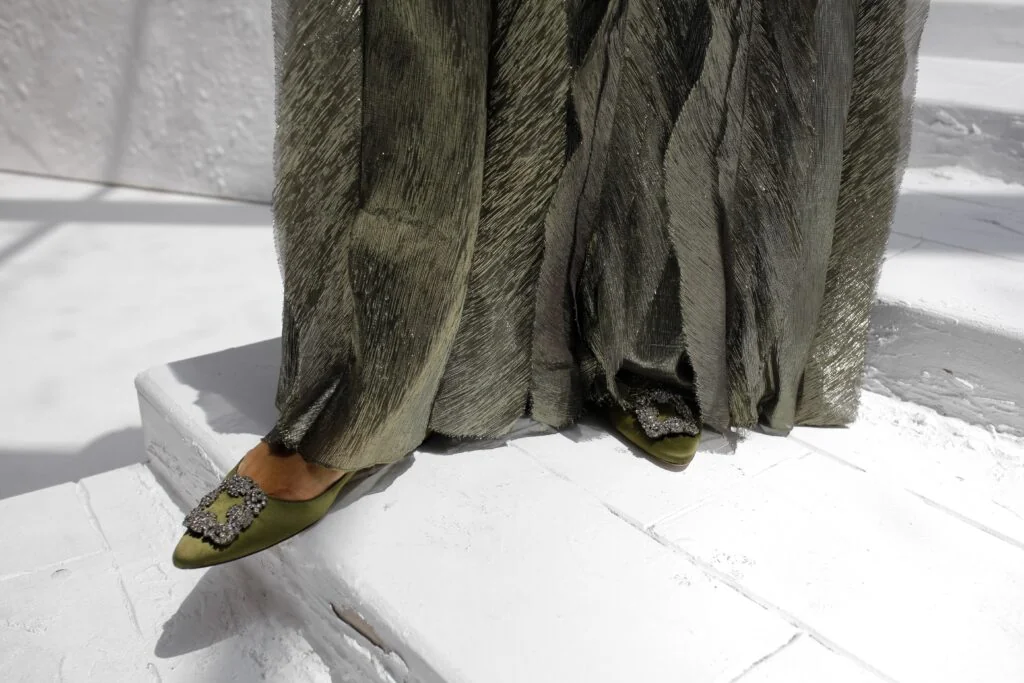
Footwear follows the same logic, though it gets less attention. The Manolo Blahnik Hangisi pump still shows up in wardrobes years after its debut, largely because its shape doesn’t fight the foot. Christian Louboutin’s Pigalle remains a reference point in formal footwear despite years of shifting opinion on heel heights. Chanel’s two-tone slingback, dating back to the 1950s, keeps selling because its structure hasn’t needed correcting since. Gucci’s horsebit loafer, also from the 1950s, remains one of the house’s strongest resale performers precisely because it never tried to reinvent itself into irrelevance.
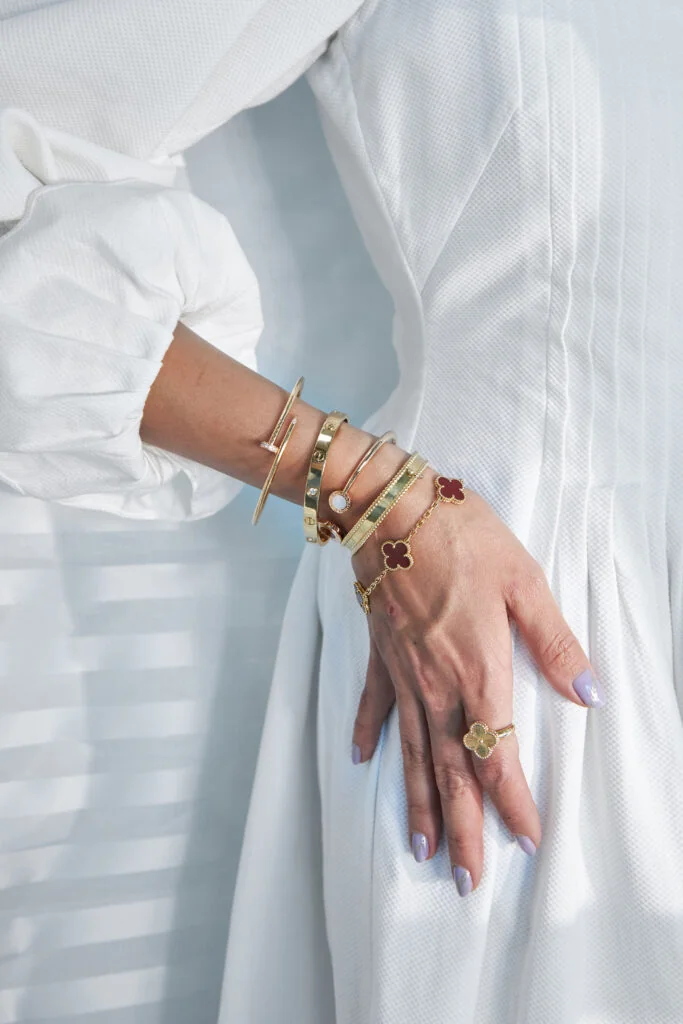
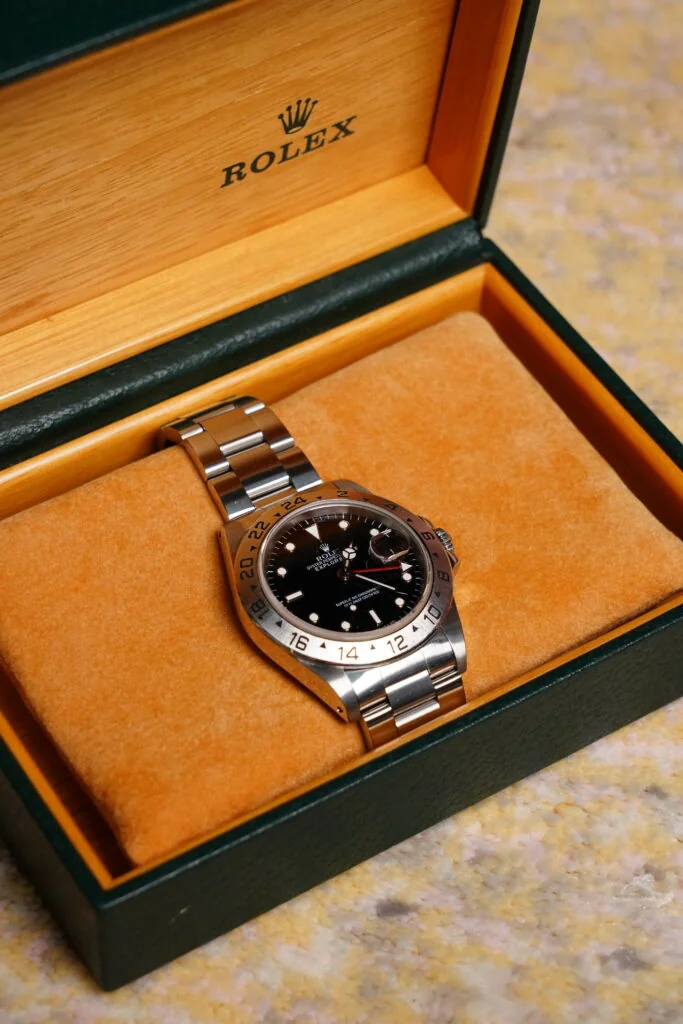
Accessories, fine jewelry, and watches tell the same story with even higher stakes. The Hermès Carré scarf, introduced in 1937, still circulates widely because its format is endlessly reusable and its graphic language ages well. Bottega Veneta’s intrecciato weave, developed in the 1960s, has defined the house across multiple creative directors, proving a technique can carry identity as effectively as a logo. Cartier’s Love bracelet and Van Cleef & Arpels’ Alhambra continue to move through resale decades after launch because their design language never depended on trend cycles. In watches, the Rolex Submariner and the Audemars Piguet Royal Oak stay in demand because their engineering and continuity matter more to buyers than whichever complication is trending that year.
The same pattern extends into clothing. Giorgio Armani’s tailoring reshaped how modern suiting is understood, and that vocabulary still informs collections that have nothing to do with his house. Jil Sander’s approach to clean construction and controlled volume keeps resurfacing in designers working decades later. Phoebe Philo’s tenure at Céline established a clarity-of-line approach that’s still a reference point for how people build a modern wardrobe. Even earlier work, like Yves Saint Laurent’s reworking of classic tailoring or Azzedine Alaïa’s sculptural forms, keeps circulating through resale and archive culture without losing relevance.
What unites all of this isn’t sentiment. It’s that these pieces were designed around function first, which is a much harder thing to age out of than a trend. That’s the real reason pre-owned luxury fashion built around these names holds up so consistently in resale.
The Investment Case for Pre-Owned Pieces#
“Investment piece” gets thrown around loosely in luxury marketing, so it’s worth being precise about what actually drives resale value, because it isn’t the same mechanism across every category.
Handbags hold value largely through a combination of controlled supply and daily usability. Hermès bags are the clearest example: production is deliberately limited, waitlists are real, and that scarcity, combined with genuine everyday function, is what lets certain Birkin and Kelly configurations sell above their original retail price on the secondary market. Chanel flap bags behave differently. Chanel has raised prices repeatedly and reduced production of certain sizes, which has pushed resale prices up in tandem, but this is price-driven appreciation rather than pure scarcity, and it’s more sensitive to the brand’s own pricing decisions than Hermès is. Condition matters enormously here: corner wear, hardware tarnish, and interior odor can knock a meaningful percentage off resale value regardless of how rare the style is.
Fine jewelry works on a different logic entirely. Gold and precious stone content give a piece a value floor that a handbag simply doesn’t have, since the materials themselves are worth something independent of brand. On top of that floor, design recognition (a Cartier Love bracelet, a Van Cleef Alhambra motif) adds a premium. This is why jewelry tends to be a more stable long-term holding than handbags, even if the upside is usually less dramatic. The catch is liquidity: jewelry can take longer to sell at full value than a well-known handbag, because the buyer pool for a specific piece is narrower.
Watches are the category where investment logic is most explicit, and also where it’s most misunderstood. Certain references, particularly steel sports models from Rolex and Audemars Piguet, have shown real price appreciation over time, driven by production limits and sustained demand. But the watch market also had a sharp correction after the speculative highs of 2021 to 2022, and plenty of buyers who paid grey-market premiums during that period are still underwater. Mechanical condition, service history, and box-and-papers completeness affect value here more than in any other category, because a watch is a functioning mechanism, not just an object.
The honest summary across all three: rarity and brand recognition create the ceiling, but condition, documentation, and timing determine whether a specific piece actually reaches it. Most pre-owned luxury doesn’t appreciate. A select group of pieces holds value exceptionally well, and an even smaller group appreciates. Treating every designer purchase as an “investment” is how people end up disappointed at resale.
What Buyers Should Know Before Purchasing Pre-Owned#
This is the part that matters most if you’re about to spend real money, and it’s where I’d tell a friend to slow down before a platform’s polished photography talks them into moving fast.
Authentication is not optional, and it’s harder than people think. Counterfeiters have gotten better at replicating date codes, hardware stamps, and even microchips on some brands. A platform that doesn’t clearly explain its authentication process, or that relies on a single photo review rather than in-hand inspection, is a red flag. For high-value pieces (Birkins, fine watches, serious jewelry), independent third-party authentication is worth the fee even when a platform claims to have already checked it.
Condition grading is subjective, and terms get stretched. “Excellent condition” from one seller can look like “good condition” from another. Ask for close-up photos of corners, handles, interior lining, and hardware specifically, not just the flattering studio shot. On watches, ask whether it’s been serviced and when, since a watch that hasn’t run in years may need real money spent before it works reliably again.
Platform trust varies more than people assume. Established resale platforms and consignment houses with in-house authentication teams are generally safer than marketplace listings from individual sellers, but they also charge for that safety through commission and buyer premiums. Read the return policy before you buy, not after: some resale platforms have no-return policies once authentication is confirmed, which shifts more risk onto the buyer than a typical retail purchase would.
Common pitfalls worth naming directly:
- Buying a “rare” color or hardware combination without confirming it against the brand’s actual production history for that year
- Assuming a lower price means a better deal, when it may simply reflect condition issues not disclosed clearly
- Overlooking import duties and taxes on cross-border resale purchases, which can add a meaningful amount to the final cost
- Treating a seller’s confidence as a substitute for documentation, receipts, or authentication certificates
None of this means pre-owned buying is riskier than buying new. It’s differently risky, and the risks are manageable with the right questions asked upfront.
How the Resale Shift is Changing the Industry Itself#
Brands spent years treating resale as something to ignore or quietly compete against. That’s no longer the posture, mostly because ignoring a market this size stopped being an option.
Authentication has become a service brands offer directly, rather than something they leave entirely to third parties. LVMH’s Aura Blockchain initiative traces provenance for products across several of its maisons. Some brands have introduced or piloted digital IDs and certificates of authenticity tied to individual pieces, aimed at making resale verification easier and, not incidentally, at capturing some of the value that used to go entirely to resale platforms.
Buy-back and trade-in programs are a more direct move. Rather than watching a customer sell a bag to a third-party platform, some brands now offer to take it back, either for credit toward a new purchase or as part of a certified pre-owned line the brand controls itself. This gives the brand a second point of revenue on the same product and lets it manage how its own resale supply looks, rather than leaving that entirely to Vestiaire Collective, The RealReal, or Rebag.
This is also reshaping primary market strategy. Deliberate scarcity, limited production runs, and waitlists aren’t just about exclusivity anymore; they’re partly designed with resale value in mind, because a strong resale market reinforces the perception that the brand’s pricing at retail is justified. When a bag or watch holds its value well used, that reflects back onto the brand’s credibility when it’s sold new. It’s a feedback loop that didn’t really exist in this form ten years ago, and it’s part of why brands now talk about resale as strategy rather than leakage.
Frequently Asked Questions#
Is pre-owned luxury fashion actually a good investment? Sometimes, but not automatically. Certain handbags, watches, and jewelry pieces have shown genuine long-term value retention or appreciation, but this depends heavily on rarity, brand, condition, and timing. Most designer purchases, new or pre-owned, are not investments in a financial sense. Treat resale value as a possible benefit of buying well, not the primary reason to buy.
How can I tell if a pre-owned designer item is authentic? Check date codes, hardware stamps, stitching consistency, and material quality against known references for that specific model and production year. For high-value pieces, use a reputable third-party authentication service in addition to whatever the seller or platform claims to have done.
Do pre-owned Hermès bags really sell above retail price? Certain configurations do, particularly rare leathers, colors, or hardware on Birkin and Kelly bags, driven by limited production and waitlists that make the piece harder to get new than used. This isn’t true of every Hermès bag or every size, so it shouldn’t be assumed automatically.
Are brand buy-back programs a good deal for sellers? They’re usually more convenient than selling privately, but the trade-in value offered is typically lower than what you could get selling directly through a specialized resale platform or consignment house. Convenience and certainty come at a cost.
Does watch condition matter as much as the reference number? Yes, arguably more for long-term ownership. A desirable reference with poor service history, missing box and papers, or mechanical issues can sell for significantly less than the same reference in verified, well-maintained condition.
Conclusion#
Pre-owned luxury fashion isn’t a workaround for people priced out of the primary market anymore. It’s become a legitimate, well-documented part of how luxury is bought, sold, and evaluated, with its own standards for authentication, condition, and value that didn’t exist in any organized way a decade ago.
The designs that hold up in this market do so because they were built with function and proportion in mind from the start, not because they’re old. And the brands themselves have noticed: authentication services, buy-back programs, and scarcity-driven production are all direct responses to a resale market they can no longer treat as background noise. For buyers, that means more transparency and better tools than ever before, but also more responsibility to ask the right questions before paying full attention, and full price, to a piece’s history.
Related Articles#
- How to Sell Luxury Items Online: The Luxury Closet Guide
- Best It Bags to Buy This Year: A Definitive Guide
- Sell Designer Handbags in 2025: Maximize Your Payout
- 10 Best Designer Handbags Worth the Investment (2026)
- Best Designer Handbag Brands Worth the Investment 2025


Keyword index