Introduction#
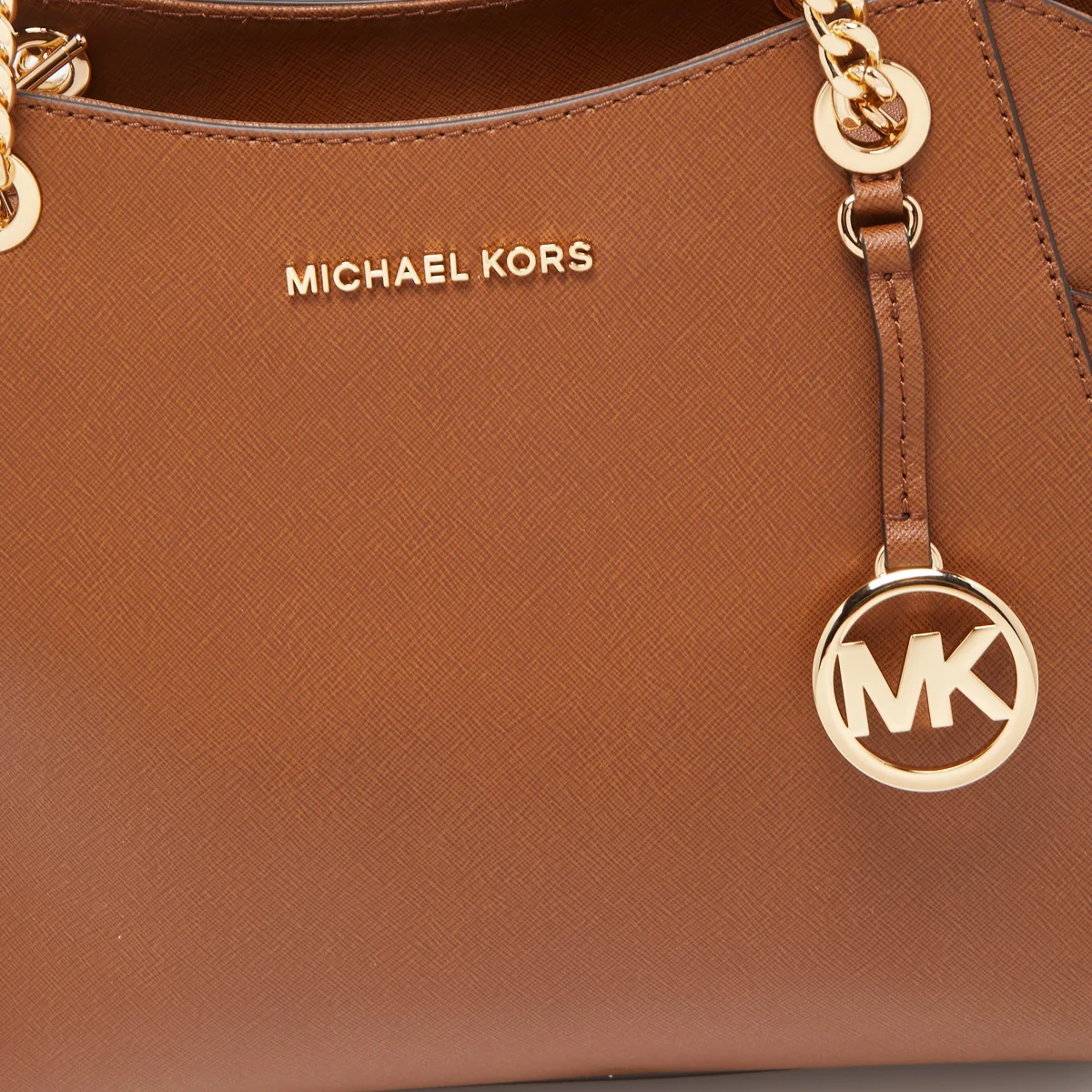
Michael Kors built his American label on a simple promise: attainable luxury. The hardware feels substantial, the leather has weight, and the price sits low enough that a first “real” designer bag feels within reach. That combination made MK one of the most searched handbag brands in the world, and it also made it one of the most counterfeited.
Because Michael Kors products sit at a lower price point than [[[Chanel](/brands/unique-chanel-bags-rare-novelty-designs/)](/brands/luxury-brands-founded-by-women/)](/brands/devil-wears-prada-2-fashion-style-guide/) or Hermès, some shoppers assume fakes aren’t worth the counterfeiters’ effort. That’s backwards. High sales volume means high demand, and high demand is exactly what draws counterfeit sellers to a brand. I’ve handled hundreds of MK bags over the years, both on racks and secondhand, and the fakes have gotten noticeably better since the early 2010s. The obvious tells, like glue-stained plastic and crooked logos, are mostly gone. Today’s counterfeits require a closer, more informed look.
This guide walks through the same checks I actually use when authenticating a Michael Kors bag, in the order I use them. It won’t turn you into a professional authenticator overnight, but it will give you the concrete, testable details that separate a genuine bag from a convincing copy, whether you’re buying new, at an outlet, or secondhand.
Check the Logo and Branding First#
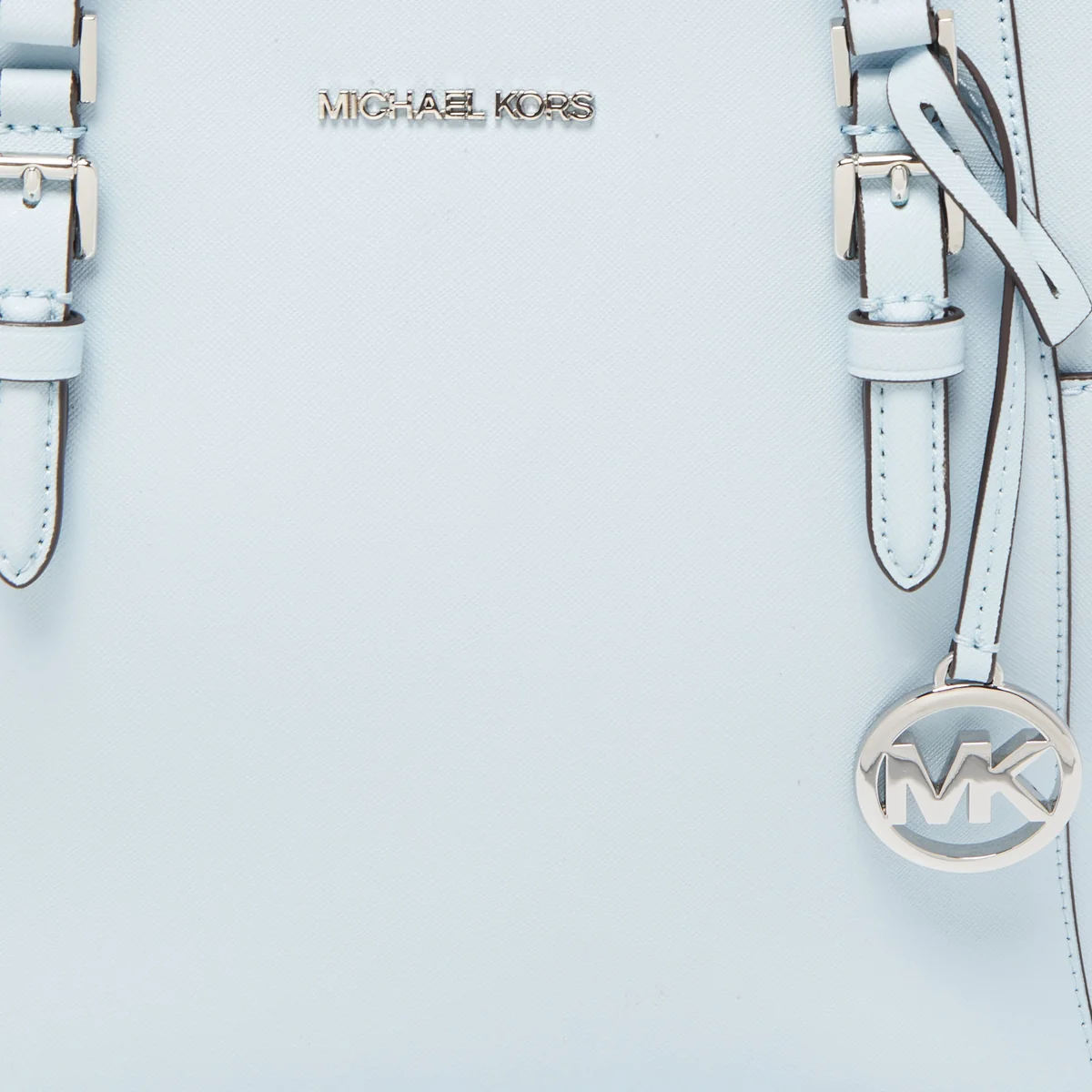
The logo is the first thing I look at, and it’s also the first thing counterfeiters try hardest to copy. It’s usually where they still fall short.
On a genuine Michael Kors bag, the “Michael Kors” wordmark on hardware (zipper pulls, buckles, feet, or the signature circular medallion) is embossed or engraved directly into the metal, not printed on top of it. Run your fingernail across it. You should feel a slight recess or ridge. The font is clean and consistent, with even spacing between every letter, and it doesn’t wobble in size across the word. Look closely at the “R” in “Kors”: on authentic hardware it has a distinct, slightly curved tail that sits clear of the leg of the letter.
On fakes, I tend to see one of two problems. Either the logo is flat and shiny, meaning it was stamped or printed rather than engraved, or the engraving is there but shallow and blurry, as if the die used to make it was worn down or copied from a photo rather than the original tooling. Letter spacing is the other giveaway: fakes often crowd letters together on one side of the word or leave uneven gaps, especially around the “K” and “o.” I’ve also seen the “Michael Kors” text swapped for a stylized “MK” monogram on a style that should carry the full wordmark, which is an instant red flag if you can cross-reference the correct branding for that specific bag.
One honest caveat: MK has used several logo variations over the years (the full wordmark, the “MK” turnlock, and various circular medallions), so don’t assume a bag is fake just because the logo style looks unfamiliar. Confirm which branding matches that specific silhouette and collection year before you call it a fake.
Assess Material Quality and Craftsmanship#
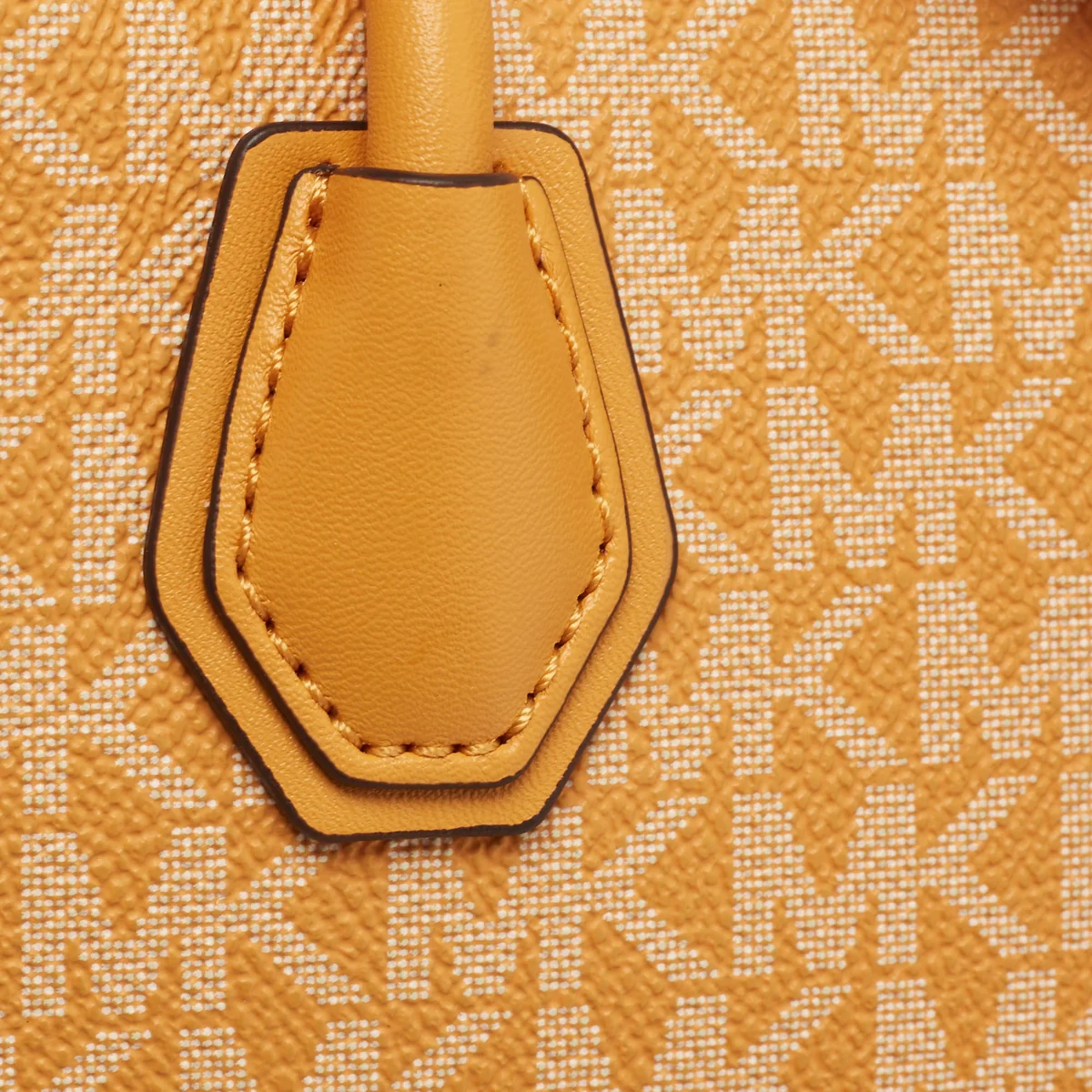
Materials are where a genuine MK bag earns its price tag, and where a fake usually gives itself away the fastest once you handle it in person.
Michael Kors bags use a mix of full-grain and coated leather (often marketed as “Saffiano” style textured leather) plus canvas on logo-print styles like the Jet Set line. Genuine leather has some give when you press it; it’s not stiff or board-like, and it doesn’t smell like chemicals or fresh plastic. Coated leather still has a slight texture and sheen that reads as intentional, not glossy in a way that looks like vinyl. On canvas styles, the logo print should be sharp, evenly saturated, and consistent in scale across every panel, with no bleeding or blurring at the edges.
Fakes cut corners here in a way that’s hard to hide. I’ve picked up counterfeit MK bags that felt almost hollow, with leather (or “leather”) that creases sharply and stays creased, unlike the softer rebound of genuine hide. Canvas on fakes often looks slightly off in color, usually a shade too yellow or too flat, and the printed logo pattern can be noticeably lower resolution up close, sometimes pixelated at the edges of each letter.
Hardware quality tells the same story. Genuine zippers, buckles, and feet have real heft; they’re cold to the touch and don’t flex when you press them. Fake hardware often feels light, almost like coated plastic, and tarnishes or shows brassy wear through the plating within weeks of use. If a “leather” bag feels suspiciously light for its size, that’s worth trusting as a signal, not dismissing.
Inspect Stitching, Hardware and Interior Details#
Once you’re past the logo and the material, the stitching and interior are where I spend the most time, because they’re genuinely hard to fake well.
Stitching on an authentic Michael Kors bag is straight, even, and tight, with consistent stitch length running the full seam. Thread color matches the bag material precisely, and there are no loose threads, skipped stitches, or visible glue seeping out from under a seam. Corners and handle attachment points, which take the most stress, are reinforced and neatly finished rather than bulky or puckered.
Counterfeits tend to slip in exactly these high-stress areas. I look at the base seams and handle tabs first, since that’s where sloppy machine work and rushed assembly show up fastest: wavy stitch lines, thread that doesn’t quite match the leather, or stitches that are too widely spaced. Zippers matter just as much as stitching. Genuine YKK or MK-branded zippers glide smoothly with no catching, and the pull tab sits flush. Fake zippers often stick, feel gritty, or have a pull tab that wobbles loosely on its loop.
Inside, check the lining fabric and the interior tag. Authentic bags use a lining that’s consistent in texture and color with no loose fibers, and the brand tag (fabric or leather, depending on the style) is sewn into the seam, not glued on top of it. Text on that interior tag should be crisp, correctly spelled, and centered. I’ve seen fakes with interior tags that are noticeably crooked, printed with a slightly wrong font weight, or, occasionally, missing the “Made in [Country]” text that should accompany the MK branding.
Verify Serial Numbers, Care Cards and Packaging#
This is the step people skip, and it’s often the fastest way to confirm or rule out a fake, especially when buying secondhand.
Most Michael Kors bags carry a leather patch or tag sewn inside, stamped with a date code or serial number, typically a combination of letters and numbers rather than a random string. The stamping should be clean and legible, pressed evenly into the leather with consistent depth on every character. On fakes, this number is often smudged, unevenly spaced, printed rather than embossed, or simply absent altogether, which on its own is a strong warning sign for any bag claiming to be authentic.
New bags should also come with a care card that matches Michael Kors’ actual branding, layout, and language (correct logo placement, no typos, consistent font). It’s a small detail, but counterfeiters frequently get the exact wording or logo proportions on these cards slightly wrong, because they’re copying a scan rather than the original print file.
On packaging: genuine MK dust bags are made of a soft flannel-like fabric with the logo printed or embroidered cleanly, and boxes (when included) have sturdy construction with accurate branding. That said, I’ll be straightforward here: dust bags and boxes are the easiest part of a fake setup to fake convincingly, since they’re mass-produced and cheap to replicate. Never rely on packaging alone to confirm authenticity. Treat it as supporting evidence, not the deciding factor, and always weigh it against the logo, materials, and stitching checks above.
Where to Buy Authentic Michael Kors Bags Safely#
The single most reliable way to avoid a fake is to control where you buy, before you ever get to inspecting the bag in hand.
For new bags, stick to Michael Kors’ own website and flagship or outlet stores, or major department stores that carry the brand as an authorized retailer (think Nordstrom, Bloomingdale’s, or similar established names in your region). These channels source directly from Michael Kors and don’t carry counterfeit risk in any meaningful way.
For secondhand or resale, the retailer matters more than the price. Vetted resale platforms and consignment sellers that authenticate every item before listing, rather than just taking a seller’s word for it, are worth the extra step of research. Look specifically for platforms that disclose their authentication process (in-house experts, third-party verification services, or a documented multi-point check) rather than a vague “guaranteed authentic” badge with no explanation behind it. A platform that shows you close-up photos of the logo, hardware, and interior tag before you buy is doing you a favor; take advantage of it and cross-reference those photos against the checks in this guide.
I’d treat marketplaces with open, unmoderated seller listings (certain peer-to-peer apps and auction sites) as higher risk, not because every seller there is dishonest, but because there’s often no verification layer between the listing and your payment. If you do buy from an individual seller, ask for close-up photos of the interior tag, the embossed logo on hardware, and the stitching at the base seam before committing, and don’t be talked out of asking.
FAQ: Spotting a Fake Michael Kors Bag#
What’s the fastest way to check if a Michael Kors bag is real? Check the hardware logo first. Run a fingernail over the “Michael Kors” text on the zipper pull or medallion; it should feel embossed or engraved, not flat. Pair that with the interior tag stitching (sewn in, not glued) for a quick two-point check.
Do all authentic Michael Kors bags have a serial number? Most do, stamped on a leather patch inside the bag, but exact placement and format have varied across collections and years. If a bag has no serial number or date code at all and is being sold as authentic, treat that as a warning sign worth investigating further before buying.
Can a fake Michael Kors bag still have a “real” dust bag or box? Yes. Packaging is one of the easiest elements for counterfeiters to replicate convincingly, so a nice dust bag or box proves very little on its own. Always verify the bag itself using the logo, material, and stitching checks rather than relying on packaging.
Is it normal for the Michael Kors logo to look different across bag styles? Yes, MK has used multiple logo variations over the years, including the full wordmark, the “MK” turnlock, and different circular medallions. Confirm which branding is correct for that specific silhouette and release period before assuming it’s wrong.
Are secondhand Michael Kors bags riskier to buy than new ones? They carry more counterfeit risk simply because there’s no direct brand relationship in the transaction, but buying from a resale platform that authenticates every item before listing brings that risk close to buying new. The retailer’s verification process matters more than whether the bag is new or secondhand.
Related Articles#
- How to Spot a Fake Burberry Bag: Full Guide
- How to Spot a Fake Fendi Handbag: Authentication Guide
- How to Spot a Fake Neverfull: Authentication Guide
- How to Spot a Fake Goyard Bag: Expert Guide
- How to Spot Fake Christian Louboutin Shoes: Guide


Keyword index