Introduction#
Scroll through any red carpet gallery, wedding album, or Dubai nightlife feed and you’ll spot at least one flash of red sole before you notice the dress. Christian Louboutin built one of the most recognizable signatures in fashion, and that recognition is exactly why the brand is one of the most counterfeited shoe labels on the planet. Market stalls, resale apps, and “too good to be true” Instagram sellers are flooded with fakes that range from laughably bad to genuinely convincing.
I’ve handled hundreds of pairs over the years, authentic and fake, and the gap between them has narrowed. The best counterfeits now get the silhouette right, the box looks decent in photos, and the red paint job can fool a quick glance. That’s the problem: casual inspection isn’t enough anymore. If you’re buying secondhand, from a private seller, or from any platform that isn’t the brand itself or a vetted luxury reseller, you need a checklist, not a hunch.
This guide walks through exactly where fakes fall apart, based on hands-on comparison of genuine and counterfeit pairs. None of these checks require special tools, just patience and knowing where to look.
Check the Packaging: Box and Dustbag#
Packaging is often the first thing buyers check and the first thing counterfeiters get sloppy with. It’s also the easiest thing to fake convincingly, so treat it as a starting point, not the final word.
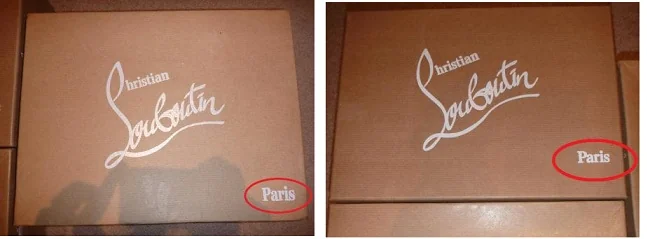
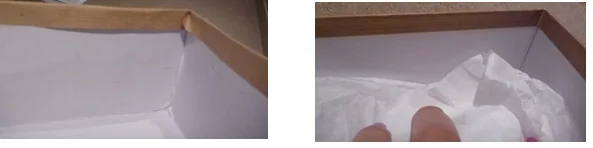
The box. Authentic Louboutin boxes carry “Christian Louboutin” with “Paris” printed directly beneath it, centered on the lid in a clean, consistent font. On fakes, I regularly see the text slightly off-center, the font weight too bold or too thin, or awkward spacing between letters. Flip to the sticker: genuine boxes carry a label with the style name, European size, barcode, and the Christian Louboutin logo. Counterfeit boxes frequently skip this sticker entirely or use a blank, generic one. Build quality matters too. A real box feels sturdy, the cardboard is rigid, and the paper lining is glued down flat with no lifting corners. Fakes tend to feel flimsy, with dented corners and lining that’s visibly loose or bubbling.
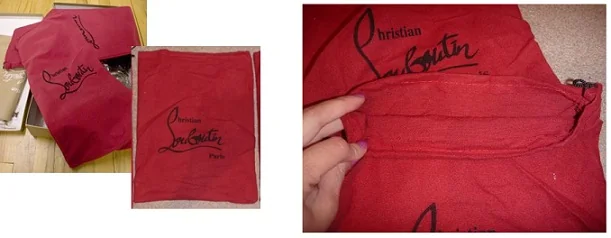
The dustbag. This is where I’ve caught more fakes than almost anywhere else. Authentic dustbags come in a specific cherry red, not the brighter cardinal red or muted maroon you’ll see on counterfeits. “Christian Louboutin” and “Paris” should sit in a straight, evenly spaced line, not tilted or crowded. Feel the fabric: genuine dustbags use a soft, high-denier cotton with overlocked (finished) seams and a proper drawstring closure. Cheaper fakes use thin, almost papery cotton with raw, fraying edges and uneven machine stitching. If the bag feels scratchy or the seams look hand-rushed, that’s a bad sign.
One honest caveat: packaging alone doesn’t guarantee authenticity. Sellers sometimes pair a real box with fake shoes, or vice versa, especially in secondhand markets. Use packaging as one data point, then move to the shoe itself.
Inspect the Signature Red Sole#
The red sole is Louboutin’s trademark and, unsurprisingly, the hardest single feature for counterfeiters to nail perfectly.
Authentic soles are leather, not plastic, and have a smooth, slightly matte-to-satin finish rather than a glossy or rubbery sheen. The red itself is a proprietary shade that Louboutin mixes specifically for this purpose, and it’s genuinely difficult to replicate exactly. On fakes, I’ve seen the color run too orange, too pink, or too dark, and occasionally with a visible grain or pattern in the paint that shouldn’t be there. If the sole looks like it’s coated in glossy plastic rather than painted leather, walk away.
Check the embossing. On genuine pairs, the Christian Louboutin logo, “MADE IN ITALY,” and the European size are pressed into the leather, not printed on top of it. Run a finger over it, you should feel a slight indentation. Printed logos on fakes sit flat on the surface and often smudge or fade faster.
There’s also a useful dating detail for older pairs: shoes made before 2007 carry a “Vero Cuoio” stamp on the sole and tend to show a brighter red. Post-2007 production shows the deeper red-toned sole along with the logo, “MADE IN ITALY,” and size stamp described above. If you’re looking at a pair claimed to be vintage, the stamping should match the era it’s supposed to be from.
Examine Interior Markings and Insole Details#
The insole is where craftsmanship shortcuts show up fastest, and it’s an area a lot of buyers skip because it’s less photogenic than the sole.
Look at how the insole meets the shoe’s upper. On authentic pairs, it’s aligned precisely with the edge of the shoe and properly sealed, with no visible gaps or lifting. On fakes, the insole is frequently cut unevenly, sits slightly askew, or has adhesive visible at the edges.
The logo stamped or printed on the insole should be crisp and clearly defined, with correct spacing and font weight matching official branding. I’ve seen counterfeit insole logos that are thicker than they should be, smudged, or already flaking off on a “brand new” pair, which tells you everything about the print quality used. If the shoe has embellishments like crystals or sequins near the insole or upper, check that each piece is fully adhered and evenly placed. Loose or crooked embellishments are a common tell.
Size stamps and any serial or batch markings should be clean, legible, and consistent with the sizing system used across the rest of the shoe (the sole, the box sticker, and the insole should all agree on size). Mismatched sizes between the box and the shoe itself is an immediate red flag.
Assess Stitching, Materials and Craftsmanship#
Christian Louboutin shoes are made in Italy, and that manufacturing standard should be visible in every seam.
Stitching should be tight, even, and consistent in length throughout the shoe. Counterfeiters often struggle here: look for doubled-up stitching where a single line would do, thread that varies in tension, or stitches that are noticeably larger and less uniform than what you’d expect on a luxury shoe. It’s a small detail but a reliable one, because it’s hard to fake consistently across an entire pair.
Leather quality is the other major giveaway. Genuine uppers use properly cut, well-shaped leather that sits smoothly against the last with no rippling or puckering. Fakes frequently use lower-grade leather (or leather substitutes) that ripples or bunches, especially around the toe box and heel. Hardware, buckles, straps, embellishment settings, should feel substantial. Cheap zinc or aluminum hardware feels noticeably lighter and can look dull or slightly discolored compared to the weight and finish of the real thing.
None of these checks require expertise you don’t already have as a careful shopper, they just require slowing down and looking at the shoe the way a quality control inspector would, not the way a buyer excited about a deal would.
Red Flags in Price, Seller and Listing#
Even a shoe that photographs well can be a fake if the surrounding listing raises questions.
Price. Louboutin doesn’t discount significantly, and resale prices for popular styles hold up reasonably well. A pair listed at a fraction of retail, especially a current-season style, is the single biggest signal something’s wrong. There’s a difference between a fair secondhand discount and a price that only makes sense if the shoes aren’t real.
Seller history. On resale platforms, check the seller’s account age, review history, and whether they’ve sold other Louboutin pairs or luxury items consistently. A brand-new account with a single “too good to be true” listing deserves extra scrutiny. On social media or through direct messages, be wary of sellers who resist video calls, refuse to send additional photos, or push you to complete payment quickly outside a platform’s buyer protections.
Listing details. Genuine sellers, especially those reselling, tend to have specific, styleaccurate photos: sole close-ups, insole shots, box and dustbag included. Vague stock photos, stolen images (a reverse image search can catch this), or a description that avoids naming the exact style are warning signs. Also watch for sellers who claim “no box or authenticity card because it was a gift” as a blanket excuse to avoid providing verifiable details.
None of these signs are proof on their own, but two or three together should make you pause and dig deeper before paying.
Buying Advice: Where to Shop with Confidence#
The safest way to buy Christian Louboutin is directly from the brand’s boutiques or official website, where authenticity is guaranteed by definition. Beyond that, your risk level depends heavily on where you shop.
Reputable [luxury resale platforms](/buying-guides/best-places-to-buy-luxury-accessories-online/) and consignment houses that authenticate inventory in-house are your next best option. Look for platforms that explicitly state their authentication process, ideally involving specialists who physically inspect stitching, materials, and hardware rather than relying on photos alone. These platforms typically charge a premium over unverified marketplaces, and that premium is essentially what you’re paying for: risk reduction.
If you’re buying from a private seller or a general marketplace, treat it as a negotiation for information, not just price. Ask for:
- Close-up photos of the sole, insole, size stamp, and any interior tags, taken in natural light
- The original receipt or proof of purchase, if available
- A short video call or additional live photos on request, which most legitimate sellers will accommodate without hesitation
- Confirmation of the exact style name and size, which you can then cross-check against official Louboutin product listings
Third-party authentication services (either standalone authenticators or ones built into certain resale platforms) are worth the fee for a high-value purchase, particularly for rare or vintage styles where visual authentication is harder. It’s a small cost relative to the price of the shoe and the alternative of being stuck with a counterfeit.
My honest take after years of doing this: if a seller is reluctant to provide any of the above, that reluctance is itself the answer. A legitimate seller has nothing to hide and usually welcomes the scrutiny, because it helps them sell faster too.
FAQ#
Do all Christian Louboutin shoes have red soles? Yes. The red lacquered sole is the brand’s signature across essentially the entire footwear line, from pumps to sneakers to flats. A Louboutin-branded shoe without any red sole treatment at all should be treated as suspicious.
Is the red sole painted or dyed into the leather? It’s painted onto a leather sole in a proprietary shade developed specifically for the brand. The finish is smooth, not glossy-plastic and not textured or patterned. Any visible pattern, streaking, or an obviously synthetic sheen is a strong sign of a counterfeit.
Can I authenticate Louboutins from photos alone? Partially. Photos of the sole embossing, insole alignment, stitching, and box sticker can rule out obvious fakes, but the best counterfeits require an in-person or video inspection to catch details like leather texture and hardware weight. For high-value purchases, don’t rely on photos alone.
Does missing the box or dustbag mean the shoes are fake? Not necessarily. Plenty of authentic secondhand pairs lose their original packaging over time. But it does remove one layer of verification, so you’ll need to rely more heavily on the sole, insole, and craftsmanship checks in this guide.
What’s the difference between pre-2007 and post-2007 soles? Pairs made before 2007 carry a “Vero Cuoio” stamp and typically show a brighter red sole. Shoes made after 2007 show the deeper red tone along with the Christian Louboutin logo, “MADE IN ITALY,” and the European size embossed on the sole. If a seller claims a pair is from a specific era, the stamping should match.
Are all counterfeit Louboutins low quality? No, and that’s the concerning part. Higher-tier counterfeits (“superfakes”) can get the box, dustbag, and general shoe shape convincingly close. This is exactly why relying on a single check, like the box alone, isn’t enough. Cross-referencing sole texture, embossing depth, insole alignment, and stitching consistency together gives a far more reliable picture.
Where’s the safest place to buy secondhand Louboutins? Authenticated luxury resale platforms or consignment stores with an in-house verification process are the safest middle ground between full retail price and the higher risk of unmoderated marketplaces or private sellers.
Related Articles#
- How to Spot a Fake Burberry Bag: Full Guide
- How to Sell Luxury Items Online: The Luxury Closet Guide
- How Pre-Owned Luxury Fashion Is Reshaping the Industry
Related guides
- Online Bag Authentication: What Photos Can and Cannot Prove
- Fake Goyard Bag Guide: How to Spot Real vs Fake (2026)
- How to Spot a Fake Chanel Flap Bag: Authentication Guide
- How to Spot a Fake Hermès Birkin: Expert Checklist
- How to Buy an Authentic Luxury Bag from China Safely
- New vs Pre-Owned Luxury Bags: Which Route Is Right for You?
- Chanel Bag Guide: What to Know Before You Buy
- Luxury Bag Houses


Keyword index