Introduction: Why Authenticity Matters for Goyard#
Goyard occupies a strange corner of the luxury market. It doesn’t run ad campaigns, doesn’t court influencers, and doesn’t sell through its own website. That silence is precisely what makes the brand desirable, and precisely why so many counterfeits exist. When a house refuses to explain itself, buyers are left to figure out the details on their own, and counterfeiters exploit that information gap.
I’ve handled enough Goyard pieces, real and fake, to know the difference usually comes down to details most shoppers never think to check: the weight of the canvas, the way a hand-painted line wavers slightly, the placement of a serial number. None of these are things you can verify from a listing photo alone. If you’re researching how to spot a fake Goyard bag before buying new or on the resale market, this guide walks through what actually matters, not the generic tips repeated across forums.
The Goyard Brand: Rarity, Discretion and Why It’s Hard to Verify#
Goyard’s story starts earlier than most people assume. The house traces back to 1792 as Maison Martin, a trunk-making business founded by Pierre-François Martin. François Goyard took over the company in 1853, a year after [[[[Louis Vuitton](/buying-guides/best-white-designer-dresses-2025/)](/authentication/how-to-spot-a-fake-louis-vuitton-bag/)](/buying-guides/most-popular-louis-vuitton-bags-2026/)](/brands/louis-vuitton-neverfull-insider-retail-story/) opened its own doors, and renamed it. So while Goyard is often treated as the “quieter cousin” of the big French houses, it’s actually one of the older ones.
What sets Goyard apart today is its deliberate lack of visibility. There’s no e-commerce, no official social media presence, and no press outreach announcing new releases. For years, the brand’s US footprint was limited to a standalone boutique in San Francisco (closed in 2015) and a flagship in New York, supplemented by occasional shop-in-shop placements at select department stores. That’s it. No seasonal drops, no online catalog to cross-reference.
This scarcity is the whole point of the brand, but it’s also exactly why authentication is harder for Goyard than for a brand like Louis Vuitton, which publishes detailed product information and sells directly online. With Goyard, there’s no manufacturer database to check a serial number against, no official size chart to confirm proportions. You’re relying entirely on craftsmanship literacy, which is why a checklist matters more here than almost anywhere else in luxury.
Check the Silhouette: Iconic Goyard Styles#
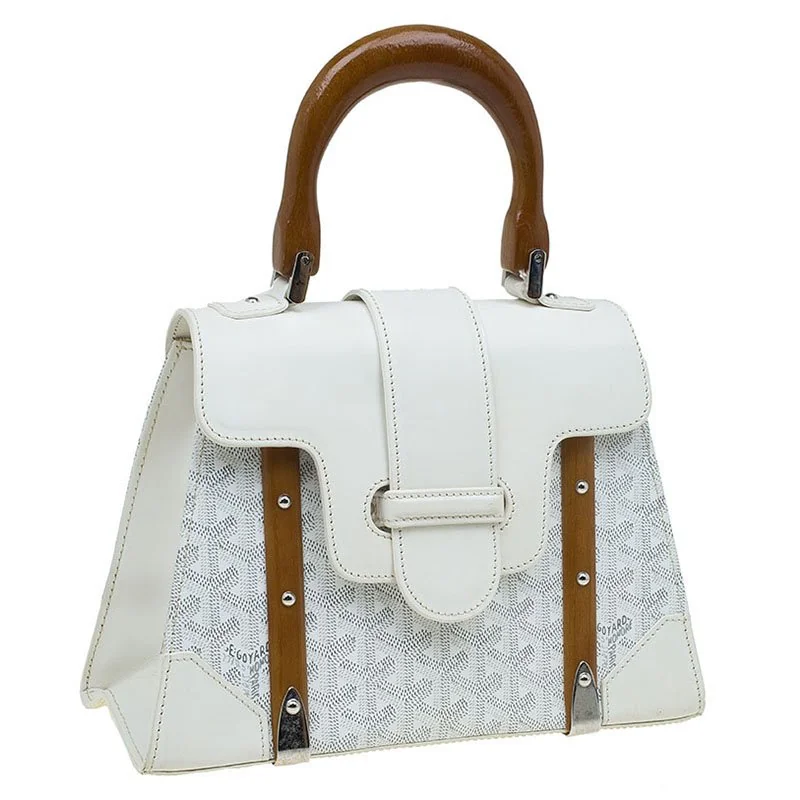
Goyard doesn’t chase trends, and that works in your favor as a buyer because the brand’s catalog of shapes is small and consistent. The St. Louis tote is the bag most people encounter first: lightweight, collapsible, sold in more than one size, and cut with a simple, boxy silhouette that hasn’t changed dramatically in years. The Saigon, by contrast, sits at the top of the range, with a rigid structure, wood detailing on some versions, and noticeably more hand-finishing.
Counterfeiters tend to get proportions wrong more often than you’d expect. A fake St. Louis might have handles that sit too high, a base that’s too rounded, or a body that’s slightly boxier or slouchier than the real thing. If a silhouette looks “close enough” but not quite right when compared to verified authentic photos, trust that instinct. Goyard’s limited style range means there’s very little excuse for a bag to look off-model; the brand simply doesn’t produce that many shapes to confuse.
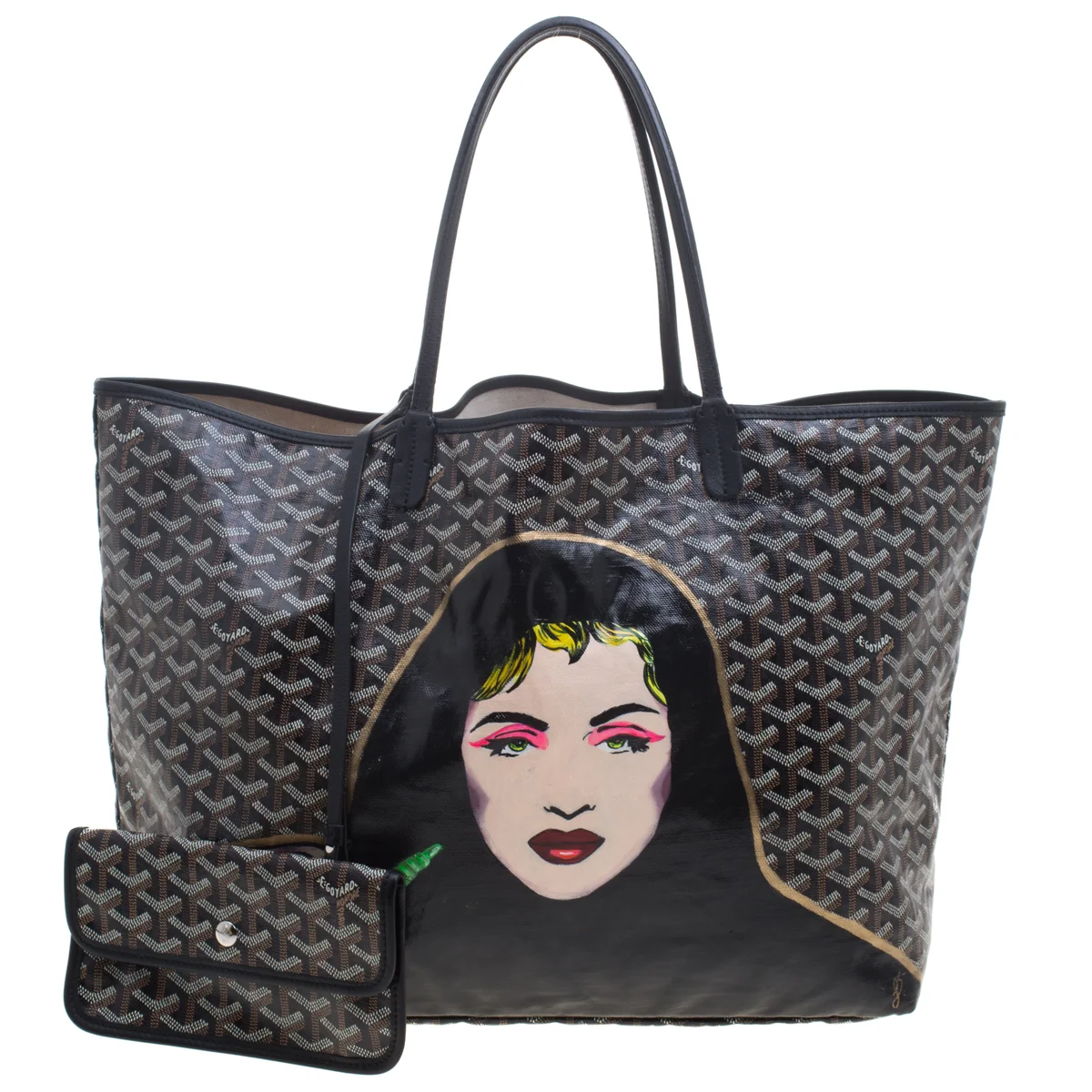
On pricing structure: standard colorways, like black-on-black or classic tan with contrasting trim, sit at one price point. Bags in less common colors or with custom personalization command a premium, since those combinations involve additional hand-painting work. A “rare colorway” priced suspiciously low is a red flag worth remembering later in this guide.
Examine the Goyardine Canvas and Print#
This is where authentication either succeeds or falls apart, and it’s the detail I always check first. Goyard’s signature chevron print, the Goyardine, is hand-stencilled, not printed digitally. That means on a genuine bag, you should be able to see the texture of the canvas grain coming through the paint, along with a glossy base layer contrasting against the matte finish of the painted chevron pattern.
Look closely at the print alignment. On an authentic bag, the pattern will show tiny, human inconsistencies: a slightly uneven line, minor variation in paint saturation across the surface. That’s not a flaw, it’s proof of hand craftsmanship. Counterfeits, especially the better-made ones, tend to have a print that’s too perfect, too flat, and applied in a single uniform plane with no textural depth. If the chevrons look laser-crisp and identical from panel to panel, be suspicious.
Color consistency matters too. Genuine Goyardine canvas has a certain richness and depth to its base color that’s difficult for counterfeiters to replicate cheaply, since the process is labor-intensive by design. Faded, flat, or overly saturated canvas colors are common tells on fakes.
Inspect Hardware, Stitching and Leather Trim#
Goyard’s hardware philosophy is minimalism, and that’s actually a gift to authenticators because fakes almost always overcompensate. Genuine zipper pulls and clasps rarely carry bold branding; you’re more likely to see a simple “G” or a discreet Goyard stamp tucked on the underside of a hardware piece rather than a large, obvious logo on the front. If a bag’s hardware is shouting the brand name, that’s already a warning sign.
Stitching should be tight, even, and precise, with no loose threads or visible glue residue along the seams. Leather piping and trim, whether on handles or edges, should feel supple rather than stiff or plasticky. I’ve handled fakes where the leather trim had that telltale synthetic sheen and stiffness that no amount of good photography can hide in person. Handles specifically deserve a close look: authentic Goyard handles have consistent stitching spacing and a leather that softens naturally with wear, not one that cracks or peels within months.
None of these details are things a counterfeiter skips entirely, they simply can’t match the labor cost of doing it correctly, so quality gaps show up under close inspection even when the overall silhouette looks convincing from a distance.
Verify Interior Tags, Personalization and Serial Details#
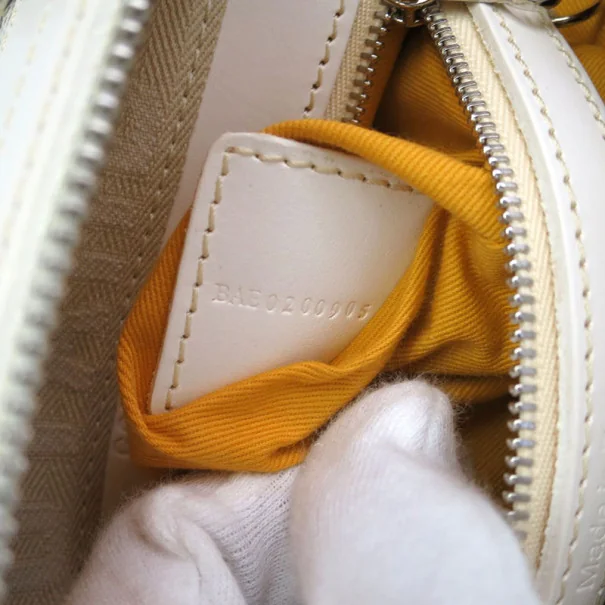
Inside the bag, Goyard uses a signature mustard-yellow cotton twill lining, historically paired with matching dust bags (older pieces used chocolate brown dust bags to coordinate with the boxes of that era). The interior is typically trimmed with jacquard webbing carrying an all-caps Goyard logo, and the stitching here should be just as clean and deliberate as on the exterior.
Serial numbers are placed discreetly and vary by bag era and style. On older St. Louis totes, the number is often found inside the included pouch. Newer styles tend to have it embossed where the leather strap meets the bag, the same strap that connects the pouch to the tote. The key detail: authentic serial numbers are small and unobtrusive. If the numbering on a bag you’re inspecting is large, bold, or easy to spot at a glance, that’s inconsistent with how Goyard actually marks its pieces.
Personalization is another area to scrutinize on resale pieces. Goyard offers hand-painted monogramming through its boutiques, and the quality of that painted initials work should match the same hand-stencilled character as the canvas print itself, not a printed or stickered addition. Sloppy, overly uniform, or poorly placed monogramming on a “personalized” bag usually means it was never done by Goyard at all.
Where to Buy an Authentic Goyard Bag Safely#
Given how little Goyard controls its own distribution, where you buy matters as much as what you inspect. The safest option is always a Goyard boutique directly, since there’s no ambiguity about sourcing. Beyond that, the brand’s very limited retail partnerships (currently centered on its own stores rather than wide department store distribution) mean you should treat any “authorized retailer” claim with scrutiny unless you can confirm it independently.
For resale, stick to platforms that provide in-house authentication by trained specialists rather than marketplaces where individual sellers list items with no verification layer. A legitimate resale platform will typically photograph the actual item for sale (not stock photos), disclose condition honestly, including flaws, and stand behind the authenticity of what they sell with some form of guarantee or return policy tied to verification.
Be wary of private sellers offering rare colorways or “personalized” pieces at a steep discount, especially when they’re unwilling to provide close-up photos of the interior tags, serial placement, or canvas texture. A seller confident in a bag’s authenticity won’t hesitate to show you those details before you buy.
Frequently Asked Questions#
Is a very low price always a sign of a fake Goyard? Not always, but it’s the single biggest red flag. Because Goyard doesn’t discount through official channels and resale demand stays high even for older pieces, a price significantly below typical resale value for that style and condition should prompt closer inspection, not excitement.
Should I use a third-party authentication service? Yes, particularly for a purchase at this price point. Independent authentication services and reputable resale platforms with in-house specialists can catch details, like stencilling texture or hardware stamping, that are hard to judge from photos alone. It’s a small cost relative to the risk of buying a counterfeit.
Can I authenticate a Goyard bag from photos alone? It’s possible to catch obvious fakes this way, but subtler counterfeits require in-person inspection or high-resolution close-ups of the canvas texture, interior tags, and serial number area. If a seller can’t or won’t provide these, treat it as a warning sign.
Does Goyard offer its own authentication service? No. Goyard doesn’t operate a public authentication program the way some brands do, which is part of why buying from a boutique or a platform with independent verification matters so much for resale purchases.
Are all Goyard styles equally faked? The St. Louis tote is counterfeited far more often than the Saigon or other structured styles simply because it’s the most recognizable and most purchased. That popularity makes St. Louis authentication checks especially important if you’re buying one on the resale market.
Related Articles#
- Designer Handbag Trends 2025: What’s Actually Worth Buying
- How to Sell Luxury Items Online: The Luxury Closet Guide
- How to Spot a Fake Neverfull: Authentication Guide
- Best It Bags to Buy This Year: A Definitive Guide


Keyword index