Your Quintessential Luxury Handbag: Louis Vuitton Alma #
Introduction: Why the Alma Endures #
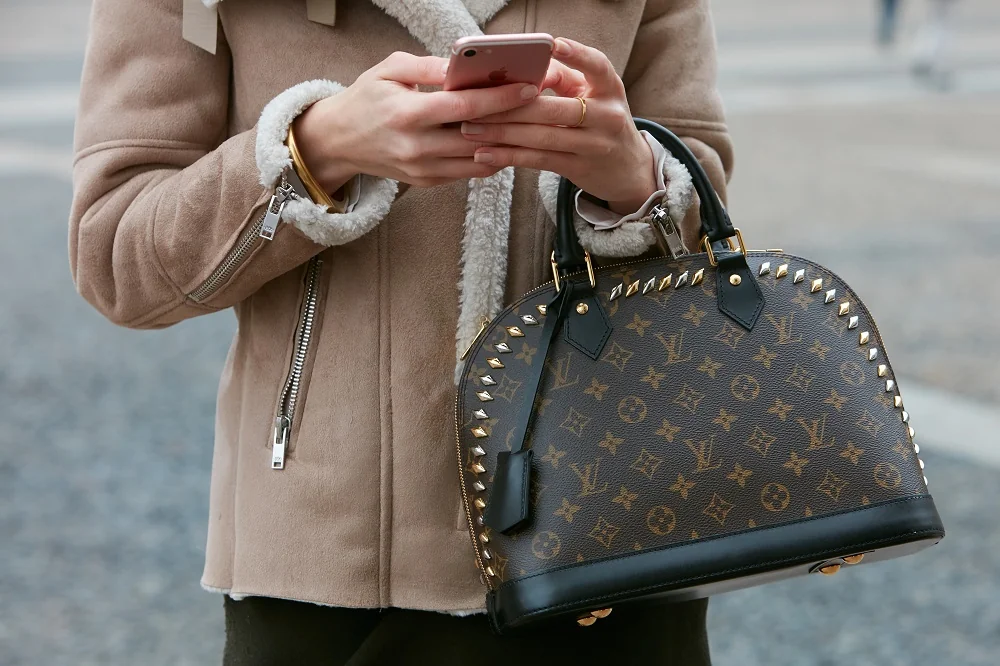
Some handbags become trends. The Louis Vuitton Alma bag became furniture — the kind you inherit, argue over, and never quite get rid of. It has been on the arm of everyone from Audrey Hepburn to Nicki Minaj, and it still appears regularly in the windows of every Louis Vuitton boutique on earth, season after season, without apology.
That kind of longevity doesn’t happen by accident. The Alma is one of the few bags in the luxury market that was genuinely engineered to last — not just physically, but aesthetically. It has been revisited by collaborators from Takashi Murakami to Stephen Sprouse, produced in everything from mirror-finish vinyl to ostrich skin, and scaled from a palm-sized Nano to a substantial travel bag — yet its identity has remained remarkably intact throughout.
If you’re considering buying an Alma — whether you’re walking into a Louis Vuitton boutique for the first time or shopping pre-owned with a specific size and canvas already in mind — this guide is built for that decision. We’ll cover the history, every size, every major canvas option, honest trade-offs, resale dynamics, and a clear recommendation for different buyer profiles.
A Brief History: From the Squire to the Alma #
The Alma’s origin story is one of the more satisfying in luxury handbag history, partly because it involves Coco Chanel commissioning a competitor.
In 1925, Coco Chanel asked Gaston-Louis Vuitton — grandson of the founder — to create a travel-sized day bag. The result was the Squire, a compact, structured piece derived from the trapezoidal Steamer trunk bag that Louis Vuitton had introduced in 1901. The Squire was disciplined and functional: it had the house’s signature rigidity but was scaled for daily life rather than a sea voyage.
Three decades later, in 1955, the Squire was reimagined into a more architectural form and renamed the Champs-Élysées — a nod to the urban sophistication it was meant to embody. It was produced regularly from the1930s onward, with Chanel’s blessing, but the name Champs-Élysées was eventually retired.
The bag we know today as the Alma — officially named after the Place de l’Alma, the Parisian intersection where the Avenue Montaigne meets the Seine — carries that entire lineage in its silhouette. The art deco influence is deliberate: those clean, upward-curving lines, the rigid base, the sense of geometric discipline softened by rounded edges. It’s a bag that was designed to look like it belongs in a city, specifically one city.
That backstory matters when you’re spending north of $1,500. It’s not mythology manufactured by a marketing team — it’s one of the more genuinely documented narratives in fashion history.
Design DNA: What Makes the Alma Instantly Recognisable #
The Alma has a handful of design details so consistent across versions and decades that they function almost as a logo on their own.
The bell silhouette. The bag is widest at its curved base and tapers upward, giving it a shape that’s distinctive from across a room. It’s the opposite of most structured bags, which tend to be boxy or trapezoidal. The Alma’s proportions feel almost sculptural.
The Toron handles. Double rolled leather handles — the same hardware-and-leather construction used on LV trunks — sit high on the frame. They are elegant and genuinely comfortable to carry, though they’re not adjustable and are designed for hand or crook-of-elbow carry only. There is no shoulder-strap attachment on the PM, MM, or GM.
The padlock. Every Alma comes with a brass padlock and two keys on a leather tag. On the Nano and BB, it functions as more of a decorative element; on the PM and above, it actually secures the bag. It’s one of the details that communicates heritage most clearly.
The rigid structure. This is worth addressing honestly, because it defines both the appeal and the limitations of the bag. The Alma holds its shape completely — it will never sag, slouch, or collapse into itself. This is wonderful for preservation and for a polished appearance. It is less wonderful when you need to quickly access your phone mid-conversation, because the top-entry opening requires two hands to unzip, pull back the canvas, and reach inside. Daily users consistently cite this as the Alma’s main friction point.
Weight. The rigid frame and canvas construction mean the bag has meaningful baseline weight before anything goes inside. Fill an Alma PM with a tablet, a full wallet, sunglasses, a water bottle, and a cosmetics pouch, and you’re carrying something substantial. This is a real trade-off, particularly for anyone with shoulder or back issues, given that the larger sizes have nostrap option.
Structured shape and versatility. The Alma’s silhouette is unmistakably formal. It reads as polished and intentional in almost every context — which is an asset at work and at dinner, and a mild obstacle when you want to look effortless at a weekend brunch. It is not a “throw-it-on-and-go” bag the way a Speedy or a Neverfull can be.
These are not reasons to avoid it. They are reasons to buy it knowing exactly what you’re getting.
Size Guide: Nano, Mini, BB, PM, MM and GM Compared #
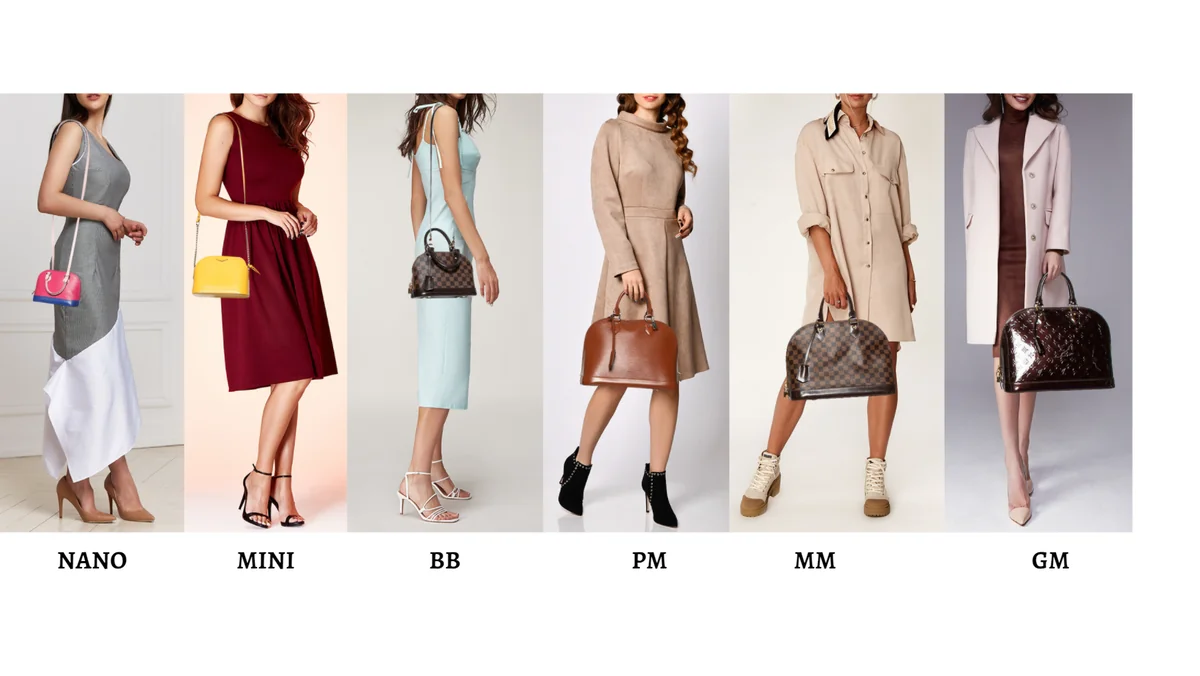
The Alma family currently spans six sizes, and the differences between them are more than just scale — each size serves a genuinely different purpose.
| Size | Dimensions (W × H × D) | What Fits | Best For | Strap Option |
|---|---|---|---|---|
| Nano | 17 × 12 × 8 cm | Cards, phone, lipstick, keys | Evening, statement accessory | Yes (chain) |
| Mini | 21 × 16 × 10 cm | Phone, slim wallet, small essentials | Party, capsule carry | Yes (chain) |
| BB | 23.5 × 17.5 × 11.5 cm | Phone, full wallet, keys, lip gloss, small sunglasses | Lunch, light weekend, travel days | Yes (adjustable leather) |
| PM | 32 × 25 × 16 cm | Phone, wallet, sunglasses, notebook, cosmetics pouch | Daily use, work, travel | No |
| MM | 36 × 28 × 17 cm | Full-day contents, A4 documents, small tablet | Work, commute, day travel | No |
| GM | 39 × 29 × 18.5 cm | Laptop, full travel day kit, large organiser | Weekend travel, heavy work days | No |
A few honest observations on sizing:
The BB is the sweet spot for many buyers who want the Alma’s silhouette without committing to a large structured bag. It comes with a detachable shoulder strap — a significant practical advantage — and its proportions are flattering on most frame types. The trade-off is capacity: if you carry more than the basics, you’ll feel the constraints within a week.
The PM is the most widely purchased size, and there’s a reason for that. It holds a full day’s contents while maintaining proportions that feel purposeful rather than bulky. The absence of a shoulder strap is the real consideration here — you are hand-carrying or crook-of-elbow carrying, full stop. For some buyers that’s a pleasure; for others, it becomes limiting.
The MM and GM are genuinely workhorses, but they tip into substantial territory. Unless you regularly carry documents or need real volume, the PM will serve most people better.
The Nano and Mini are fashion pieces first. Buy them if you love the silhouette and want it in miniature — not because you need to carry anything.
Canvas and Material Options: Which to Choose #
The Alma has been produced in nearly every material in Louis Vuitton’s archive. The core options you’ll encounter at retail and in the pre-owned market are these:
| Canvas / Material | Durability | Care Requirements | Price Tier | Resale Strength | Personality |
|---|---|---|---|---|---|
| Monogram Canvas | Very high | Low (wipe clean) | Mid | Strong | Classic, recognisable, heritage |
| Damier Ebène | Very high | Very low | Mid | Strong | Understated, city-smart, water-resistant |
| Damier Azur | High | Moderate (light canvas shows dirt) | Mid | Moderate-strong | Fresh, resort, seasonal |
| Epi Leather | Exceptional | Low | High | Very strong | Minimal, modern, colour-forward |
| Vernis | Moderate | High (colour transfer, scratches) | High | Moderate | Statement, glamorous, high-maintenance |
| Special/Limited Editions | Varies | Varies | Premium | Variable (often high for sought-after collabs) | Collector, archival |
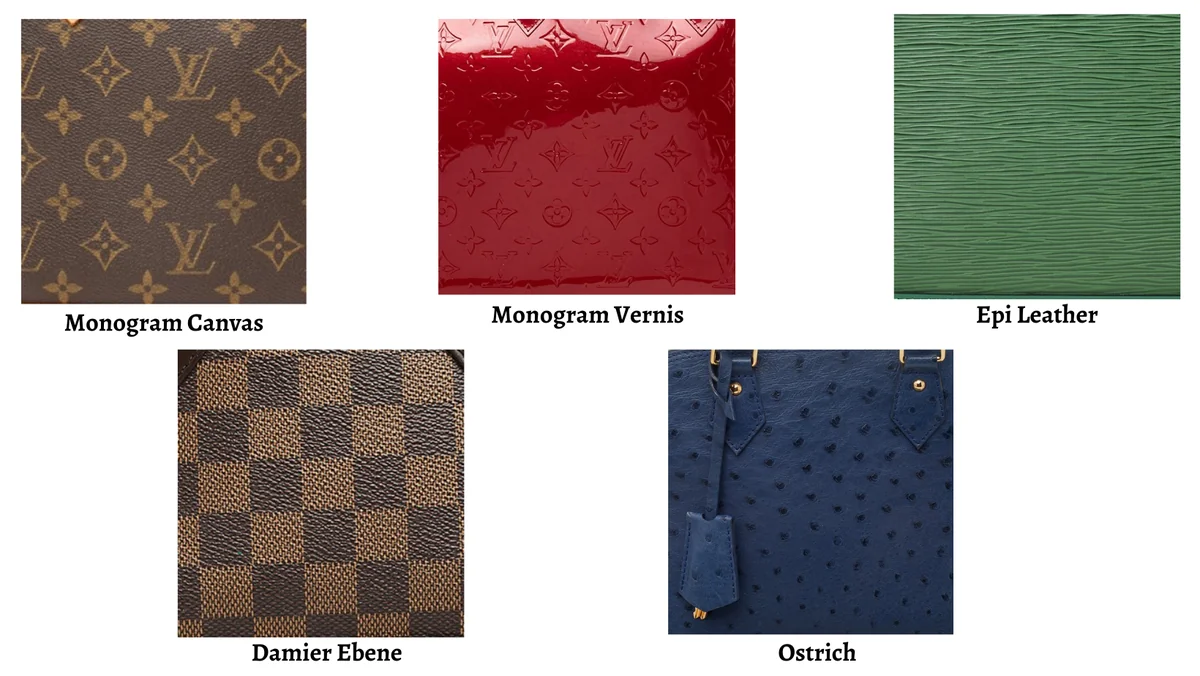
Monogram Canvas is the entry point and the benchmark. The coated canvas is genuinely hardwearing — far more so than most leathers — and it requires almost no maintenance beyond wiping down. The vachetta leather trim (handles and base piping) will patina over time, which some buyers love and others find unpredictable. If you’re unsure where to start, this is the responsible choice.
Damier Ebène is, in my view, the most practical option for everyday use. The dark check pattern conceals minor marks, the canvas is weather-resistant, and it reads as quietly expensive rather than loudly branded. If you work in a professional environment where loud logos feel performative, Damier is worth considering seriously.
Damier Azur is the most season-specific of the main canvases. It photographs beautifully and it’s genuinely lovely in warm weather, but it shows dirt and colour transfer more readily than the darker options, and it reads as occasional-use rather than year-round.
Epi Leather is where the Alma transforms into something close to modern minimalism. The embossed leather grain is subtle, the structure feels luxurious, and the colour range — red, black, navy, white, and seasonal additions — is among the most satisfying in the LV catalogue. It costs more at retail, holds value exceptionally well on the secondary market, and it wears differently from anything else in the line. If you’re considering a second Alma, Epi is almost always the right answer.
Vernis is beautiful and high-risk. The patent lacquer finish is striking, but it is susceptible to colour transfer from denim and dark fabrics, and it scratches. Buy Vernis knowing you will handle it carefully.
How to Style the Alma #
The most common objection to the Alma is that it’s too formal, too structured, or somehow dated. This is a reasonable concern that dissolves once you actually wear the bag.
For work: The PM in Damier Ebène or Epi leather is one of the most effective professional bags available. It sits cleanly on a desk, it holds what you need, and it projects a level of considered taste that a logo-heavy tote rarely achieves. Pair it with tailoring, a midi dress, or clean-line separates. It does the work without demanding attention.
For travel: The GM carries like a dream through airports — rigid structure means contents stay organised and the bag maintains its shape regardless of what you pack. More practically, the PM fits under most airline seats and holds an entire travel day’s worth of essentials. Monogram or Damier Ebène both travel well.
For evening: The Nano and Mini are built for this. Chainstrap, a few essentials, and the Alma’s sculptural silhouette becomes a genuine accessory rather than a functional object. Vernis in a deep jewel tone or a limited-edition version elevates the look significantly.
The’too formal’ question: The Alma reads formal because it has no soft edges. The solution is contrast — a structured bag against relaxed denim, a striped shirt, white trainers. The BB in particular works well with casual dressing because its proportions are smaller and the shoulder strap option makes the carry feel less deliberate. If you’re consistently wearing very relaxed, streetwear-adjacent outfits, the Speedy or Neverfull will feel more instinctive. But the Alma is more versatile than its reputation suggests.
Investment Value and Resale: Is the Alma Worth It? #
The honest answer is that the Alma is a solid value-hold rather than a standout appreciator — and that’s a perfectly respectable position for a bag to occupy.
Price trajectory: Louis Vuitton has raised its prices consistently over the past decade. An Alma PM in Monogram canvas that retailed below $1,200 ten years ago now retails closer to $2,000 or above, depending on current pricing in your region. This pattern shows no signs of reversing.
Resale strength: The Alma PM in Monogram canvas is among the most liquid pieces in the pre-owned LV market. It is recognisable, perpetually in production, and broadly desirable, which means it sells reliably but not at a significant premium over what you paid. Epi leather Almas — particularly in discontinued colours — command stronger resale multiples, especially in excellent condition.
Compared to the Speedy (faster resale, slightly lower prices) and the Neverfull (extremely liquid, almost always depreciates from retail unlessLE), the Alma occupies middle ground: slower to sell than the Speedy, but stronger on price retention.
Which versions hold value best:
- Epi leather in discontinued colours (red, fuchsia, indigo)
- Sought-after collaborations (Murakami Multicolore, Kusama iterations)
- Monogram PM in excellent condition with intact padlock and keys
- Limited runway editions in immaculate condition
Condition is everything. Vachetta leather trim on Monogram and Azur versions will darken with use — deep honey patina is desirable; dark, cracked handles are not. Expect a meaningful price reduction for any example with handle wear, canvas cracking, or missing hardware.
Investment Callout: If you’re buying primarily for value retention, prioritise Epi leather in a classic colour (black, red) in the PM size. It holds value more consistently than coated canvas, is less susceptible to condition issues, and has a secondary market that moves at a premium. Current retail for Epi PM runs approximately $2,500–$3,200depending on region; pre-owned examples in excellent condition typically resell at 70–85% of current retail, which compares favourably to most leather goods in this category.
Buying the LV Alma: New, Pre-Owned and What to Watch For #
Retail price context (approximate, subject to LV price adjustments):
- Alma BB (Monogram): ~$1,500–$1,800
- Alma PM (Monogram): ~$1,900–$2,200
- Alma PM (Epi): ~$2,500–$3,200
- Alma MM (Monogram): ~$2,200–$2,600
- Alma GM (Monogram): ~$2,500–$3,000
Prices vary by market and are updated by Louis Vuitton periodically — verify current pricing directly with the brand.
The case for pre-owned: A pre-owned Alma PM in Very Good condition typically sells at 60–75% of current retail. Given that Louis Vuitton’s coated canvas is exceptionally durable, a well-maintained example from even five years ago may show minimal functional wear. Pre-owned also opens access to discontinued canvases (Damier Geant, Mini Lin, Multicolore) that are unavailable at retail.
Authenticity red flags to know:
- Heat stamp font: LV’s lettering has a very specific weight; fakes frequently use thinner or bolder type
- Date code (now replaced by RFID microchip in newer pieces): should be present and consistent with production year
- Zipper quality: authentic Almas use smooth, even-pull Lampo or Éclair zippers — rough action is a red flag
- Toron handle construction: should be firm, symmetrical, and evenly stitched
- Padlock: authentic LV locks are weighty brass; lightweight, loose-feeling locks are a signal
- Canvas alignment: on genuine pieces, the LV monogram meets symmetrically at seams
Condition grades to target: For everyday use, aim for “Excellent” or “Very Good” — minor patina on vachetta trim is expected and acceptable. Avoid pieces with handle cracks, canvas peeling at corners, or missing hardware.
Buying recommendations by profile:
-
New-to-LV buyer: Start with the Alma PM in Monogram canvas, ideally pre-owned in excellent condition. It gives you the full experience of the bag without maximum financial commitment, and it’s the most liquid piece to resell if your taste evolves.
-
Minimalist / professional user: Alma PM in Damier Ebène or Epi black. Both canvases wear beautifully with formal and smart-casual dressing, require minimal maintenance, and age exceptionally well.
-
Frequent traveller: Alma GM in Monogram or Damier Ebène if you check luggage and want a structured carry-on companion. Alma PM if you travel light and want one bag that handles both daily use and travel days.
-
Office user: Alma MM in Monogram or Damier Ebène. It handles documents comfortably and projects the right level of put-together-ness in a professional setting.
-
Collector: Focus on Epi leather in discontinued colourways, Murakami Multicolore pieces in excellent condition, or limited-edition runway iterations with provenance. Condition and completeness (padlock, keys, dust bag, box) are paramount for collector value.
FAQ #
Which Alma size is most popular?
The Alma PM is consistently the most widely purchased size. It balances capacity and proportion more successfully than any other variant — it holds a full day’s essentials, reads as a proper handbag rather than a mini or an oversized tote, and its dimensions are flattering across most body types. The BB has gained significant ground in recent years among buyers who want shoulder-strap functionality, but the PM remains the benchmark.
Does the Alma hold its value?
Better than most. The Alma PM in Monogram canvas reliably retains60–75% of its retail value when well maintained, placing it in the stronger tier of the [[[[pre-owned luxury](/buying-guides/luxury-valentines-day-gifts-pre-owned-guide/)](/buying-guides/designer-beachwear-buying-guide/)](/buying-guides/best-pre-owned-luxury-watch-brands/)](/buying-guides/best-luxury-casualwear-brands-effortless-style-2025/) market. Epi leather versions — particularly discontinued colours — frequently command 75–85% of current retail, making them among the better-performing pieces in LV’s permanent lineup. It does not appreciate the way a Birkin or a Boy Bag might, but for a bag in continuous production, its resale strength is genuinely respectable.
Is the Alma out of style?
No — and the question itself misunderstands what the bag is. The Alma was never a trend piece and has never been marketed as one. It occupies the same category as the Chanel 2.55 or the Celine Box: a bag with a fixed, considered design that functions independently of seasonal trends. Younger buyers have been rediscovering the Alma steadily over the past several years, particularly the BB and PM sizes. Its structured silhouette actually feels more contemporary in contrast to the oversized slouchy bags that have dominated recent seasons.
Alma BB vs PM — which is better for everyday use?
It depends entirely on how much you carry. The BB is the right choice if your everyday carry is light — phone, slim wallet, keys, lipstick — and you want shoulder-strap functionality. It’s compact, flattering, and genuinely versatile. The PM is the right choice if you carry more than the essentials, work from a bag, or want one piece that handles both daily use and occasional travel. The absence of a shoulder strap on the PM is its main practical limitation; if that’s a dealbreaker, the BB is the answer.
Related Articles #
- Designer Handbag Trends 2025: What’s Actually Worth Buying
- Best It Bags to Buy This Year: A Definitive Guide
- 10 Best Designer Handbags Worth the Investment (2026)
- 10 Designer Handbags That Hold Their Value (2026)
- Best Investment Handbags to Buy in 2026 (Expert Guide)


Keyword index