Introduction#
Fendi has been shaping Italian leather craft since 1925, when the Fendi family opened a small workshop in Rome. Nearly a century later, that same workshop has grown into one of the most imitated houses in luxury fashion, and that popularity is exactly the problem. Because a used Fendi bag can hold serious resale value, counterfeiters have every incentive to get the details close enough to fool a casual buyer.
I’ve handled enough Fendi bags, both real and fake, to tell you the difference rarely comes down to one obvious flaw. It’s usually a combination of small things: a logo that’s slightly too fat, hardware that feels light in the hand, stitching that’s just a touch too even. This guide walks through exactly what I check, in the order I check it, so you can look at a Fendi bag with the same eye a specialist would before you hand over your money.
Know the Brand Before You Buy#
Before you can spot a fake, you need a mental baseline of what Fendi actually makes. Counterfeiters count on buyers not knowing the brand’s design language well enough to notice when something is off.
A few codes to know:
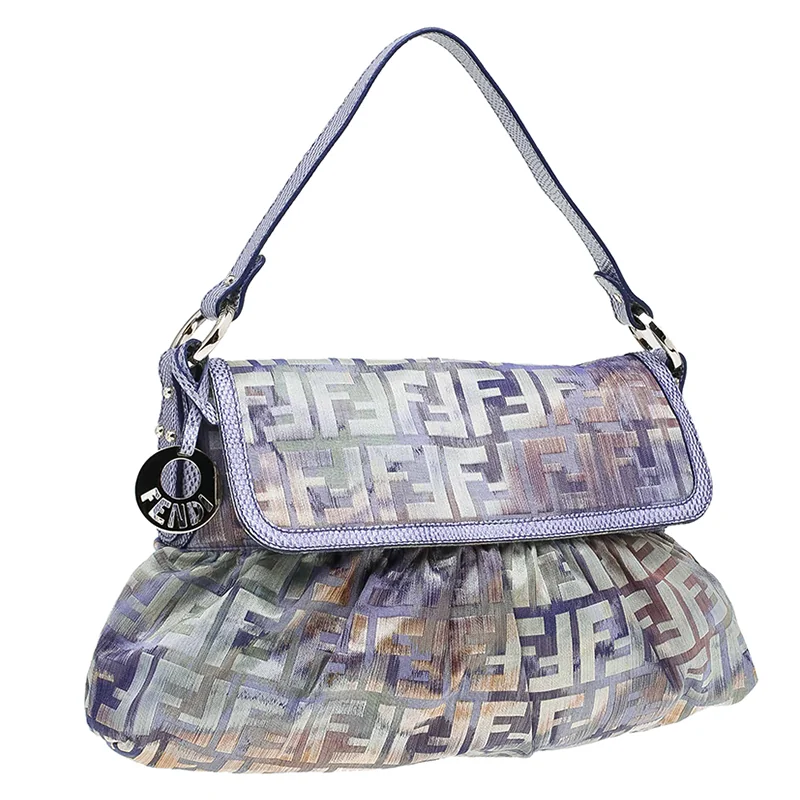
- Zucca canvas – Fendi’s [[[monogram canvas](/authentication/how-to-spot-a-fake-louis-vuitton-bag/)](/buying-guides/most-popular-louis-vuitton-bags-2026/)](/brands/louis-vuitton-neverfull-insider-retail-story/), printed with the interlocking double-F motif. It’s Fendi’s answer to Louis Vuitton’s Monogram or Gucci’s GG, and it shows up across bags, wallets, and clutches. On authentic pieces, the print is sharp, evenly spaced, and the FF motif never looks smudged or pixelated.
- Pequin canvas – a striped canvas Fendi has used on bags like the Silvana, often paired with leather trim. It’s a subtler design cue than Zucca, and one counterfeiters tend to get wrong because it’s less documented online.
- The metal charm – many Fendi bags carry a small hanging charm, often with the Fendi lettering or FF motif stamped into it. The engraving should be crisp, not shallow or blurred.
- The FF logo – this is the single most faked element on the brand’s roster. On a real bag, the two Fs are distinct, evenly weighted, and never touch or overlap. I’ve seen counterfeit Zucca canvas where the Fs are noticeably wider or squished together, which throws off the whole print rhythm once you know to look for it.
Spend ten minutes browsing Fendi’s current and archive collections before you shop secondhand. You don’t need encyclopedic knowledge, just enough familiarity to notice when a bag’s proportions, hardware placement, or print feel a little “off” compared to the real thing.
Check the Hologram Sticker and Serial Number#
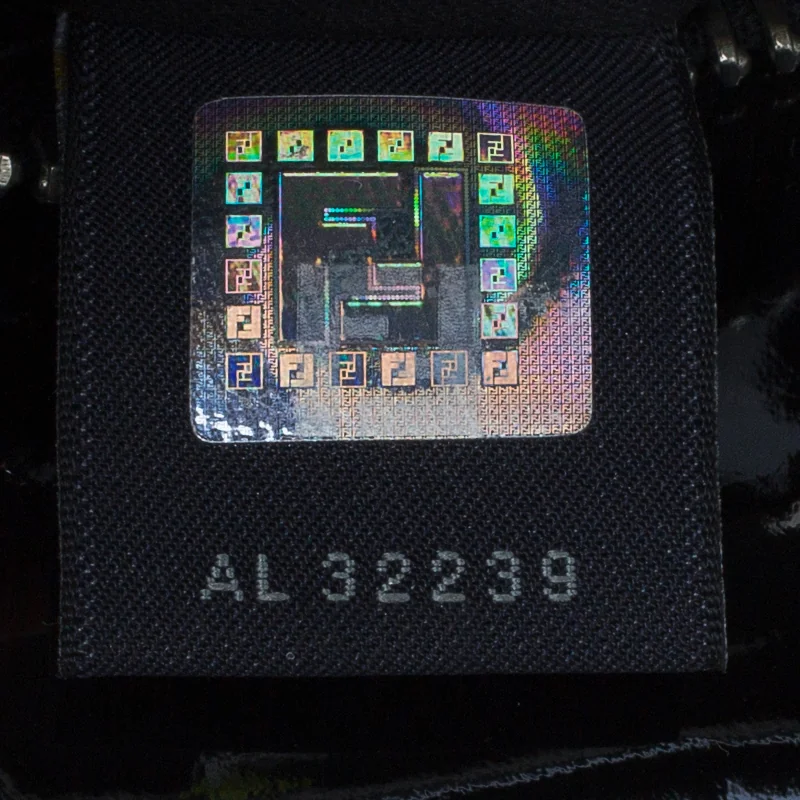
This is the checkpoint I go to first, because it’s the fastest way to rule a bag in or out.
Since 2004, Fendi has used a hologram sticker as part of its authenticity system. It’s applied to a fabric tag sewn into the bag’s interior, usually along a side seam or near the lining. The hologram itself has a layered, multi-effect finish, meaning it shifts and shows different imagery or color depending on the angle you view it from. A flat, single-tone sticker, or one that’s printed rather than holographic, is an immediate red flag.
Beneath the hologram, you’ll find an alpha-numeric serial number. This should be:
- Printed cleanly, with consistent spacing and font weight
- Free of smudging, scratches that look deliberate, or an uneven cut on the fabric tag
- Present on the same tag as the hologram, not on a separate loose label
If a bag claiming to be recent has no hologram and no serial number at all, that’s not a gray area. It’s a fake, full stop.
The one real exception: bags made before Fendi introduced serial numbers in the 1980s won’t have one. If you’re looking at a genuinely vintage piece from that earlier era, the absence of a serial number isn’t suspicious on its own. But be honest with yourself about how likely it is that you’ve stumbled onto an untouched 1970s Fendi at a bargain price. Pristine pieces from that period are rare and command premium prices among collectors precisely because so few exist in good condition. If the price doesn’t match that rarity, something doesn’t add up.
Examine Hardware, Stitching, and Materials#
Once the tag and serial number check out, I move to the parts of the bag that are hardest for counterfeiters to fake convincingly, because they require real tooling and real materials, not just a good printer.
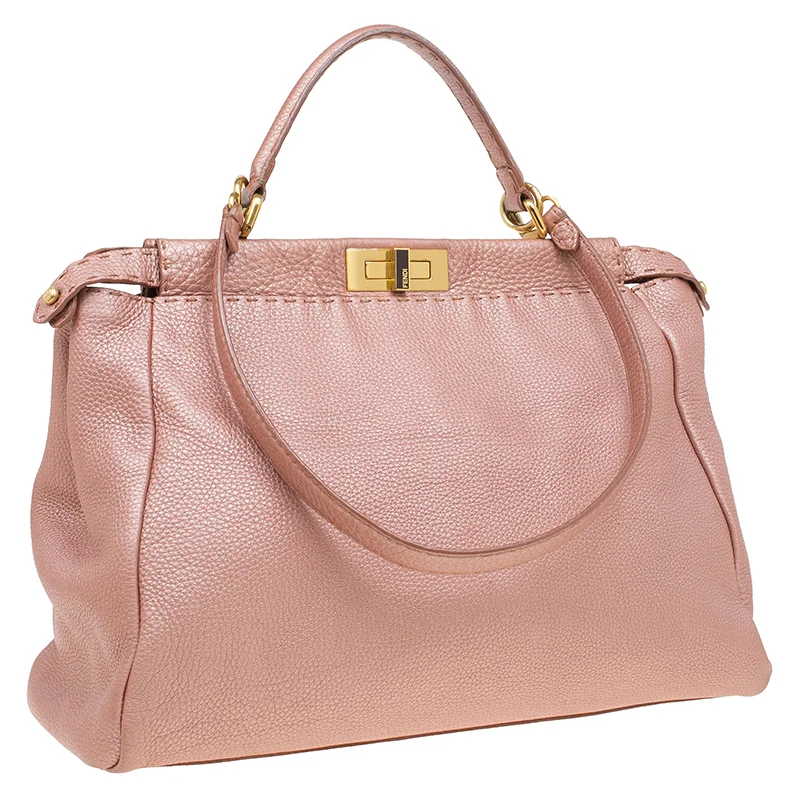
Hardware. Zippers, studs, turn locks, and clasps on an authentic Fendi should carry the Fendi name or FF logo engraved directly into the metal, not stamped on top or printed. Run your finger over the engraving. It should feel slightly recessed and sharp-edged. Fakes often use hardware that’s noticeably lighter in weight, with engraving that’s shallow, off-center, or missing altogether on smaller components like zipper pulls.
Stitching. Fendi’s stitching is precise but not machine-perfect in a suspicious way. Look for even spacing, no loose threads, and stitching that follows the curve of the leather without puckering. Ironically, some counterfeits actually over-correct here, with stitching that’s too uniform and mechanical looking compared to the slight, expected variation you’d see on a handmade luxury good.
Leather and canvas. Fendi uses full-grain and treated leathers that have a distinct smell (rich, not chemical) and a texture with some natural give. Cheap counterfeit leather often feels stiff, slightly plastic, or has an artificial sheen. On structured bags like the Peekaboo, the leather should hold the bag’s shape on its own. If a Peekaboo looks slouchy or collapsed when empty, that’s a problem, either it’s not authentic or it’s been badly cared for.
Lining. Check the interior lining fabric. It should be even, well-adhered to the bag’s structure, and free of loose threads or glue residue along the seams. On models like the 2Jours and 3Jours, also check the metal bar across the front. On genuine bags, it’s screwed into the leather. If it’s glued or loosely riveted, walk away.
Red Flags When Buying Secondhand or Online#
Most fakes don’t get caught because of one glaring mistake. They get caught because a buyer ignored several small warning signs that added up.
- Price that’s dramatically below market. A small discount is normal for resale. A Fendi Peekaboo or Baguette listed at a fraction of its usual resale value is not a lucky find, it’s a warning sign. Check recent sold listings on reputable resale platforms to know what a genuine example actually goes for before you get excited about a “deal.”
- No documentation. Legitimate sellers, especially resale boutiques, should be able to provide the bag’s serial number, close-up photos of the hologram tag, and ideally a receipt or authentication certificate. A seller who can’t or won’t produce these is asking you to buy on faith.
- Blurry or limited photos. If a listing only shows the bag from flattering angles and avoids close-ups of the hardware, stitching, and interior tag, ask for more before you buy. Sellers of authentic goods generally have nothing to hide and will happily send additional photos.
- Vague or copy-pasted descriptions. Listings that reuse generic brand copy instead of describing the actual condition of the specific bag are common with counterfeit sellers running the same template across multiple fake listings.
- New or unrated sellers with no return policy. On peer-to-peer marketplaces, a seller with no history and no returns accepted is a much riskier bet than an established reseller, even if the price looks better.
None of these signs alone proves a bag is fake. Together, though, they’re exactly the pattern I’d expect from someone trying to move counterfeit stock quickly.
Where to Buy an Authentic Fendi Bag#
If you want certainty rather than educated guesswork, buy from sources that build authentication into the transaction rather than leaving it entirely up to you.
- Fendi boutiques and the brand’s official site are the only zero-risk option, though obviously limited to current collections.
- Established luxury resale platforms that authenticate inventory in-house before listing it. Look for ones that explicitly state their authentication process and stand behind it with a guarantee, rather than simply hosting peer-to-peer listings.
- Third-party authentication services, which you can use to verify a bag independently, either before buying from a private seller or as a condition of the sale. Many will authenticate from detailed photos, though a hands-on inspection is more reliable when the price is high.
- Documentation to request regardless of source: the serial number, clear photos of the hologram tag, original receipt or dust bag if available, and the bag’s exact measurements to compare against Fendi’s official specs for that model.
A legitimate seller won’t be offended by these requests. If anything, a seller who answers documentation questions quickly and specifically is one more good sign you’re dealing with the real thing.
FAQ#
Do all Fendi bags have a hologram sticker? Only bags made from 2004 onward. Earlier pieces, particularly from the 1980s and before serial numbers existed, won’t have one. Anything made after 2004 without a hologram and serial number should be treated as inauthentic.
Where exactly is the serial number located? On the fabric tag sewn into the interior of the bag, directly beneath the hologram sticker. It won’t be on a separate tag or printed on the lining itself.
Can a fake Fendi have a convincing hologram? Higher-quality counterfeits can replicate a layered look, which is why the hologram alone shouldn’t be your only check. Cross-reference it with the hardware engraving, stitching quality, and leather feel before you trust a listing.
Is it normal for vintage Fendi bags to have no serial number? Yes, for pieces genuinely made before the 1980s. But be realistic about how rare and well-documented an untouched vintage piece from that era actually is, especially if it’s priced like a common find.
What’s the single biggest giveaway on a fake Fendi? In my experience, it’s the FF logo. Counterfeiters consistently get the proportions and spacing wrong, either the two Fs touch, or the shape is slightly too rounded or too narrow compared to Fendi’s actual design.
Should I buy a Fendi bag without seeing the interior tag first? No. Always ask for clear photos of the interior tag, hologram, and serial number before purchase, whether you’re buying online or in person. A seller unwilling to provide this is not someone I’d buy from.
Related Articles#
- How to Spot a Fake Neverfull: Authentication Guide
- How to Spot a Fake Burberry Bag: Full Guide
- How Pre-Owned Luxury Fashion Is Reshaping the Industry
- How to Spot a Fake Michael Kors Bag: Key Signs


Keyword index