Introduction #
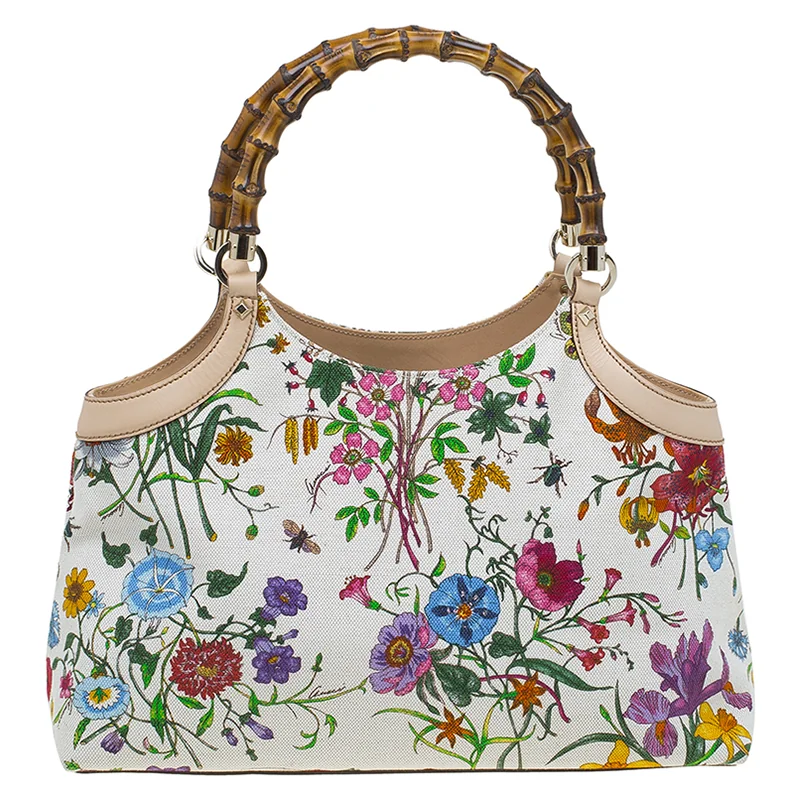
Gucci has spent over a century turning [Italian leather goods](/brands/trussardi-brand-history/) into cultural shorthand for status, and few houses can point to a single handbag design that’s stayed in continuous rotation for more than 75 years. The Bamboo Bag is that design. It didn’t start as a marketing exercise or a runway statement — it started as a workaround, born from a shortage that most luxury customers today have never had to think about. That origin is exactly what makes it worth understanding before you spend money on one, whether you’re eyeing a boutique reissue or a decades-old bag from a reseller. This guide walks through where the Bamboo Bag came from, how it’s actually made, and — more practically — how to tell a real one from the flood of counterfeits that have followed its fame since the 1950s.
1947: The Birth of an Icon Born from Wartime Scarcity #
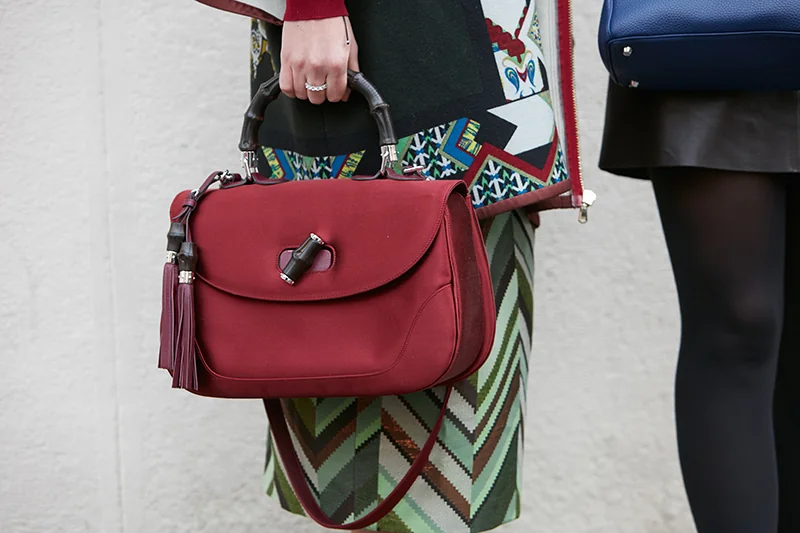
Post-war Italy in 1947 wasn’t a place where leather goods manufacturers had the luxury of choice. Metal hardware was rationed, quality hides were scarce, and Guccio Gucci’s workshop needed a way to keep producing without the materials that European fashion houses had relied on for generations. The solution came from outside the usual supply chain entirely: bamboo, imported from Japan.
It’s worth sitting with how unconventional this was. Bamboo isn’t a material with any prior history in European handbag construction — it’s not tanned, it’s not stitched, and it doesn’t behave like leather or metal under tension. Gucci’s craftsmen had to invent a way to shape it into something structurally sound enough to carry weight on a woman’s arm. The body of the bag was built from pigskin, itself a more workaday leather than the calfskin the house would later become known for, but the real innovation — and the reason this bag survived scarcity to become a status symbol — was the handle.
What could have been a purely functional, materials-driven compromise ended up as the bag’s signature. That’s the part of the story worth remembering: the Bamboo Bag’s most recognizable feature exists because of a shortage, not despite one.
Craftsmanship Behind the Signature Bamboo Handle #
The handle is where the Bamboo Bag earns its price tag, and understanding the process matters if you’re trying to judge whether a bag in front of you is worth what someone’s asking for it.
Raw bamboo arrives from Japan in stalks that are far too rigid and brittle to bend into the tight semi-circle the bag needs. Gucci’s artisans heat the bamboo to make it pliable — a controlled process, since too much heat scorches or weakens the fiber, and too little leaves it prone to cracking under the curve. Once heated, the bamboo is bent into the arched handle shape and held in that position while it cools and sets. Cooling is not a rushed step: the bamboo needs to fully stabilize in its new shape before it can be released, or it will spring back or split later under normal use.
Only after the handle has cooled and hardened is it fitted and attached to the pigskin (or, in modern versions, calfskin) body of the bag. Gucci has stated that this handle-shaping process alone accounts for a meaningful chunk of the roughly 13 hours of hands-on labor that goes into a single bag — and the house has kept that timeline essentially unchanged since the 1940s, resisting the temptation to industrialize or speed up the bending process. That’s a genuine rarity in an industry where most “handcrafted” claims get quietly automated over decades.
From an authentication standpoint, this matters: a genuine bamboo handle has a slightly organic, faceted grain and a curve that looks hand-set rather than molded. Counterfeits almost never replicate the heating-and-curving process — they use painted wood, resin, or plastic substitutes that look uniform and lack the natural texture variation of real bamboo.
From Hollywood Favorite to Modern Revival #
The bag’s second life started almost immediately after its release. By the 1950s and 60s, it had become a fixture among Hollywood’s biggest names — Elizabeth Taylor and Ingrid Bergman both carried it publicly, which did more for the bag’s visibility than any advertising campaign could have at the time. Lady Diana’s endorsement later cemented it as a bag with royal as well as celebrity credibility, and that dual appeal — old-money respectability paired with red-carpet glamour — is part of why the design never fully disappeared from circulation, unlike a lot of its 1950s contemporaries.
The bag went through a genuine creative pause before its most significant relaunch. In 2010, under then-creative director Frida Giannini, Gucci reissued the Bamboo Bag with updated proportions and materials while keeping the bent-bamboo handle as the non-negotiable core of the design. That relaunch reintroduced the silhouette to a generation of buyers who’d never have encountered the original 1947 bag outside of vintage circles, and it’s why you’ll now see both genuinely vintage pieces and 2010-onward reissues circulating in the resale market — two distinct eras of the same design, which matters when you’re pricing one out.
More recent appearances by Beyoncé, Naomi Watts, and Florence Welch have kept the bag culturally active rather than treating it purely as archival, which is unusual for a design this old.
How to Authenticate a Gucci Bamboo Bag #
Counterfeiters have had 75 years to study this bag, so authentication needs to go beyond checking for a logo. A few checkpoints that actually separate genuine bags from convincing fakes:
The bamboo handle itself. Real bamboo has visible natural grain, subtle color variation, and small surface irregularities — it’s a plant, not a molded part. If the handle looks perfectly uniform, glossy in a plastic way, or suspiciously light in weight, that’s a red flag. Genuine handles also have a certain heft and rigidity from the heat-set curing process; fakes made from resin or lacquered wood often feel hollow or too light.
Hardware and the closure clamp. Authentic Gucci hardware — the piston closure, D-rings, and any branded plates — is weighted, cleanly cast, and free of rough edges or visible mold lines. Engravings should be crisp and evenly spaced; shallow, uneven, or slightly misaligned stamping is one of the most common counterfeit tells.
Stitching. Gucci’s stitch count is consistent and tight, typically running in straight, evenly spaced lines with no skipped stitches or thread inconsistencies. Check where the handle meets the body — this joint takes the most stress and is where cheaper counterfeits often show glue residue, uneven leather folds, or visible machine puckering.
Leather grain and smell. Pigskin has a distinctive, fine grain with tiny visible pores, different from the smoother grain of calfskin used in newer versions. Genuine leather also has a mild, natural leather smell — a strong chemical or plastic odor usually signals bonded leather or PU substitutes.
Interior details. Look for a serial number tag (older bags have a fabric or leather tag with a stamped number; newer bags increasingly use QR-code authentication cards) and a clean, finished interior lining with no loose threads or glue smell.
Proportions. Because the bag has been reissued across decades, silhouette details shift. If a listing photo shows a handle curve that looks too tight, too shallow, or asymmetrical compared to reference photos from the same era, treat it as a warning sign rather than a quirk.
No single detail is definitive on its own — the strongest approach is checking hardware, stitching, and bamboo quality together, since well-made counterfeits will usually get one or two of these right but rarely all of them.
[Buying Guide](/buying-guides/gucci-bamboo-1947-bag-review/): Value, Pricing, and Where to Shop Pre-Owned #
Pricing on the Bamboo Bag spans a wide range depending on era, size, and material, so it helps to think in tiers rather than a single number.
New from Gucci boutiques or the official site: Current-production Bamboo bags generally run from roughly $2,500 to $4,500, with smaller top-handle and mini styles at the lower end and larger shoulder bags or special leather treatments pushing toward the top. Limited editions or exotic-skin versions can go well beyond that range.
Pre-owned reissues (2010 onward): These typically trade for $1,200 to $2,800 depending on condition, hardware finish, and whether the bamboo handle shows any wear or discoloration. Bags in excellent condition with original dust bags and cards hold value noticeably better.
Genuine vintage (1950s–1980s originals): This is the most variable tier. Well-preserved vintage pieces with structurally sound bamboo handles and minimal leather cracking can sell for $800 to $2,000, sometimes more for documented celebrity-era pieces or unusual colorways. Bags with a compromised handle — hairline cracks, re-glued joints, or replaced hardware — sell for considerably less and are arguably not worth the premium unless you’re buying purely for display.
A few honest notes on resale value: the Bamboo Bag doesn’t command the same aggressive appreciation as Hermès Kelly or Birkin bags, and it shouldn’t be bought as an investment vehicle. Its value is more stable than speculative — a genuinely well-kept example holds its price over time, but it’s not going to double. Vintage pigskin versions are also more fragile than people expect; pigskin ages less gracefully than calfskin, and buyers new to vintage Gucci sometimes underestimate how much handle and leather condition affects both usability and resale price.
For sourcing, stick to platforms with in-house authentication (consignment houses, Fashionphile, The RealReal, or a specialist reseller like The Luxury Closet) rather than open marketplaces with no verification step. If buying vintage specifically, ask the seller directly about the handle’s condition and request close-up photos of the joint where bamboo meets leather — that’s the component most likely to fail and the hardest to restore convincingly.
How to Spot a Fake: An Authentication Checklist #
Run through this before finalizing any purchase, especially online:
- Handle material: Natural grain and slight irregularity, not a uniform glossy finish. Should feel solid, not hollow or artificially light.
- Handle curve: Smooth, symmetrical semi-circle with no visible cracks, sanding marks, or seams where a mold split would leave a line.
- Hardware weight: Substantial and cool to the touch (metal), not lightweight plastic-feeling alloy.
- Engraving quality: Deep, crisp, evenly spaced lettering on any branded hardware or plaques.
- Stitch consistency: Straight, tight, evenly spaced stitching, especially at the handle-to-body joint.
- Leather grain: Fine, consistent pore pattern for pigskin; smooth, tight grain for calfskin — no plastic sheen.
- Serial/authentication tag: Present, legible, and consistent with the bag’s claimed production era.
- Smell test: Natural leather scent, not a strong chemical or rubber odor.
- Seller documentation: Authentication certificate, purchase history, or third-party verification from a reputable consignment platform.
- Price sanity check: If a “vintage original” is priced well below the low end of the ranges above, treat that as a signal to investigate further, not a bargain.
FAQ #
When was the Gucci Bamboo Bag first made, and why bamboo? It launched in 1947, during a period of severe material shortages in post-war Italy. Gucci’s craftsmen turned to imported Japanese bamboo for the handle specifically because traditional materials like metal hardware were rationed and hard to source.
How long does it take to make one bag? Roughly 13 hours per bag, largely due to the handle-shaping process — heating, curving, and cooling the bamboo before it’s attached to the body. Gucci has kept this production timeline largely unchanged since the design’s introduction.
What materials does the Bamboo Bag come in today? Beyond the original grey pigskin, current and recent collections include calfskin in colors like magenta and orange, plus neoprene versions in black and white. The bamboo handle remains the one constant across every material variation.
Is the Bamboo Bag a good investment compared to Hermès or other Gucci icons? It’s a stable piece rather than a strong appreciating asset. It doesn’t compete with Hermès Kelly or Birkin resale trajectories, and within Gucci’s own lineup, the Dionysus and GG Marmont have stronger recent resale momentum due to more consistent recent marketing, while the Jackie occupies a similar “classic revival” position to the Bamboo Bag with comparable pricing. Buy it for the design and craftsmanship, not for flipping.
What’s the biggest authentication mistake buyers make? Focusing only on the logo hardware or serial tag while ignoring the bamboo handle itself. Since the handle is the most labor-intensive and materially distinctive part of the bag, it’s also the hardest for counterfeiters to replicate convincingly — and the detail most worth scrutinizing.
How do I care for a pigskin, calfskin, or neoprene Bamboo Bag? Pigskin is more porous and prone to surface marking than calfskin, so keep it away from prolonged sun and moisture, and condition it sparingly with a leather-specific product. Calfskin versions handle everyday wear better and just need routine wiping and occasional conditioning. Neoprene versions are the most water-resistant of the three but can crease permanently if stored folded — always store upright or stuffed with tissue. Across all versions, keep the bamboo handle dry and avoid twisting it under load, since repeated stress at the joint is the most common cause of long-term damage.
Related Articles #
- The History Behind Gucci’s Iconic Flora Print
- Lady Dior Bag: The Story Behind Princess Diana’s Icon
- How to Spot a Fake Hermès Bag: Authentication Guide
- Kelly vs Birkin: Hermès Bags Compared
- Dior Granville Bag Review: Honest Take After Years
Related guides
- Online Bag Authentication: What Photos Can and Cannot Prove
- Hermes Oran Sandals Guide: History, Sizing & Authenticity
- How to Spot a Fake Hermès Birkin: Expert Tips
- How to Authenticate a Chanel Bag: 10 Expert Checks
- How to Buy an Authentic Luxury Bag from China Safely
- New vs Pre-Owned Luxury Bags: Which Route Is Right for You?
- Chanel Bag Guide: What to Know Before You Buy
- Luxury Bag Houses


Keyword index