Introduction #
Most handbags are accessories. A handful become archives. They carry a name, a face, a moment in cultural history, and that association turns a piece of hardware and leather into something closer to a relic. The five bags in this guide were each named after a real woman whose personality, or a single lucky encounter with her, reshaped how a design house thought about its product.
That naming convention matters more than nostalgia. It affects resale value, counterfeit risk, and how a bag ages in the secondary market. A Birkin holds value differently than a Mulberry Alexa, not because one is “better” made, but because the story attached to it, and the scarcity built around that story, behaves like an asset class of its own. This guide walks through the origin stories, the current price and resale landscape, and the authentication checkpoints you need before you commit real money to any of them.
Royal Inspirations: The Gucci Diana and Dior’s Lady Dior #
The Gucci Diana #
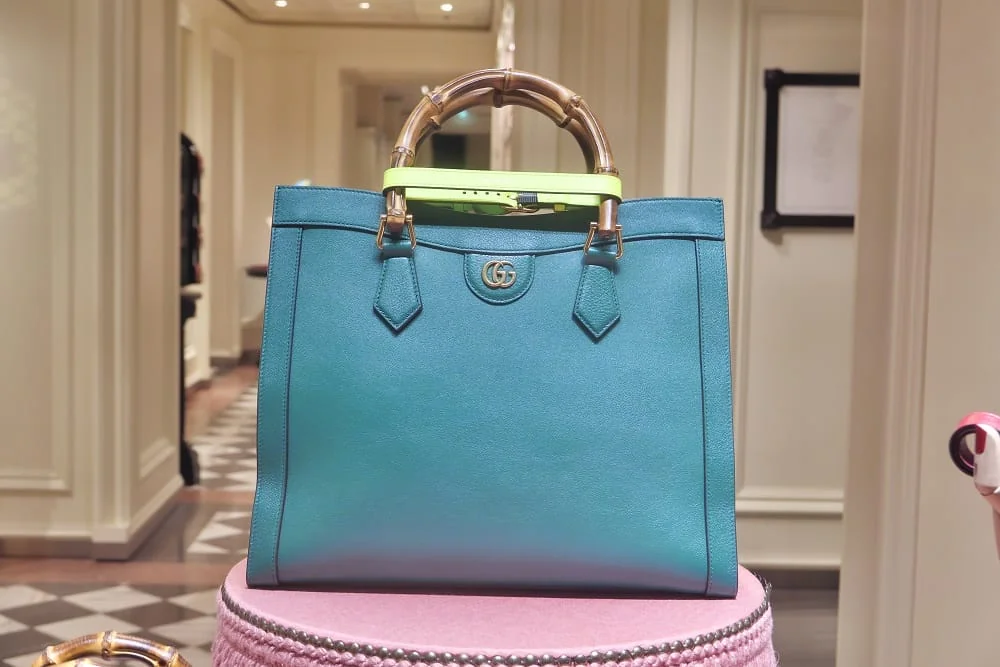
Princess Diana was never officially a Gucci ambassador, but she didn’t need to be. She was photographed for years carrying the House’s 1991 bamboo-handled tote, and that repeated, unstyled attachment to one bag is exactly what made it hers in the public imagination. Gucci formalized that connection decades later, reworking the original tote’s silhouette and reissuing it as the Gucci Diana.
The bag keeps the structural cues that made the original recognizable: a boxy tote shape, the polished bamboo top handles, and the interlocking GG hardware. It comes in three sizes and a rotating run of colorways, which gives it more everyday versatility than most bags on this list. Sienna Miller and Elle Fanning have both been photographed with it in recent years, which helped push it back into relevance alongside archival revivals like the Fendi Baguette and Dior Saddle.
Retail runs roughly $2,800 to $3,900 depending on size and leather. Resale is soft compared to Hermès: expect 45-60% of retail on the secondary market for pieces in strong condition, with mini sizes holding value slightly better than the larger totes because they move faster.
Dior’s Lady Dior #
The Lady Dior started life as the “Chouchou,” a quilted cannage tote from Dior’s Fall/Winter 1994 collection. Bernadette Chirac, wife of the French president, gifted one to Princess Diana at a Cannes Film Festival event in 1995. Diana carried it constantly afterward, and Dior renamed the bag in her honor that same year, cementing one of the clearest cases of a client’s personal habit rewriting a product line.
The design leans on the cannage stitching (a reference to Napoleon III chairs), rounded top handles, and dangling D.I.O.R. charms that spell out the House name. Retail today sits between roughly $4,800 and $6,800 depending on size and leather, with exotic skins climbing well past that. Resale retention is solid for a non-Hermès house, typically 55-65% of retail for the medium size in classic black or nude cannage leather, though seasonal or embellished versions depreciate faster.
The comparison worth making here: Diana’s Gucci bag was already in production before she made it famous, while her Dior bag was renamed specifically because of her. That distinction is why the Lady Dior carries a stronger, more literal claim to being “named after” her than the Gucci Diana does.
Hermès’ Namesake Classics: The Birkin and The Kelly #
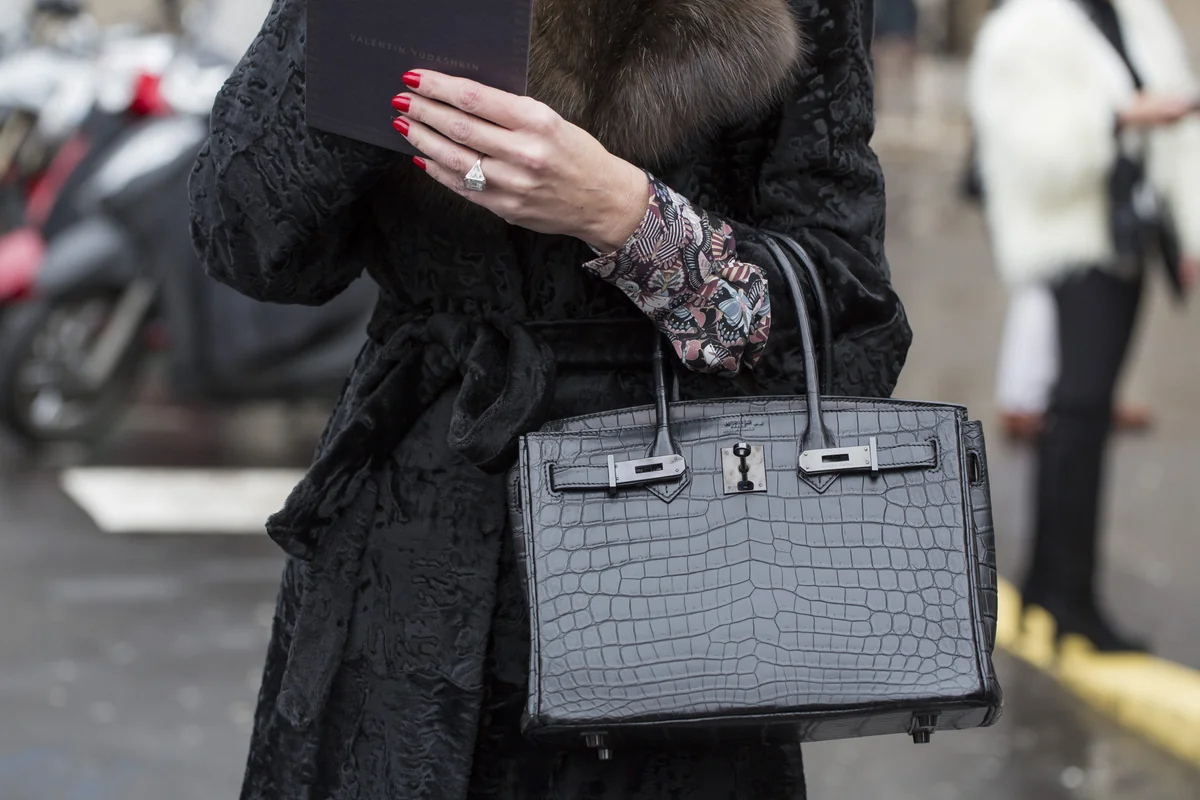
Everything above operates in the same general market tier. Hermès does not. The Birkin and Kelly aren’t just named after famous women, they’re actively rationed, and that scarcity is engineered, not accidental. Hermès does not mass-produce either bag, doesn’t advertise them, and famously does not guarantee a client can walk in and buy one regardless of budget. That structure is the single biggest driver of their resale performance.
Here’s the current landscape at a glance:
| Bag | Retail range (approx.) | Resale range (approx.) | Typical resale vs. retail |
|---|---|---|---|
| Birkin 25/30, Togo/Epsom | $10,500-$13,500 | $15,000-$25,000+ | 120-180% |
| Birkin, exotic skins (croc, alligator) | $30,000-$60,000+ | $50,000-$300,000+ | Highly variable, often 150%+ |
| Kelly 25/28, Sellier or Retourné | $9,500-$13,000 | $13,000-$22,000 | 110-160% |
| Kelly, exotic skins | $35,000-$70,000+ | $45,000-$200,000+ | Comparable to Birkin, sometimes slightly lower |
Both bags routinely sell above retail on the resale market, which is almost unheard of outside Hermès. The Birkin tends to command a small premium over the Kelly in equivalent leathers and sizes, mostly because it carries broader name recognition, but a Sellier (structured) Kelly in a rare color can outpace a common Birkin easily. This is one of the few product categories in fashion where buying secondhand can cost more than buying new, if you can even get an allocation from a boutique at all.
The Modern Muse: Mulberry’s Alexa #
Not every namesake bag comes from a heritage maison with a hundred-year archive. Mulberry launched the Alexa in 2010, named for and reportedly inspired by British stylist and television presenter Alexa Chung, who was frequently seen carrying a similar satchel-style bag before the brand approached her. The design borrowed structural cues from a men’s briefcase: a flap front, postman’s lock closure, and a long adjustable strap.
The Alexa became one of the defining “it bags” of the early 2010s, showing up on street style blogs constantly and helping Mulberry post some of its strongest sales years. It’s a useful case study because it shows the naming tradition isn’t limited to Hermès-tier exclusivity or royal patronage. A stylist’s personal taste, amplified by the right brand partnership, was enough to build a genuine cultural moment.
Original retail sat around $800-$1,200. The current market tells a less flattering story than the heritage bags above: resale values have dropped significantly since the bag’s peak, often landing at 20-35% of original retail, because Mulberry has since diversified its bestsellers and the Alexa’s cultural moment has passed. It’s a good reminder that a strong launch doesn’t guarantee long-term investment performance. Scarcity and brand-level pricing power matter more than a good origin story.
Honorable mentions worth knowing #
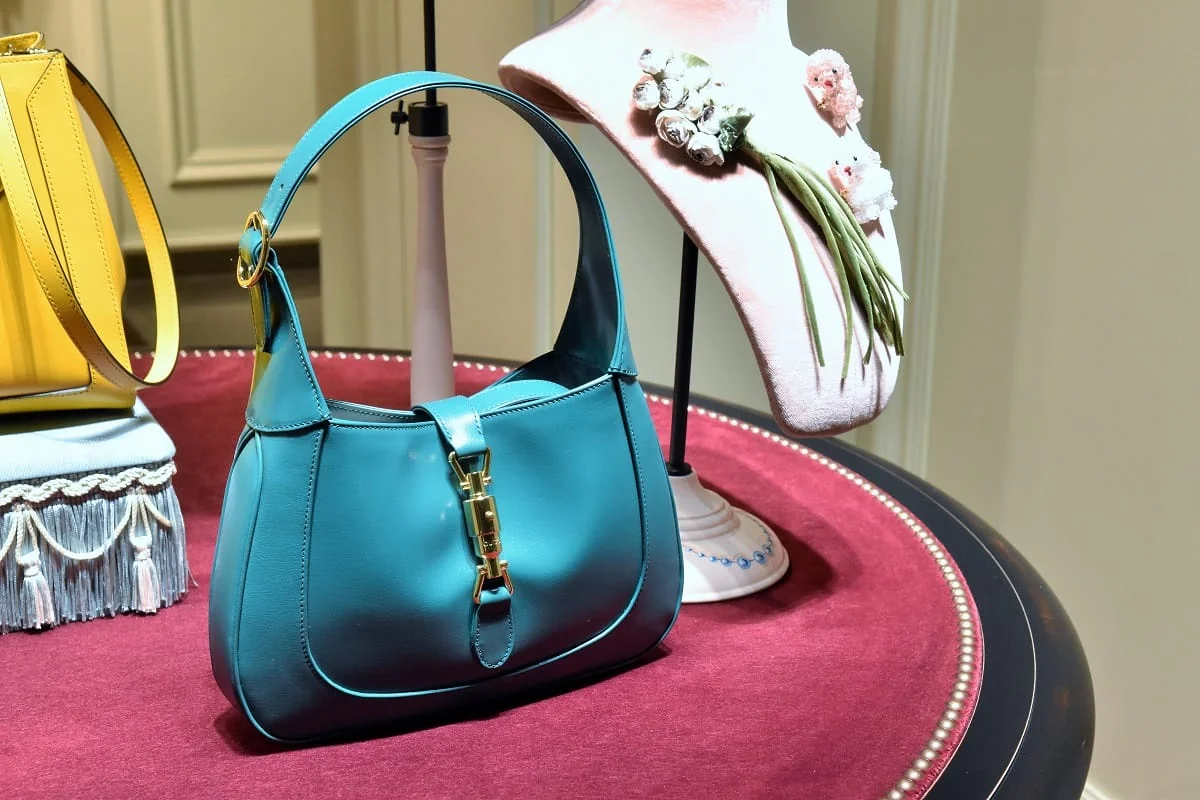
A few other named bags come up constantly in this conversation, even though they don’t anchor a full section here. The Gucci Jackie, named for Jackie Kennedy who was photographed shielding her face with it in the 1960s, predates the Diana by decades and has its own recent reissue. The Fendi Baguette wasn’t named after a real person, but its cultural resurgence owes almost entirely to a fictional one, Carrie Bradshaw, which is worth knowing if you’re comparing “named after a personality” bags against “made famous by a personality” bags, since the two categories behave very differently in resale. Chanel doesn’t typically name flap bags after individuals, its naming convention runs toward dates and codes (2.55, 19), which is part of why Chanel’s namesake category is thinner than Hermès’ or Dior’s.
Authenticating Your Icon: What to Check Before You Buy #
Every bag on this list has been counterfeited at scale, and the Birkin and Kelly attract the most sophisticated fakes because the financial incentive is highest. Here’s what I check first, in order, when evaluating a piece before purchase.
Stitching and proportion. Hermès saddle stitching is hand-done, slightly irregular, and slanted in one consistent direction. Machine stitching that’s perfectly uniform is an immediate red flag on a Birkin or Kelly. Check that the bag’s proportions match the stated size exactly; counterfeits are frequently a few centimeters off in height-to-width ratio because they’re built from measurements rather than the actual pattern.
Blind stamps and date stamps. Genuine Hermès bags carry a craftsman’s blind stamp and a date stamp (a letter inside a shape, denoting production year) stamped into the leather near the interior seam. These should be crisp, centered, and consistent with the bag’s claimed age. Blurry or off-center stamps are common on fakes.
Hardware weight and finish. Palladium and gold hardware on a real Birkin or Kelly has noticeable heft and a specific warmth to the plating. Fakes often use lightweight base metal that feels hollow and shows plating wear at the edges within months.
Turn-locks and closures. On the Gucci Diana, check that the bamboo handle’s internal lock mechanism turns smoothly and that the bamboo itself has natural grain variation, not a uniform printed texture. On the Lady Dior, the D.I.O.R. charms should have crisp, deep engraving, not shallow stamping.
Interior details. Mulberry’s Alexa should carry an authenticity card with a serial number that matches the interior stamp. Dior interiors typically match the exterior leather quality; a bag with a premium exterior and cheap interior lining is a common counterfeit shortcut.
Buy from verifiable sources. Whether you’re buying from a boutique, an authorized reseller, or a peer-to-peer platform, insist on full provenance: original receipt, box, dust bag, and if possible, third-party authentication (Entrupy or a specialist authenticator) before the sale closes. For Birkins and Kellys specifically, be wary of any seller offering a “guaranteed allocation” outside the Hermès waitlist system at a price near retail, that’s one of the more common scam structures targeting first-time buyers.
None of this replaces hands-on experience. If you can, visit a boutique first and physically handle an authenticated example so you know what the real stitching, hardware weight, and leather grain should feel like before you shop secondhand.
Frequently Asked Questions #
Why are some luxury bags named after real people instead of just given a style name? Houses do this either to formalize an existing association (Diana’s habitual use of a Dior tote) or to manufacture prestige from a single origin story (Jane Birkin’s conversation with Jean-Louis Dumas). Both approaches work because they attach a specific, memorable narrative to what would otherwise be a generic product name.
Do namesake bags hold value better than other luxury bags? Not automatically. Hermès’ Birkin and Kelly appreciate because Hermès controls supply tightly, not simply because they’re named after someone. The Mulberry Alexa is proof that a strong origin story doesn’t guarantee long-term resale strength if the brand doesn’t sustain scarcity and demand.
Is it worth buying a namesake bag as an investment rather than for use? Only the Birkin and Kelly consistently behave like appreciating assets, and even then, condition, leather type, color, and hardware all affect returns significantly. Treat Dior, Gucci, and Mulberry pieces as fashion purchases with decent resale support, not investment vehicles.
How can I tell an original-era bag from a modern reissue? Look at hardware finish, date stamps, and construction details. Hermès bags carry date stamps that pinpoint production year. Dior and Gucci reissues typically use updated interior linings, revised zipper pulls, and current-season authenticity cards that differ from vintage originals, useful details if you’re trying to date a piece rather than just verify it’s genuine.
What’s the single biggest authentication mistake buyers make? Trusting a seller’s photos without requesting close-ups of stitching, stamps, and hardware, or skipping third-party authentication to save time on a fast-moving listing. The bags that attract this level of counterfeiting deserve the extra week it takes to verify properly.
The Hermès Birkin: Jane Birkin’s Accidental Icon #
The Birkin’s origin is one of the few luxury creation stories that’s actually true and actually mundane. In 1981, actress and singer Jane Birkin sat next to Jean-Louis Dumas, then Executive Chairman of Hermès, on a flight from Paris to London. Birkin, a new mother, complained about not being able to find a leather weekend bag that suited how she actually lived, spacious enough for a diaper change, but still refined. Dumas sketched a design on the spot. That sketch became the Birkin.
The original brief explains details that still define the bag: a wide, structured rectangular silhouette, saddle stitching, and, notably, an interior pocket originally sized for baby bottles. It’s a detail almost nobody who buys a $20,000 Birkin today ever uses it for its original purpose, but it’s a good reminder that the bag was designed around a real, specific problem, not around exclusivity.
Exclusivity came later, and it’s now the entire engine behind the bag’s resale performance. Hermès controls production volume tightly enough that boutiques can’t guarantee availability regardless of budget, which pushed the bag onto waitlists and, eventually, into a genuine secondary market where prices regularly exceed retail. A 2014 Himalaya Niloticus crocodile Birkin sold at Christie’s Hong Kong for roughly $300,000 in 2017, a figure that’s become something of an industry benchmark for how far exotic-skin Birkins can climb at auction.
Celebrity attachment runs deep and wide at this point, well beyond the early adopters. Victoria Beckham has been widely reported to own one of the largest private Birkin collections in the world. Kim Kardashian, Kylie Jenner, and Rihanna have all been photographed with pieces from the family regularly enough that “Birkin” functions as shorthand for arrived wealth in a way few other objects do. That ubiquity is a double-edged sword for buyers: it drives demand and resale value, but it also means the Birkin is the single most counterfeited handbag on the planet, which makes the authentication steps above non-negotiable, not optional, on this particular bag.
The [[Hermès Kelly Bag](/brands/kelly-vs-birkin-hermes-bags-buying-guide/)](/brands/kelly-vs-birkin-hermes-bags-compared/): Grace Kelly’s Royal Elegance #
The Kelly predates its famous name by roughly two decades. Hermès introduced the design, then called the “Sac à dépêches,” in the 1930s as a structured saddle-style bag with a top handle and a front strap closure. It sat quietly in the House’s catalog until 1956, when Grace Kelly, newly married into Monaco’s royal family and pregnant, was photographed on the cover of Life magazine using the bag to shield her stomach from paparazzi. Hermès formally renamed the bag in her honor in 1977, one of the clearer examples on this list of a name earned through repeated, documented use rather than a marketing decision made in advance.
Structurally, the Kelly comes in two main constructions: Sellier, which is rigid, structured, and shows sharper corners; and Retourné, which is softer and slouches more naturally. That distinction matters for both wear and resale, Sellier pieces in rare colors or exotic skins tend to command a premium over Retourné in the same leather, because the structured build requires more precise, time-intensive craftsmanship.
Kelly resale trails the Birkin slightly in name-recognition-driven demand, but the gap has narrowed over the past decade as buyers who already own a Birkin look for a second, less ubiquitous Hermès piece. Diamond-hardware and rare exotic Kelly bags have crossed into six-figure territory at major auction houses, and waitlists for the bag are, if anything, currently just as tight as for the Birkin.
Grace Kelly’s own relationship with the bag was understated: she used it as a practical accessory during a very public, very scrutinized period of her life, not as a status marker. That’s part of why the Kelly still reads as slightly more discreet than the Birkin among longtime Hermès clients, even though, on paper, the two bags now sit in nearly identical price and resale tiers.
Related Articles #
- Lady Dior Bag: The Story Behind Princess Diana’s Icon
- 5 Most Popular Chanel Bags You Need to Know
- Why the Chanel Crossbody Bag Never Goes Out of Style
- Best Time to Buy a Luxury Handbag: Save More in 2025
- Céline Luggage Tote Guide: Sizes, History & Resale Value
Related guides
- Online Bag Authentication: What Photos Can and Cannot Prove
- How to Spot a Fake Hermès Birkin: Expert Tips
- How to Authenticate a Chanel Bag: 10 Expert Checks
- Fake Goyard Bag Guide: How to Spot Real vs Fake (2026)
- How to Buy an Authentic Luxury Bag from China Safely
- New vs Pre-Owned Luxury Bags: Which Route Is Right for You?
- Chanel Bag Guide: What to Know Before You Buy
- Luxury Bag Houses


Keyword index