Introduction: The House That Leather Built#
“Leather is like a religion to us.” Diego Della Valle has repeated some version of this line for decades, and after years of covering the TOD’S brand, I’m inclined to believe him. It’s a strange thing to say about a company that makes driving shoes and handbags, but it explains why TOD’S has never chased trends the way some of its Italian peers have. The philosophy is simple: comfort and craftsmanship aren’t opposites, and luxury doesn’t have to hurt.
That idea, stubbornly unfashionable in an industry obsessed with newness, is exactly why TOD’S has staying power. This piece walks through where the brand actually came from, why the Gommino loafer earned its reputation, the real story behind the D-Bag, and an honest read on whether TOD’S pieces are worth the money today, whether you’re buying to wear or buying to hold.
From Family Workshop to Global House: TOD’S Heritage#
TOD’S didn’t start as a fashion house. It started as a family shoemaking operation in Casette d’Ete, in Italy’s Le Marche region, a part of the country still known for its concentration of skilled leather artisans. The Della Valle family’s shoemaking business took shape in the late 1920s, built on small-batch, handmade production rather than volume manufacturing.
For decades, the business stayed regional, known for quality but not for scale. That changed when Diego Della Valle stepped into a leadership role and pushed the company toward international markets through the 1970s. He didn’t abandon the artisanal techniques his father’s generation relied on. Instead, he applied them more rigorously and packaged them for a global audience, positioning handmade construction as a selling point rather than a limitation.
The turning point came with the brand’s own signature product: a rubber-pebbled sole loafer that would eventually carry the TOD’S name into department stores and boutiques worldwide. It’s a heritage story with less drama than some fashion houses claim (no bankruptcy-to-glory arc, no wartime origin myth), and that’s part of the appeal. TOD’S grew because the product worked, not because of a manufactured narrative.
The Loafer: TOD’S Signature Craft#
If TOD’S has one product that defines the brand, it’s the Gommino loafer, and it’s worth understanding why this specific shoe earned so much editorial respect rather than just commercial success.
Della Valle’s own framing of the problem is the best explanation I’ve heard: “Usually, when people speak of comfort, the product in question is cheap. When they speak of luxury, the product in question is too stiff, and makes no sense as something to use in modern, everyday life.” That tension, comfortable shoes being cheap and expensive shoes being stiff, was the gap TOD’S loafers were built to close.
The signature detail is the rubber pebble sole, over 100 tiny rubber studs on the bottom that provide flexibility and grip without the heavy tread of a sneaker or the rigidity of a formal leather sole. It’s a small engineering choice, but it changes how the shoe behaves on your foot. Where a lot of designer loafers need a break-in period, TOD’S loafers are noticeably softer out of the box because of the unstructured construction and the way the leather is treated.
Having tried on plenty of pairs across seasons, I’ll say the reputation holds up. They’re genuinely comfortable in a way that doesn’t feel like a marketing line. That said, I don’t think they’re universally flattering. The rounded, casual silhouette suits relaxed and smart-casual wardrobes far better than anything formal, and if you’re expecting a sleek, structured dress shoe, this isn’t it. TOD’S loafers are also not cheap for what is, functionally, a driving shoe, so the value equation depends on how much you weigh comfort and construction against a lower price point elsewhere.
The D-Bag: A Royal Legacy in Leather#
TOD’S handbags don’t get the same instant name recognition as the loafers, but one exception has outlasted trend cycles for close to three decades: the D-Bag.
The story is straightforward and, unlike a lot of celebrity-bag marketing, actually true. Princess Diana was browsing a TOD’S store and chose the bag herself. It wasn’t gifted, seeded, or placed by a PR team. TOD’S later named the style after her, a quiet honor that turned into one of the more meaningful tributes in fashion, and one that gave the bag a permanence most “It bags” never achieve. There’s something genuinely moving about a brand naming a product after someone the world lost too soon, and I think that emotional weight is part of why the D-Bag still resonates.
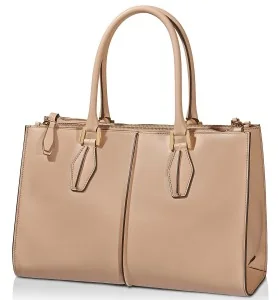
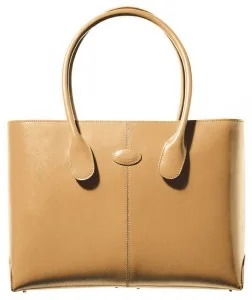
The design itself has evolved. The original D-Bag had a squarer, more structured silhouette. Over time it transitioned into what’s now called the D-Cube, with a curvier shape, softer lines, and a more overtly ladylike profile than the 1990s original. Kate Middleton, Diane Kruger, and Nicole Kidman have all carried versions of it since, which has kept the bag in circulation culturally even as the design has shifted.
My honest preference leans toward the original silhouette. It has a directness and structure that feels more distinctly “of its era” and, to my eye, more iconic. The D-Cube is more wearable for how people actually dress today, softer, less boxy, easier to style casually, but it trades some of that original character for versatility. Neither is wrong. It depends on whether you want a piece with vintage-specific identity or one that fits seamlessly into a modern wardrobe.
Craftsmanship and Investment Value#
This is where I want to be direct rather than promotional, because “investment piece” gets thrown around too loosely in luxury content.
On construction, TOD’S earns its reputation. The leather sourcing and hand-finishing are consistent with what you’d expect from an established Italian house, and the loafers in particular are built to be worn hard, driven in, walked in, broken into daily rotation, without falling apart. That durability is real, not just brand copy. I’ve seen well-used pairs hold their shape and color years in.
Where I’d temper expectations is [resale value](/buying-guides/sneaker-trends-2025-styles-worth-the-hype/). TOD’S doesn’t command the secondary-market premiums that Hermès or [Chanel](/brands/devil-wears-prada-2-fashion-style-guide/) do. A used Birkin or Chanel flap can hold or exceed its retail price; a used TOD’S D-Bag or loafer generally will not. That’s not a knock on quality, it reflects brand positioning. TOD’S sits in the accessible-luxury tier, strong craftsmanship, recognizable design, but without the waitlist scarcity or heritage-house cachet that drives investment-grade appreciation.
So if you’re buying purely for resale speculation, TOD’S isn’t the strongest candidate in the luxury handbag or shoe category. If you’re buying for long-term wearability, cost-per-wear, and pieces that age well without falling apart, the value case is much stronger. Vintage D-Bags in good condition do carry a collector’s premium among people specifically hunting Princess Diana-associated pieces, which is a narrower but genuine niche market.
Styling TOD’S: From Casual to Elevated#
TOD’S loafers are one of the more versatile shoes I recommend, precisely because they refuse to commit fully to casual or dressy. A classic Gommino works with raw-hem denim and a linen shirt just as easily as it works with tailored trousers and a blazer, provided you skip the tie and keep the rest of the outfit relaxed. They’re not the right choice for a formal suit or black-tie setting; the rounded toe and driving-shoe DNA will always read casual-elevated rather than formal.
For the D-Bag or D-Cube, the styling range is broader than people expect. The original structured D-Bag pairs naturally with tailored, slightly retro outfits, high-waisted trousers, a fitted blazer, minimal jewelry. The softer D-Cube leans into more contemporary, easy dressing: worn crossbody with denim and a simple top, or as a daytime alternative to a structured tote with a midi dress. Neutral tones (tan, black, cognac) do the most versatile work here; the brighter seasonal colorways are more statement-driven and worth choosing intentionally rather than defaulting to.
FAQ: TOD’S Loafers and D-Bag#
Are TOD’S loafers actually comfortable, or is that just marketing? In my experience, yes, genuinely. The rubber-pebble sole and softer, unstructured leather construction make them wearable with little to no break-in period, unlike many stiffer designer loafers. They’re not orthopedic-level supportive for all-day standing, but for walking and daily wear, the comfort claim holds up.
Do TOD’S loafers run true to size? Generally true to size, but the unstructured design means they can feel slightly roomy at first before molding to your foot. If you’re between sizes, I’d size down rather than up, since they’ll relax with wear.
Is the D-Bag still in production, or only the D-Cube? The D-Cube is the current, updated version sold today. The original D-Bag silhouette from the Princess Diana era is discontinued at retail, so you’ll only find it on the secondhand and vintage market.
How can I authenticate a secondhand TOD’S bag or pair of loafers? Check stitching consistency, the quality of the embossed logo, hardware weight, and serial or authenticity cards where applicable. Because TOD’S doesn’t have the same counterfeit volume as Hermès or Chanel, authentication is somewhat easier, but buying from reputable resale platforms with authentication guarantees is still the safer route than marketplace listings with no verification.
Are TOD’S handbags a good investment? Not in the appreciating-asset sense that top-tier heritage houses offer. They hold value reasonably well relative to their original price if kept in good condition, but don’t expect Birkin-level resale premiums. The better case for buying is long-term wearability and quality, not speculative resale.
Related Articles#
- Why the Chanel Crossbody Bag Never Goes Out of Style
- Designer Handbag Trends 2025: What’s Actually Worth Buying
- Classic and Chic Handbags: Timeless Style Icons
Related guides
- Online Bag Authentication: What Photos Can and Cannot Prove
- Fake Goyard Bag Guide: How to Spot Real vs Fake (2026)
- How to Spot a Fake Chanel Flap Bag: Authentication Guide
- How to Spot a Fake Hermès Birkin: Expert Checklist
- How to Buy an Authentic Luxury Bag from China Safely
- New vs Pre-Owned Luxury Bags: Which Route Is Right for You?
- Chanel Bag Guide: What to Know Before You Buy
- Luxury Bag Houses


Keyword index