Introduction: Mulberry’s Place in British Fashion#

Ask any handbag collector to name the quintessentially British leather goods house, and Mulberry will come up before the conversation is even a minute old. It sits in an interesting spot in the luxury hierarchy: not as rarefied as Hermès, not as globally ubiquitous as [[[Louis Vuitton](/buying-guides/louis-vuitton-twist-bag-guide/)](/brands/working-at-louis-vuitton-mba-grad-wake-up-call/)](/brands/louis-vuitton-neverfull-insider-retail-story/), but unmistakably its own thing, rooted in English countryside sensibility rather than Parisian ateliers or Milanese ready-to-wear houses.
What makes Mulberry worth studying isn’t just the bags themselves, though the Bayswater and the Alexa have earned their icon status. It’s the origin story: a mother-and-son operation that started with a £500 loan and a kitchen table in Somerset, and grew into one of the few genuinely independent British luxury houses still standing. That trajectory, and what it means for the brand’s design DNA and resale standing today, is worth unpacking properly.
From a Somerset Kitchen to a Global Name: The Founding Story#
Mulberry didn’t begin in a design studio or with outside investment. It began in 1971, when Roger Saul, then in his early twenties, started making belts and leather accessories in his family’s farmhouse kitchen in Somerset, in the South West of England. His mother, Joan Saul, financed the venture with a £500 loan, and the two ran it together, which is part of why Mulberry’s early identity feels so distinctly domestic and unpretentious compared to houses that were built around a single celebrity designer or a royal atelier commission.
The business grew steadily rather than explosively through the 1970s and 80s, expanding from small leather accessories into full handbag collections and eventually clothing and menswear. That slow build matters when you’re evaluating the brand today: Mulberry’s reputation wasn’t manufactured through a single viral moment. It was built over decades of actually making leather goods in Britain, which is a genuinely different foundation than a lot of newer “heritage” labels can claim.
The Story Behind the Name and Tree Logo#
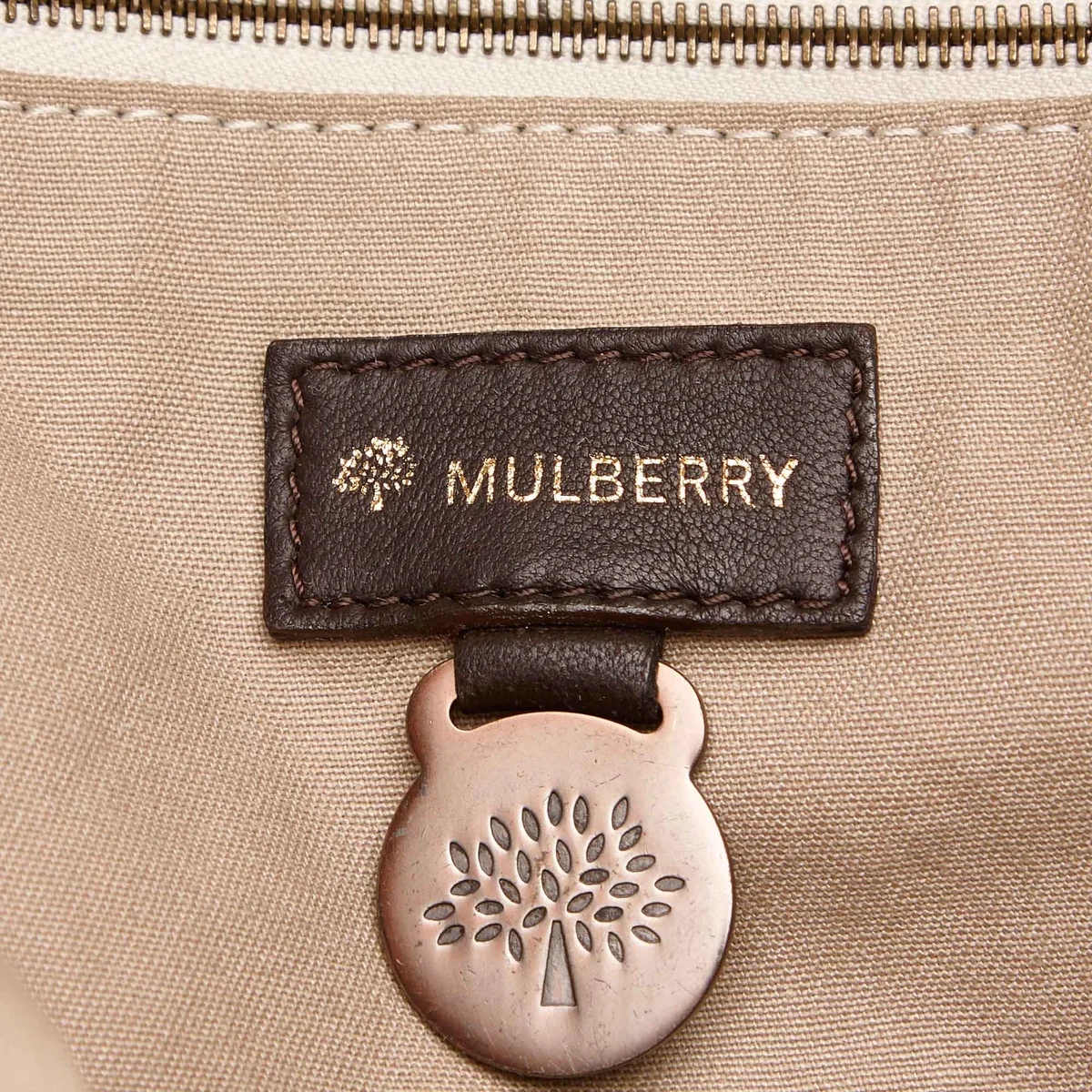
The name and the tree logo both trace back to Roger Saul’s schooldays. He’s spoken about walking past mulberry trees on his way to school, and that memory stuck enough to become the company’s name. The logo itself, the now-instantly-recognizable tree emblem, was designed by Roger together with his sister.
It’s a simple mark, and that simplicity is the point. The tree signals nature, growth and a kind of settled English domesticity, which is a very different brand language than the interlocking monograms or crests you see from French and Italian houses. If you’ve handled Mulberry hardware, you’ll know the tree shows up stamped into leather tabs, embossed on postman’s locks, and etched into buckle plates, small, quiet, and consistent across decades of collections rather than being resized and reissued as a fashion statement the way some competitor logos have been.
Design Philosophy: Countryside Heritage Meets City Edge#
Mulberry’s design language pulls from two sources that shouldn’t work together as well as they do: traditional British country pursuits and London’s sharper urban edge.
The countryside half shows up in the hardware and materials, postman’s locks, saddle-style stitching, heavy buckles and straps that reference equestrian tack and field bags used for shooting and fishing. The leather itself tends toward a slightly rugged, natural grain rather than the glassy, treated finishes you see on some French houses’ calfskin. It’s meant to look like it belongs on a country estate, and it genuinely does age well outdoors in a way some more delicate luxury leathers don’t.
The city half is where Mulberry earns its “fashion house” credentials rather than just “leather goods maker.” Structured satchel shapes, sharper hardware finishes, and collaborations with stylists and It-girls (the Alexa being the obvious example) pulled the brand out of purely heritage territory and into something a London fashion editor would actually carry to a runway show. The tension between the two is genuinely the brand’s identity, not a marketing line. When Mulberry gets it right, a bag reads as both practical and directional. When it gets it wrong, some collections lean too far into either the twee countryside aesthetic or overly trend-chasing shapes that haven’t aged as gracefully as the Bayswater has.
Iconic Mulberry Pieces: The Trout Satchel, The Alexa and Beyond#
A few pieces genuinely define what Mulberry means as a brand, and it’s worth knowing them if you’re shopping resale or trying to understand what holds value.
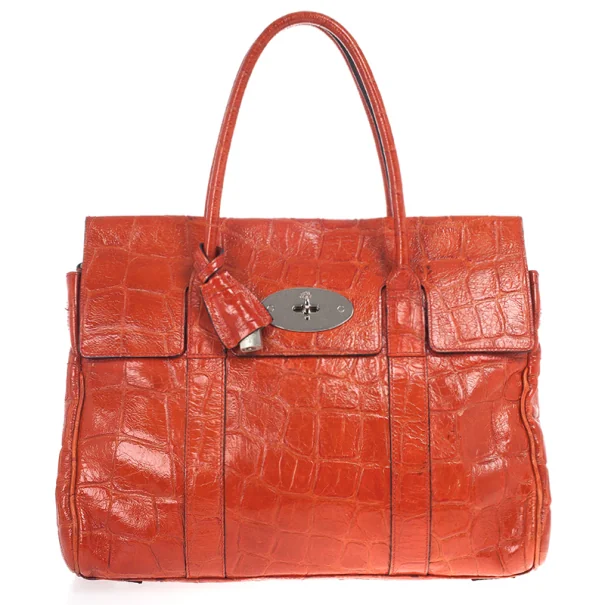
The Bayswater is the piece that put Mulberry on the map as a serious leather goods contender. Structured, boxy, with a postman’s lock closure, it’s the bag most associated with the brand’s rise in the 2000s. It comes in everything from pebbled brown leather to more exotic ostrich skin, and it remains the most recognizable Mulberry silhouette by a wide margin.
The Alexa, introduced around 2007 and named for British model Alexa Chung, is the bag that brought Mulberry a younger, more fashion-forward audience. Its design borrows from two earlier Mulberry styles, the Elkington and the Bayswater, combining the turn-lock hardware and satchel shape into something slouchier and more casual. It’s been produced in red leather, green, beige, lizard-embossed finishes, and plenty of seasonal colorways, and it’s arguably the single bag most people mean when they say “Mulberry handbag” today.
The Trout satchel and pieces like the Brynmore messenger represent the brand’s menswear and unisex side, typically in beige canvas with dark tan leather trim, or brown leather with turn locks, and manufactured in facilities in Turkey that also produce for houses like Givenchy and Dunhill. These are less collected than the women’s icons but genuinely well made and undervalued relative to their construction quality.
The Mitzy Hobo rounds out the lineup as the brand’s answer to the softer, slouchier hobo shape, offered in shades from chocolate brown to pink, and it’s a favorite among people who find the structured Bayswater too formal for everyday use.
Is Mulberry Worth the Investment? A Collector’s Perspective#
Here’s the honest answer, not the marketing one: Mulberry is a genuinely well-made British leather brand, but it doesn’t hold resale value the way Hermès or even Chanel does, and you should go in with that expectation rather than treating it purely as an investment vehicle.
The leather quality is real. Mulberry uses substantial, often vegetable-tanned leathers that develop a nice patina and hold up to daily wear better than a lot of comparably priced competitors. The hardware, particularly the postman’s locks, is solid brass construction, not the lightweight plated metal you find on fast-fashion “luxury” imitators. If you’re buying to actually carry and use for a decade, Mulberry earns its price point on construction alone.
Where it falls short of true investment territory is scarcity and brand positioning. Mulberry doesn’t operate on the waitlist-and-quota model that keeps Hermès resale prices above retail. Discounting is common at outlet and off-season sales, which keeps secondary market prices soft. A well-loved Bayswater or Alexa will typically resell for a fraction of its original price, whereas a comparable Chanel flap or Hermès Birkin often holds or exceeds retail. If you’re buying purely to flip for profit, Mulberry isn’t the right category.
That said, for buyers who want genuine British craftsmanship, a distinct design identity that doesn’t scream logo, and a lower entry price than the French and Italian majors, Mulberry remains a smart buy. The Bayswater in particular has proven durable in both construction and desirability over nearly two decades, which is more than can be said for a lot of “it bags” from the same era. Buy it because you love the design and the leather, not because you expect it to appreciate.
FAQ: Common Questions About Mulberry#
Is Mulberry considered a true luxury brand? Yes, though it sits in the accessible-luxury tier rather than alongside Hermès or Chanel. It’s a genuine British heritage house with its own factories and design language, priced below the top-tier French houses.
What does the Mulberry tree logo mean? It references founder Roger Saul’s memory of mulberry trees he passed on his way to school as a child. He designed the mark with his sister, and it’s meant to evoke nature, growth and a rooted, family-founded identity.
Who founded Mulberry and when? Roger Saul founded Mulberry in 1971 in Somerset, England, with his mother Joan Saul, who financed the start-up with a £500 loan. Roger began making leather goods in the family kitchen.
What is Mulberry’s most iconic bag? The Bayswater is generally considered the defining Mulberry design, though the Alexa, launched around 2007 and named after Alexa Chung, is the piece most credited with modernizing the brand’s image.
Does Mulberry hold its resale value? Not as strongly as Hermès or Chanel. Mulberry bags are well constructed and durable, but frequent discounting and a less scarcity-driven retail model mean resale prices typically sit well below original retail.
Where are Mulberry bags made? Many Mulberry bags, particularly menswear pieces, are produced in specialized facilities in Turkey that also manufacture for houses like Givenchy and Dunhill, alongside production in the UK.
Related Articles#
- Popular Handbag Brands: Which One Is Right for You?
- 10 Most Iconic Louis Vuitton Bags to Buy in 2026
- Louis Vuitton Alma Bag: The Ultimate Buying Guide
- Designer Handbag Trends 2025: What’s Actually Worth Buying
- 4 Reasons Bally Bags Are Worth Buying: A Buying Guide


Keyword index