Introduction: The Legacy Behind Every Chanel Bag #
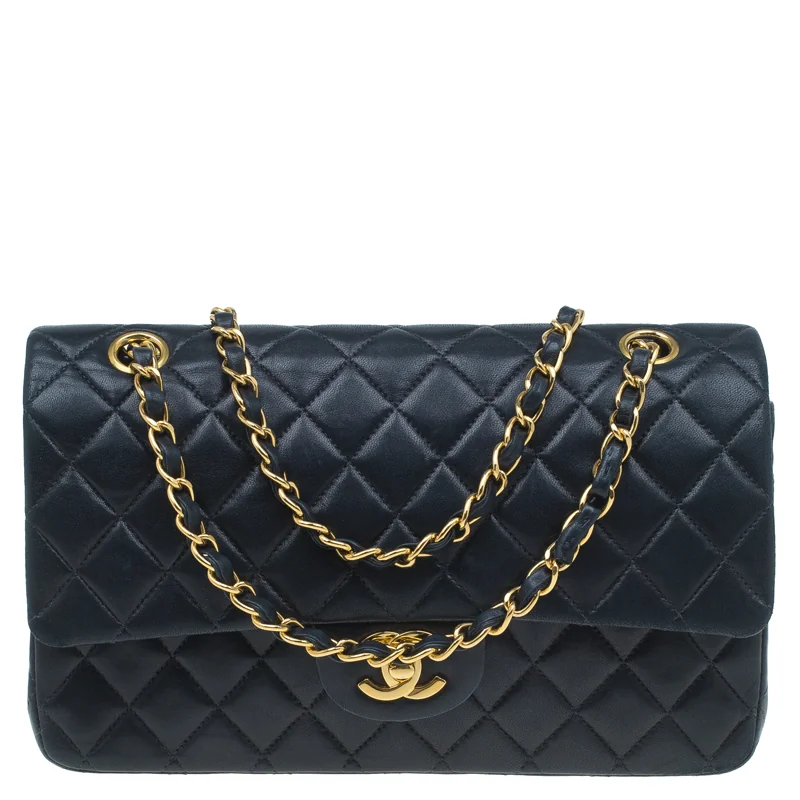
Every design detail on a Chanel bag traces back to a decision Gabrielle “Coco” Chanel made almost a century ago, and that’s part of why the house’s leather goods still command attention (and money) the way almost no other brand’s do. The chain-link strap wasn’t a styling flourish. Chanel borrowed the idea from the key chains worn by the nuns at the convent where she spent part of her childhood. The burgundy lining that shows up across decades of flap bags nods to the uniforms worn by the orphans there. Even the quilting, the diamond-stitched matelassé pattern that’s become shorthand for “Chanel” on sight, was lifted from the jackets worn by jockeys.
The hardware tells its own story. The turn-lock on the flap bag is called the “mademoiselle lock,” a quiet reference to the fact that Chanel never married and kept her maiden title her entire life. The interlocking CC logo is usually read as her initials, though there’s a persistent and fairly credible theory that it also honors Arthur “Boy” Capel, the lover who backed her first boutique and never lived to see the empire it became.
None of this is trivia for its own sake. If you’re shopping for a Chanel bag, especially on the pre-owned market, knowing where these details come from helps you recognize when a bag is off. A counterfeit maker can copy a silhouette. Getting the weight of the mademoiselle lock, the depth of the quilting, or the exact chain finish right is much harder, and that’s usually where fakes give themselves away.
Why a Chanel Bag Is Considered an Investment #
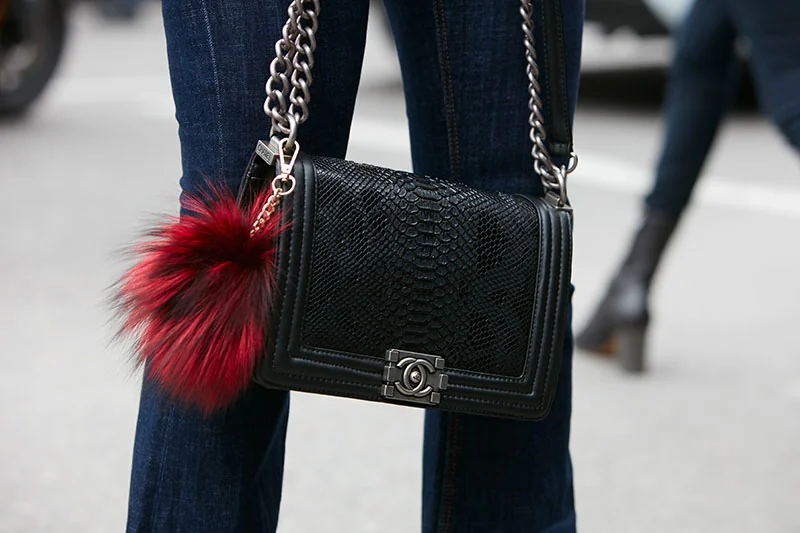
“Handmade” gets thrown around loosely in luxury marketing, so it’s worth being precise about what actually happens on a Chanel bag. The leather is selected and cut first, often by hand, since flaws in a hide have to be worked around before a panel is cut. The core panels then go through machine stitching, but that step isn’t as simple as it sounds. Chanel ateliers report that it takes an artisan roughly four to five years of training before they’re trusted to run those machines on a finished bag. Everything after that, the zips, the fasteners, attaching the chain strap, setting the hardware, is done entirely by hand. That’s the actual craftsmanship story: a hybrid of precision machine work and hand-finishing, not an entirely hand-sewn bag.
That production standard, combined with genuinely premium hides (lambskin, caviar leather, exotic skins), is why these bags hold up structurally over decades rather than years. It’s also part of why the price has moved so consistently in one direction.
The trajectory is well documented if you look back far enough. A Classic Flap that sold for roughly $700-$800 in the early 1980s is now priced well into four figures at retail. Chanel has pushed through multiple price increases a year in some recent cycles, partly tied to raw material costs, partly a deliberate brand strategy to protect exclusivity and margin. For a buyer, that consistent appreciation is exactly why a Chanel bag behaves less like a depreciating accessory and more like an asset with a resale floor, provided the bag is authentic, in good condition, and a design the market actually wants (not every colorway or limited edition holds value equally).
None of this means every Chanel bag is a guaranteed win. Trend pieces, heavily embellished limited editions, and unusual colors can sit on the resale market for a long time even when the classic black caviar version of the same bag sells in days.
3 Most Iconic Chanel Handbags and Their Average Prices #
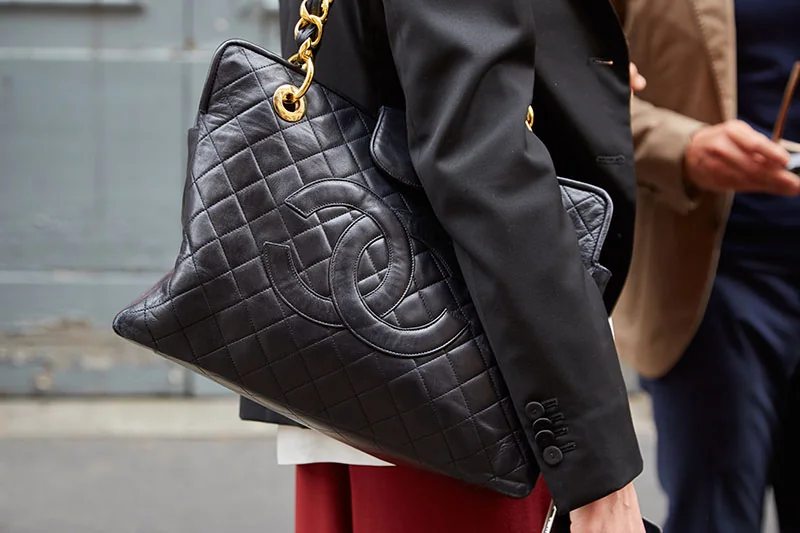
Chanel Classic Flap Bag #
Launched in February 1955 (hence “2.55” for the reissue, not this bag), the Classic Flap is credited as one of the first true shoulder bags for women at a time when handbags were still mostly carried, not worn. It has a single flap with a snap closure, an extended lip, and the CC turn-lock. Inside, there’s a zip pocket sitting above two open pockets, with the CC logo stitched into the flap lining. The chain strap can typically be worn short, long, or doubled, which is part of why it’s stayed relevant across so many eras of fashion.
It comes in seven main size options and multiple leather types: lambskin (soft, but the most prone to scratches and rippling), caviar (textured, structured, far more resistant to daily wear), patent, and, for collectors, exotic skins like alligator and python. Hardware runs gold-tone, silver-tone, gunmetal, and antiqued “brushed gold” on vintage pieces.
Current average price: a Small Classic Flap in caviar starts around $8,800-$9,500 at retail, with the Medium closer to $10,200-$10,600. Lambskin and caviar are priced the same size-for-size; exotic skins run well above that, and jersey or velvet seasonal versions typically cost less.
Chanel 2.55 Reissue #
Karl Lagerfeld reintroduced the original 1955 design in 2005 to mark its 50th anniversary, and it’s stayed in permanent rotation since. The giveaway details that separate it from the Classic Flap: a rectangular “mademoiselle” push-lock instead of the CC turn-lock, an exposed, slightly aged-looking chain (often gunmetal, matching the vintage aesthetic Lagerfeld was chasing), and a distressed calfskin finish rather than the glossier caviar most Classic Flaps use.
Current average price: the 225 size (medium) generally runs $8,700-$9,300, with the smaller 224 slightly under that. It tends to price a touch below the equivalent Classic Flap size, which surprises some first-time buyers given its historical significance.
Chanel Boy Bag #
Introduced for Fall/Winter 2011, the Boy bag is named for Arthur “Boy” Capel and was designed with a harder, more masculine silhouette, drawing from military cartridge bag shapes. It has a rectangular push-lock instead of the rounded mademoiselle lock, a structured boxy body, and a chain strap threaded through leather at the shoulder points rather than woven throughout like the Classic Flap.
Current average price: a Small Boy bag typically sits around $6,700-$7,200, with the Medium closer to $7,600-$8,100, making it the most accessible entry point of the three main icons.
New vs Pre-Owned: Where to Buy Your Chanel Bag #
Buying new means walking into a boutique and, for the most in-demand pieces, potentially being told the bag isn’t available that day regardless of what’s showing online. Chanel intentionally restricts stock on core styles, and staff often allocate bags based on purchase history with the brand. It’s not unusual to be offered a waitlist or asked to build a relationship with an SA (sales associate) before being offered a Classic Flap in classic black caviar. The upside is certainty: you know the bag is authentic, it comes with its box, authenticity card, and dust bag, and you get the current-season hardware and construction.
The pre-owned market solves the availability problem and, in many cases, the price problem too. Because Chanel raises prices multiple times a year, a well-kept bag bought two or three years ago can resell for close to, or sometimes above, its original retail price, which is unusual in luxury goods generally. Reputable resale platforms and consignment boutiques that specialize in authenticated luxury inventory (rather than open marketplaces with no vetting) are the safer route here. You get access to discontinued colors, older hardware finishes some buyers prefer, and sizes that current retail may not be producing.
The trade-off is that you’re relying entirely on the seller’s authentication process. A platform that physically inspects stitching, hardware stamping, and interior tags before listing is worth paying a premium over one that doesn’t, because the downside of an unauthenticated purchase (a bag that turns out to be a replica, or worse, seized by customs) far outweighs any savings.
Authentication Tips: How to Spot a Real Chanel Bag #
A handful of checkpoints catch the majority of counterfeits, even good ones.
Stitching: Genuine Chanel stitching is even, tight, and consistent in length across every seam, including underneath the flap where fakes often get sloppy since makers assume no one checks there. Loose threads, uneven quilting diamonds, or stitching that doesn’t line up symmetrically on both sides of the flap are red flags.
Hardware: Authentic hardware has real heft. It shouldn’t feel light or hollow, and the CC turn-lock should have a satisfying, precise click, not a loose wobble. Look closely at the engraving on the back of the lock and on the chain links; Chanel’s engravings are crisp and evenly spaced, while replicas tend to have slightly blurred or inconsistent stamping.
Authenticity card and serial verification: Chanel used sequential serial number stickers inside the bag through 2020, then transitioned to a system using a unique identifier tied to an authenticity card, with newer bags incorporating a microchip that can be scanned in boutique. If a bag claims to be from 2021 or later but has an old-style sticker (or no card at all), that’s worth questioning before buying. Note that a serial sticker alone has never been proof of authenticity on its own, since counterfeiters copy real serial numbers onto fake bags. It’s one data point, not the whole verification.
Interior tag and font: The “CHANEL Paris Made in France” (or Italy) stamp inside should have a specific font weight and letter spacing that Chanel is consistent about. Fonts that look slightly condensed, too bold, or unevenly spaced are common tells on replicas.
Overall smell and feel: This sounds unscientific, but experienced buyers rely on it constantly. Genuine leather has a specific, rich smell; heavy chemical or “new plastic” odors on a bag marketed as lambskin or caviar are a warning sign.
When in doubt, get a third-party authentication service or a specialist to physically inspect the bag before finalizing a pre-owned purchase. It typically costs far less than the risk it eliminates.
Chanel Handbag Price List by Iconic Style (2025 Update) #
| Model | Popular Sizes | Approx. Retail Price (2025) |
|---|---|---|
| Classic Flap (Small) | 20cm x 12cm x 6cm | $8,800 - $9,500 |
| Classic Flap (Medium) | 25cm x 15cm x 7cm | $10,200 - $10,600 |
| 2.55 Reissue (224 / 225) | 20cm-24cm width range | $8,300 - $9,300 |
| Boy Bag (Small) | 20cm x 14cm x 7cm | $6,700 - $7,200 |
| Boy Bag (Medium) | 25cm x 16cm x 8cm | $7,600 - $8,100 |
| Chanel 19 (Small) | 26cm x 16cm x 9cm | $6,400 - $6,900 |
| Chanel 19 (Medium) | 30cm x 19cm x 10cm | $7,300 - $7,800 |
| Wallet on Chain (WOC) | 19cm x 12cm x 3.5cm | $4,050 - $4,650 |
Prices vary by leather type, hardware finish, and region (EU and Asia-Pacific pricing frequently differs from US pricing due to currency adjustments Chanel makes independently). Treat these as representative ranges rather than fixed figures, and always confirm current pricing directly with a boutique before budgeting.
Price history: how fast these bags have appreciated #
| Year | Classic Flap (Medium), approx. | Boy Bag (Medium), approx. |
|---|---|---|
| 2015 | $4,900 | $4,600 |
| 2018 | $5,600 | $5,000 |
| 2020 | $6,800 | $5,700 |
| 2022 | $8,800 | $6,900 |
| 2024 | $10,000 | $7,700 |
| 2025 | $10,200 - $10,600 | $7,600 - $8,100 |
The steepest jumps happened between 2020 and 2022, when Chanel pushed through several increases in a single year, partly attributed to raw material costs and partly to a deliberate repositioning against Hermès. That period is also when resale prices on pre-2020 bags climbed fastest, since buyers who’d bought before the hikes were sitting on bags now worth noticeably more than they paid.
Classic Flap vs. Boy vs. 2.55: Price and Value Comparison #
| Classic Flap | 2.55 Reissue | Boy Bag | |
|---|---|---|---|
| Launch year | 1955 | 2005 (reissue) | 2011 |
| Closure | CC turn-lock | Rectangular push-lock | Rectangular push-lock |
| Typical leather | Lambskin, caviar | Aged/distressed calfskin | Caviar, calfskin |
| Everyday durability | High (caviar), moderate (lambskin) | Moderate | High |
| Average retail (medium) | $10,200 - $10,600 | $8,700 - $9,300 | $7,600 - $8,100 |
| Resale value retention | Strongest of the three, especially caviar/black | Strong, slightly softer than Classic Flap | Good, but more trend-sensitive |
If pure resale value is the priority, a black caviar Classic Flap in a common size is the safest bet in the Chanel range, full stop. The 2.55 Reissue holds value nearly as well but has a smaller resale pool, meaning it can take longer to sell even at a fair price. The Boy bag depreciates a little faster in unusual colors or hardware finishes, though the black caviar/gold hardware combination is nearly as stable as the Classic Flap’s.
How Chanel stacks up against Hermès and Louis Vuitton #
Buyers researching Chanel are frequently cross-shopping Hermès Kelly and Birkin bags, and the comparison is useful context. Hermès operates on a much stricter allocation model (there’s effectively no walk-in purchasing for a Birkin at most boutiques), which pushes resale premiums on Birkins and Kellys well above retail in many cases, something that essentially never happens with Chanel. Louis Vuitton, by contrast, is far more accessible at retail, but its core canvas bags depreciate faster on resale than Chanel’s leather flap bags, since LV’s volume is simply much higher and scarcity plays a smaller role in its pricing.
Chanel sits in between: harder to walk in and buy than LV, easier than Hermès, with resale value that trails Hermès but comfortably outperforms most other leather goods houses. For a buyer weighing all three, Chanel is generally the more attainable “investment bag” category, while Hermès remains the ceiling for resale performance.
FAQ: Chanel Handbag Prices and Buying Tips #
Why do Chanel bags keep going up in price every year? Chanel has pushed through multiple price increases annually in recent years, citing raw material and production costs, but the pattern also functions as a deliberate scarcity strategy. Buying sooner rather than later, for a bag you actually plan to use for years, tends to make financial sense given this trend.
Does the leather type affect resale value? Yes. Caviar leather holds value better than lambskin because it resists scratching and wear far better, so pre-owned caviar bags in good condition consistently outsell comparable lambskin pieces at similar prices.
Is it safe to buy a Chanel bag on a resale marketplace? It depends entirely on whether the seller or platform actually authenticates inventory before listing it. Open marketplaces with no vetting carry real risk. Specialist luxury resale platforms and consignment boutiques that physically inspect bags are significantly safer, even at a slightly higher price point.
What’s the most affordable “real” Chanel bag to start with? The Wallet on Chain (WOC), at roughly $4,050-$4,650, is the lowest entry point into the Classic Flap design language, sharing the same quilting, turn-lock, and chain strap in a smaller crossbody format.
Do Chanel bags actually appreciate, or just hold value? Certain configurations genuinely appreciate, particularly discontinued colors, older hardware finishes, and bags bought before a major price increase. Most current-production bags in common colorways hold value closely rather than gaining significantly beyond retail, similar to a strong but not exceptional resale asset.
How can I verify a serial number is legitimate? A serial sticker or authenticity card number alone doesn’t confirm authenticity, since counterfeiters can replicate real numbers. Combine it with physical inspection of stitching, hardware weight, and interior tag font, or use a professional authentication service for anything above a few hundred dollars in risk.
Related Articles #
- 5 Iconic Bags Named After Famous Women (Buying Guide)
- Why the Chanel Crossbody Bag Never Goes Out of Style
- Classic and Chic Handbags: Timeless Style Icons
- Luxury Price Hikes 2026: Causes & Resale Market Impact
- How Pre-Owned Luxury Fashion Is Reshaping the Industry
Related guides
- Online Bag Authentication: What Photos Can and Cannot Prove
- How to Spot a Fake Hermès Birkin: Expert Tips
- How to Authenticate a Chanel Bag: 10 Expert Checks
- Fake Goyard Bag Guide: How to Spot Real vs Fake (2026)
- How to Buy an Authentic Luxury Bag from China Safely
- New vs Pre-Owned Luxury Bags: Which Route Is Right for You?
- Chanel Bag Guide: What to Know Before You Buy
- Luxury Bag Houses


Keyword index