Introduction #
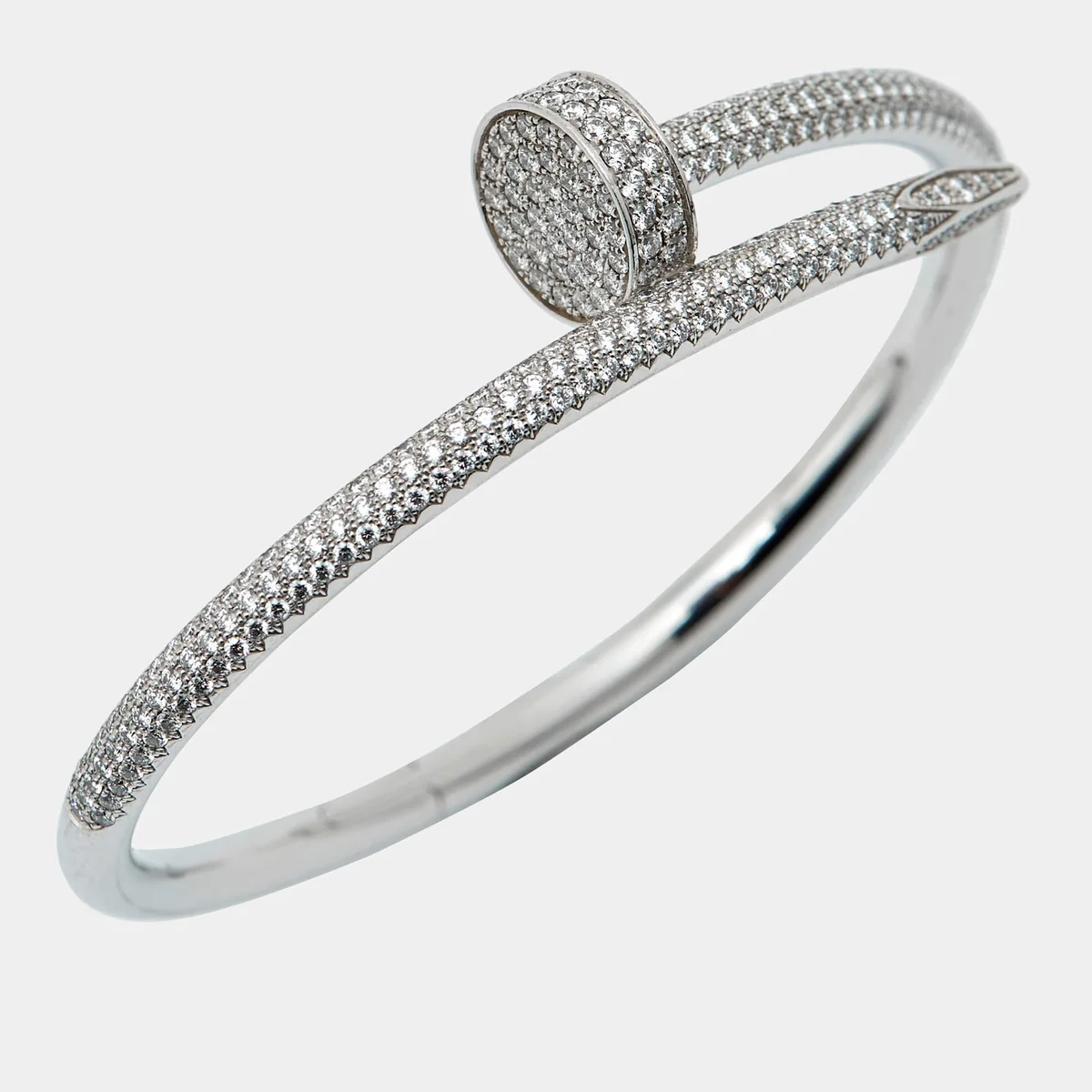
Ask five different secondhand jewelry dealers whether a Cartier piece holds its value, and you’ll get five confident “yes” answers before they even see the item. That confidence is rare in luxury goods. Handbags depreciate the moment they leave the store. Watches swing wildly with hype cycles. Fine jewelry from most brands quietly loses 50% or more the second it changes hands. Cartier is the exception buyers keep coming back to, and it’s worth understanding why before you spend five figures on a bracelet you may want to sell in a decade.
This guide isn’t a [brand history](/brands/trussardi-brand-history/) lesson. It’s a practical breakdown of what actually happens to Cartier pieces on the resale market: which collections hold up, which don’t, what kills value fastest, and where to actually sell when the time comes. If you’re buying with resale in mind, or sitting on a piece and wondering what it’s really worth, this is the version of that answer with numbers attached.
Does Cartier Jewelry Hold Its Value? The Short Answer #
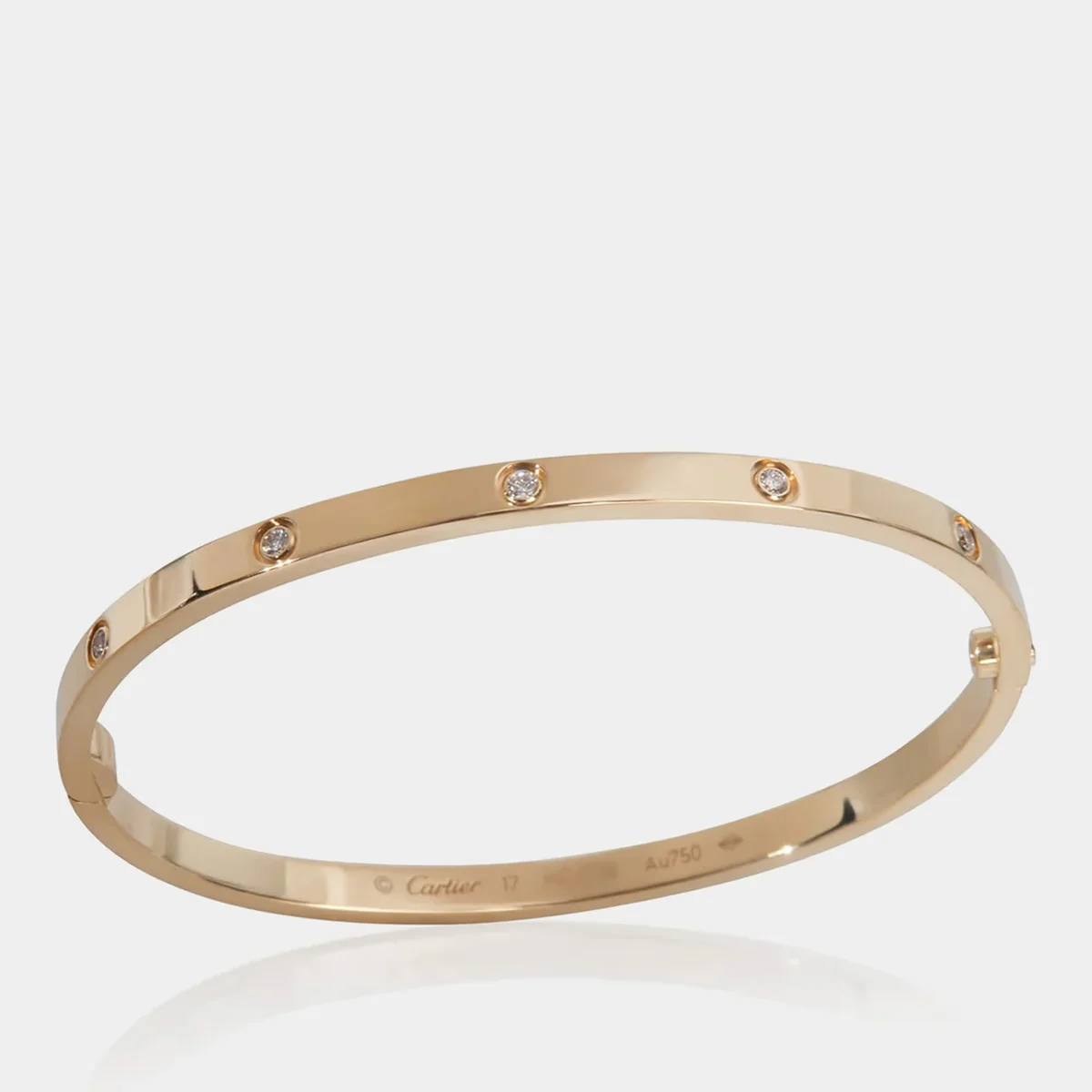
Yes, more consistently than almost any other fine jewelry house, but “Cartier” isn’t one product. It’s a portfolio, and resale performance splits sharply by collection, material, and condition.
As a baseline, core pieces in the Love, Trinity, and Juste un Clou lines typically resell in the range of 55% to 85% of current retail when they’re in strong condition with box and papers. That’s a dramatically better outcome than the 20% to 40% range you’ll see on most designer fine jewelry, and it puts Cartier closer to how a well-kept luxury watch behaves than how jewelry usually behaves.
The financial backdrop supports this. Richemont, Cartier’s parent company, posted €22.4 billion in annual sales for the year ending March 2026, up 11% at constant exchange rates, with net profit climbing 27% to €3.5 billion. The jewelry division, driven mainly by Cartier and Van Cleef & Arpels, grew 14% with a 30.5% operating margin, easily the strongest unit in the group. Richemont’s market valuation has more than doubled over five years to roughly $123 billion, even as fashion and leather goods brands across the luxury sector slowed down. A brand backed by that kind of financial engine and consumer demand doesn’t see its secondary market collapse the way struggling houses do.
None of that means every Cartier item is a safe bet. A thin, low-carat Love bangle bought at a discount and sold scratched, without papers, can land closer to 40% of retail. The strength is real, but it’s earned piece by piece, not guaranteed by the crown on the box.
Why Cartier’s Resale Value Outperforms Other Luxury Brands #
Cartier’s resale strength comes down to a few deliberate choices the brand has made for over a century, plus a comparison against rivals that haven’t made the same ones.
Heritage without dilution. Cartier built its reputation as “jeweler of kings” and has resisted the kind of mass-market expansion that erodes prestige. Compare that to Tiffany, which spent decades selling silver bean pendants at accessible price points alongside its fine jewelry. That accessibility built brand awareness but also trained the market to see Tiffany as attainable rather than rare, and resale values reflect it. Tiffany fine jewelry, outside of vintage Schlumberger or Elsa Peretti pieces, commonly resells in the 30% to 50% range.
Design that doesn’t age. The Love bracelet, Trinity ring, and Juste un Clou have barely changed in decades. There’s no “last season” model dragging down demand for older pieces, unlike Chanel fine jewelry, where design language shifts more visibly between collections and the pre-owned market for Chanel jewelry (as opposed to bags) remains comparatively thin and inconsistent in pricing.
Controlled supply. Cartier doesn’t chase volume the way some competitors do. Bulgari, by contrast, has pushed harder into diffusion lines and broader retail distribution with Serpenti and B.zero1, and it shows in resale: those lines typically land in the 40% to 60% range, noticeably behind Cartier’s core pieces, though Bulgari’s high jewelry and vintage tubogas pieces perform much closer to Cartier’s numbers.
Van Cleef & Arpels is the real peer. VCA’s Alhambra collection is arguably tighter on supply than Cartier’s core line, and clover-motif Alhambra pieces in gold or with hardstone inlay often resell at 65% to 90% of retail, sometimes matching or beating Cartier depending on the model and metal. If there’s a brand genuinely competing with Cartier for best-in-class resale, it’s VCA, not Tiffany or Bulgari.
Metal content as a floor. Every core Cartier piece uses solid 18k gold, which carries real commodity value independent of brand premium. When gold prices rise, as they have significantly in recent years, that floor rises with it, giving Cartier pieces a value cushion that costume-adjacent luxury jewelry simply doesn’t have.
Annual price increases. Cartier raises retail prices roughly 2% to 3% a year across its core lines. A Love bracelet bought three years ago at a lower price point looks increasingly attractive on the resale market as new retail climbs, which is part of why well-timed used purchases can actually hold flat or gain nominal value even before accounting for gold appreciation.
Which Cartier Collections Retain Value Best #
Grouped by design philosophy rather than treated as a flat list, three tiers emerge clearly in the secondary market.
Top tier: Love and Juste un Clou. These are bold, minimal, unisex, and instantly recognizable even to buyers with no jewelry background. That broad recognizability is what drives resale demand beyond just existing Cartier collectors. They also tend to be sold in gold-forward designs with little reliance on gemstones, which means their value is anchored more in metal weight and brand desirability than in stone quality that’s harder to verify secondhand.
Strong but more price-sensitive: Trinity. The three-band Trinity ring and bracelet are iconic, but they’re also sold at lower price points and in higher volumes than Love or JUC, which softens resale slightly. Plain tri-gold Trinity rings hold up well relatively speaking, but they don’t command the same percentage retention as a Love bangle because the entry price was lower to begin with and the design has more direct market substitutes.
Most variable: Panthère. This is where collection-level generalizations break down fastest. A plain gold Panthère ring performs modestly. A vintage Panthère piece with enamel detailing, diamond pavé, or the articulated panther-head motif can significantly outperform, sometimes exceeding retail at auction, because those pieces overlap with Cartier’s high jewelry heritage and appeal to collectors rather than just brand buyers. Panthère is less a single collection for resale purposes than a spectrum from “nice gold ring” to “collector-grade object.”
Key Factors That Affect Cartier Resale Value #
Condition. Deep scratches on a Love bangle, worn plating on white gold pieces (which is often rhodium-plated and does wear), or a bent Juste un Clou nail shape all reduce value meaningfully, sometimes by 15% to 25% off comparable clean examples.
Engraving. This one surprises first-time sellers. Cartier’s screw-motif engraving on Love pieces is expected and doesn’t hurt value. Personal engraving, initials, names, or dates, does, often knocking 10% to 20% off resale because buyers want a blank piece they can make their own, not someone else’s sentimental object.
Materials and stones. Plain 18k gold pieces are the easiest to value and sell because buyers can assess them on sight. Diamond-set versions add real cost but don’t always add proportional resale value unless the stones are certified and the setting is verifiable as original Cartier work rather than an aftermarket addition.
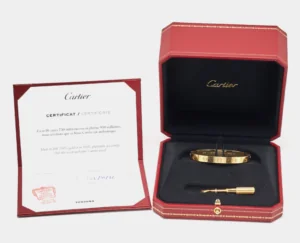
Box, papers, and authentication. A piece with its original box, Cartier certificate, and purchase receipt typically commands a 10% to 20% premium over an identical piece sold “bare.” This matters more for Cartier than for many brands because counterfeiting in the Love and JUC categories is aggressive, and buyers pay for the certainty documentation provides.
Market timing. Gold price swings directly affect the floor value of every piece. Selling during a gold price spike, as has happened repeatedly in recent years, can meaningfully improve your outcome independent of anything Cartier-specific.
How to Maximize Value When Buying or Selling Cartier #
If you’re buying for resale potential: Stick to core, unmodified pieces in classic metals. A plain yellow or rose gold Love bracelet in a standard size is easier to resell than a heavily diamond-paved white gold version, because the buyer pool is larger and valuation is simpler. Buy from an authorized Cartier boutique or a reputable pre-owned dealer that provides paperwork, and keep every document that comes with the purchase, including the receipt, in a dedicated folder. Avoid personal engraving if resale is a real consideration down the line.
If you’re selling, match the venue to the piece:
- Consignment platforms (Fashionphile, The RealReal, The Luxury Closet) work well for standard Love, Trinity, and JUC pieces. They handle authentication and photography for you, but expect to net roughly 60% to 80% of the platform’s sale price after commission, and the sale price itself is usually below full retail.
- Peer-to-peer resale marketplaces (Vestiaire Collective, Rebag) offer faster turnaround and sometimes better net proceeds on common pieces, but buyer trust and authentication scrutiny are higher hurdles you’ll need to clear with clear photos and documentation.
- Auction houses (Sotheby’s, Christie’s) are the right call for vintage, limited-edition, or high jewelry Panthère pieces, anything with genuine collector appeal. Auction fees cut into proceeds on both sides, but rare pieces can achieve prices that flat resale platforms never will.
- Private sale through a trusted network or specialist dealer can yield the best net price with the lowest fees, but it’s slower, requires you to handle authentication questions directly, and carries more personal risk if something goes wrong with payment or the buyer’s legitimacy.
Timing matters too. If gold prices are elevated, selling sooner rather than later can lock in a better floor value regardless of which venue you choose.
Which Cartier Pieces Hold Value Best (Love, Juste un Clou, Trinity, Panthère) #
Breaking it down to specific, practical answers:
- Love bracelet (plain gold, no diamonds): Among the strongest performers in the entire fine jewelry resale market, commonly retaining 70% to 85% of current retail in excellent condition with papers.
- Love bracelet (pavé diamond): Retains value well but slightly less predictably than the plain version, typically 60% to 75%, since diamond quality assessment adds friction for buyers.
- Juste un Clou bracelet: Performs close to the Love bracelet, often 65% to 80%, with the small and medium sizes moving fastest due to broader wrist-size compatibility.
- Trinity ring (classic tri-gold): Solid but more moderate, generally 50% to 65%, reflecting its lower original price point and wider market availability.
- Panthère (plain gold ring or pendant): Middling performance, roughly 45% to 60%, competitive but not standout.
- Panthère (vintage, enamel, or diamond pavé head motif): The outlier. These can meet or exceed original retail at auction for rare examples, driven by collector demand rather than typical resale dynamics.
- Discontinued or limited-run pieces across any collection, including colored-gemstone Love bracelets, Trinity collaborations, and early-production Panthère jewelry, carry genuine scarcity premiums, but only when documented as authentic and in strong condition. Discontinued alone doesn’t guarantee a premium; desirability has to be there too.
What Affects Cartier Jewelry Resale Value #
A quick reference for the variables that move the number up or down on any given piece:
- Condition and wear, especially on white gold plating and bracelet clasps
- Presence of original box, certificate, and receipt
- Personal engraving versus factory screw-motif engraving
- Metal type and current gold market pricing
- Whether the piece is a core model or a limited/discontinued run
- Authentication status, since counterfeit Love and JUC pieces are common enough that unverified items sell at a steep discount regardless of actual authenticity
FAQ #
Does servicing or resizing a Cartier piece hurt resale value? Not if done through Cartier or a qualified jeweler and documented. Undocumented aftermarket resizing, especially on Love bracelets where the screw mechanism is altered, can raise authentication concerns and reduce buyer confidence.
Is an engraved Love bracelet worth less than an unengraved one? The factory screw-pattern engraving doesn’t hurt value. Personal text engraving typically does, often 10% to 20%, because it limits the buyer pool to people comfortable with someone else’s engraving or willing to pay for removal.
Do Cartier prices really go up every year, and does that help resale? Yes, Cartier has raised core collection prices roughly 2% to 3% annually in recent years. It helps resale indirectly: pieces bought at older, lower retail prices look more attractive against a rising current retail baseline.
Is it better to sell at auction or through a consignment platform? Auction makes sense for rare, vintage, or high jewelry pieces where collector demand can push the price above typical resale ranges. For standard Love, Trinity, or JUC pieces, consignment or resale platforms are usually faster and comparably net, without auction house fees eating into a price that wasn’t going to be exceptional anyway.
Can a Cartier piece lose value even if the brand is strong? Yes. Heavy wear, missing documentation, personal engraving, and buying during a gold price peak followed by a market dip can all pull a specific piece’s resale well below the brand-level averages. Cartier’s overall performance is strong, but it doesn’t protect an individual poorly-maintained or undocumented item.
Related Articles #
- Bvlgari Resale Value: Best Pre-Owned Pieces to Buy
- 6 Iconic Cartier Watches That Hold Their Value
- Sell Designer Handbags in 2025: Get Paid More, Faster
- 5 Limited Edition Designer Bags Worth Collecting
- Pre-Owned Luxury Gold Jewelry: Smarter Than Bullion?
Related guides
- Online Bag Authentication: What Photos Can and Cannot Prove
- Inside a Million-Dollar Closet: Pre-Loved Hermès & More
- Meet Marwa Azzam Aldabbagh: Kelly Bag Authentication Expert
- Luxury Handbag Authentication Process Explained
- How to Buy an Authentic Luxury Bag from China Safely
- New vs Pre-Owned Luxury Bags: Which Route Is Right for You?
- Chanel Bag Guide: What to Know Before You Buy
- Luxury Bag Houses

Keyword index