Introduction #
Say the name Jimmy Choo to almost anyone with a passing interest in fashion, and they’ll picture the same thing: a jewel-toned satin pump, a red carpet, a flash of paparazzi light. Few footwear labels have crossed so completely into pop culture — namedropped in chart-topping songs, written into sitcom scripts, and used as shorthand for “made it” glamour in movies that have nothing to do with fashion at all. That kind of cultural saturation doesn’t happen by accident, and it didn’t happen overnight.
What makes the brand’s rise genuinely interesting is how far it travelled — from a one-man workshop in a converted East London hospital to a publicly traded, multi-billion-dollar name under one of the world’s largest luxury conglomerates. Understanding that arc matters for more than trivia’s sake. If you’re shopping pre-loved Jimmy Choo, tracking down a specific heel style, or trying to work out whether a listing is the real thing, knowing how the brand actually developed — its ownership changes, its creative leadership, its signature product lines — gives you a much sharper eye than any spec sheet alone.
The Humble Beginnings of Jimmy Choo #
The man behind the name had nothing resembling a luxury upbringing. Datuk Jimmy Choo Yeang Keat was born on November 15, 1948, in Penang, Malaysia, into a family that had been making shoes for generations. His father taught him the trade directly, and by most accounts Choo hand-stitched his first pair of shoes at just 11 years old — a detail that tells you the craft wasn’t a career choice so much as an inheritance.
There’s a small, almost accidental piece of trivia buried in the family history: the surname was originally “Chow,” but a clerical error on his birth certificate recorded it as “Choo” instead. Had that typo never happened, the label on millions of shoeboxes today would read “Jimmy Chow.”
Choo moved to London to formalize his training, enrolling at Cordwainers Technical College — the institution now absorbed into the London College of Fashion. Funding that education meant working two jobs simultaneously: shifts at a restaurant, plus part-time cleaning work at a shoe factory. He graduated in 1986 and, rather than joining an established house, set up his own small operation in a former hospital building in Hackney. It was unglamorous, undercapitalized, and entirely built on hand craftsmanship — the opposite of how most people imagine a future luxury brand starting out.
The Breakthrough Moment: Fame and Royal Endorsement #
The turning point came fast once it arrived. By 1988, just two years after graduating, Choo’s work earned an eight-page feature in British Vogue — a serious editorial nod for a designer with no backing and no retail presence to speak of.
The real inflection point, though, was 1990, when Diana, Princess of Wales, started wearing his designs publicly. Her patronage wasn’t a one-off photo opportunity; Choo was reportedly invited to Kensington Palace on multiple occasions to work with her directly. For a niche craftsman with a single workshop, that kind of royal association functioned as an industry-wide seal of approval overnight. In 2002, his contribution to British fashion was formally recognized with an OBE.
What’s less often discussed is how the brand’s cultural footprint kept expanding well beyond that royal endorsement. Through the 1990s and 2000s, Jimmy Choo became one of the recurring visual signifiers of aspirational glamour on screen — footwear closely tied to the “Sex and the City” era of shoe obsession, referenced alongside Manolo Blahnik as the label serious shoe collectors chased. The name also worked its way into music, most memorably in Fergie’s 2007 single “Glamorous,” where owning Jimmy Choos is treated as cultural shorthand for having arrived. That’s a rare kind of brand penetration — moving from Vogue editorial to song lyric to sitcom dialogue — and it’s part of why the label still carries instant recognition today, decades after Choo himself stepped back from the business.
Building a Global Brand: Partnership and Expansion #
A skilled craftsman and a scalable global label are two different things, and the gap between them closed thanks to a specific business relationship. Tamara Yeardye Mellon, then an accessories editor at British Vogue, recognized commercial potential in Choo’s work that went beyond bespoke commissions. The two began collaborating on projects before formally co-founding Jimmy Choo Ltd in 1996.
The partnership mattered structurally, not just financially. Designer footwear at the time was still largely a male-dominated field, and Mellon brought both a woman’s perspective on wearability and the retail instincts to turn a made-to-order atelier into a ready-to-wear label people could actually walk into a store and buy. The first Jimmy Choo boutique opened on Motcomb Street in London in 1996. By 1998, the brand had crossed into the US market with stores in New York City and Beverly Hills — an unusually fast international expansion for a house that had started as a single-workshop operation just a couple of years earlier.
This period also laid the groundwork for the brand’s later move beyond shoes entirely. As the retail footprint grew, the product range began stretching into eyewear and small accessories, setting up the categories — handbags especially — that would eventually become just as central to the brand as its footwear.
Ownership Changes and Continued Growth #
The Choo–Mellon partnership didn’t survive long-term. By 2001, tensions between the two had grown enough that Choo sold his 50% stake in the company for a reported $10 million, stepping back from the label that carried his name to focus on his own couture work. That sale kicked off a long, fairly typical private-equity chapter for a growing luxury brand:
- 2004: A controlling stake passed to a new investment group as Mellon pushed for further retail and accessories expansion.
- 2007: Towerbrook Capital Partners acquired the company, reportedly valuing it in the region of £185 million.
- 2011: Labelux Group, backed by the Reimann family’s JAB Holding, bought Jimmy Choo for a figure widely reported around £500 million — a valuation roughly fifty times what Choo had sold his own stake for a decade earlier.
- 2014: The brand went public via an IPO on the London Stock Exchange, trading as Jimmy Choo PLC.
- 2017: Michael Kors Holdings acquired Jimmy Choo outright for approximately $1.35 billion, folding it into what would become Capri Holdings after the parent company’s 2018 rebrand alongside its later acquisition of [[Versace](/brands/versace-medusa-aevitas-platform-pumps-review/)](/brands/versace-jeans-handbags-buying-guide/).
That’s four changes of control in roughly two decades — a pace that tells you a lot about how the label’s valuation compounded once it moved from bespoke workshop to global accessories house. It also means Jimmy Choo, as a business, has been part of a genuine luxury conglomerate for years now, with the operational backing that comes from shared logistics, buying power, and retail infrastructure across Capri’s portfolio.
Jimmy Choo Today: Legacy and Iconic Status #
The person actually shaping what Jimmy Choo looks like today isn’t Jimmy Choo himself. That’s Sandra Choi, his niece, who joined the company at its founding in 1996 and took over as sole creative director in 2002 once Choo exited day-to-day design entirely. Choi is one of the few figures in luxury fashion who has led a single house’s design vision continuously for over twenty years through multiple ownership changes — a rare thread of continuity for a brand that’s otherwise changed hands four times.
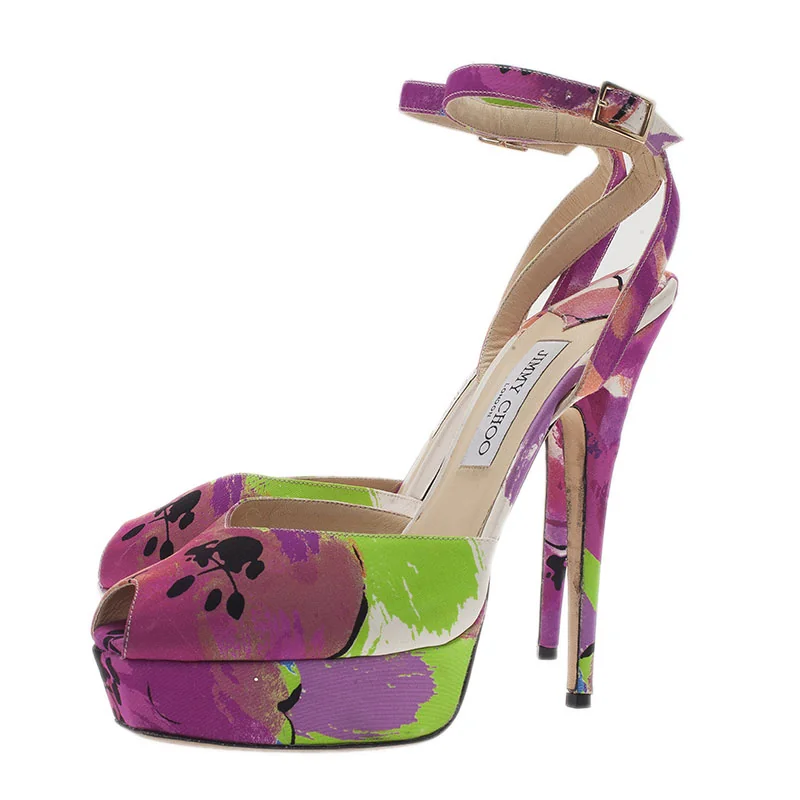
Under her direction, the label’s product identity has broadened well past the strappy sandals of the 1990s. A few styles worth knowing if you’re shopping the brand:
- Romy pump — the pointed-toe, ribbon-tie silhouette that’s become the brand’s most consistently reissued classic.
- Bing sandal — a crystal-buckled evening sandal frequently seen on red carpets.
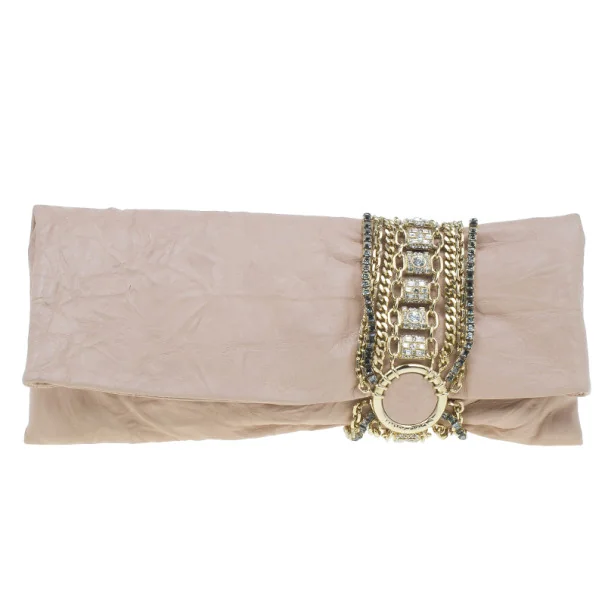
- Diamond and Bon Bon lines — quilted, diamond-pattern handbags launched to give the brand a genuine leather goods identity independent of footwear.
- Sneaker range — introduced in the mid-2010s, embellished with crystals and star motifs, which pulled in a considerably younger, more casual customer base than the brand’s evening-wear roots.
That handbag expansion is worth underscoring, because it’s a meaningful shift from the brand’s origins. Accessories — bags, small leather goods, eyewear — now sit alongside footwear as a core revenue category rather than a side project, which is part of why you’ll increasingly see Jimmy Choo bags, not just heels, in resale and pre-loved markets.
How to Spot an Authentic Jimmy Choo #
Given how recognizable the label is, it’s also a frequent counterfeit target, so a few checks matter if you’re buying secondhand:
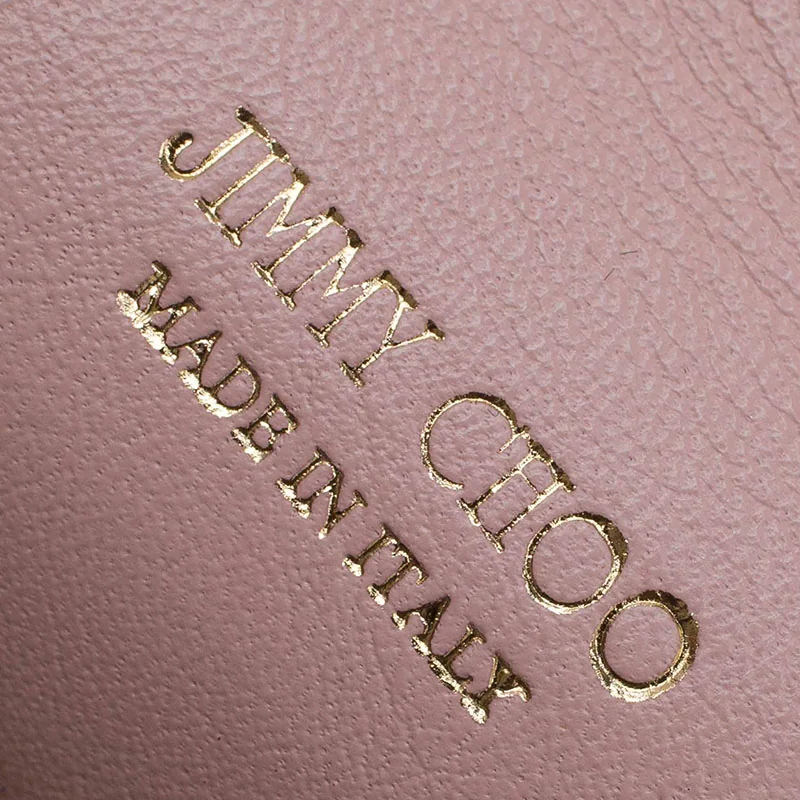
- Insole branding: Authentic pairs have the “JIMMY CHOO” name and “Made in Italy” (or occasionally another country of manufacture) debossed or printed cleanly into the insole — not glued-on lettering, which tends to peel or sit slightly raised.
- Serial/date stamps: Genuine pairs typically carry a small stamped code on the sole or inside the shoe indicating production batch and season; missing or smudged stamps are a warning sign.
- Hardware weight and finish: Buckles and studs on real Jimmy Choo pieces have noticeable heft and a consistent, evenly applied finish. Lightweight, thin-feeling hardware is a common tell on fakes.
- Stitching consistency: Look for even, tight stitching with no loose threads, especially around ankle straps and embellishment placement — a hallmark of the brand’s shoemaking heritage.
- Packaging: Authentic boxes and dust bags use consistent typography and quality cardstock; counterfeit packaging often has slightly off color tones or lower-grade materials.
None of these checks are foolproof on their own, and high-quality counterfeits have gotten good at replicating individual details. When in doubt, buying through an authenticated reseller or having a piece professionally checked before purchase is the safer route, especially for higher-value bag styles rather than shoes.
The Tamara Mellon Partnership #
This relationship deserves more attention than the usual one-line mention, because it’s genuinely the reason Jimmy Choo exists as a global brand rather than a well-regarded bespoke atelier that closed when its founder retired.
Mellon wasn’t a passive investor. As a working Vogue accessories editor, she had direct insight into what the fashion press and retail buyers responded to, and she used that insight to push Choo’s craftsmanship toward a commercially viable product line — a shift from one-off, made-to-measure commissions to a repeatable, sellable collection. The division of labor was fairly clear in the early years: Choo supplied the technical shoemaking expertise, Mellon supplied the brand vision, retail strategy, and the connections needed to open stores in London, New York, and Beverly Hills within just a few years of founding.
The partnership’s unraveling followed a pattern common to founder splits — creative and business priorities diverging as the company scaled. After Choo sold his stake in 2001, Mellon retained creative control of the mainline brand, working closely with Sandra Choi, while Choo redirected his energy into his own exclusive Couture line launched in 2006, entirely separate from the company that still carried his name. Mellon herself eventually exited following the 2011 Labelux acquisition, later launching her own eponymous label. It’s a useful reminder that the “Jimmy Choo” on the label and the people actually running the business have been two different stories for most of the brand’s history.
FAQ #
Who founded Jimmy Choo? The brand was co-founded in 1996 by shoe designer Jimmy Choo Yeang Keat and businesswoman Tamara Yeardye Mellon, though Choo had already been making shoes independently in London since 1986.
Is Jimmy Choo the designer still involved with the company? No. He sold his stake in 2001 and left the company entirely by the mid-2000s. He now focuses on his own separate couture label, unconnected to the Jimmy Choo brand sold in stores today.
Where does the name “Jimmy Choo” come from? It’s the founder’s own name — with an accidental origin. His family surname was “Chow,” but a birth certificate error recorded it as “Choo,” and that misspelling became the brand name.
Who designs Jimmy Choo now? Sandra Choi, the founder’s niece, has been the brand’s creative director since 2002 and has led its design direction continuously since the company’s founding in 1996.
Who owns Jimmy Choo today? Capri Holdings, the same parent company behind Michael Kors and Versace, has owned Jimmy Choo since Michael Kors Holdings acquired it in 2017 for roughly $1.35 billion.
Does Jimmy Choo make more than shoes? Yes. The brand’s range now includes handbags, small leather goods, sunglasses, and a sneaker line, with accessories forming a substantial part of its business alongside footwear.
Related Articles #
- 5 Iconic Bags Named After Famous Women (Buying Guide)
- Trussardi Brand History: Italy’s Underrated Leather House
- YSL Tribute Sandals: Why This Iconic Style Still Reigns
- YSL Tribute Sandals: Why This Iconic Style Still Reigns
- Gucci Bamboo Bag: History, Craft & Authentication Guide
Related guides
- Online Bag Authentication: What Photos Can and Cannot Prove
- Hermes Oran Sandals Guide: History, Sizing & Authenticity
- Gucci Bamboo Bag: History, Craft & Authentication Guide
- How to Spot a Fake Hermès Birkin: Expert Tips
- How to Buy an Authentic Luxury Bag from China Safely
- New vs Pre-Owned Luxury Bags: Which Route Is Right for You?
- Chanel Bag Guide: What to Know Before You Buy
- Luxury Bag Houses

Keyword index