Introduction #
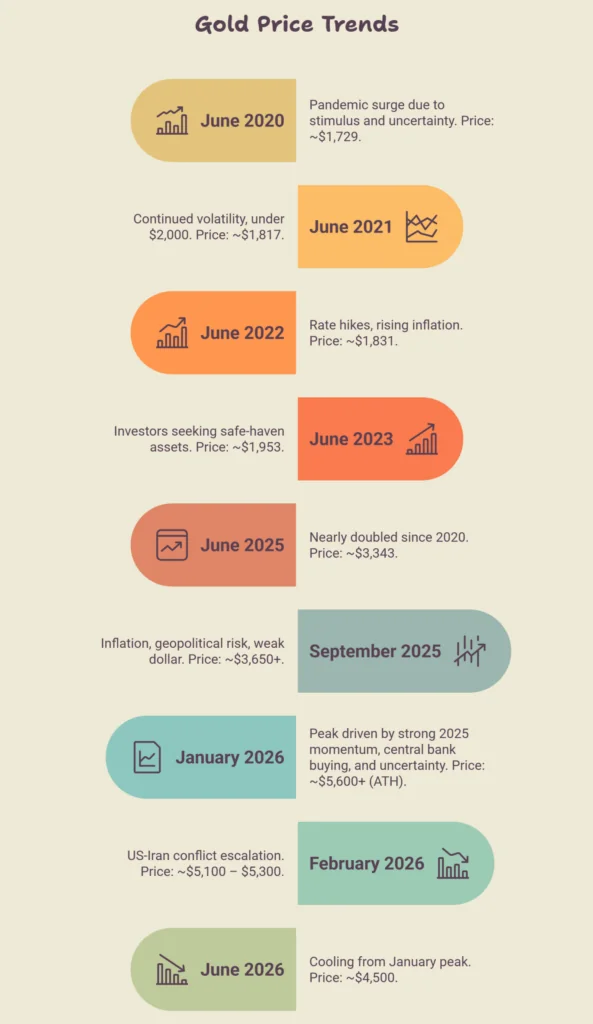
Spot gold is trading around $4,500–$4,570 an ounce as I write this, up more than 70% from a year ago. That kind of move gets attention, and it should. But the more interesting story for anyone shopping seriously in this space isn’t the bullion chart. It’s what’s happening one tier up, in the pre-owned market for branded gold jewelry.
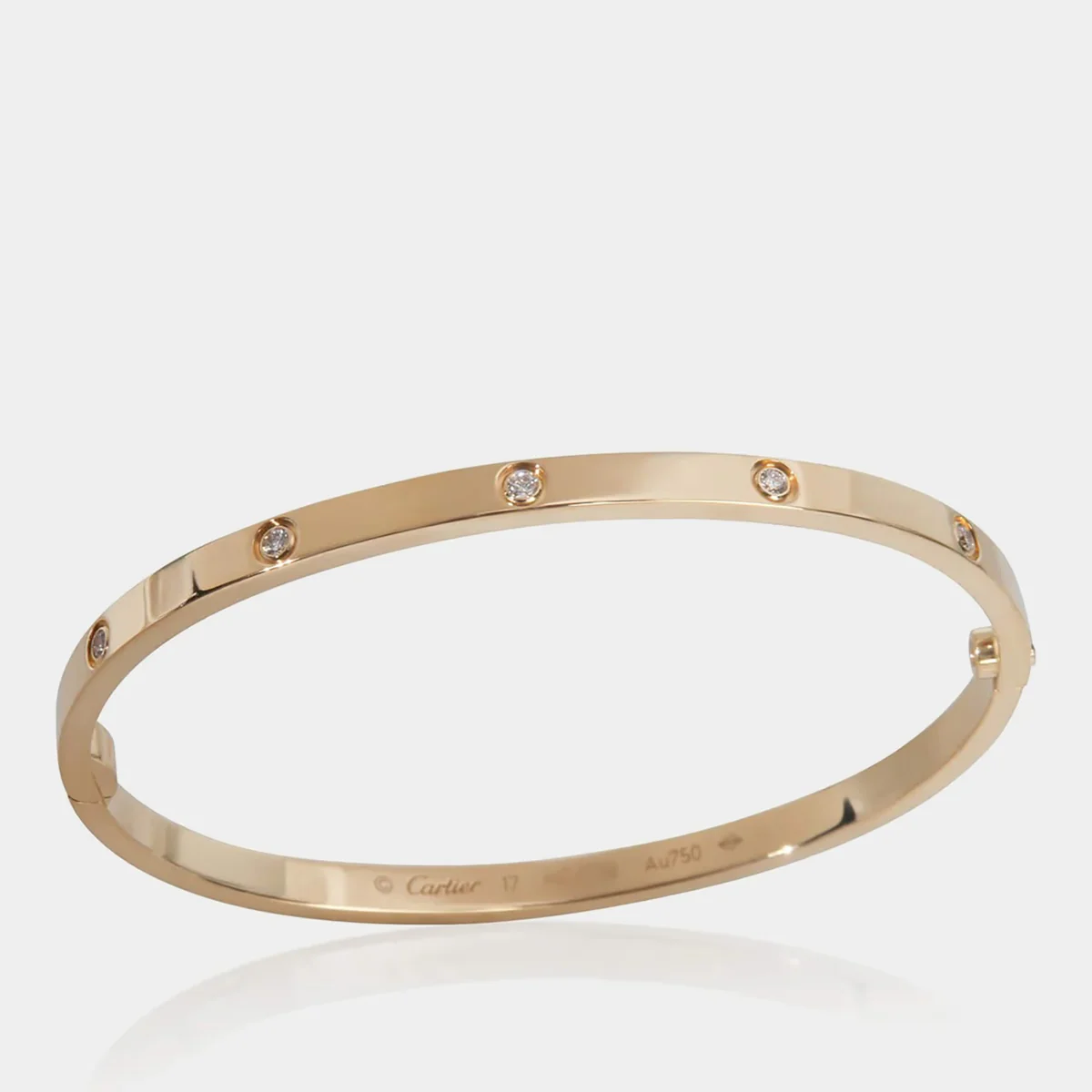
I’ve spent years buying, selling, and evaluating pre-owned pieces from Cartier, Van Cleef & Arpels, Bulgari, and Tiffany & Co., and the pattern is consistent: a well-chosen branded gold piece bought secondhand doesn’t just track the gold price, it tends to beat it. A Cartier Love Bracelet or Van Cleef Alhambra pendant carries the raw material value of its gold content, plus a second layer of value built from brand equity, design longevity, and constrained supply. Bullion can’t replicate that second layer. It only ever gives you the first.
This guide makes the case for [[[pre-owned luxury](/buying-guides/best-pre-owned-luxury-watch-brands/)](/buying-guides/best-luxury-casualwear-brands-effortless-style-2025/) gold jewelry investment](/prices-and-value/gold-jewelry-vs-bullion-smarter-2026-buy/) as a genuinely competitive alternative to bullion, not a lifestyle purchase dressed up as one. I’ll walk through why gold itself still matters as a trust asset, break down the mechanics of how branded pieces earn their premium, compare resale performance across the four brands that matter most in this category, and give you practical buying advice, including the risks nobody selling you jewelry wants to mention.
Why Gold Still Matters: A Brief History of Trust #
Gold’s credibility isn’t a marketing story, it’s a several-thousand-year track record. Ancient Egypt, Mesopotamia, Rome, and the Inca all treated gold as the default store of value, long before paper currency existed. It anchored national currencies through the gold standard era, and it remains the most widely held reserve asset among central banks today, precisely because it can’t be printed, defaulted on, or manipulated the way fiat currency can.
Part of that trust comes from pure scarcity. All the gold ever mined in human history would fit inside a cube roughly 22 meters on each side. That’s it. Combined with gold’s physical indestructibility, it’s a metal that resists the slow erosion every other currency experiences over time.
That trust has been on full display recently. Gold set 53 new all-time highs in 2025 alone, climbing from around $2,624 to above $4,300 by year-end, then pushing past $5,600 in January 2026. Central banks bought 863 tonnes of gold in 2025, nearly double the 2010–2021 annual average of 473 tonnes, as institutions diversify away from dollar reserves. Analysts aren’t calling this a bubble either. Goldman Sachs is targeting $5,400/oz by the end of 2026, J.P. Morgan is projecting $6,000–$6,300, and UBS has put a floor above $5,000 for Q4 2026.
Why does any of this matter to someone shopping for a bracelet instead of a bar? Because every gram of gold inside a Cartier Love Bracelet or a Van Cleef Alhambra motif inherits that same store-of-value credibility. The metal itself is doing exactly what it’s always done. The brand is what determines whether you get more than that.
Pre-Owned Jewelry vs Bullion: Where the Extra Value Comes From #
Bullion is a pure commodity trade. You buy an ounce, you own an ounce, and its value moves exactly with the spot price, no more, no less. There’s no upside beyond the metal, and honestly, that’s the appeal for some investors: simplicity, deep liquidity, and no subjective judgment involved.
Branded gold jewelry works differently, and the difference is where the real return lives. Three forces stack on top of the raw material value:
Brand equity. A house like Cartier or Van Cleef controls its retail pricing tightly, rarely discounts, and raises prices almost every year regardless of what gold is doing. That pricing discipline creates a floor under resale value that raw gold simply doesn’t have.
Scarcity by design. These brands manage production deliberately. Certain sizes, metals, or stone configurations of the Love Bracelet or Alhambra pendant are produced in limited runs or discontinued outright, which pulls resale prices upward for anyone who already owns one.
Sustained demand. Unlike a coin or bar, a Love Bracelet or Serpenti watch is something people actually want to wear. That dual identity, jewelry and asset, keeps demand broad-based rather than limited to investors alone.
Here’s the proof in actual numbers. Cartier’s 18K yellow gold and diamond Love Bangle Bracelet was priced at roughly €7,950 (about $8,470) in late 2024. By 2026, that same bracelet retails above €9,200 (about $10,000), an increase of more than 15% in eighteen months. Some of that is simply gold’s rally. But Richemont’s pricing strategy and sustained global demand for the Love Bracelet specifically are doing real work too, since gold’s move over that window doesn’t fully account for the increase on its own.
The pre-owned market is where this gets genuinely interesting for buyers. A Love Bracelet in excellent secondhand condition trades at a meaningful discount to that current retail price, which means you’re acquiring the gold content and the brand premium below what a new buyer just paid at the boutique. That gap, buying below retail on an asset that has historically appreciated at retail, is the entire thesis behind treating pre-owned branded gold as a stronger total-return play than bullion.
I’ll flag the honest counterpoint here too, because it matters. This premium only holds for the right pieces. Buy the wrong model, wrong condition, or wrong brand, and you can end up with jewelry that depreciates like any other consumer good while bullion just sits there tracking spot. More on that risk later.
Cartier: Love Bracelet and the Strongest Resale Track Record #
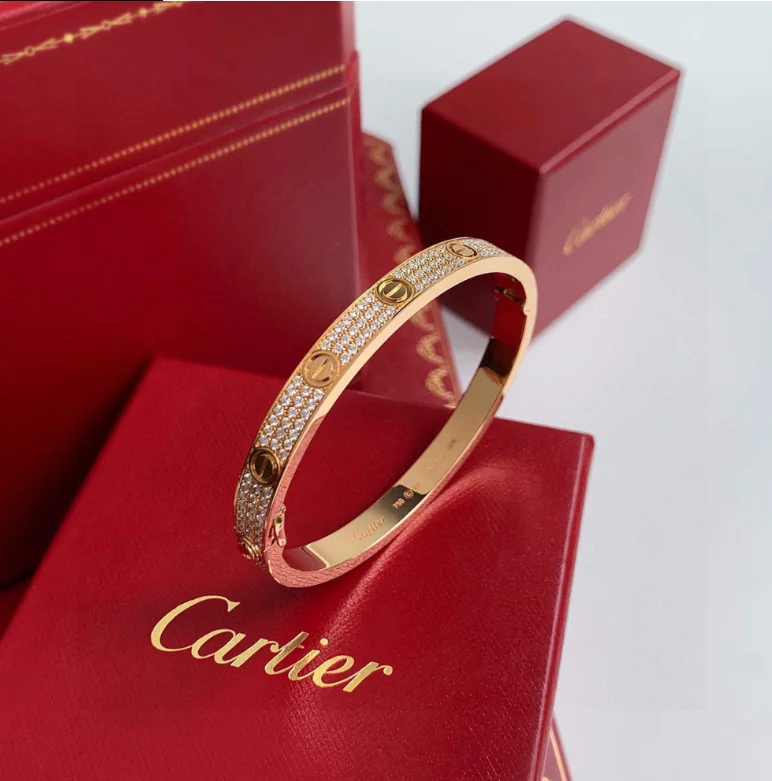
If there’s one piece that anchors this entire category, it’s the Cartier Love Bracelet. Launched in 1969 and still in continuous production, it has the longest and most consistent resale track record of any branded gold piece on the market, and in my experience buying and evaluating pre-owned pieces, that consistency is exactly why it commands such confidence among resellers and collectors alike.
The Love Bracelet in 18K yellow, white, or rose gold retains an estimated 85–95% of current retail value in the pre-owned market, depending on size, condition, and whether it comes with the original screwdriver and box. That’s an exceptionally tight spread for jewelry. Most fine jewelry loses a large chunk of value the moment it leaves the boutique. The Love Bracelet largely doesn’t, because Cartier has never meaningfully discounted it, has raised its price nearly every year, and has kept the design essentially unchanged for over five decades.
What actually drives resale strength within the line:
- Size matters more than people expect. Mid-range sizes (16–18) tend to have the deepest resale market because they fit the widest range of wrists and resell fastest.
- Diamond-set versions hold value better proportionally, since the diamond-paved bracelet has a higher retail entry point, meaning the dollar gap between retail and resale is often wider in absolute terms even if the percentage retention is similar.
- Condition on the screw mechanism is the single biggest value factor I check personally. Worn screw heads or a scratched bezel from repeated opening/closing knock resale value down noticeably, more than most buyers realize.
- Discontinued sizes and vintage 1970s–80s pieces occasionally command a premium over current production, similar to how a discontinued watch reference can outperform the current model.
Beyond the Love line, Cartier’s Juste un Clou bracelet and the Trinity ring have decent secondary markets, but neither matches the Love Bracelet’s liquidity or price stability. If you’re buying one Cartier piece purely for investment logic, the Love Bracelet remains the safest, most liquid choice, and it’s the piece I’d point any first-time buyer toward.
Van Cleef & Arpels: Alhambra and Long-Term Collector Demand #
Van Cleef & Arpels plays a different game than Cartier, and it shows up clearly in the resale data. Where Cartier wins on liquidity and brand recognition, Van Cleef wins on pure appreciation, and the Alhambra collection is the reason.
Introduced in 1968, the Alhambra’s four-leaf clover motif has become one of the most collected jewelry designs in the world, and pre-owned Alhambra pieces in gold are averaging around 112% resale retention against original retail, meaning many well-chosen pieces are actually reselling above what they cost new. That’s a genuinely rare dynamic in fine jewelry, and it’s driven almost entirely by two things: Van Cleef’s habit of retiring specific stone combinations and sizes without warning, and a collector base that treats certain Alhambra pieces closer to how watch collectors treat a discontinued Rolex reference.
A few practical notes from having tracked this market closely:
- Discontinued hardstone combinations (particularly malachite, turquoise, and certain onyx pairings) drive the strongest premiums. Once Van Cleef stops producing a stone in a given size, pre-owned prices climb steadily.
- The 20 Motifs long necklace is the collector’s benchmark piece. It’s expensive at retail, but it’s also the most liquid and consistently in-demand Alhambra piece secondhand.
- Yellow gold outperforms white gold in resale across the collection, largely due to broader demand and gold’s own price momentum compounding the effect.
- Single-motif pendants and small earrings are more accessible entry points but carry thinner margins than the more collected multi-motif pieces.
The honest caveat: Van Cleef’s resale strength is more piece-dependent than Cartier’s. The Love Bracelet performs well pretty much regardless of which specific version you buy. With Alhambra, picking the wrong stone or the wrong size can mean solid but unremarkable returns rather than the standout numbers the collection is known for. This is a category where doing homework on discontinued combinations pays off directly.
Bulgari and Tiffany: Serpenti, Diamond-Set Gold, and Emerging Value #
Bulgari and Tiffany sit a step behind Cartier and Van Cleef in resale strength, but both deserve a serious look, and I’d argue Bulgari specifically is the most underpriced brand in this entire category right now relative to where its resale trajectory is heading.
Bulgari’s Serpenti line, built around the serpent motif that dates back to the 1940s, has been gaining real momentum in the pre-owned market over the past few years. Serpenti gold jewelry, and especially the Serpenti Viper bracelets and rings, has benefited from Bulgari’s aggressive brand repositioning under LVMH, alongside genuinely strong watch and handbag halo effects that are pulling more collector attention toward the jewelry line. Resale retention on Serpenti gold pieces still trails Cartier and Van Cleef, generally landing in a lower band, but the trend line is upward, and I’ve noticed pricing gaps closing faster here than in almost any other brand over the last 18 months. If you’re looking for where the next resale value increase might come from rather than where it’s already priced in, Serpenti investment potential is worth watching closely.
Tiffany & Co.’s position is more mixed. Its diamond-set gold jewelry, particularly pieces from the Tiffany T and Victoria lines, holds respectable resale value, but nowhere near Cartier’s Love Bracelet or Van Cleef’s Alhambra. Tiffany’s broader retail footprint and more frequent design turnover work against the scarcity mechanics that drive strong resale in this category. That said, Tiffany’s gold pieces still comfortably outperform generic branded gold jewelry with no house pedigree, and they remain more liquid to resell than most independent jewelers’ work.
The practical ranking, based on what I’ve seen move through the pre-owned market: Cartier for liquidity and consistency, Van Cleef for pure appreciation on the right pieces, Bulgari for emerging upside if you’re willing to hold, and Tiffany as a solid but unremarkable performer that’s still meaningfully better than unbranded gold.
How to Buy Pre-Owned Gold Jewelry as an Investment #
Buying pre-owned branded gold well requires more discipline than buying bullion. There’s no spot price to check, so your due diligence is the difference between a good return and an expensive lesson.
Authentication first, always. Every piece should have verifiable hallmarks, serial numbers where applicable, and ideally original documentation. For Cartier and Van Cleef specifically, having the original box, papers, or service history materially improves both your confidence at purchase and your resale value later. Never buy a piece you can’t get independently authenticated, no matter how good the deal looks.
Understand condition grading before you shop. “Excellent” pre-owned condition should mean no visible scratches beyond light surface wear, fully functional clasps and mechanisms, and no signs of amateur repair. Get comfortable inspecting screw heads, clasp tension, and stone settings yourself, or have a jeweler do it, because condition differences of even one grade level can shift resale value by a noticeable percentage.
Know the retail-to-resale gap for your target piece. This is where the actual investment math happens. Compare the current boutique retail price to pre-owned asking prices for the same reference and condition. A meaningful discount to retail, on a piece with strong historical appreciation like the Love Bracelet or a discontinued Alhambra combination, is the setup you’re looking for.
Buy from established resellers with authentication guarantees and return policies, not from unverified marketplace listings or social media sellers. The premium you pay for that assurance is worth it against the downside of an unauthenticated or misrepresented piece.
Red flags to walk away from: missing or mismatched serial numbers, prices dramatically below market for the stated condition, sellers unwilling to allow independent authentication, and resellers who can’t produce a clear provenance or purchase history for higher-value pieces.
FAQ #
Is pre-owned luxury gold jewelry more liquid than bullion? No, and this is the honest tradeoff. Bullion can be sold almost instantly at a transparent, universally recognized spot price through countless dealers. A Love Bracelet or Alhambra pendant needs the right buyer, and even through an established reseller, a sale can take days to weeks rather than minutes. You’re trading some liquidity for the chance at outperformance.
How do I get a pre-owned piece appraised accurately? Get an independent appraisal from a certified gemologist or jeweler who isn’t the one selling you the piece, and ideally one who has specific experience with the brand in question. Generic jewelry appraisers sometimes undervalue branded pieces because they’re pricing gold weight and stone quality without accounting for brand-driven resale premiums.
What’s the actual risk compared to bullion? Several real ones. Branded jewelry resale value is far less standardized than a spot price, meaning it depends heavily on condition, documentation, and market taste at the time you sell. Certain models or brands can also fall out of favor, and unlike gold, there’s no floor guaranteeing you’ll recover even the metal value if a piece is damaged or heavily worn. Bullion never asks whether it’s still fashionable. Jewelry does.
Does the resale premium apply to every branded gold piece? No, and this is the most common misunderstanding I run into. The premium is concentrated in specific, historically strong references, the Love Bracelet, core Alhambra motifs, Serpenti, not across every SKU a brand has ever made. A limited-run fashion piece or a design the brand no longer emphasizes can underperform bullion badly.
Is 2026 a good time to buy, given how high gold prices already are? It’s a reasonable time for the right piece, but not a guaranteed one for every purchase. High gold prices raise the floor value under branded jewelry, which is supportive. But if you’re paying near-retail for a pre-owned piece with no discount and no scarcity behind it, you’re mostly just buying expensive gold with extra steps. The opportunity is in the retail-to-resale gap, not in the gold price alone.
Related Articles #
- Best Time to Buy a Luxury Handbag: Save More in 2025
- Sell Designer Handbags in 2025: Get Paid More, Faster
- How Pre-Owned Luxury Fashion Is Reshaping the Industry

Keyword index