Introduction #
There’s a specific kind of guilt that comes with owning a designer bag you never carry. It sits on the shelf, dust bag zipped shut, box tucked in the closet, quietly reminding you that you spent real money on something that now just… exists. I’ve had clients and readers describe this exact feeling about a Chanel Flap they wore twice, or a Louis Vuitton Neverfull that got replaced by a newer favorite.
Here’s the thing: that bag is not doing you any good sitting there. [Designer handbags](/brands/top-tory-burch-handbags/) are one of the few “luxury” categories that can actually function like an asset — some models even outpace inflation — but only if you sell them the right way, at the right time, through the right channel.
The problem is that selling designer handbags in 2025 has gotten more complicated, not less. There are more resale platforms than ever, more scam attempts targeting sellers, and more confusion about what a bag is actually worth versus what you paid for it. I’ve sold bags through consignment, sold them peer-to-peer, and watched friends get burned by “buyers” who vanished after receiving a bag on approval.
This guide cuts through that. No fluff, no pretending every bag is a goldmine. Just a straight rundown of which bags are genuinely worth selling, where to sell them without losing your shirt to fees or fraud, how to price them so you’re not leaving money on the table, and how to protect yourself from the delays and scams that make people give up on resale entirely.
Which Designer Handbags Are Actually Worth Selling #
Let’s get the uncomfortable truth out of the way first: not every designer bag holds value. A lot of them lose 40-60% of retail the moment you walk out of the boutique, and no amount of “but it’s designer” changes that. What actually holds or grows in value comes down to a fairly narrow list of brands and models, and the reasons are more mechanical than emotional.
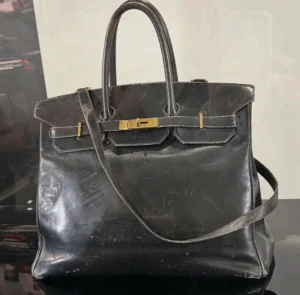
Hermès (Birkin, Kelly, Constance) sits at the top, and it’s not close. Hermès manufactures deliberately below demand, doesn’t advertise, and forces most retail buyers through a waitlist and purchase history before they’re even offered a Birkin. That artificial scarcity is why well-kept Birkins routinely resell at or above retail, and why rare leathers or hardware (Himalaya, Rose colors, gold hardware in exotic skins) can fetch multiples of the original price. The extreme end of this market made headlines in July 2025, when Jane Birkin’s original prototype Birkin — the actual bag Hermès built for her in 1985, complete with her initials and a non-removable strap — sold at Sotheby’s Paris for €8.6 million ($10.1 million with fees) after a ten-minute bidding war. That’s a one-of-one provenance sale, not a benchmark for your Birkin, but it says everything about how far Hermès resale value can stretch when scarcity and history line up.
Chanel (Classic Flap, Boy, 2.55) holds value for a different reason: Chanel has raised prices on these bags almost every year for over a decade, sometimes twice a year. That means a Classic Flap bought five years ago can resell close to, or occasionally above, its original price simply because retail has climbed so much since. I sold a 2021 Medium Classic Flap in black caviar through consignment in early 2025 for roughly $6,500 against an $11,300 current retail price — not a full return, but a strong one for a bag that had been carried regularly, and after the platform’s 25% commission I still walked away with about $4,875. That’s the realistic range for a well-cared-for Flap: expect 55-75% of current retail, not original purchase price.
Louis Vuitton (Neverfull, Speedy, Pochette) is the volume leader — the most recognizable, most searched, easiest to resell quickly, but also the least exciting from a pure investment angle. Because LV produces these at scale, resale prices track closer to a steady 60-75% of retail for pieces in excellent condition, with less upside than Hermès or Chanel. A 2022 Neverfull MM in monogram canvas, near-mint with dust bag, sold on Vestiaire Collective in mid-2024 for around $1,800 against a $2,500 retail price — the seller cleared about $1,350 after Vestiaire’s 25% cut. Reliable, liquid, unspectacular.
Dior (Lady Dior, Book Tote) rides celebrity visibility and reissue cycles. When a Lady Dior shows up on a red carpet or gets a fresh colorway push, resale interest spikes; between those moments, it’s more stable than exciting.
Below that tier, Goyard’s St. Louis Tote, Prada’s Re-Edition and Saffiano lines, Celine’s Luggage Tote and Box Bag, and Gucci’s Dionysus, Jackie, and Marmont hold reasonable resale value but are far more trend-sensitive. Prada’s Re-Edition, for instance, is riding a genuine Y2K wave right now — sell it while that’s true. Gucci’s logo-forward pieces move in and out of favor faster than any bag on this list, so don’t expect Chanel-level stability.
The honest takeaway: quilted, boxy, logo-light, hardware-driven classics hold value. Seasonal micro bags, novelty collabs, and anything that was clearly a trend purchase rarely recoup more than a third of retail. If your bag isn’t on this list, it might still be worth selling — just adjust your price expectations accordingly.
Where to Sell Your Bag: Comparing Resale Platforms #
This is where most sellers either make good money or lose patience. Every platform advertises itself as the easiest, fastest, most trustworthy option — they can’t all be right, and in my experience, none of them are perfect for every bag.
Broadly, you’re choosing between three models: consignment (they sell it for you and take a cut once it sells), instant buyout marketplaces (they buy it from you outright, usually below what consignment would net), and peer-to-peer marketplaces (you set the price, they facilitate the transaction and often authentication).
| Platform | Model | Typical Fee/Commission | Payout Speed | Trust Factor | Best For |
|---|---|---|---|---|---|
| The Luxury Closet | Consignment marketplace | ~20-25% | After sale (days to weeks) | High — pro photography, in-house authentication | Chanel, Hermès, LV pieces in good condition wanting global buyer exposure |
| Vestiaire Collective | Peer-to-peer + authentication | ~15-25% (seller side, sliding scale) | After sale, post-authentication | High for authentication, moderate for payout speed | Sellers who want to set their own price and reach a large audience |
| Fashionphile | Instant buyout or consignment | Instant offer is a flat lower price; consignment ~20-30% | Instant offers pay in 1-2 days | High — long track record, strong authentication | Sellers who want speed over maximum price |
| The RealReal | Consignment | Seller commission scales down as price rises (roughly 55-70% goes to seller on lower-value items, less on high-value) | After sale | High | Sellers okay with lower payout in exchange for brand trust and foot traffic |
| Rebag | Instant cash offer (Clair pricing tool) | Built into the lower offer price | Immediate | Moderate-high | Sellers prioritizing speed and certainty over top dollar |
| Independent local consignment boutique | Consignment | Highly variable, often 30-50% to shop | After sale, can be slow | Variable — depends entirely on the shop’s reputation | Sellers who want a local relationship and in-person negotiation |
| eBay / Poshmark | Peer-to-peer, no built-in authentication (eBay now offers optional authentication on some categories) | ~10-15% (Poshmark) / ~10-13% (eBay) | Fast once sold, but buyer disputes common | Lower — burden of proof is on you | Experienced sellers comfortable handling their own authentication and shipping |
A few honest notes here. Consignment almost always nets you more money than an instant buyout, but you’re trading certainty for a payout — your bag might take two weeks or two months to sell, and you don’t get paid until it does. Instant buyout services like Fashionphile’s cash offer or Rebag are genuinely useful if you need money now, but expect offers 15-30% below what the same bag would fetch through consignment. Peer-to-peer platforms like eBay give you the most pricing control and the least protection, which is fine for a well-documented Neverfull and risky for a five-figure Birkin.
If you’re selling a Chanel or Hermès piece specifically, I’d lean toward a platform with in-house authentication and professional photography — buyers at that price point are cautious, and a listing that looks amateur will sit unsold far longer than it should.
Pricing Your Handbag for Maximum Profit #
Pricing is where sellers either leave money on the table or price themselves out of a sale entirely, and both mistakes are common.
Start with condition, honestly graded. Most platforms use some version of this scale:
- Pristine/New — unused or barely used, all original packaging, no wear on corners or hardware
- Excellent — light use, minimal signs of wear, no repairs needed
- Good — visible wear (corner scuffs, minor hardware tarnish, slight color transfer) but structurally sound
- Fair — noticeable wear, may need cleaning or minor repair before resale
Be brutally honest with yourself here. Overstating condition is the single biggest reason listings get returned or renegotiated after the fact, which slows down your payout and damages your credibility on the platform.
Next, rarity. A standard black Chanel Flap in caviar leather with gold hardware is the most common configuration — expect standard resale pricing. A rare color, a discontinued size, exotic leather, or limited-edition hardware can push the price up 20-40% over the standard version, but only if you can prove it (original receipt, style number, authenticity card). Don’t guess at rarity — search recently sold listings for your exact model and color before setting a number.
Then factor in market trend. Hermès and Chanel prices have trended upward for years, so a bag bought in 2019 may resell close to its original price simply because retail has risen so much since. Louis Vuitton and Gucci pieces trend flatter or downward depending on style cycles — check what similar bags have actually sold for in the last 30-60 days, not what they’re listed for, since asking price and sale price are often very different numbers.
My practical formula: pull three to five recent sold comps (not active listings) for your exact model, condition, and color. Price at the middle of that range if you want a faster sale, or the top of the range if you’re patient and the demand data supports it. Avoid the trap of pricing based on what you paid — the market doesn’t care about your original receipt, only what buyers are currently paying for that bag.
Prepping Your Bag: Authentication, Cleaning, and Photos #
This is the step people skip, and it’s the one that costs them the most time later.
Authentication first. Gather everything you have: original receipt, authenticity card, dust bag, box, care booklet. If you’re using a platform with in-house authentication, they’ll verify it regardless, but having documentation speeds up the process and reassures buyers browsing peer-to-peer listings. If you’re not sure your bag is authentic (bought secondhand years ago, gifted, no paperwork), get it verified independently before listing — a bag that fails authentication mid-sale doesn’t just lose you that sale, it can flag your account on some platforms.
Cleaning comes next, carefully. For leather bags, a soft, dry microfiber cloth and a leather-specific cleaner made for the material (calfskin, caviar, epi leather all react differently) is usually safe for light surface dirt. Do not use household cleaners, baby wipes, or anything with alcohol — I’ve seen well-meaning sellers strip the finish off caviar leather trying to “brighten” it before a sale, which tanks the resale grade instead of improving it. For anything beyond light dust and surface marks — deep stains, mold, cracking, hardware tarnish — get it professionally cleaned by a leather specialist, not a general dry cleaner. It costs money upfront but usually returns more than its cost in a higher sale price and a faster sale.
Photos make or break the listing. Shoot in natural, indirect light — a window on an overcast day works better than any ring light. Capture the front, back, both sides, the base (where wear shows fastest), interior lining, hardware close-ups, and any flaws in full honesty. Include a photo of the authenticity card or date stamp if you have one. Listings with 8-12 clear photos consistently outperform listings with 3-4, and buyers at this price point will assume anything you didn’t photograph is hiding a flaw.
Avoiding Scams and Payment Delays #
This is the part nobody wants to think about until it happens to them, and it happens often enough that it deserves real attention.
The “overpayment” scam. A buyer sends more than the asking price and asks you to refund the difference, usually citing shipping or a mistake. The original payment often bounces or gets reversed after you’ve already sent the refund and the bag. Never refund a difference — cancel the transaction and relist.
Fake payment confirmations. Especially common on peer-to-peer platforms or social media DMs, where a “buyer” sends a screenshot of a payment that was never actually sent, pressuring you to ship before checking your actual account balance. Confirm funds have cleared in your real account, not in a screenshot, before shipping anything.
Chargeback fraud. A buyer receives the bag, claims it’s not as described or never arrived, and files a chargeback with their card issuer or PayPal. This is why shipping with tracking and signature confirmation matters — and why selling through a platform with buyer/seller protection and its own authentication step is worth the commission it charges. Off-platform deals (someone messaging you directly to “skip the fees”) are where almost all of this fraud happens.
Slow or withheld payouts. Some consignment platforms hold payment until a return window closes, which can stretch 14-30 days after delivery even after the sale is confirmed. This isn’t necessarily a scam, but it’s a real cash-flow consideration — read the payout terms before you list, not after you’re waiting on money.
The pattern across almost every scam I’ve seen: it starts with pressure to move fast, communicate off-platform, or skip a verification step. Legitimate buyers and reputable platforms don’t need you to rush. If something about a deal feels like it’s speeding past your normal caution, that instinct is usually right.
FAQ #
How long does it actually take to sell a designer handbag? It depends heavily on the bag and the platform. In-demand Hermès and Chanel pieces in good condition can sell within days to a few weeks on consignment platforms. Less iconic bags, or ones priced too high relative to comps, can sit for months. Instant buyout services pay in one to two days but at a lower price than consignment.
What’s the best place to sell handbags if I want cash fast? Instant offer services like Fashionphile’s cash offer or Rebag are your fastest route, typically paying within a day or two. You’ll get less than a consignment sale would eventually bring, but you skip the wait.
How do I sell a Chanel bag specifically for the best price? Because Chanel prices climb almost yearly, timing and documentation matter more than usual. Sell through a platform with strong Chanel-specific traffic and in-house authentication, price against recent sold comps (not retail history), and lean on the fact that Chanel resale often benefits from the brand’s own price increases working in your favor.
Are consignment fees worth it compared to selling it myself? Usually yes, for anything mid-value and up. You’ll net less per sale, but you gain authentication credibility, professional photography, and a built-in buyer audience — all of which typically translate into a faster sale and fewer disputes than going it alone on a general marketplace.
Do I need the original box and dust bag to sell my bag? No, but it helps. Bags with full packaging and documentation typically sell faster and can command a modest premium, especially for Hermès and Chanel. Missing packaging isn’t disqualifying, just be upfront about it in the listing.
Is 2025 a good time to sell designer handbags? For Hermès and Chanel specifically, yes — sustained price increases and strong demand mean resale values remain solid. For trend-driven brands, timing matters more: sell while a style is having its moment (like Prada’s current Y2K resurgence) rather than waiting for demand to cool.
Related Articles #
- Sell Designer Handbags in 2025: Maximize Your Payout
- How to Sell Luxury Items Online: The Luxury Closet Guide
- Best Time to Buy a Luxury Handbag: Save More in 2025
- Louis Vuitton Alma Bag: The Ultimate Buying Guide
- Why the Chanel Crossbody Bag Never Goes Out of Style


Keyword index