Introduction#

Some handbags look good on a runway. The Louis Vuitton Alma looks good on a subway platform, at a board meeting, and on the arm of a woman who’s owned it for twenty years and has no plans to retire it. That’s the real test of an “icon,” and the Alma passes it in a way a lot of newer It-bags simply don’t.
If you’re researching the Alma before buying, you’re likely weighing more than aesthetics. You want to know which size actually fits your life, which leather ages well and which one you’ll regret in humid weather, and whether this is a bag that holds its value or one that just holds your keys. I’ve handled the Alma across sizes and materials, watched resale prices move over the last few years, and I’ll give you the straight version here, including the parts Louis Vuitton’s own marketing conveniently leaves out.
In Reverence of the Iconic LV Alma#
The Alma’s backstory is more interesting than most people realize, and it starts with a name you wouldn’t expect on a Louis Vuitton dust bag: Coco Chanel.
In 1925, Chanel reportedly asked Gaston-Louis Vuitton for something practical, a day bag sized for real travel rather than a full trunk. What came out of that request was the Squire, a compact, trapezoidal take on the house’s 1901 Steamer bag. It was structured, it was portable, and it quietly set the template for what the Alma would eventually become. Production only ramped up in the 1930s, reportedly with Chanel’s blessing, which is a fairly remarkable footnote given the two houses are rivals today.
The design kept evolving. By 1955, the Squire had been reworked into a firmer, more architectural shape and renamed Champs-Élysées, a nod to the boulevard’s urban polish. The Champs-Élysées name didn’t survive long term, but the silhouette did, eventually settling into the identity we now call the Alma, named after Place de l’Alma, where Avenue Montaigne meets the Seine.
What makes the Alma recognizable at ten paces isn’t a logo, it’s the shape: a rounded top, an oblong base, and a rigid, boxy structure that owes a clear debt to Art Deco design. The twin rolled Toron handles are the other giveaway, and they’re a big part of why the bag reads as polished rather than casual. Structurally, it’s closer to a piece of luggage than a slouchy shoulder bag, and that’s precisely the point. It was built to hold its shape, and decades later, it still does.
LV Alma Sizes to Choose From#
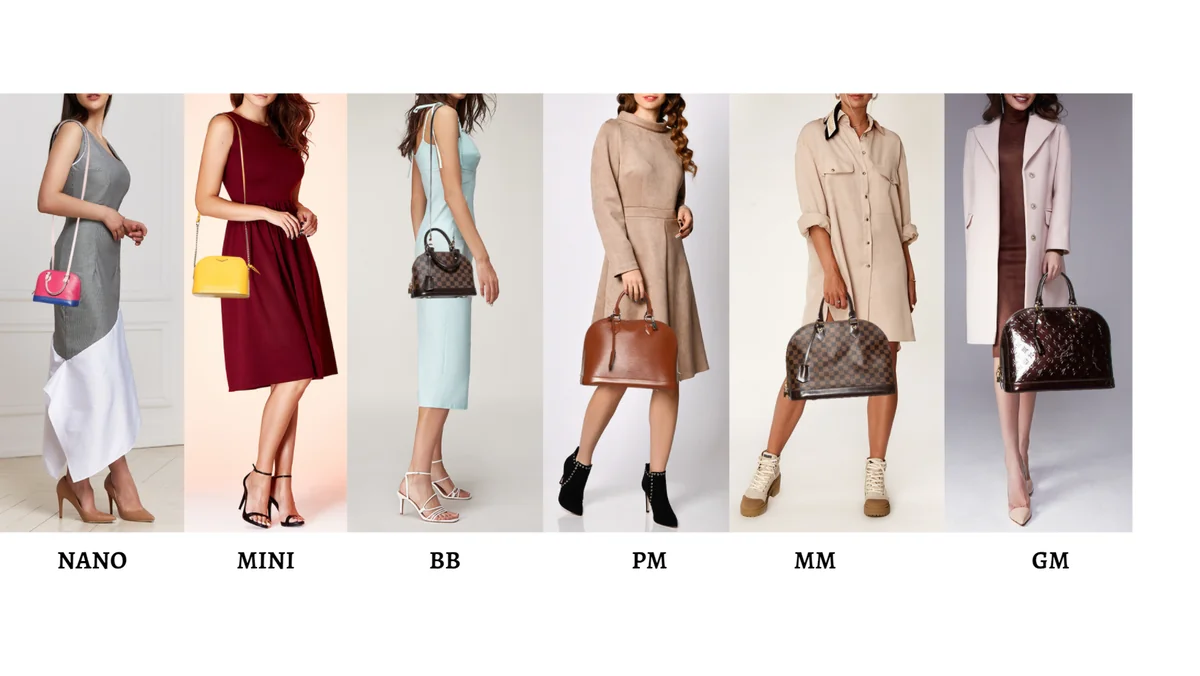
This is where most buyers get stuck, because the Alma comes in six sizes and the naming convention (French abbreviations, no obvious logic to a first-time buyer) doesn’t help.
| Size | Dimensions (W x H x D) | Strap | Best For |
|---|---|---|---|
| Nano | 17 x 12 x 8 cm | Optional micro strap | Phone, cards, lipstick. A statement accessory more than a functional bag. |
| Mini | 21 x 16 x 10 cm | Optional strap | Evening events, small essentials, buyers who want the shape without the bulk. |
| BB | 23.5 x 17.5 x 11.5 cm | Removable shoulder strap (“bebe bandouliere”) | The most versatile small size, day to evening, works as crossbody or handheld. |
| PM | 32 x 25 x 16 cm | Often none | Everyday carry, fits a small wallet, sunglasses case, phone, and a slim pouch. |
| MM | 36 x 28 x 17 cm | No strap | Work bag territory, comparable capacity to the Neverfull MM. |
| GM | 39 x 29 x 18.5 cm | No strap | Genuine travel or overnight capacity, the largest and least common size on resale. |
A few honest notes on top of the spec sheet. The Nano and Mini are trend-driven purchases, they photograph beautifully but don’t function as your only bag. The BB is the size I’d point most first-time buyers toward, it’s small enough to feel current, large enough to be useful, and it comes with a strap option, which the PM and up don’t reliably offer. The PM is the classic “one bag” choice if you want the Alma as a genuine workhorse rather than an occasion piece. The MM and GM are underrated on the secondary market simply because fewer people know they exist, which occasionally means better value if you actually need the room.
Materials, Leathers and Colorways#
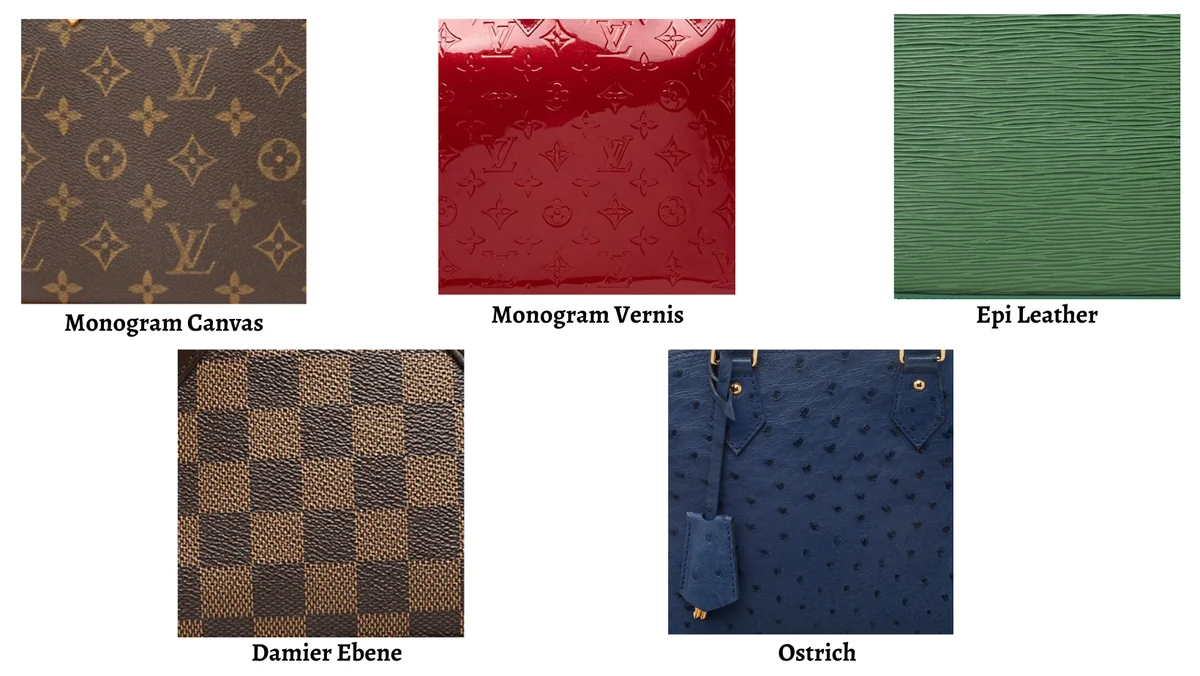
The Alma’s material range is wide, and the material you choose affects daily wear as much as it affects looks.
Damier Ebene and [[[[Monogram canvas](/authentication/how-to-spot-a-fake-neverfull-authentication-guide/)](/authentication/how-to-spot-a-fake-louis-vuitton-bag/)](/buying-guides/most-popular-louis-vuitton-bags-2026/)](/brands/louis-vuitton-neverfull-insider-retail-story/) are the safest, most durable options, and it’s not close. The coated canvas resists rain, scuffs, and daily handling far better than leather, and it’s the version that tends to age the most gracefully. If you want one Alma for years of actual use, canvas is the practical answer, even if it feels like the “obvious” choice.
Epi leather brings texture and structure, with a pressed, ridged finish that hides fine scratches reasonably well. It has a more grown-up, less logo-forward look, which I actually prefer for daytime and office wear.
Vernis (patent leather) is the one to think twice about. It’s gorgeous in person, glossy and rich in color, but it’s genuinely delicate. It creases at fold points, can yellow over time (especially lighter shades), and shows scratches that canvas would simply shrug off. I’d only recommend it if you’re prepared to baby it.
Exotic skins, ostrich in particular, sit at the top of the price tier and look extraordinary, but they demand real care, humidity control, and a willingness to accept that repairs and cleaning are specialist jobs, not something your average cobbler handles.
Louis Vuitton has also used the Alma as a canvas, literally, for some of its most collectible limited runs, and knowing these helps when you’re shopping resale: the Mini Lin Horizontal Alma (2002) in blue and Cerise, the Takashi Murakami Multicolore Alma (Spring/Summer 2003) with its pop-art palette, the sequin-shadowed Monogram Eclipse Alma (Fall/Winter 2009), and the glazed, metallic Monogram Miroir Alma (Fall/Winter 2006). These pieces are fun to collect, but they’re novelty purchases, not everyday bags, and their resale demand is far more sentiment-driven than the standard canvas or Epi versions.
Styling the Alma: Day to Evening#
The Alma’s structure is what makes it so easy to style, and also what makes it slightly less forgiving than a soft slouchy tote.
For daytime, I reach for the PM or BB in Damier Ebene or Epi, worn crossbody with the strap over tailored separates. It doesn’t compete with an outfit the way a heavily logoed bag can, it just sits there looking put-together. It’s also genuinely good for travel days, the boxy base means it stands up on its own in an overhead bin or under a café table, no propping required.
For evening, the Mini or Nano earns its keep. Handheld, no strap, worn close to the body, it reads as polished rather than “trying.” I’ve paired the Monogram Mini with a slip dress more times than I’d like to admit, and it never looks like an afterthought.
Where the Alma struggles a little: it’s not a great bag for anyone who overpacks. The oblong base and rigid structure mean it doesn’t expand or squish to fit “just one more thing” the way a Neverfull or a soft hobo will. If you’re a heavy-essentials person, size up deliberately rather than assuming you’ll make it work.
Price and Investment Value#
Retail pricing on the Alma varies significantly by size and material, generally starting in the low four figures for smaller canvas sizes and climbing well into five figures for exotic skins in the larger sizes. Louis Vuitton has raised prices on its leather goods multiple times over the past several years, and the Alma hasn’t been exempt.
On resale, the picture is mixed, and I want to be honest about it rather than tell you what sounds nice. The Alma holds value respectably in Damier Ebene and Monogram canvas, particularly in the BB and PM sizes, because demand is steady and the material ages well enough to sell in good condition years later. Epi leather also performs reasonably.
Where I’d temper expectations: Vernis pieces tend to resell for noticeably less relative to retail, largely because buyers know the material’s wear issues going in. The limited-edition colorways (Murakami, Miroir, Eclipse) can actually outperform the standard canvas at auction if the specific piece is in excellent condition and well documented, but that’s a collector’s market, not a guaranteed appreciation play, and condition sensitivity is brutal on these editions specifically because the finishes (glazed vinyl, sequins) don’t age gracefully.
The honest takeaway: buy the Alma because you’ll use and love it, not purely as a financial instrument. It’s a solid, stable asset in its core materials, but it’s not the Birkin-level appreciation story some sellers will imply.
Buying Advice: What to Check Before You Buy#
Whether you’re buying new or pre-owned, a little diligence goes a long way with a bag this recognizable, which unfortunately also makes it a common counterfeit target.
New vs. pre-owned: Buying new guarantees condition and gives you the full range of current colorways, but pre-owned opens the door to discontinued materials and limited editions you simply can’t buy at retail anymore, often at a meaningful discount even in excellent condition.
Authentication checks I always run:
- Date code: located inside the bag, should be legible, correctly formatted for the era, and consistent with the claimed production year.
- Stitching: Louis Vuitton’s stitching is tight, even, and uses a specific thread color depending on the leather, uneven or loose stitching is a red flag.
- Hardware: the gold-tone hardware should feel weighted and show the correct engravings, lightweight or blank hardware is a giveaway.
- Toron handles: check for even rolling and stitching along the handle seams, a common weak point on fakes.
Condition checks for pre-owned pieces:
- Base and corners: the Alma’s structured base is prone to scuffing and denting since it doesn’t have feet, inspect closely.
- Vernis pieces specifically: check for yellowing, cracking at fold lines, and stickiness, all common with age and heat exposure.
- Canvas pieces: check corners and handle attachment points for cracking or peeling coating, more common on older Damier and Monogram pieces than people expect.
- Interior lining: watch for ink transfer stains, common in lighter canvas linings, and check that the bag still holds its shape without excessive sagging.
Buy from platforms or sellers that offer authentication guarantees and clear return policies. It’s worth the added cost for a purchase at this price point.
FAQ#
What is the best LV Alma size for everyday use? The BB or PM. The BB works well as a crossbody with enough room for daily essentials, while the PM offers more capacity for anyone who carries more than a phone and cardholder.
Does the Louis Vuitton Alma come with a strap? It depends on the size. The Nano, Mini, and BB typically include a removable strap. The PM, MM, and GM generally do not, and are designed to be carried by the top handles.
Which material ages best on the Alma? Damier Ebene and Monogram canvas age the most gracefully with regular use. Epi leather is a close second. Vernis requires the most careful handling and is the most likely to show visible wear over time.
Is the Louis Vuitton Alma a good investment? In its core canvas and Epi versions, it holds value reasonably well on resale, particularly in good condition. It’s a stable choice rather than a high-appreciation one, so buy it primarily because you want to carry it.
How do I know if my Alma is authentic? Check the date code, stitching quality, hardware weight and engraving, and the construction of the Toron handles. When in doubt, use a professional authentication service before purchasing pre-owned.
How do I clean and care for an Alma bag? Avoid household cleaners on leather or Vernis, use products designed for luxury leather goods, store the bag with its shape maintained (stuffing paper works well), and keep Vernis pieces away from heat and direct sunlight to prevent yellowing.
Related Articles#
- Why the Chanel Crossbody Bag Never Goes Out of Style
- Louis Vuitton Alma Bag: Complete Buyer’s Guide 2026
- Best It Bags to Buy This Year: A Definitive Guide
- Chanel Flap Bag Buying Guide: Sizes, Prices & Deals
- How Pre-Owned Luxury Fashion Is Reshaping the Industry


Keyword index