Introduction#
A single Van Cleef & Arpels lot closing at $3.6 million is the kind of headline that makes people pause and reconsider what a “good investment” actually looks like in jewelry. Throughout 2025 and into the 2026 auction season, the Maison’s pieces have repeatedly outperformed pre-sale estimates at Sotheby’s, Christie’s, and Phillips, and that pattern raises a legitimate question for anyone considering a purchase: does Van Cleef & Arpels actually hold its value, or is the buzz around a handful of record sales masking a less impressive reality for everyday buyers?
This guide answers that question with actual auction data, resale percentages, and the structural factors behind the brand’s performance, so you can decide whether a Van Cleef & Arpels purchase, particularly from the Alhambra line, makes financial sense in 2026.
Product Overview#
Van Cleef & Arpels was founded in Paris in 1906 and built its reputation on technical innovation as much as design. The Mystery Set technique, which conceals the metal prongs holding gemstones so the stones appear to float, remains one of the most difficult setting methods in fine jewelry and has never been fully replicated outside the Maison.
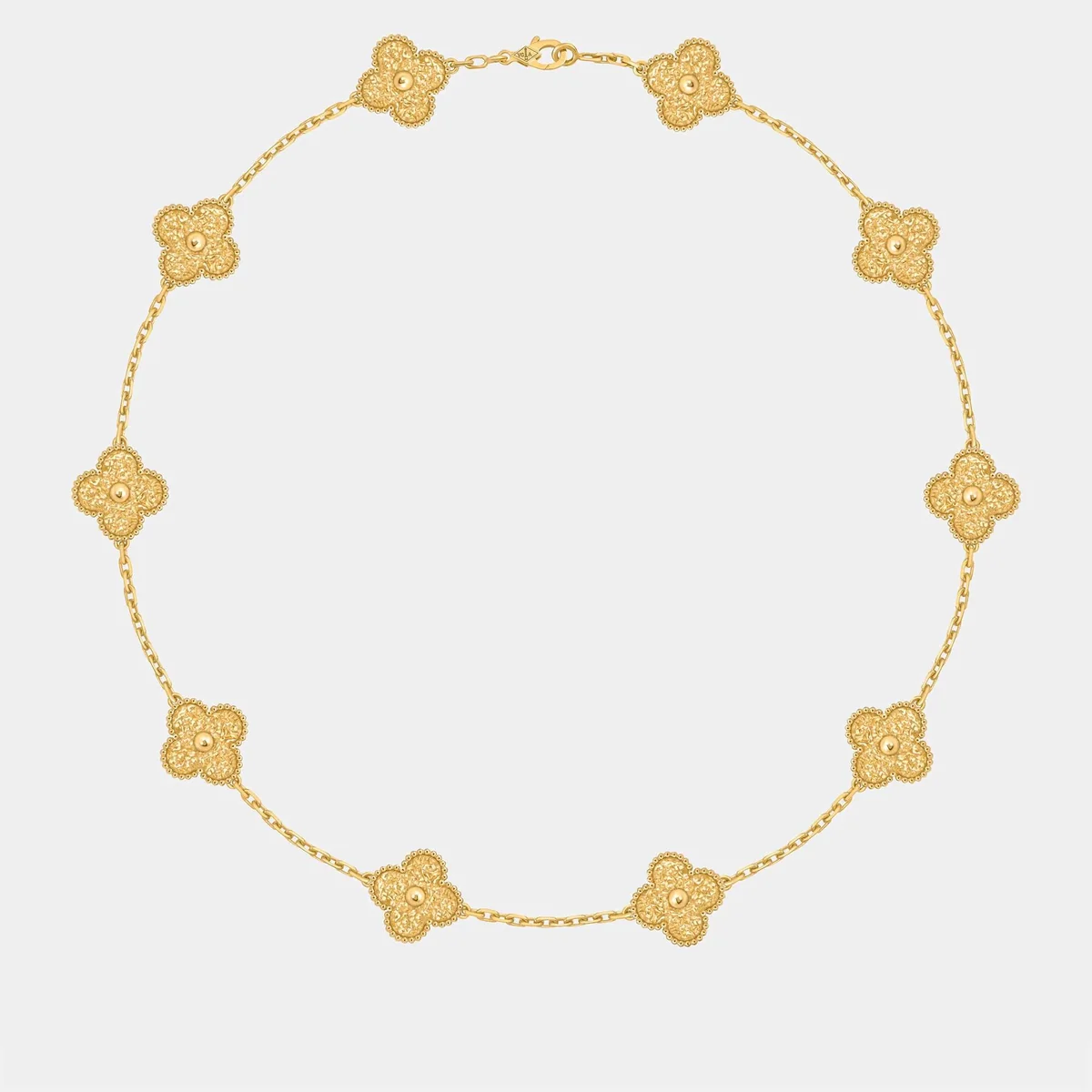
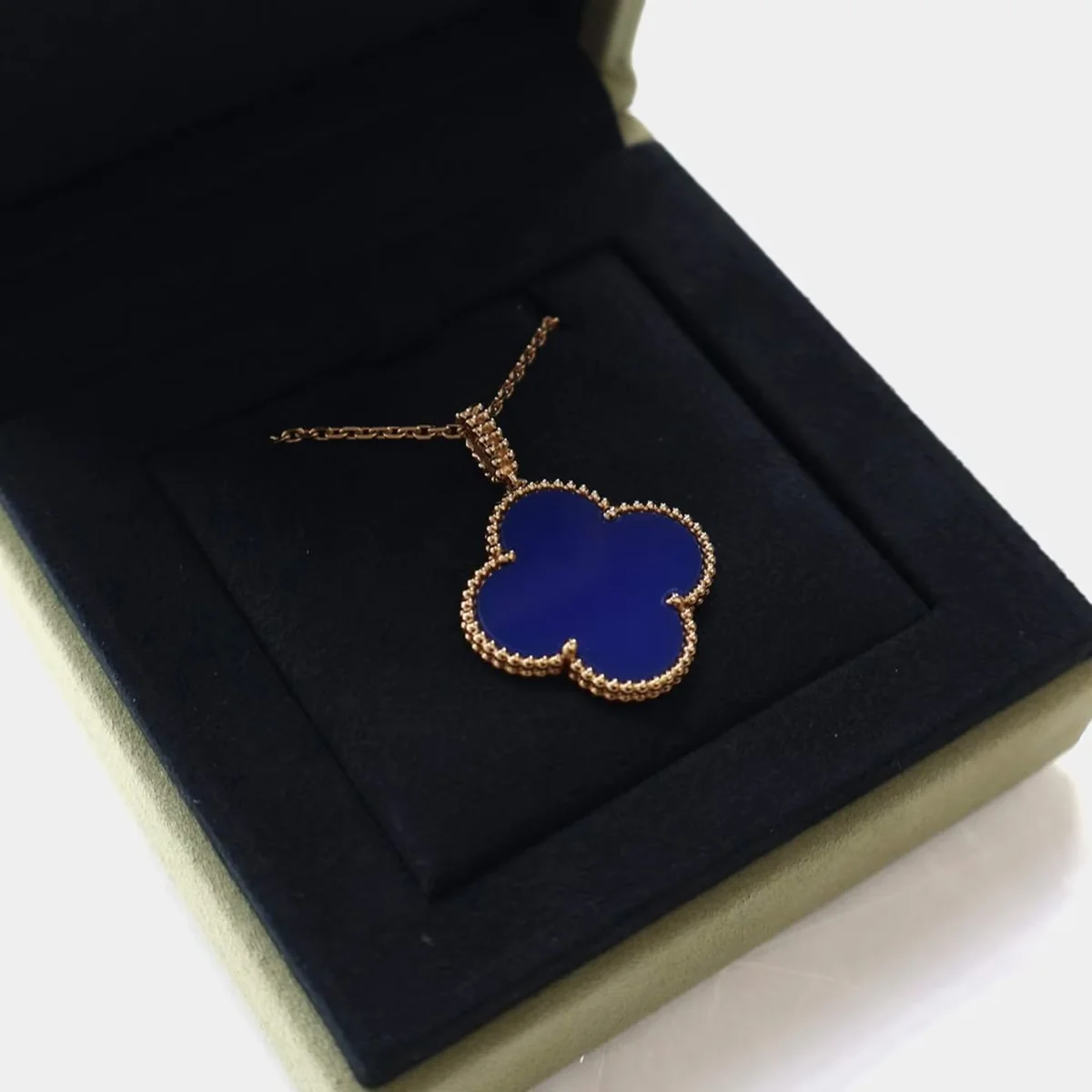
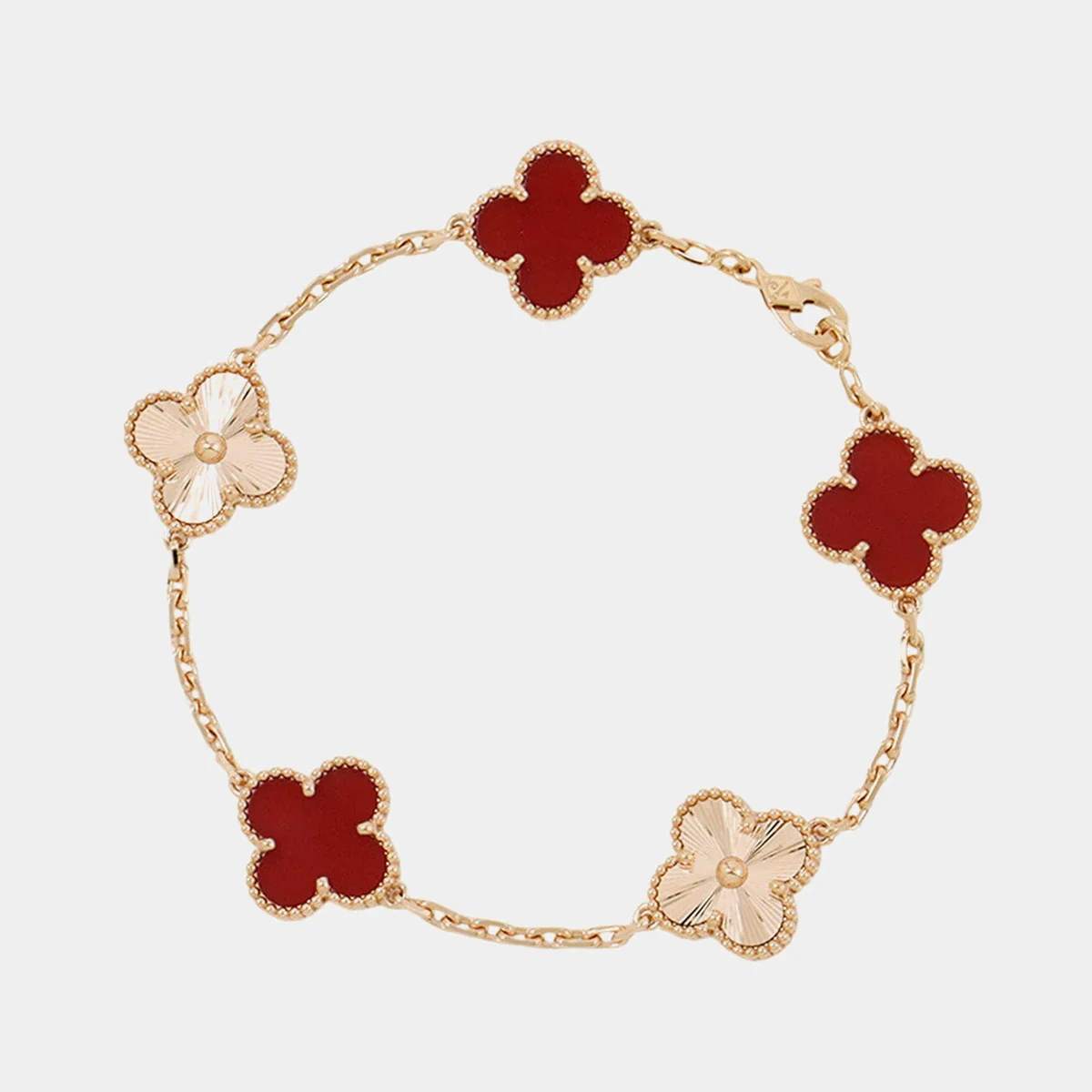
The collection most relevant to resale conversations is Alhambra, introduced in 1968 and built around a stylized four-leaf clover. It now accounts for roughly 62% of the brand’s secondary market volume, which tells you that when people talk about “Van Cleef & Arpels resale value,” they are largely talking about Alhambra specifically. Beyond Alhambra, the brand’s high jewelry and Mystery Set pieces occupy a separate, higher-stakes tier that behaves more like fine art than fashion jewelry at auction.
Distribution is deliberately narrow. There is no third-party retail and no marketplace presence; every piece is sold through official boutiques or the brand’s own site. In the UAE, that means Dubai Mall and Mall of the Emirates are the only authorized points of purchase, a restriction that keeps supply tight and, by extension, supports resale pricing.
Design#
The Alhambra clover is the reason this brand has resale traction at all. It is simple enough to wear daily, recognizable enough to hold cultural cachet, and consistent enough across decades that a 1970s piece and a current-production piece share an unmistakable design language. That continuity matters more than people assume: brands that redesign their icons every few years tend to create orphaned inventory that ages poorly on the resale market. Van Cleef & Arpels has avoided that trap almost entirely.
Where the design strategy gets more interesting is in the high jewelry tier. Pieces like the Zip necklace-bracelet, which sold for $793,346 at Phillips Geneva in 2026, or the Rose de Noël pieces featured at Sotheby’s, rely on mechanical ingenuity and rarity rather than brand logo recognition. These pieces don’t compete on wearability; they compete on craftsmanship history, and that’s precisely why they draw serious auction interest rather than casual buyer interest.
Materials#
Malachite is currently the material to watch. Between 2023 and 2025, cumulative retail increases on popular Alhambra models exceeded 20%, with malachite pieces seeing single adjustments as high as 14% in April 2025 alone. That’s a meaningful signal: when a brand raises prices on a specific stone that aggressively, it usually reflects genuine sourcing scarcity, not just margin expansion, and scarcity is what eventually shows up as resale strength.
Vintage 18k gold Alhambra pieces, particularly 20-motif necklaces with pavé diamond detailing, have also proven to be reliable performers. One such necklace sold at Sotheby’s in April 2025 for approximately $126,000, comfortably within the range collectors expect for that model. Onyx and mother-of-pearl variants remain more accessible entry points but generally sit lower in the resale hierarchy than malachite or gold pavé pieces.
Pros and Cons#
Advantages:
- Alhambra pieces retain 70–86% of retail value on average, with malachite and vintage examples occasionally matching or exceeding original retail price
- Controlled distribution through boutiques only means no gray-market flooding, which protects resale pricing over time
- Consistent retail price increases (4.8% in the US, 5.1% in Europe as of April 2025) push up the relative value of pieces already owned
- Auction results in 2025 and 2026 show above-estimate sales across multiple houses, indicating broad, not narrow, collector demand
- The Mystery Set technique gives high jewelry pieces a scarcity argument that’s difficult for competitors to replicate
Disadvantages:
- Liquidity is uneven. Alhambra sells relatively fast; niche high jewelry pieces can sit longer waiting for the right specialist buyer
- Entry price is high even before considering resale performance; malachite and gold pavé pieces are not accessible for casual buyers
- Value concentration in one collection (Alhambra) means the brand’s overall resale reputation rests heavily on a single design line
- Documentation matters a lot. Pieces without original boxes, certificates, or purchase receipts see noticeably reduced resale offers
- Unlike Cartier’s broader name recognition, Van Cleef & Arpels resale still leans on a more specialized collector base, which can narrow the buyer pool in softer markets
Who Should Buy#
Van Cleef & Arpels makes the most sense for buyers who want jewelry that functions as both a wearable piece and a reasonably defensible asset, not for anyone expecting guaranteed appreciation. If you’re drawn to the Alhambra clover specifically and plan to wear it regularly for years, the resale math works in your favor even in a worst-case scenario, since 70%+ retention is strong by fine jewelry standards.
Serious collectors chasing genuine appreciation should look toward vintage pieces, malachite Alhambra, and signed Mystery Set high jewelry, where scarcity and craftsmanship history do the heavy lifting. First-time luxury jewelry buyers with a smaller budget may be better served starting with a single Alhambra motif in gold or onyx rather than stretching for malachite, since the resale gap between entry-level and premium materials is significant enough to matter if you ever decide to sell.
Alternatives#
Cartier remains the most direct comparison. Its Love Bracelet and Juste un Clou lines offer stronger liquidity thanks to broader mainstream recognition, meaning pieces typically sell faster, though not necessarily at a higher percentage of original value than a well-chosen Alhambra piece.
Tiffany & Co. sits a tier below both brands in resale terms, typically retaining 50–70% of retail value. It’s a reasonable choice for buyers prioritizing brand recognition and lower upfront cost over long-term resale performance.
David Yurman falls further still, generally retaining 40–48% of value, which makes it a design-driven purchase rather than one made with resale in mind.
If your priority is maximizing resale percentage specifically, Van Cleef & Arpels and Cartier are the two brands worth comparing seriously; everything else in this price category is a step down in secondary market performance.
FAQ#
Does Van Cleef & Arpels hold its value in 2026? Yes, based on current data. Core Alhambra collections retain 60–80% of retail value, and select malachite, vintage, and Mystery Set pieces have sold at or above original retail price at recent auctions.
Is Van Cleef & Arpels a good investment? It performs well relative to most fine jewelry brands, but it should be treated as a value-retaining luxury purchase rather than a pure financial investment. Appreciation is possible, particularly with rare or discontinued pieces, but it isn’t guaranteed across the entire product range.
What percentage of retail value does the Alhambra collection resell for? Historically between 70% and 86%, with malachite and vintage 18k gold pieces occasionally reaching or exceeding 100% of original retail price in strong market conditions.
How can I sell my Van Cleef & Arpels jewelry for the best return? Keep original boxes, certificates, and receipts, sell through reputable resale platforms or auction houses rather than general marketplaces, and time sales to align with periods following brand retail price increases, since those tend to lift resale benchmarks industry-wide.
Which Van Cleef & Arpels pieces perform best at auction? Signed Mystery Set high jewelry, historic pieces like the Rose de Noël collection, and rare material variants such as coral or malachite Alhambra consistently draw the strongest above-estimate results.
Final Thoughts#
The auction data from 2025 and 2026 supports the claim that Van Cleef & Arpels resale value is genuinely strong, not just a marketing narrative. Structural factors, tight distribution, a single dominant design icon, consistent price increases, and a proprietary setting technique, give the brand resale advantages that most jewelry houses simply don’t have. That said, performance isn’t uniform. Alhambra in common materials behaves differently from malachite or vintage examples, and high jewelry behaves differently still. Buy for the design and the wearability first, and treat the resale strength as a genuine, well-documented bonus rather than the primary reason to purchase.
Related Articles#
- Lab-Grown vs Real Diamonds: Which Should You Buy?
- Hermès Birkin Prices 2025: Where to Buy for Less
- Y2K Fashion 2026: 15 Iconic Pre-Owned Luxury Looks
- Best Time to Buy a Luxury Handbag: Insider Tips
- Sell Your Hermès Bag Fast | The Luxury Closet Guide


Keyword index