Introduction: Why the Scarf Is Fall’s Most Underrated Accessory #
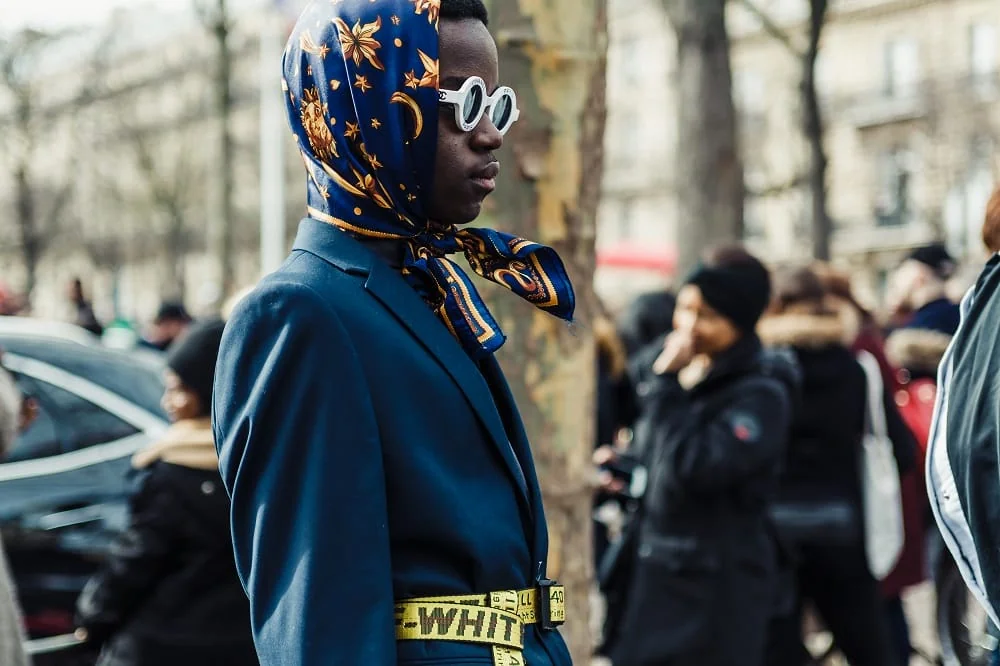
Handbags get the headlines every season, but the accessory doing the real styling work in fall is the scarf. It’s the piece that softens a structured coat, adds color to a monochrome outfit, and — for anyone building a serious handbag collection — the detail that keeps a Kelly or Birkin from looking static in the same three photos you’ve been reposting since 2019.
A scarf is also one of the lowest-risk entry points into designer accessories. It doesn’t need to fit, it doesn’t age out of trend the way footwear does, and a well-chosen cashmere or silk piece will outlast most seasonal handbag drops. If you’re already fluent in checking stitching on a Birkin or blind stamps on a Kelly, you’re closer than you think to spotting a fake scarf, too — the same discipline applies, just on a smaller canvas.
This guide rounds up ten designer scarves worth shopping this fall, breaks down how to wear them with your existing bag rotation, and — because this is a site built on authentication — walks through exactly what to check before buying one secondhand.
Fall 2021 Runway Trends: Prints, Faux Fur, and Babushkas #
Fall runways leaned into three distinct scarf stories rather than one unified trend, which is good news for shoppers: there’s a version of this trend for every wardrobe.
Texture Took Over #
Marc Jacobs sent out faux fur scarves that read more like statement collars than traditional wraps, while Burberry and other houses leaned into mohair and boucle blends. This is the “scarf as outerwear” moment — pieces bulky enough to be the focal point of an outfit rather than an accent.
Print Got Louder, Then Quieter #
Givenchy showed textured and printed scarves with real graphic presence, while Ralph Lauren went the opposite direction with tonal, neutral pieces built for layering rather than standing out. Both are valid entry points depending on whether your existing wardrobe (and handbag collection) already carries color, or needs it.
The Babushka Comeback #
Paco Rabanne, Preen by Thornton Bregazzi, Max Mara, and Dior all revived the headscarf as a runway staple. It’s a trend that photographs well but is genuinely wearable off the runway too — silk square scarves tied at the neck or over the head have quietly become one of the more practical ways to wear a designer print without committing to a full scarf’s yardage.
10 Standout Designer Scarves to Shop This Season #
Rather than list ten scarves in isolation, it’s more useful to group them by what they’re actually built for — because a printed silk twill and a cashmere shawl solve completely different styling problems.
Printed Silk Scarves #
These are your lightweight, pattern-forward pieces — ideal for neck ties, bag charms, or headscarves rather than warmth.
- Hermès Tête-à-Tête Équestre cashmere and silk scarf — a blended weight that bridges silk’s drape with cashmere’s warmth, in Hermès’s signature equestrian print language.
- Etro purple paisley-printed cashmere and silk stole — Etro’s paisley is its most recognizable signature, and this stole uses a muted purple palette that reads sophisticated rather than costume-y.
- A Dior silk twill headscarf in the house’s classic motifs — the most direct nod to the babushka trend, and small enough to double as a bag handle wrap.
- Givenchy printed silk square — bolder, more graphic prints for anyone whose existing handbags are already neutral leather and want the scarf to do the color work.
Cashmere and Wool Wraps #
The workhorses of a fall scarf collection — these are the pieces you’ll actually reach for on cold commutes.
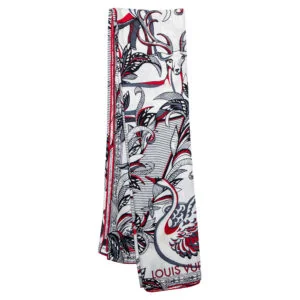
- [Louis Vuitton](/buying-guides/designer-handbag-trends-2025/) Wild LV monogram cashmere scarf — a maximalist monogram print on a genuinely warm cashmere base, built for visibility as much as warmth.
- Balenciaga monochrome logo-intarsia cashmere and wool stole — the intarsia knit construction (rather than print) gives it a more textured, sweater-like finish that reads slightly less “logo mania” in person than in photos.
- Ralph Lauren neutral wool wrap — the tonal, quiet counterpart to the above two, built for anyone who wants warmth without a visible logo.
- Max Mara oversized wool scarf — closer to a blanket scarf, sized generously enough to double as a wrap.
Fringed and Textured Shawls #
The most transitional pieces on this list — heavy enough for outerwear layering, but still soft enough to wear indoors.
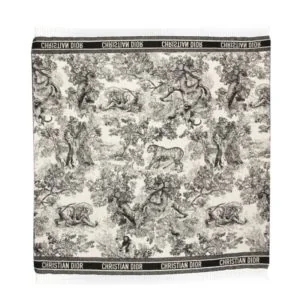
- Dior Monochrome Toile de Jouy fringed wool shawl — the Toile de Jouy print is one of Dior’s most heritage-coded motifs, and the fringed hem gives it more movement than a flat-edged scarf.
- Burberry colorblock mohair and silk-blend scarf — genuinely one of the warmer pieces here thanks to the mohair content, with a colorblock pattern that’s more playful than Burberry’s classic check.
A practical note from handling these in person: mohair and fur-blend pieces shed, especially in the first few wears. If you’re pairing one with a light-colored bag or coat, keep a lint roller in your bag — this is a real, unglamorous downside that most roundups skip.
Styling Your Scarf with Iconic Handbags Like the Kelly and Birkin #
The scarf-and-handbag pairing only works if you think about proportion and friction, not just color coordination.
Casual #
For everyday wear, a lightweight silk square tied loosely around the neck pairs well with a Birkin in a neutral palette — it adds pattern without competing with the bag’s clean lines. Avoid letting a long scarf dangle near a Kelly’s turn-lock hardware; the metal edges can snag delicate silk over repeated wear.
Work #
A tonal cashmere or wool wrap layered under a structured coat, carried alongside a Kelly Sellier (the more architectural of the two Kelly silhouettes), reads polished without looking like you tried too hard. Skip anything with heavy fringe or fur trim in an office setting — it competes with the bag rather than complementing it.
Formal or Evening #
This is where the fringed shawls earn their place — a Dior Toile de Jouy shawl thrown over the shoulders works as a light layer over evening wear, and pairs naturally with a smaller Birkin or Kelly in an exotic skin, since the scarf’s texture doesn’t compete with the leather’s.
One general rule worth repeating: match scarf weight to bag formality, not just color. A bulky mohair scarf next to a delicate box-leather Kelly can visually overwhelm the bag; a fine silk square next to a heavy shearling coat can get lost.
Buying Pre-Owned Designer Scarves: What to Check for Authenticity #
Secondhand scarves get counterfeited less aggressively than handbags, but the market is far from clean, and the checks are different from what you’d run on a bag.
Check the Hem First #
Hand-rolled hems are the single biggest tell on silk scarves, especially Hermès. Genuine hand-rolling is uneven in the best way — slightly irregular stitch spacing, hand-finished corners. Machine-rolled hems on a scarf claiming to be hand-finished are a hard red flag.
Print Alignment and Color Saturation #
Authentic silk twill scarves use engraved screens per color, which means colors are sharp-edged with no bleed between sections. Counterfeits and reprints often show slightly blurred color transitions or muted saturation, especially in scans sold online — ask for in-hand photos in natural light, not just the listing photos.
Fabric Feel, Not Just Fabric Claims #
Cashmere and wool blends should feel dense but not stiff. A “cashmere” scarf that feels papery or overly shiny is more likely a synthetic blend mislabeled by a reseller, whether intentionally or not. If you can, ask for a burn test description or fiber content tag close-up — genuine cashmere doesn’t melt the way synthetics do.
Labels and Care Tags #
Brand-specific details matter: Hermès scarves carry a copyright symbol and a specific printed care tag format that’s been consistent across recent years; deviations in font weight or tag placement are worth flagging. Louis Vuitton and Dior similarly have consistent label placement and stitching patterns that counterfeiters routinely get slightly wrong on spacing or thread color.
Buy from Platforms with Authentication Built In #
This is the honest shortcut: buying pre-owned scarves through a marketplace that authenticates inventory (rather than peer-to-peer social selling) removes most of this risk. It costs a small premium over marketplace-of-strangers pricing, but for anything over roughly $200, that premium is cheaper than the mistake.
Price and Resale Value: Which Designer Scarves Hold Their Worth #
Scarves don’t hold value the way a Birkin does, but there’s real variation worth knowing before you buy.
Budget tier (roughly $150–$350 pre-owned): Burberry and Ralph Lauren scarves in wool or silk-blends tend to sit here secondhand. They hold moderate resale value if kept in excellent condition, but heavily logoed pieces depreciate faster as monogram trends cycle.
Mid tier (roughly $300–$600 pre-owned): Dior, Balenciaga, and Etro scarves generally fall here, with cashmere and wool pieces priced above silk squares. Iconic, recurring prints (Dior’s Toile de Jouy, Etro’s paisley) hold value better than seasonal one-off graphics because they’re not tied to a single collection.
Investment tier (roughly $500–$1,200+ pre-owned): Hermès scarves are the clear outlier here. Discontinued prints and cashmere-silk blends in excellent condition can hold 60–80% of retail on the resale market, sometimes more for rare colorways — a resale performance closer to the brand’s handbags than to any other scarf on this list. Louis Vuitton’s monogram pieces sit just below this, buoyed by the strength of the LV monogram itself rather than print rarity.
The practical takeaway: if resale value matters to you, prioritize condition (no pulls, no odor, original box or ribbon if possible) and prints with staying power over trend-driven graphics. A scarf bought purely because it matched one season’s runway story is the one that depreciates fastest.
How to Choose the Right Fabric for Fall Weather #
Fabric choice should follow climate, not just aesthetics — a mistake a lot of buying guides skip entirely.
Silk is the lightest option here and offers the least warmth. It’s best for early fall, mild climates, or as an accent piece worn over a coat rather than as your primary layer. It’s also the most delicate fabric on this list — silk snags on rough textures and rings, including your own jewelry.
Cashmere is the mid-weight workhorse. A good cashmere scarf provides real warmth without bulk, making it the most versatile option for anyone in a climate with genuine but not extreme cold — most of the continental US and UK fall/early winter falls into this range. Quality varies a lot by ply count; a scarf described only as “cashmere” without ply information is worth asking about, since thin single-ply cashmere pills faster.
Wool runs warmer and heavier than cashmere at a similar price point, and it’s more durable against daily wear, making it a better choice if you’re rough on accessories or live somewhere genuinely cold.
Mohair and fur-blends are the warmest and most texturally dramatic, but they shed, they’re harder to clean, and they can look overly bulky in warmer climates or transitional weather. Save these for the coldest stretch of the season rather than wearing them from September onward.
If you only buy one scarf this season and want it to work across the widest range of days, a cashmere piece in a mid-weight (roughly 70/30 cashmere-silk or a dense pure cashmere) is the safest single purchase.
FAQ: Designer Scarves, Care, and Buying Tips #
How do I clean a silk designer scarf without damaging it? Hand wash in cold water with a gentle, pH-neutral detergent, or take it to a dry cleaner experienced with silk twill specifically — not just any dry cleaner. Never wring it; press water out with a towel and lay flat to dry, away from direct sunlight, which fades silk dye over time.
What size scarf should I buy? It depends on use. Silk squares in the 90cm range work best for neck ties, headscarves, and bag charms. Shawls and wraps in the 140–200cm range are better for draping over the shoulders or layering under a coat. If you’re buying to pair with a handbag as a charm or handle wrap, a smaller square (around 70cm) is easier to knot securely.
Are cashmere scarves worth the price difference over wool? For warmth-per-weight, yes — cashmere insulates better without the bulk. For durability and daily use, wool is often the more practical choice, since cashmere pills and wears faster with frequent handling.
Where can I buy pre-owned designer scarves safely? Stick to marketplaces or resellers that authenticate inventory before listing, rather than unverified peer-to-peer platforms. If buying from an individual seller, request close-up photos of the hem, label, and print edges before paying, and be wary of prices significantly below market for the brand and print.
Do designer scarves actually hold resale value? Some do. Hermès leads by a wide margin, particularly for discontinued or rare prints in excellent condition. Most other brands hold moderate value if the piece is in excellent condition and the print isn’t tied to a single trend cycle — heavily logoed or seasonal-only designs depreciate fastest.
Can I wear a scarf with a handbag that already has a lot going on visually (hardware, embossing, exotic leather)? Yes, but keep the scarf simpler in that case — a tonal or lightly patterned piece lets the bag stay the focal point, while a bold graphic scarf next to an already busy bag can read cluttered rather than curated.
Related Articles #
- Handbag Trends 2024: The Bags You’ll Actually Wear
- Popular Handbag Brands: Which One Is Right for You?
- Top Handbags Winter 2016: 10 Designer Bags Worth Buying
- Hermès Retail vs. Resale: Which Should You Choose?
- Sell Designer Handbags in 2025: Get Paid More, Faster
Related guides
- Online Bag Authentication: What Photos Can and Cannot Prove
- Luxury Handbag Authentication Process Explained
- China TikTok Luxury Factory Claims: Fact vs Fiction
- Chanel 2.55 History, Details & How to Spot a Fake
- How to Buy an Authentic Luxury Bag from China Safely
- New vs Pre-Owned Luxury Bags: Which Route Is Right for You?
- Chanel Bag Guide: What to Know Before You Buy
- Luxury Bag Houses


Keyword index