Introduction#
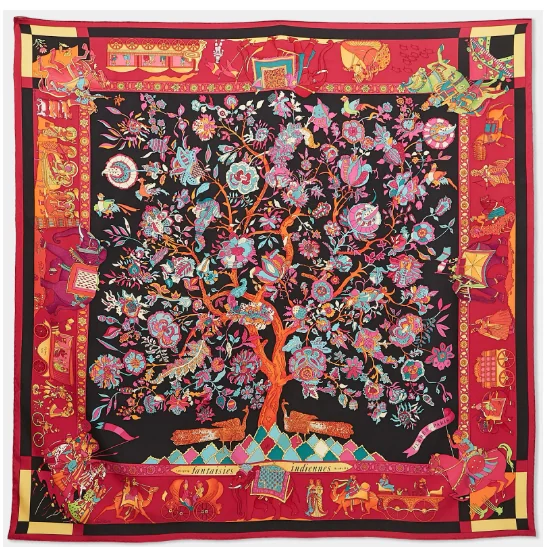
There’s a reason auction houses now run dedicated sales for vintage [[Hermès](/brands/painted-birkin-bags-celebrity-trend/) scarves](/buying-guides/hermes-scarf-investment-guide-2025/), and it’s not just the silk. A well-chosen Hermès carré has outlasted decades of trend cycles, survived being reinvented as a headband, a bag charm, and a crop top, and still sells out within hours when a new print drops. Few accessories carry that kind of cultural weight while remaining, technically, just a square of fabric.
I’ve bought, sold, and handled more Hermès scarves than I can count over the years, from crisp new-season 90cm carrés to soft, decades-old pieces with the kind of patina that only comes from being worn, not stored. What keeps pulling me back to them isn’t nostalgia. It’s that Hermès scarves are one of the rare luxury categories where the craftsmanship claims actually hold up under scrutiny, and where buying decisions genuinely benefit from understanding the history behind the product.
This guide walks through where the Hermès scarf came from, what actually happens between an artist’s sketch and a finished carré, which print families are worth knowing before you shop, how to avoid getting sold a fake, and how to think about [resale value](/buying-guides/sneaker-trends-2025-styles-worth-the-hype/) if you’re buying with an eye on the secondary market. No filler, no hype, just what I’d tell a friend before they spend four figures on a piece of silk.
A Legacy Written in Silk#
The first Hermès scarf, “Jeu des Omnibus et Dames Blanches,” was printed in 1937 by Robert Dumas, a member of the Hermès family who would later run the house. It arrived at an odd moment, post-Depression Europe wasn’t exactly clamoring for luxury, but the design tapped into something Hermès had already built its name on: equestrian culture, craftsmanship, and objects meant to last generations rather than seasons.
What’s less commonly known is how much of the scarf’s quality comes from decisions made long before any printing happens. Hermès sources raw silk thread from Brazil, one of the world’s major silk-producing regions, then has it woven into fabric in Lyon, France, historically the center of European silk weaving and still home to the ateliers Hermès relies on. The resulting twill is dense but light, with a structure that holds color and print detail far better than the thinner silk used in most mass-market scarves.
This is where the “is it worth the price” question actually starts to make sense. A cheap silk scarf and a Hermès carré are not made from comparable material. The weight, drape, and durability differences are noticeable the first time you handle one, and it’s a large part of why 40 and 50-year-old Hermès scarves are still circulating in wearable condition today.
The Artist’s Canvas#
Every Hermès carré starts as a piece of original art, and the house has worked with more than 50 different artists over its history, each bringing a distinct visual language rather than following a house style. That’s part of why the catalog feels so varied: a 1950s equestrian print and a 2020s abstract design can both be unmistakably Hermès while looking nothing alike.
The production side is where the craftsmanship claims stop being marketing language. A single design can require over 30 individual colors, and each color needs its own separate screen, hand-cut and precisely aligned so the layers register perfectly on the silk. Lay out all the screens for one complex design and they reportedly stretch longer than a tennis court. That’s not a small production run mentality, and it’s the direct reason Hermès only releases a limited number of new designs each year rather than churning out constant collections.
The honest caveat here: not every era of Hermès scarf printing is equal. Older pieces from the mid-20th century often show slightly richer, more saturated color separation because of the print techniques and screens used at the time. Some newer designs, particularly limited collaborations aimed at hype rather than longevity, can feel less considered. If you’re buying for the craftsmanship story, it pays to look closely rather than assume every carré on the shelf represents the brand’s best work.
Iconic Motifs and Bestselling Designs#
Rather than chasing individual scarf names, it’s more useful to know the print families collectors actually organize their thinking around. Almost everything in the Hermès scarf catalog falls into one of these camps.
Equestrian and carriage motifs. This is the foundational category, tracing straight back to Hermès’s origins as a saddlery. “Brides de Gala,” designed by Hugo Grygkar and first printed in the late 1950s, is the most recognized scarf Hermès has ever produced and remains one of the safest entry points for a first purchase because it never really goes out of favor.
Botanical and garden series. The “Jardin” designs (Jardin Perdu, Jardins d’Hiver, and successors) trade the heraldic density of equestrian prints for softer, more wearable colorways. These tend to appeal to buyers who find the classic carriage prints a bit heavy for everyday styling.
Wildlife and exotic themes. Designs built around big cats, birds, and safari imagery lean bolder and skew toward buyers who want a statement piece rather than a quiet classic. These can be harder to style daily but often become standout collector pieces.
Geometric and graphic prints. Think bold stripes, checkerboards, and abstract patterns like “Rocabar.” These read more modern and tend to work best for younger buyers or anyone building a more minimalist wardrobe.
Artist collaborations and limited editions. Occasional partnerships with contemporary artists produce scarves that break from the house’s traditional visual language entirely. These carry real cachet but are the riskiest category for resale value, since demand is tied to the specific collaboration’s popularity rather than a timeless print family.
If I’m advising a first-time buyer, I steer them toward the equestrian or early garden prints. They photograph well, style easily, and have decades of resale data behind them. The graphic and collaboration pieces are more of a personal taste purchase than an investment one.
How to Spot an Authentic Hermès Scarf#
The resale market for Hermès scarves is large enough that convincing counterfeits are common, especially online. A few checks I use every time I evaluate a pre-owned piece:
- Hand-rolled hems. Authentic Hermès scarves have hems finished by hand, called roulottage, with small, slightly irregular stitches. Machine-rolled hems with perfectly uniform stitching are a strong red flag.
- Weight and drape. Genuine carrés use a heavier silk twill than most counterfeits bother replicating. A scarf that feels thin, slippery, or overly stiff is worth questioning.
- Print sharpness. Because each color is individually screen-printed, authentic scarves show crisp, clean color separation with no bleeding between colors, even in fine linework.
- Signature details. Most designs include the artist’s signature worked into the print itself, along with a copyright symbol and the year, usually along the border. Sellers rarely fake these convincingly.
- Labeling. “HERMÈS PARIS” is woven into a corner of the scarf, not printed on afterward. The font, spacing, and placement have been consistent across decades, and any obvious inconsistency is worth a second look.
- Selvedge edges. Original edges should be clean and tightly woven. Fraying, glue residue, or an uneven cut along the fabric edge suggests a lower-quality reproduction.
Beyond the scarf itself, buy from sellers who offer an authentication guarantee, especially for vintage pieces where box and receipt are long gone. If a price seems unusually low for a well-known print, treat that as information, not a bargain.
Styling Your Hermès Scarf#
Part of what’s kept the Hermès carré relevant is how far it’s moved beyond the traditional neck knot, without ever abandoning it.
- Classic neck styles. The simple knot or the cravat-style tie under a collar remain the most timeless options and the easiest to master.
- Bag charm. Tied around a handle or through a hardware ring, a scarf (or the smaller twilly) adds color to a neutral handbag without competing with it.
- Headband or hair accessory. Folded into a band or tied around a ponytail, this is one of the most popular modern uses and works well with almost any print family.
- Belt. Looped through denim or tailored trousers, a scarf belt is an easy way to wear a large-format print without it overwhelming an outfit.
- Top or halter. A more advanced styling move, but a 90cm scarf tied as a halter top or bandeau has become a genuine warm-weather staple, particularly with bolder wildlife or geometric prints.
- Framed as art. For scarves too delicate, discolored, or sentimentally valuable to wear, framing is a legitimate and increasingly common choice, especially for rare vintage prints.
The versatility is real, but it’s worth noting that constant tying, knotting, and handling does put wear on hems and printed surfaces over time. If resale value matters to you, keep at least one scarf in unworn, boxed condition rather than styling every piece you own.
FAQ#
How much does a Hermès scarf cost? New 90cm silk carrés generally retail between roughly $500 and $800 depending on the design, with smaller twillys starting lower and cashmere-silk blends running higher. Limited editions and special materials can price significantly above that range.
Are Hermès scarves a good investment? Select designs, particularly iconic equestrian prints in classic colorways and scarves in excellent, unworn condition, have held or appreciated in value on the resale market. That said, most scarves are not guaranteed investments, and trend-driven or collaboration pieces are far less predictable than the house’s foundational designs.
How can you tell if a Hermès scarf is real? Check for hand-rolled hems, dense silk twill weight, crisp screen-printed color separation, a woven “HERMÈS PARIS” label, and an artist’s signature with copyright mark within the print. Buying from a seller with an authentication guarantee is the safest route for pre-owned pieces.
How many colors does a Hermès scarf typically have? Complex designs can include more than 30 individual colors, each applied with its own separate screen, which is part of why production runs are limited and prices reflect that labor.
What silk do Hermès scarves use? Hermès sources raw silk thread primarily from Brazil, which is then woven into fabric in Lyon, France, resulting in a heavier, more durable twill than most other silk scarves on the market.
What’s the best first Hermès scarf to buy? A classic equestrian print like “Brides de Gala,” or an early garden series design, in a neutral colorway. Both style easily, wear well, and have the longest resale track record.
Recommendations and Buying Advice#
If you’re buying to wear and enjoy, choose the print you’ll actually reach for, not the one that seems most collectible. A scarf you never wear isn’t doing its job, no matter how well it holds value.
If resale or investment potential matters to you, prioritize established print families over trend-driven collaborations, favor neutral or classic colorways over highly seasonal ones, and keep the original box, ribbon, and any documentation. Condition matters enormously on the secondary market; a scarf with visible pulls, discoloration, or a damaged hem will sell for a fraction of one in excellent shape, regardless of print.
Buy new pieces directly from Hermès boutiques when possible, since availability and pricing are controlled there. For vintage or discontinued designs, work only with resellers who authenticate their inventory and can speak knowledgeably about print history, hem construction, and dating a piece by its labeling. And go in with realistic expectations: Hermès scarves are a genuinely well-made luxury product with real craftsmanship behind them, but they’re not all equally rare, and not every piece you buy will appreciate. Buy the ones that earn their price through design and quality, and the value question tends to take care of itself.
Related Articles#
- Why the Chanel Crossbody Bag Never Goes Out of Style
- Best Time to Buy a Luxury Handbag: Save More in 2025
- Best It Bags to Buy This Year: A Definitive Guide
- Classic and Chic Handbags: Timeless Style Icons
Related guides
- Online Bag Authentication: What Photos Can and Cannot Prove
- Fake Goyard Bag Guide: How to Spot Real vs Fake (2026)
- How to Spot a Fake Chanel Flap Bag: Authentication Guide
- How to Spot a Fake Hermès Birkin: Expert Checklist
- How to Buy an Authentic Luxury Bag from China Safely
- New vs Pre-Owned Luxury Bags: Which Route Is Right for You?
- Chanel Bag Guide: What to Know Before You Buy
- Luxury Bag Houses


Keyword index