Introduction #
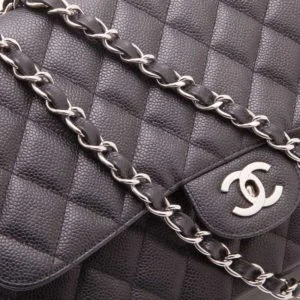
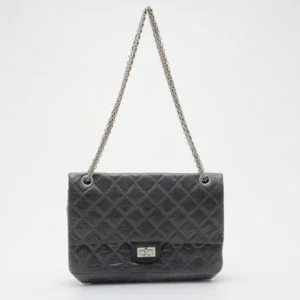
Ask any handbag collector to name the five most recognizable bags ever made, and the Chanel 2.55 will come up before you finish the question. The quilted leather, the chain-and-leather strap, the little turn-lock that everyone assumes is decorative but isn’t — it’s a silhouette that’s been copied more than almost any other accessory in fashion history, which is exactly why it’s also one of the most faked.
This piece is a deep dive into what actually makes a 2.55 a 2.55: where the design came from, what the details mean, how it differs from the Classic Flap it’s constantly confused with, and — because this matters more than nostalgia once real money is on the table — how to tell a genuine bag from a convincing fake, what these bags are worth right now, and where to buy one with confidence.
The Origin Story: Coco Chanel’s Vision for a Hands-Free Bag #
Coco Chanel didn’t design the 2.55 in a vacuum. Her starting point, by her own account, went back to the First World War, watching soldiers move with rucksacks slung across their bodies, hands completely free. At the time, women’s handbags were almost exclusively carried in-hand or tucked under an arm — elegant, but useless the moment you needed both hands for anything.
Chanel’s solution was to give a handbag a strap long enough to wear across the body or over the shoulder. That single change reframed what a luxury bag could be: not just a status object, but a tool for a woman who actually moved through her day. It’s worth sitting with how radical that was in the 1920s. Practicality wasn’t a selling point for luxury goods at the time — Chanel made it one, and the entire category of the “shoulder bag as everyday luxury” traces back to that decision.
The bag that would become the 2.55 didn’t arrive fully formed, though. Chanel refined the concept for nearly three decades before releasing the version we recognize today in February 1955 — hence the name, which simply encodes the month and year of its launch. That’s a detail worth knowing on its own, because it tells you the 2.55 isn’t a marketing name or a nickname that stuck later. It’s literally a date stamp.
Hidden Symbolism: How Aubazine Abbey Shaped the Design #
This is the part of the story that turns a well-made bag into a genuinely meaningful object, and it’s rooted in Chanel’s childhood at the Aubazine orphanage in rural France, where she lived after her mother’s death.
- The chain strap references the chains the caretakers at the orphanage wore at their waists — an image Chanel apparently never shook.
- The garnet-red interior lining, which shows up across decades of 2.55 and Classic Flap bags, mirrors the color of the uniforms the orphanage children wore.
- The interlocking CC logo, arguably the most licensed and imitated monogram in fashion, is believed to be derived from a stained-glass window inside the abbey.
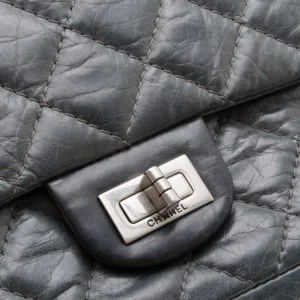
- The turn-lock closure carries its own quiet signature: it’s called the “Mademoiselle lock,” a nod to the fact that Chanel never married and was, by her own design, never a Madame.
None of this is sentimental filler. It matters for buyers because these details are also the exact points counterfeiters get wrong most often — the shade of the lining, the proportions of the CC lock, the weight and link pattern of the chain. Knowing why a detail exists makes it much easier to spot when it’s been reproduced carelessly.
Chanel also built function into the bag around her own life. The interior has a flat welt pocket for everyday items like lipstick, a small hidden zip compartment reportedly meant for love letters (she was in a relationship at the time and wanted discretion), and a flat pocket on the back exterior for quick access to cash. These aren’t decorative flourishes — they’re the reason the bag has stayed relevant for a century. It was designed to actually be used.
Craftsmanship and Signature Details #
The Diamond Quilt and Mademoiselle Lock #
The quilting on a 2.55 isn’t arbitrary — it’s a diamond pattern, stitched to give the leather structure without stiffening it, and it’s meant to be even, tight, and symmetrical across every panel. On the original 2.55, the closure is the rectangular Mademoiselle turn-lock, not the CC lock most people picture when they think “Chanel flap.” That distinction is the single biggest source of confusion in the resale market, and we’ll come back to it.
Sizes, Leather Types, and Hardware Finishes #
Chanel has never limited the silhouette to one leather or one size, and that variety is part of what makes buying pre-owned confusing if you’re new to it.
Leathers you’ll commonly encounter:
- Caviar leather — pebbled, textured calfskin. It’s the most durable and scratch-resistant option, forgiving for everyday use, and generally the easiest to maintain. It’s also the most widely available, which affects resale liquidity.
- Lambskin — smooth, soft, and noticeably more luxurious to the touch, but it marks and scratches far more easily. Beautiful for occasional wear, riskier as a daily bag.
- Aged/distressed calfskin (reissue lines) — used on later reissue versions to replicate the vintage, worn-in look of the original 1955 bags.
- Exotic skins (python, lizard, crocodile) — limited production, priced significantly higher, and worth extra authentication scrutiny given how often exotics are targeted by counterfeiters.
Sizes generally run Mini, Small, Medium (the most commonly bought and resold size), Jumbo, and Maxi, with proportions shifting slightly across eras. Medium and Jumbo tend to hold resale value best simply because demand is highest for those two.
Caring for Your Chanel 2.55 #
Leather goods this expensive reward basic discipline more than any special product. A few things we’d flag from handling and reviewing hundreds of these bags:
- Store it stuffed with tissue paper or a shaper, inside its dust bag, away from direct light — leather dye can shift color with sun exposure, especially on lighter shades.
- Caviar leather tolerates light moisture and daily handling well; lambskin doesn’t. If you carry lambskin regularly, expect visible wear within a year or two — that’s normal, not damage.
- Avoid leaving the bag in a car or anywhere with heat swings. Glue and leather both react badly to temperature extremes over time.
- Clean hardware with a dry microfiber cloth only. Avoid silver polish or metal cleaners — most Chanel hardware is plated, and abrasive cleaners strip the plating rather than restore it.
- Have the bag inspected periodically if you’re using it hard. Loose stitching at the strap attachment points is the most common wear failure, and it’s fixable early but expensive to fix once it’s torn through.
Chanel 2.55 vs. Classic Flap: Knowing the Difference #
This is the most common point of confusion in the entire category, and it’s not your fault if you’ve mixed them up — Chanel itself contributed to the blur by never renaming the newer line.
The original 2.55, designed by Coco Chanel and launched in 1955, uses the rectangular Mademoiselle turn-lock and a chain-only strap. In the early 1980s, Karl Lagerfeld — newly installed as creative director — updated the silhouette: he replaced the Mademoiselle lock with the now-famous interlocking CC turn-lock, and introduced the chain-and-leather woven strap that’s become the brand’s signature. That updated version is what the market calls the “Classic Flap,” while the pre-Lagerfeld design retains the “2.55” name.
Design Lineage: Mademoiselle Lock vs. CC Turn-Lock #
If you’re shopping and want to know instantly which lineage you’re looking at, the lock tells you everything: a rectangular twist lock means 2.55 (or a reissue paying homage to it), a circular interlocking CC lock means Classic Flap. It sounds simple, but a surprising number of listings — even from established resellers — label things loosely, so don’t rely on the title of a listing alone.
Chanel 2.55 vs. Chanel 19: Two Different Philosophies #
Since buyers often cross-shop the 2.55/Classic Flap against the newer Chanel 19 (introduced in 2019), it’s worth being direct about how differently these bags are built. The 19 uses a mix of quilting patterns (not the uniform diamond quilt), a lighter, more casual chain-and-leather strap combination, and a flatter, more relaxed silhouette overall. It was designed to feel less formal and more youthful, and it’s noticeably softer structurally — which some buyers love and others find flimsy compared to the boxier, more architectural 2.55. If you want a bag that holds its shape with minimal babying, the 2.55/Classic Flap wins. If you want something slouchier and more casual, the 19 fits that brief better — but expect it to soften and lose shape faster with heavy use.
Current Pricing and Resale Value #
Chanel has raised prices on its leather goods multiple times over the past several years, and the 2.55/Classic Flap has consistently outpaced general inflation. Depending on size and leather, current retail on a Medium Classic Flap in caviar sits well above what it cost even three or four years ago — check Chanel’s current boutique pricing directly, since it changes without much notice and varies by region.
What that’s done to resale is notable: because retail keeps climbing, well-kept pre-owned 2.55 and Classic Flap bags in popular sizes (Medium, Jumbo) and neutral colors (black caviar with gold hardware especially) often resell at or close to original retail, sometimes above it for discontinued colorways or hardware finishes. Lambskin holds value less consistently than caviar simply because condition variance is higher. Mini sizes have seen the strongest demand growth of any size category over the last several seasons, which has pushed resale prices up disproportionately.
The honest caveat here: resale value is not guaranteed, and “Chanel always appreciates” is more myth than rule. Condition, documentation, hardware finish, and even the specific season’s stitch count all affect what a bag actually commands.
[[[Authentication Tips](/buying-guides/mothers-day-2026-pre-owned-luxury-handbags/)](/authentication/how-to-spot-a-fake-chanel-flap-bag/)](/buying-guides/replica-vs-pre-owned-bags/) for Buying a Chanel 2.55 #
If you’re buying pre-owned — which is where most 2.55s on the market now live, given the bag hasn’t been in regular production for years — authentication isn’t optional. This is one of the most counterfeited handbags in the world, and fakes have gotten considerably better over the last decade.
Common Counterfeit Red Flags #
- Quilting that’s uneven or slightly off-symmetrical. Genuine bags have precise, consistent diamond stitching across every panel. Wobbly or inconsistent quilting is one of the fastest tells.
- A CC turn-lock on a bag marketed as an original 2.55. As covered above, an authentic 1955-style 2.55 uses the Mademoiselle lock, not the CC lock. A seller mixing these up is either uninformed or misrepresenting the bag.
- Chain links that feel light or hollow. Genuine chain has real heft. Counterfeits routinely use thinner, lighter-gauge metal that feels noticeably cheap in hand.
- Interior lining color that’s slightly off from the deep garnet Chanel uses, or a lining fabric that feels synthetic rather than the correct leather or fabric blend for the era.
Hardware, Stitching, and Serial Stamps #
Check the hardware plating closely — genuine Chanel hardware is heavy, evenly plated, and doesn’t show brassy undertones through the gold or silver finish. Stitch count matters too: authentic bags have consistent, tight stitches (Chanel is known for specific stitch counts per panel that vary by era, which is a level of detail worth researching for the specific decade of bag you’re evaluating).
Every authentic Chanel bag also carries an identification marker. Bags made before late 2020 have a holographic sticker with a serial number inside, which should match an authenticity card sold with the bag. If either the card or the sticker is missing, blurry, or the numbers don’t align with the production era, treat that as a serious red flag, not a minor omission.
Chanel 2.55 vs Classic Flap Bag: What’s the Real Difference #
Beyond the lock and strap distinctions already covered, this question usually comes down to what a buyer actually wants to use the bag for and what they’re trying to get out of resale.
Which One Should You Buy #
If you’re drawn to the history — the idea of owning something close to Chanel’s original 1955 design philosophy — the true 2.55 with the Mademoiselle lock is the more meaningful purchase, and it tends to appeal to serious collectors more than casual buyers. If you want the bag most people recognize on sight and the easiest one to resell quickly, the Classic Flap with the CC lock is the safer, more liquid choice. It’s also simply more available; original 2.55 pieces with the Mademoiselle lock are comparatively rare on the pre-owned market now, since production shifted decades ago.
Resale Demand and Investment Value #
In our experience watching resale listings and auction results, Classic Flap bags move faster and command more consistent pricing simply because demand is broader — more buyers recognize it, more buyers want it. Original 2.55 pieces can command a premium with the right collector, but they sit on the market longer waiting for that specific buyer. Neither is a bad choice financially; they’re just different liquidity profiles.
How to Authenticate a Chanel 2.55 (With Visual Checkpoints) #
Since 2021, Chanel changed its authentication system entirely — newer bags no longer use the holographic sticker and paper card. Instead, they carry a unique identification code embedded in a small chip sewn discreetly into an interior seam, without a corresponding removable card. If you’re evaluating a bag claimed to be recent production and it still has an old-style sticker and card, that’s worth questioning directly with the seller.
Visual Checkpoint Checklist #
- Interior stamp/chip — confirm it’s present, legible, and consistent with the claimed production year.
- Lock mechanism — Mademoiselle (rectangular) for original 2.55, CC turn-lock for Classic Flap. Test that it turns smoothly and clicks with resistance, not looseness.
- Quilting symmetry — lay the bag flat and check that diamond stitching lines up evenly across the front and back panels.
- Chain weight and finish — it should feel substantial, with even plating and no visible brassy patches at the links.
- Leather smell and texture — genuine Chanel leather has a distinct, rich smell; chemical or plastic odors are a warning sign.
- Stitch count and thread tension — even, tight stitching with no loose threads or glue residue along seams.
Where to Buy Pre-Owned or Authenticated Chanel 2.55 Bags #
Given how frequently this bag is counterfeited, buying from a platform with in-house authentication — rather than a peer-to-peer marketplace with no verification — is worth the added cost or fees. Established luxury resale platforms, consignment boutiques with published authentication processes, and Chanel’s own pre-owned partnerships (where available) are all safer starting points than unmoderated marketplace listings. If a private seller’s price looks meaningfully below market for the size, leather, and condition described, treat that gap as a signal to slow down, not a bargain to grab quickly.
FAQ #
Is the Chanel 2.55 still made? Chanel continues to produce reissue versions referencing the original 1955 design, alongside the ongoing Classic Flap line. True vintage 2.55 pieces with the Mademoiselle lock are no longer in regular production and are sourced through pre-owned and vintage channels.
Does caviar or lambskin hold value better? Caviar generally holds value better because it resists wear, which keeps more bags in good, resalable condition over time. Lambskin can be just as valuable in excellent condition, but that condition is harder to maintain.
Can I authenticate a Chanel 2.55 from photos alone? Partially. Photos can reveal obvious issues — wrong lock, uneven quilting, incorrect lining color — but serious authentication should include an in-person or professional inspection, especially for higher-value pieces.
Is a missing authenticity card automatically a dealbreaker? For pre-2021 bags, a missing card is a real concern and should lower your confidence significantly. For bags made after Chanel’s switch to the embedded chip system, there’s no separate card to begin with, so its absence isn’t unusual — but the chip itself should still be present and verifiable.
Related Articles #
- Chanel Flap Bag Buying Guide: Sizes, Prices & Deals
- Why the Chanel Crossbody Bag Never Goes Out of Style
- 5 Rare Chanel Bags Every Collector Should Know
- Real vs Fake Chanel Tweed Jacket: How to Spot a Fake
- 5 Iconic Bags Named After Famous Women (Buying Guide)
Related guides
- Online Bag Authentication: What Photos Can and Cannot Prove
- Private Bag Edit: Hermès Kelly Authentication Blog
- Hermès Date Codes & Stamps Explained: Full Guide
- Hermès Crocodile vs Alligator Bags: Buyer's Guide
- How to Buy an Authentic Luxury Bag from China Safely
- New vs Pre-Owned Luxury Bags: Which Route Is Right for You?
- Chanel Bag Guide: What to Know Before You Buy
- Luxury Bag Houses


Keyword index