Introduction#
The Chanel tweed jacket has a strange origin story for something so aristocratic. The fabric itself was born on Scottish and Irish farms, woven coarse and durable enough to keep laborers warm through wet winters. Gabrielle Chanel saw something else in it: a fabric that moved with the body instead of against it, unlike the stiff, boned tailoring women were expected to wear in the early 20th century. She took a working-class textile and turned it into one of the most recognizable status symbols in fashion history.
That history is exactly why the jacket gets counterfeited so aggressively. It’s instantly recognizable even to people who know nothing about fashion, it holds its value on the resale market better than almost any other ready-to-wear item Chanel makes, and it’s complicated enough to construct that convincing fakes take real skill to produce. In other words, the incentive to fake it is high, and the room for error if you’re buying pre-owned is real.
I’ve handled hundreds of these jackets over the years, from decades-old vintage pieces bought at estate sales to current-season runway versions, and I can tell you the fakes have gotten noticeably better in the last five years. The obvious tells — cheap zippers, glued hems, blurry logos — are mostly gone from the higher-tier counterfeits. What hasn’t improved is the fabric hand-feel, the weight distribution, and the precision of construction, because those things require actual skilled tailoring, not just a good photo reference. That’s where authentication really happens now, and it’s what this guide focuses on.
Examining the Fabric and Craftsmanship#
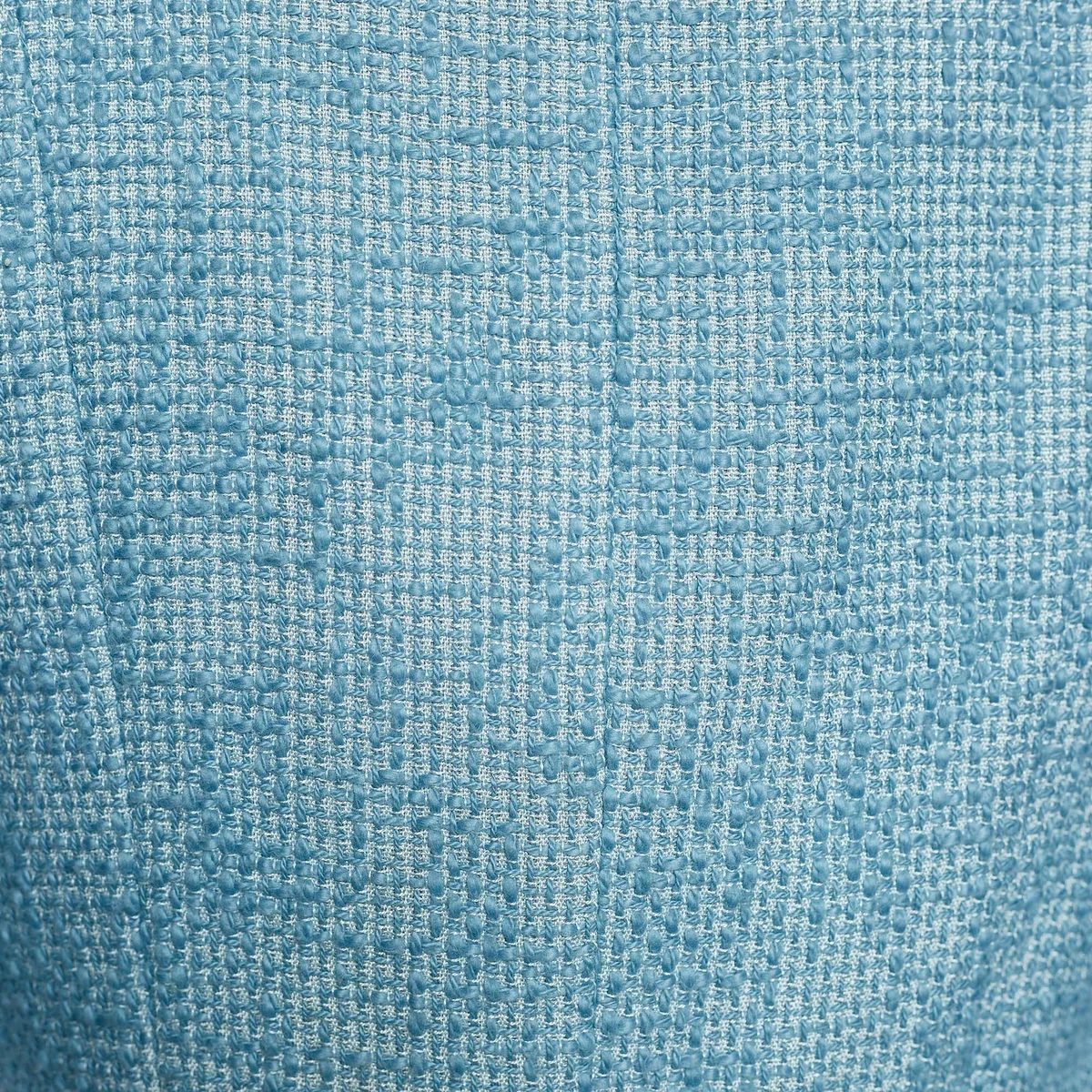
Start here, because fabric is the hardest thing for counterfeiters to replicate convincingly, and it’s the first thing your hands will notice before your eyes catch up.
Authentic Chanel tweed is a bouclé weave, meaning the yarn itself has small loops and irregularities built into it rather than a flat, uniform surface. Chanel sources wool blended with fibers like silk, mohair, alpaca, or cotton depending on the season and collection, which gives the fabric a slightly textured, almost three-dimensional quality. Run your fingers across a genuine jacket and you’ll feel subtle variation in the yarn thickness. It should feel soft and slightly springy, never scratchy, and it should have visible depth when you look at it under natural light, almost like the surface is woven in layers.
Fakes tend to use a flatter, more uniform tweed-look fabric, often synthetic-heavy, that photographs fine but feels thin and papery in person. It also tends to fray or pill faster because the fiber blend is lower quality. If a seller won’t provide close-up, well-lit photos of the fabric texture, or if the listing photos look suspiciously glossy and flat, that’s worth flagging before you go further.
One honest caveat: fabric alone won’t settle it. Chanel has used dozens of different tweed compositions across decades and collections, so “this doesn’t feel like the tweed I remember” isn’t proof of anything on its own, especially with vintage pieces. Use fabric quality as one data point, not the verdict.
Decoding the Label and Logo Details#
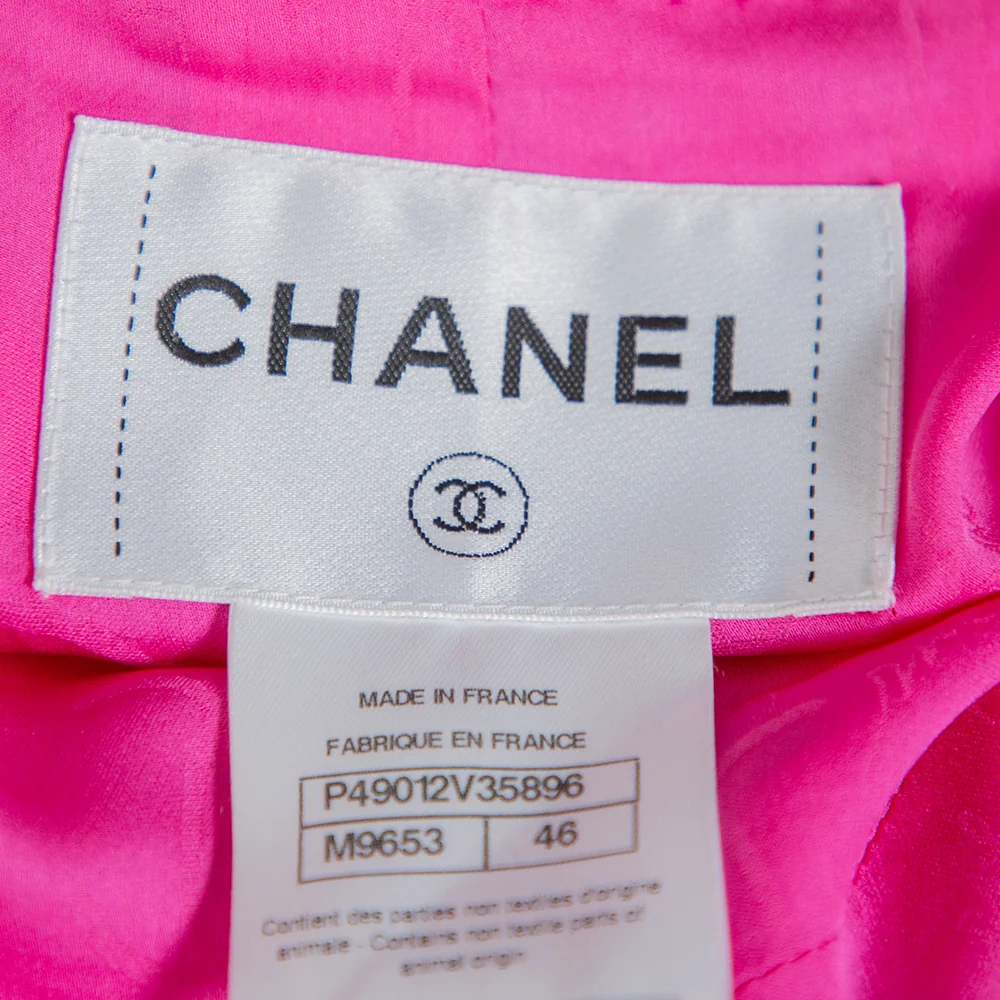
The label is where a lot of buyers focus first, and for good reason, but it’s also where I see people get overconfident. Labels can be swapped, reprinted, or sewn from real jackets that have been damaged elsewhere, so treat this as one piece of the puzzle rather than the whole picture.
On an authentic jacket, the main label is sewn into the lining, typically black or white, with block-letter “CHANEL” text and the interlocking CC logo positioned beneath it, flanked by small dashed lines on either side. The font weight should be consistent, evenly spaced, and crisp, never smudged or slightly bowed. Older vintage pieces (roughly pre-2000s) use slightly different label formats than current-season jackets, so it helps to know approximately when your specific style was produced before comparing it against a reference.
Below or beside the main label, you’ll usually find a separate care label listing the style code, size, and fiber composition. This is a detail counterfeiters frequently get wrong, either by using a font that’s slightly too bold, spacing that’s too tight, or a size format that doesn’t match Chanel’s actual sizing conventions for that era.
Check the “Made in France” or “Made in Italy” marking closely. Chanel ready-to-wear is produced almost exclusively in these two countries, and the text should be clean and properly aligned, not crooked, off-center, or printed in a font that doesn’t match the rest of the label. Spelling errors are the obvious giveaway on lower-tier fakes, but the better ones now get the spelling right and only fail on proportion and placement, which is why side-by-side comparison with a verified authentic example matters more than reading the words themselves.
Hardware, Buttons, and Lining Clues#
This is where I’d argue the real forensic work happens, because hardware is expensive to replicate properly and cheap counterfeiters cut corners here fast.
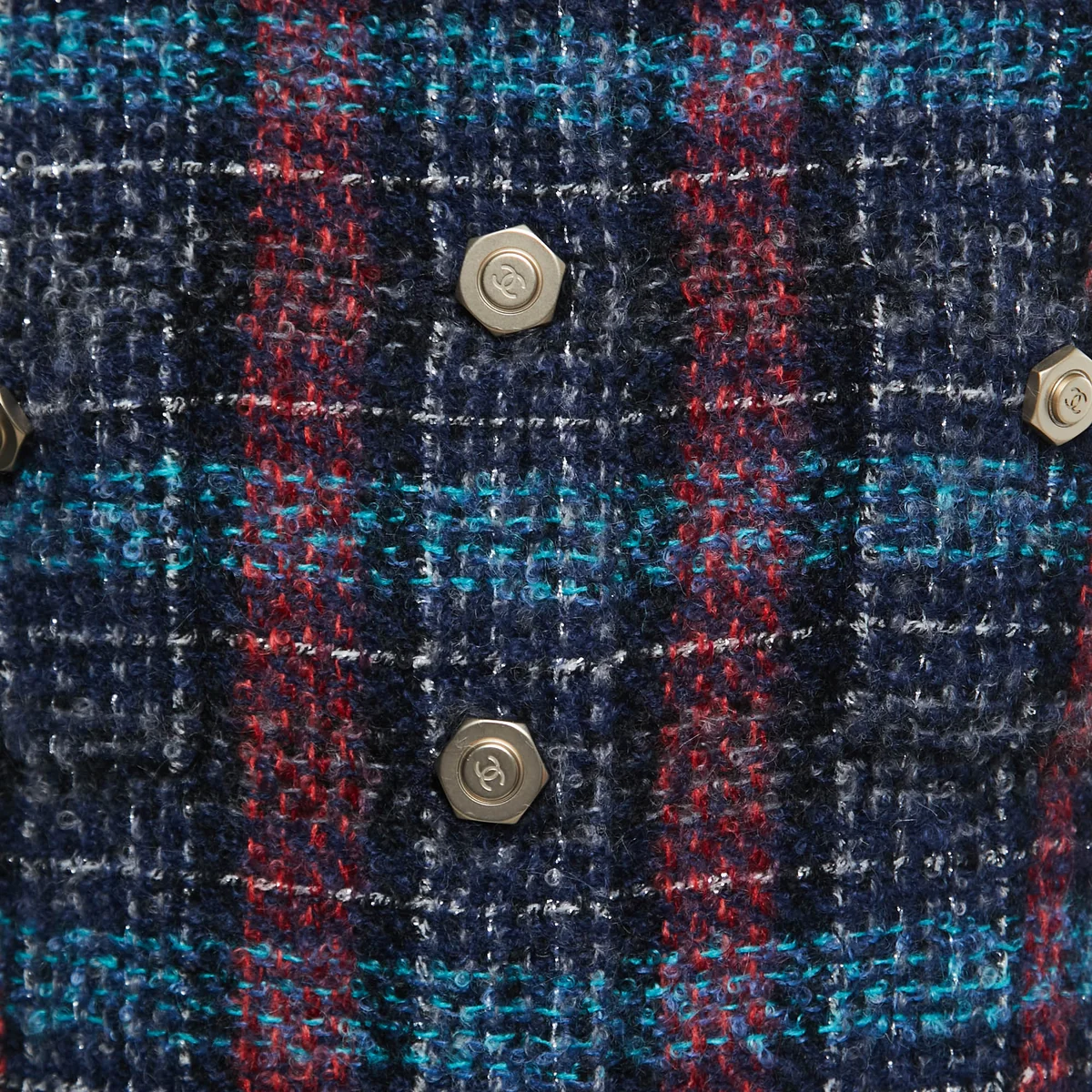
Chanel buttons almost always carry a signature detail: the interlocking CC logo, the brand name, or occasionally a seasonal motif like the Camélia flower or a lion’s head, tied to the specific collection’s theme. The buttons should feel substantial, not light or hollow, and they should be stitched on securely with no wobble. Pick one up between your fingers if you can — a real Chanel button has weight and a slightly cool, dense metal feel, not the light clatter of cheap alloy.
Look for the CC hardware detail on zippers or clasps if the jacket has them, and check the inner hem for a metal chain. Chanel sews a fine metal chain into the lining along the bottom hem of most jackets specifically to help the garment hang correctly and maintain its structured drape. This is a functional design choice, not decoration, and it’s one of the harder details for counterfeiters to bother replicating because it adds cost without being visually obvious in photos. That said, some cropped or shorter-length styles genuinely don’t include this chain, so its absence isn’t automatically a red flag — check the specific style first.
The lining deserves its own look too. Chanel frequently uses a silk lining, often in a subtle camellia jacquard pattern, finished as neatly as the exterior of the jacket. If the lining feels like polyester, looks unevenly dyed, or the pattern is printed rather than woven into the fabric, be suspicious.
Stitching, Fit, and Overall Construction#
Stitching is the detail that separates a good fake from an obviously bad one, but it’s also where genuinely excellent counterfeits start to show cracks under close inspection.
Authentic Chanel construction uses tight, even stitching with no visible looseness around seams, pockets, or the collar. Turn the jacket inside out if you can and check the interior seam finishing — Chanel jackets are typically finished as carefully inside as they are outside, with bound or neatly overlocked seams rather than raw, fraying edges. Pocket flaps should sit flush and symmetrical, buttonholes should be clean without stray threads, and the overall silhouette should have that slightly boxy, structured-but-soft drape Chanel is known for, largely thanks to the weighted hem chain and precise tailoring.
Fit is a subtler tell that’s easy to overlook. Chanel jackets are cut to skim the body rather than cling or gape, with sleeves set in cleanly at the shoulder without pulling or bunching. A lot of mid-tier fakes get the fabric and logo details close enough to pass a casual glance but fall apart in the shoulders and armholes, because pattern-cutting to Chanel’s exact specifications requires access to accurate blocks, not just a similar-looking finished garment to copy from.
If you’re buying pre-owned, also inspect wear patterns. Genuine, well-cared-for vintage jackets show even, expected aging — slight fading, soft creasing at natural fold points — rather than the fabric pilling or fraying unevenly, which suggests lower-quality materials aging poorly rather than an authentic jacket showing its years gracefully.
Where to Buy an Authentic Chanel Tweed Jacket Safely#
Here’s the detail that surprises a lot of first-time buyers: Chanel does not sell ready-to-wear, leather goods, or watches through any authorized third-party retailer online. If you want a brand-new jacket, your only fully guaranteed option is a physical Chanel boutique. Any site claiming to be an “authorized online Chanel retailer” for clothing is not telling the truth, full stop.
For pre-owned and vintage pieces, which is where most collectors and value-conscious buyers actually shop, you’re relying on the resale market, and quality varies enormously between platforms. A few things I’d actually recommend:
- Buy from resellers with in-house authentication teams and transparent processes. Platforms like [[[The Luxury Closet](/news/the-luxury-closet-essa-walla-sale/)](/news/the-luxury-closet-adds-designer-clothing/)](/news/farfetch-second-life-middle-east-luxury-closet/), Vestiaire Collective, Fashionphile, and The RealReal each run physical authentication checks before listing, and reputable ones will tell you exactly what that process involves if you ask.
- Ask for the authentication report or documentation directly, not just a badge on the listing page. Any seller confident in what they’re selling will provide this without pushback.
- Use a third-party authentication service for high-value or vintage pieces if you have any doubt, even after buying from a reputable platform. Services like Entrupy, Real Authentication, and Authenticate First specialize in luxury tweed and leather goods and can review detailed photos or physical items for a modest fee, which is cheap insurance on a jacket that can run into thousands of dollars.
- Be wary of private marketplace listings (social media resale groups, unmoderated classifieds) offering steep discounts, vague photos, or pressure to pay via untraceable methods. This is where the majority of convincing fakes circulate, precisely because there’s no authentication layer and no recourse if something’s wrong.
- Check return policies before buying, even from trusted platforms. Mistakes happen even with professional authentication teams, and a legitimate seller will always offer a return window if authenticity is disputed.
I’ll be honest: even experienced buyers get fooled occasionally, and even reputable platforms have, on rare occasion, had an item slip through that shouldn’t have. The goal isn’t finding a source that’s magically infallible, it’s stacking the odds heavily in your favor by combining a trustworthy platform with your own inspection and, for expensive pieces, an independent second opinion.
Frequently Asked Questions#
How much should an authentic Chanel tweed jacket cost? New from a boutique, current-season jackets typically start around $6,000–$7,000 and climb well beyond that for more elaborate collections. Pre-owned prices vary widely based on condition, rarity, and collection, but a well-kept authentic piece rarely sells for a steep discount off comparable retail. If a “vintage Chanel tweed jacket” is priced at a few hundred dollars, treat that as a serious warning sign rather than a bargain.
Can I authenticate a Chanel jacket by its serial number or hologram sticker alone? No, and be cautious of anyone claiming this is definitive. Chanel discontinued hologram authenticity stickers on handbags years ago, and ready-to-wear pieces were never authenticated primarily through serial numbers the way some other categories are. Authentication should always combine label details, hardware, fabric, and construction, not a single sticker or code.
Are third-party authentication services actually reliable? Reputable ones with trained specialists and a track record, like Entrupy or Real Authentication, are quite reliable and worth using for expensive or uncertain purchases. That said, no service is infallible, and it’s worth choosing one with transparent methodology and a good reputation among collectors rather than the cheapest option you find.
Do Chanel tweed jackets hold their resale value well? Generally, yes, particularly for iconic silhouettes, rare collection prints, or pieces tied to a notable runway season. Condition matters enormously, though — a jacket with pilling, stretched buttonholes, or a damaged lining will sell for meaningfully less than one that’s been stored and worn carefully, even if both are equally authentic.
Is buying vintage riskier than buying a current-season jacket secondhand? Slightly, yes, mainly because label formats, hardware styles, and construction details changed over the decades, so you need a reference point specific to that era rather than comparing against a current jacket. It’s not a reason to avoid vintage, which often offers better value and more distinctive designs, but it does mean leaning more heavily on a knowledgeable seller or authentication service.
Related Articles#
- How to Sell Luxury Items Online: The Luxury Closet Guide
- How Pre-Owned Luxury Fashion Is Reshaping the Industry
- Sell Designer Handbags in 2025: Get Paid More, Faster
- Why the Chanel Crossbody Bag Never Goes Out of Style
- Best It Bags to Buy This Year: A Definitive Guide


Keyword index