Introduction #
There’s a persistent fantasy in handbag circles: you stroll into Hermès, mention the word “Birkin” to a sales associate, and walk out twenty minutes later with a bag on your arm. It’s a nice story. It’s also almost never how it happens.
The truth sits somewhere between “impossible” and “easy.” Hermès doesn’t run a public waitlist, doesn’t sell Birkins online, and doesn’t guarantee anyone anything — which is exactly why the bag has become the object of so much speculation. People want to know if they can buy a Birkin bag the normal way, like any other luxury purchase, and the honest answer is: sometimes, under specific conditions, but rarely on your first try and rarely without some groundwork beforehand.
This guide breaks down how allocation actually works, what your realistic odds look like depending on where you shop, and why the resale market — often dismissed as a “backup plan” — has quietly become the most dependable route to ownership for buyers who don’t want to play a multi-year guessing game.
Quick Facts About Buying a Birkin #
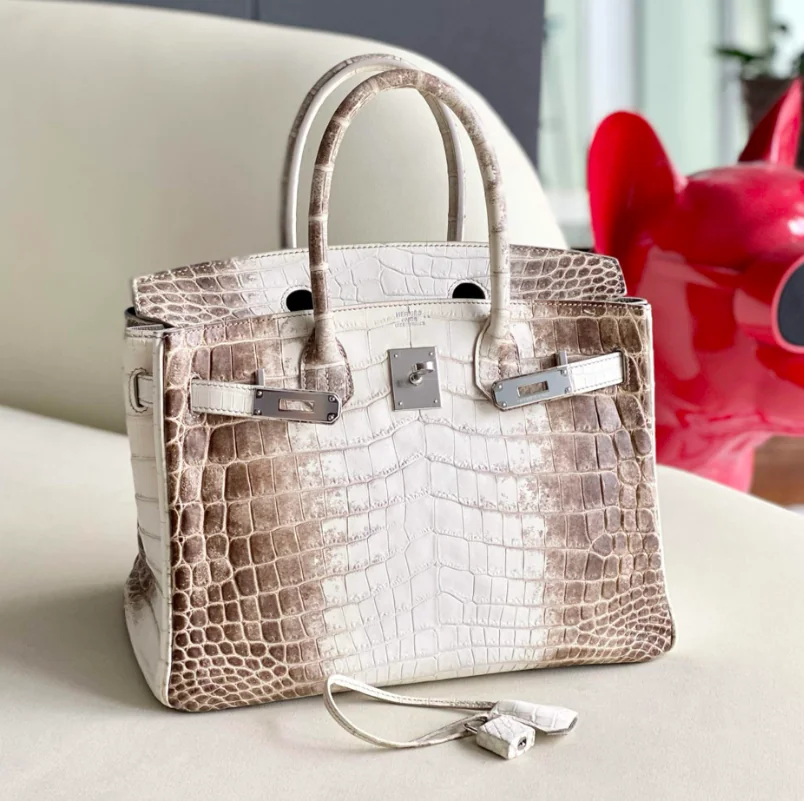
- Retail price range: roughly $11,400 for an entry-level leather Birkin 25, climbing past $450,000 at auction for museum-grade exotics like crocodile or Himalaya finishes.
- Quota limit: Hermès informally caps most clients at two quota bags (Birkin, Kelly, or Constance) per calendar year, regardless of spend.
- Most requested sizes: 25, 30, and 35 cm, in that rough order of demand.
- Most coveted colorways: Gold, Black, Etoupe, and Etain remain the most consistently requested and consistently unavailable.
- Wait times: anywhere from a few months to several years, shaped by boutique location, client history, and pure inventory luck.
- Fastest realistic path to ownership: authenticated resale, where inventory is visible and verified upfront instead of promised down the line.
What Makes the Birkin So Coveted #
Scarcity does most of the psychological heavy lifting here. Humans are wired to want what’s hard to get, and Hermès has built an entire retail philosophy around that instinct rather than fighting it.
- Engineered scarcity. Production is deliberately capped. No factory ramp-up, no online restock, no amount of money that lets you simply order one.
- Exclusivity by design. There’s no published price list in-store for quota bags, no size chart handed to walk-ins, and no guaranteed access — even for longtime clients. The opacity itself is part of the appeal.
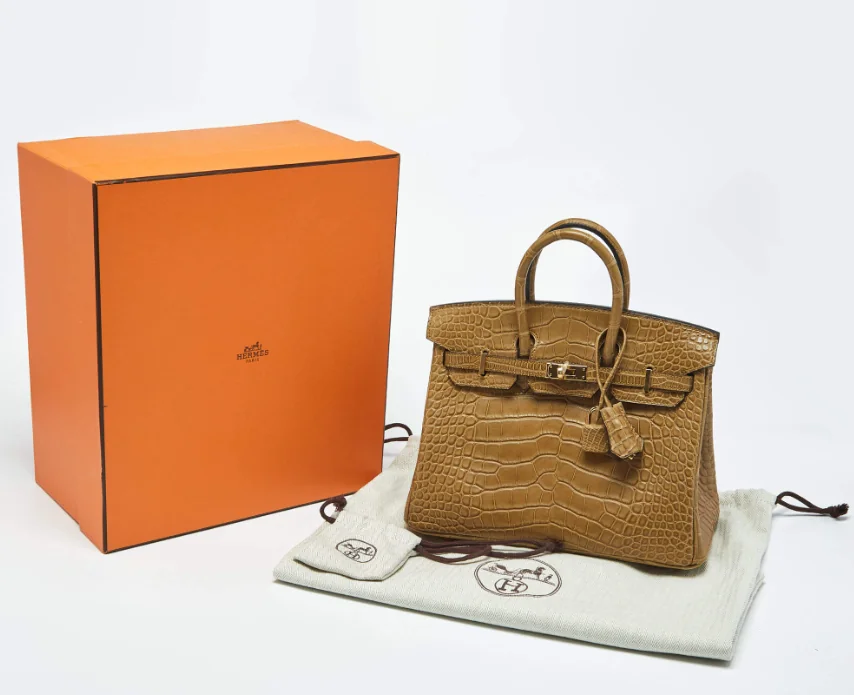
- Craftsmanship that’s hard to fake at scale. A single artisan constructs each bag from start to finish, often over 18-24 hours of hand-stitching, which is why supply can’t simply be increased to meet demand.
- Cultural signaling. Ownership reads as more than taste — it reads as access. That’s a harder thing to buy than the bag itself.
- Retained and appreciating value. Unlike almost every other luxury handbag, a Birkin frequently holds or exceeds its retail price on resale, particularly in exotic skins.
| Birkin Type | Retail Price | Resale Price (Approx.) |
|---|---|---|
| Standard Leather (25) | $11,400+ | $15,000–$30,000 |
| Exotic – Ostrich | $30,000–$45,000+ | $70,000–$150,000+ |
| Exotic – Crocodile | $100,000+ | $350,000–$600,000+ |
Figures reflect a blend of recent auction results (Sotheby’s, Christie’s handbag sales) and resale-market pricing indices; actual values vary by condition, hardware finish, and color rarity.
How Hermès Actually Allocates Birkins #
There is no sign-up sheet. There is no digital queue. What exists instead is a relationship-based system that Hermès never formally names but that every serious client eventually learns to navigate.
The quota system. Corporate policy generally limits clients to two quota bags — Birkin, Kelly, or Constance combined — per year, regardless of how much they’ve spent. This isn’t published anywhere; it’s enforced boutique by boutique, often inconsistently.
Spending history matters more than most buyers expect. Sales associates track client purchases, and consistent spending on ready-to-wear, scarves, jewelry, or home goods signals seriousness before a Birkin is ever mentioned. This isn’t a bribe system in the literal sense — it’s closer to how any relationship-driven business rewards loyalty. A client who has spent $20,000–$40,000 across several visits over a year is a fundamentally different prospect to a sales associate than someone walking in cold and asking for a Birkin outright.
The sales associate relationship is the actual mechanism. Individual SAs build client books and advocate for their clients when allocation decisions get made internally. Being polite, being a repeat face, and never leading with “I want a Birkin” all factor into whether an SA chooses to offer you one when stock arrives. Asking directly is widely considered the fastest way to be passed over — it signals you’re shopping for status rather than building a genuine client relationship with the house.
Timing and inventory luck still play a role. Even a well-connected client can go a year without an offer simply because the right size and color didn’t arrive. Allocation is not purely merit-based; it’s merit plus chance.
Can You Really Get One on a Walk-In? #
Occasionally, yes. It’s rare, but not mythical.
Odds vary sharply by location. The Paris flagship on Rue du Faubourg Saint-Honoré runs an online appointment system, and cancellations or unexpected stock surpluses do occasionally put a Birkin in front of a walk-in client — though this typically requires being in Paris and checking availability repeatedly, sometimes over multiple trips. In the US, boutiques in smaller markets (outside New York, Los Angeles, or Miami) tend to have shorter unofficial waits simply because fewer high-spending regulars are competing for the same allocation. UAE boutiques, particularly in Dubai, have gained a reputation among collectors for occasionally offering bags to newer clients faster than comparable US or European stores, partly due to a larger volume of exotic-skin stock moving through the region.
Cancellations are the real walk-in opportunity. When an existing client declines a bag they were offered, or a hold falls through, that inventory sometimes gets offered to whoever’s in the store and has a relationship with staff — which is why building rapport with an SA over repeat visits still matters even for someone chasing a walk-in.
What a walk-in almost never gets you: first pick of size, color, or leather. If a walk-in Birkin does surface, it’s usually whatever the store happens to have on hand that day, not a request fulfilled.
The realistic takeaway: walk-in success is possible but closer to a fortunate coincidence than a strategy. Anyone planning a purchase around “I’ll just go ask” is planning around the exception, not the rule.
Buying a Birkin Through the Resale Market #
This is where most practical buyers actually land, and it deserves more respect than it usually gets.
Why resale works better for most people. Authenticated resale platforms and auction houses let you see exact size, color, leather, hardware, and condition before buying — no waiting, no relationship-building, no guessing what might eventually be offered. You’re trading the mystique of the boutique hunt for certainty.
How to verify authenticity when buying resale. Counterfeits are a real risk at this price point, so vet any seller or platform against these checks:
- Buy from platforms with in-house authentication teams or that use recognized third-party services (Entrupy’s AI-based scanning, Real Authentication, or similarly established authenticators). Ask what process was used, not just whether it was “authenticated.”
- Check the blind stamp inside the bag near the handle attachment — it should include a craftsman’s stamp and a date code consistent with the claimed production year. Inconsistent or oddly placed stamps are a red flag.
- Inspect the hardware. Genuine [[Hermès hardware](/bag-care/hermes-leathers-guide/)](/authentication/how-to-spot-a-fake-hermes-bag-authentication-guide/) is noticeably heavy, with clean, evenly spaced stitching around the base and no visible glue.
- Look at the stitching itself. Hermès uses a saddle-stitch technique that’s slightly irregular but tight and consistent — machine-perfect, mechanically even stitching is a warning sign, not reassurance.
- Request close-up photos of the leather grain, zipper pull engraving, and interior lining before purchase, and compare against verified reference images.
- Confirm return policy and authenticity guarantee in writing. A platform confident in its process will offer a money-back guarantee specifically tied to authenticity, not just general satisfaction.
None of this replaces professional authentication, but it filters out the majority of obvious fakes before you commit funds.
Why Hermès Doesn’t Sell Birkins Off the Shelf #
This isn’t an accident of supply chain limitations — it’s a deliberate positioning choice, and understanding it clarifies why the whole system feels so opaque.
Hermès has resisted the industry-wide trend toward online luxury retail specifically for quota bags, because unrestricted access would collapse the scarcity that gives the Birkin its value. If anyone with $11,400 and an internet connection could order one, the bag would lose the exact quality that makes it desirable in the first place. The waiting, the relationship-building, the uncertainty — these aren’t flaws in the system from Hermès’s perspective. They’re the product.
This is also why Hermès has historically avoided discounting, avoided sample sales for quota bags, and maintained tight control over which boutiques receive which inventory. The brand is protecting long-term value and mythology over short-term revenue maximization, a strategy that’s paid off in the bag’s near-immunity to typical luxury depreciation.
The Reality of the ‘Hermès Game’ #
Collectors and longtime clients often refer to the informal path to a Birkin as “the game,” and it’s worth explaining what that actually looks like step by step, rather than treating it as vague insider folklore.
- Open a relationship with a specific SA, ideally through a referral from an existing client if possible. Cold walk-ins can still work, but a warm introduction shortens the runway considerably.
- Shop consistently across categories — ready-to-wear, home, jewelry, scarves — over a period of months to a year. This isn’t about spending recklessly; it’s about demonstrating you’re a genuine client of the house, not a one-time bag hunter.
- Never directly ask for a Birkin. Mention general interest if it comes up naturally, but let the SA raise it. Overt requests are widely understood among staff as a signal to deprioritize.
- Be responsive and low-maintenance when an SA does reach out with an offer. Bags are frequently offered on short notice, and clients who are difficult to reach or slow to respond get passed over for the next name on the informal list.
- Accept that you don’t get to choose size, color, or leather on a first offer in most cases. Turning down an early offer can reset your position with that SA.
Easier Hermès Bags to Buy While You Wait #
If the multi-year timeline isn’t appealing, several Hermès bags are genuinely easier to acquire and worth considering, either as an entry point into the brand or a satisfying alternative altogether:
- Lindy — spacious, casual, and generally available without quota restrictions in most boutiques.
- Picotin — a smaller, structured tote that’s frequently in stock and popular for everyday use.
- Garden Party — an unstructured tote that Hermès rarely restricts, making it one of the most consistently purchasable bags in the lineup.
None of these carry Birkin-level resale premiums, but they offer real Hermès craftsmanship without the waiting game, and buying one is often the fastest way to start building the client history that eventually factors into quota bag offers.
FAQ #
Can you request a specific bag, size, or color? You can express a preference, but Hermès doesn’t take formal requests for quota bags. SAs may keep your preferences in mind, but offers are driven by what’s currently allocated to that boutique, not custom orders for walk-in or even loyal clients.
Does spending more money actually help? Yes, but not as a direct transaction. Consistent spending across multiple categories over time builds the kind of client profile SAs consider when deciding who gets offered inventory. A single large purchase right before asking about a Birkin is generally seen as transparent and tends to backfire.
Is it faster to buy in Paris than in the US? Not necessarily. Paris offers more foot traffic and appointment volume, which means more chances for cancellations, but also more competition from established European clients. US wait times vary widely by city, and UAE boutiques have developed a reputation for occasionally moving faster for newer clients.
Is buying a Birkin on the resale market considered “less legitimate”? No — resale is a fully mainstream, high-value market, especially through platforms with rigorous authentication processes. Many collectors prefer resale specifically because it removes the guesswork and relationship politics of boutique allocation entirely.
How do I avoid counterfeits when buying resale? Buy only from platforms or sellers offering documented authentication (ideally third-party verified), inspect blind stamps and stitching quality yourself, and confirm a return policy tied specifically to authenticity before paying.
Related Articles #
- Hermès Retail vs. Resale: Which Should You Choose?
- Popular Handbag Brands: Which One Is Right for You?
- Hermès Kelly Clutch: Smartest Entry Into Luxury Bags
- Hermès Niloticus Crocodile Lindy 26: Bag of the Week
- 4 Reasons Bally Bags Are Worth Buying: A Buying Guide
Related guides
- Online Bag Authentication: What Photos Can and Cannot Prove
- Inside a Million-Dollar Closet: Pre-Loved Hermès & More
- Meet Marwa Azzam Aldabbagh: Kelly Bag Authentication Expert
- Luxury Handbag Authentication Process Explained
- How to Buy an Authentic Luxury Bag from China Safely
- New vs Pre-Owned Luxury Bags: Which Route Is Right for You?
- Chanel Bag Guide: What to Know Before You Buy
- Luxury Bag Houses

Keyword index