Introduction #
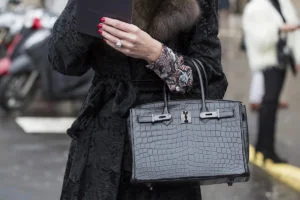
Ask any handbag specialist which bag holds its value like a small piece of real estate, and the answer comes back the same almost every time: the Hermès Birkin. It’s the only bag most people can name without owning one, and the only accessory that regularly outperforms watches, art, and in some years, the stock market itself. But “Birkin” isn’t one bag — it’s a category with hundreds of size, leather, hardware, and colorway combinations, and the gap between the ones that appreciate and the ones that just sit there is wider than most buyers realize.
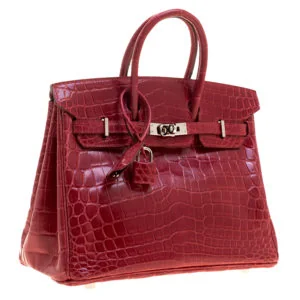
This guide walks through why the Birkin earned its investment reputation, then narrows the lens to a specific configuration worth paying attention to right now: a Rouge Garance Niloticus crocodile Birkin 25 with palladium hardware. We’ll use it as a case study for what separates a genuinely rare, value-holding Birkin from a merely expensive one — and give you the authentication and buying knowledge to act on it without getting burned.
The History of the Hermès Birkin #
The origin story gets repeated so often it’s practically folklore, but it holds up: in 1984, actress and singer Jane Birkin sat next to Hermès’ then-CEO Jean-Louis Dumas on a flight and complained that her straw bag couldn’t hold what a modern woman actually carries. Dumas sketched a solution on the spot — a structured, spacious tote with a flap, turn-lock closure, and room for real life. The bag that came out of that conversation still carries her name four decades later.
What makes the Birkin’s history relevant to buyers today isn’t the anecdote itself — it’s what Hermès did afterward. The house never mass-produced the bag to meet demand. Each Birkin is still built by a single craftsperson, start to finish, in a process that takes roughly 18-24 hours of hand-stitching, depending on the leather. That deliberate scarcity, maintained since 1984, is the entire reason the secondary market behaves the way it does. Louis Vuitton and Chanel scaled up. Hermès didn’t.
What Makes This Birkin So Rare #
The Rouge Garance Niloticus crocodile Birkin 25 with palladium hardware sits near the top of the rarity hierarchy for a few specific, checkable reasons — not just “it’s crocodile, so it’s expensive.”
The skin #
Niloticus crocodile comes from a tightly regulated Nile river population, and Hermès sources and tans it through its own controlled supply chain. Dyeing crocodile to a saturated, even Rouge Garance red without cracking the scales or losing texture is a technical skill most tanneries can’t execute — which is part of why exotic Birkins carry a materials premium that leather versions never reach.
The size #
Birkin 25 is the most requested size in the exotic category. It’s proportionate on most body types, functions as an everyday bag rather than a display piece, and Hermès allocates fewer exotic 25s to boutiques than exotic 30s or 35s. Small size plus hard material equals the tightest supply pocket in the lineup.
The hardware and colorway #
Palladium (silver-tone) hardware reads more neutral than gold, which widens resale appeal across buyers who might not want a “statement” gold Birkin. Rouge Garance itself is a discontinued-and-reissued shade — Hermès rotates colors in and out of production, and a red that isn’t currently in the catalog automatically becomes harder to source, which is a quiet but real driver of aftermarket pricing.
Put together — limited hide, discontinued colorway, high-demand size, universally wearable hardware — this configuration checks every box collectors use to separate an investment-grade Birkin from a merely nice one.
Why This Birkin Is Worth Investing in Right Now #
Three forces are converging on exotic Birkins specifically, and this piece sits at the intersection of all of them.
First, Hermès has raised retail prices on Birkins nearly every year for the past decade, and exotic skins have risen faster than leather. Every retail increase pushes the floor of the resale market up with it, because buyers benchmark used prices against current retail, not what the bag sold for originally.
Second, demand has outgrown even Hermès’ deliberately slow production. The brand doesn’t disclose exact output, but insiders and industry analysts consistently estimate global demand runs several multiples above supply for exotic Birkins in popular sizes. That imbalance doesn’t self-correct — Hermès has shown no interest in producing more to meet it.
Third, discontinued colorways function like limited-edition sneakers or vintage watches: once a shade like Rouge Garance rotates out, the only way to get it is secondary market, and that scarcity compounds over time rather than fading. A leather Birkin in a current, always-in-production color will never behave this way — it’s replaceable, so it doesn’t appreciate the same way.
The honest caveat: “right now” matters because exotic prices have already climbed substantially. You’re not buying at the bottom. You’re buying a scarce asset at a fair, market-supported price with a strong track record — which is a different (and more defensible) proposition than chasing a speculative spike.
What to Check Before You Buy #
This is where most buyers get hurt, because Birkin demand has created an equally sophisticated counterfeit market. A few non-negotiables:
Stamps and date codes #
Every genuine Birkin has a blind stamp inside — a craftsman’s ID and a letter/date code indicating the production year. Post-2015 bags use a two-letter code (e.g., “Y” for 2020-adjacent years); pre-2015 used a single letter inside a shape (square, circle). If the stamp is smudged, wrong font, or the date code doesn’t match the bag’s claimed age, walk away.
Hardware weight and finish #
Genuine palladium hardware has real heft and a cool, slightly matte-silver tone that doesn’t tarnish yellow over time. Counterfeit hardware is frequently lighter, shinier, or develops a brassy cast within months. Feel the turn-lock and clochette padlock — Hermès hardware should feel substantial, not hollow.
Stitching and leather grain #
Hermès uses a saddle-stitch technique with consistent, slightly diagonal thread spacing, sewn by hand — you’ll see minor, human irregularity, not machine-perfect uniformity. On crocodile specifically, check that scale alignment is symmetrical across the front panels; mismatched scale patterns are a common tell on fakes.
Provenance and paperwork #
Buy from resellers who provide the original receipt, a clear return policy, and in-house or third-party authentication (Entrupy, Real Authentication, or equivalent). Reputable dealers will let you photograph the interior stamps before purchase — if a seller won’t show close-ups of the blind stamp, that’s a red flag on its own.
The waitlist reality #
There is no official public waitlist at Hermès. Boutiques allocate bags based on purchase history and relationship with a sales associate — buyers typically build spending history with other Hermès categories (scarves, shoes, RTW) over months or years before being offered a Birkin, and even then, exotic skins are offered even more selectively than leather. This is precisely why the resale market exists and why most collectors, including experienced ones, buy their exotics secondhand rather than waiting on a boutique.
Frequently Asked Questions #
How much does a Birkin cost at retail versus resale? Leather Birkin 25s and 30s currently retail between roughly $10,000-$13,000 depending on leather. Exotic skins like crocodile or alligator start around $30,000-$40,000 at retail and can exceed $60,000 depending on color and hardware. Resale on discontinued or rare colorways regularly runs 20-50% above the last known retail price.
Is the Birkin actually a better investment than Chanel or Louis Vuitton? On average resale retention, yes — but the comparison only holds for the right Birkin. A common leather color in an oversaturated size holds value like a [[[Chanel Classic Flap](/buying-guides/vintage-chanel-finds-top-picks/)](/buying-guides/classic-and-chic-handbags-style-icons/)](/buying-guides/chanel-flap-bag-buying-guide/): solidly, but not spectacularly. Rare exotics and discontinued colors are where the gap widens dramatically.
What size Birkin holds value best? 25 and 30 consistently outperform 35 and 40 on the resale market, because they’re the most wearable and most requested sizes, which keeps buyer demand deep.
Does condition really matter that much for resale? Significantly. A Birkin with corner wear, handle darkening, or hardware scratching can lose 20-30% of its resale value compared to the same bag in pristine condition — which is why care and storage aren’t cosmetic concerns, they’re financial ones.
Real Resale Data: What Birkins Have Sold For (2015-2025) #
Vague claims about Birkin appreciation are easy to make and hard to trust. Here’s what’s actually documented:
A frequently cited industry study by resale platform Baghunter tracked Birkin prices from the 1980s through the mid-2010s and found an average annual appreciation of roughly 14%, outperforming the S&P 500 and gold over the same period. That analysis predates the last decade of retail increases, meaning current appreciation on rare configurations is very likely higher, not lower.
At the extreme end, a white Himalaya Niloticus crocodile Birkin 30 with diamond-set white gold hardware sold at Christie’s Hong Kong in 2017 for roughly $300,000, setting a public auction record for a handbag at the time. That’s an outlier, not a benchmark — most exotic Birkins don’t approach diamond-hardware territory — but it demonstrates the ceiling that rarity plus condition plus documented provenance can reach.
More representative data from resale platforms like Rebag, Fashionphile, and WP Diamonds over 2018-2024 shows a consistent pattern: leather Birkin 25/30s in classic colors (Black, Etoupe, Gold) retain roughly 80-100% of last retail price on resale, while discontinued exotic colorways in the same sizes have sold at 120-160% of their original retail price when documented with box, dust bag, and receipt. Common leather colors in oversaturated sizes (35, 40) have shown flatter or slightly declining resale ratios over the same window, reinforcing that appreciation is concentrated in specific configurations, not the Birkin line as a whole.
Hidden Costs: Fees, Authentication, and Liquidity Risk #
Treating a Birkin as an investment means accounting for costs that don’t show up in the headline resale price.
Consignment and platform fees. Selling through a reseller typically costs 15-30% of the sale price in commission, depending on the platform and whether you consign or sell outright. That cuts directly into your realized appreciation — a bag that “gained” 30% in value might net you closer to 10-15% after fees.
Authentication costs. Third-party authentication services (Entrupy, Real Authentication) charge $30-$100 per item. Not a huge sum individually, but if you’re buying and reselling multiple times to build a collection, it adds up, and skipping it to save money is how buyers end up with unsellable counterfeits.
Insurance and storage. A crocodile Birkin should be insured as a scheduled item on a valuables policy, not lumped into general homeowner’s coverage — premiums run roughly 1-2% of appraised value annually. Improper storage (humidity, direct sunlight, stacking) is one of the fastest ways to devalue exotic leather through cracking or fading, so a breathable dust bag, stuffed shape, and climate-controlled space aren’t optional if resale value matters to you.
Liquidity risk. This is the most underdiscussed cost. Unlike a stock, a Birkin doesn’t sell instantly. Rare configurations in high demand (like the piece discussed here) can sell within weeks. Common leather colors in oversaturated sizes can sit on resale platforms for six months to a year. If you need to convert the bag to cash quickly, you may have to accept a lower offer than its “market value” suggests — a real risk that doesn’t show up in appreciation percentages but absolutely affects the return you actually realize.
The bottom line: the Birkin’s investment case is real and better documented than most luxury goods, but it rewards patience, the right configuration, and honest accounting of fees — not the assumption that any Birkin, bought any way, is guaranteed money in the bank.
Related Articles #
- Best Time to Buy a Luxury Handbag: Save More in 2025
- Handbags Worth Investing In: Best Bags for Resale Value
- Best Designer Handbag Brands Worth the Investment 2025
- Chanel Handbag Prices: Iconic Styles & What They Cost
- Exotic Skin Handbags: What You’re Really Paying For
Related guides
- Online Bag Authentication: What Photos Can and Cannot Prove
- Luxury Handbag Authentication Process Explained
- China TikTok Luxury Factory Claims: Fact vs Fiction
- Chanel 2.55 History, Details & How to Spot a Fake
- How to Buy an Authentic Luxury Bag from China Safely
- New vs Pre-Owned Luxury Bags: Which Route Is Right for You?
- Chanel Bag Guide: What to Know Before You Buy
- Luxury Bag Houses

Keyword index