Introduction: Why Luxury Houses Are Obsessed With Exotic Skins #

Walk into any Hermès or Chanel boutique and ask about a crocodile Birkin or a python-trimmed flap bag, and you’ll notice the tone in the room shifts slightly. Exotic skin handbags aren’t just another product category. They’re the closest thing the handbag world has to fine jewelry: rare, hand-finished, and priced to match.
I’ve handled enough of these bags over the years to have opinions that go beyond the marketing copy. Exotic skin handbags have become a fixture at Hermès, Chanel, Dior, Louis Vuitton and Celine not because [[exotic leather](/brands/versace-jeans-handbags-guide/)](/buying-guides/hermes-leather-types-complete-buying-guide/) is inherently “better” than calfskin, but because it’s scarce, labor-intensive to work with, and instantly signals that a bag sits at the top of a house’s hierarchy. Even brands that don’t typically play in ultra-luxury territory, like Burberry and Chloé, have released python and snakeskin pieces to borrow some of that cachet.
There’s also a practical reason for the boom: exotic skins hold value differently than standard leather goods. A well-kept alligator Birkin can appreciate over time in a way a canvas tote never will. That’s part of why this category attracts two very different buyers, people who want a genuine statement piece, and collectors treating the bag as a tangible asset.
Before you spend five figures on one, though, it helps to actually understand what you’re buying. The terms “exotic” and “precious” get thrown around loosely by sellers, and the difference between a $6,000 caiman bag and a $60,000 alligator one often comes down to details most shoppers never learn to look for. That’s what this guide is for.
Exotic Skins Explained: Alligator, Crocodile and Caiman #
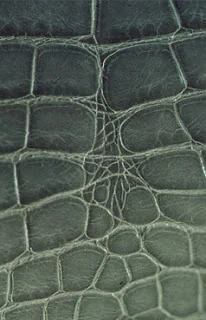
“Exotic skin” is a catch-all term, but in the handbag world it specifically refers to three reptile leathers: alligator, crocodile, and caiman. They look similar to an untrained eye and get confused constantly, even by people who own several of these bags. Here’s how they actually differ.
Alligator #
Alligator leather comes almost exclusively from American alligators farmed in the southern United States. It’s considered the top of the exotic hierarchy for a few concrete reasons: the skin has a smoother, more uniform scale pattern, a softer hand-feel, and fewer natural blemishes than crocodile.
The tell most people don’t know about: genuine alligator belly leather shows a distinctive “umbilical scar,” a small mark near the center of the belly panel where the animal’s umbilicus was located. If you’re inspecting a bag and can locate this mark in a logical position on the belly, that’s a strong point in favor of authenticity.
Alligator is often called the Rolls-Royce of exotic leathers, and the price reflects it. Hermès’ alligator Birkins and Kellys routinely sell for 30-60% more than the equivalent crocodile version at retail, and the gap widens further at auction for rare colorways.
Crocodile #
Crocodile leather (usually Nile or Porosus crocodile) has a slightly different scale geometry, the tiles tend to run more oval and are typically larger and more pronounced than alligator’s. Crocodile skin also tends to show more natural follicle marks, little pore-like dots within each scale, which some collectors actually prefer because they read as more “wild” and less uniform.
Quality-wise, crocodile and alligator are close. In my experience handling both, the difference in durability and hand-feel is marginal once the leather is tanned and finished by a house like Hermès. The price difference has more to do with rarity and branding than any meaningful gap in quality. If someone tells you crocodile is a “step down,” push back, it’s a different leather, not an inferior one.
Caiman #
Caiman is a smaller, South American relative of the crocodile family (Caiman crocodilus and related species, sometimes called Colombian crocodile). This is where the price and quality story genuinely changes. Caiman skin is thinner, the scales are smaller and more irregular, and it often includes bony deposits (osteoderms) that make the leather stiffer and less pliable than true alligator or crocodile.
Caiman is the entry point into exotic leather, and it’s honestly a reasonable one if you want the look without the five-figure commitment. Just go in knowing it won’t wear or age the same way, and resale value is significantly lower than true crocodile or alligator.
| Skin | Scale Shape | Feel | Relative Price | Best For |
|---|---|---|---|---|
| Alligator | Smooth, square, uniform | Soft, refined | Highest | Investment pieces, heirloom bags |
| Crocodile | Oval, more textured | Slightly firmer | High | Statement bags, everyday luxury use |
| Caiman | Small, irregular, bony | Stiffer | Moderate | First exotic-skin purchase, budget-conscious buyers |
Precious Skins Explained: Ostrich, Python, Stingray and Shagreen #
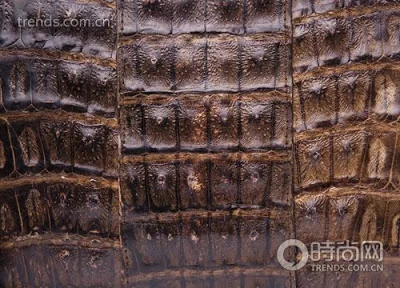
“Precious skins” is a separate family from the crocodilian leathers above, and it covers a much wider range of textures. The two you’ll see most often in handbags are ostrich and python, but stingray (shagreen) shows up more than people realize, especially in accents, hardware trim, and small leather goods.
Ostrich #
Ostrich leather is instantly recognizable by its quill follicle pattern, raised dots scattered irregularly across the surface where feather quills once were. No two ostrich hides look exactly alike, which is part of the appeal for collectors who want something that reads as genuinely one-of-a-kind.
It’s also one of the most durable leathers used in handbags, arguably tougher day-to-day than alligator, because the quill pattern is actually part of the hide structure rather than a surface treatment. If you want an exotic leather bag you can actually use hard, ostrich leather handbags are, in my opinion, underrated for that reason. They don’t get the same reverence as crocodile, but they wear beautifully.
Python #
Python is the most accessible and most colorful of the precious skins. Because it takes dye so well, python leather bags come in nearly every color imaginable, which is why you see it far more often in fun, seasonal designs from Fendi, Jimmy Choo, and Burberry than in the muted, formal exotic pieces from Hermès.
A genuine authentication tip that’s held up for me over years of buying and reselling: real python scales will curl slightly and develop a bit of texture or fraying at the edges over time. Embossed python-print leather stays flat and uniform no matter how much you use it. That slight imperfection is actually a good sign, not a flaw.
Python is also considerably more affordable than alligator or crocodile, which makes it a common “first exotic” purchase, but be aware it’s typically less durable long-term than the reptile leathers above.
Stingray and Shagreen #
Shagreen (also called galuchat) traditionally refers to stingray or shark skin with its distinctive pebbled, glazed texture, small, tightly packed calcified nodules that give it a granular, almost jewel-like surface. It’s genuinely tough and water-resistant, but its stiffness limits it mostly to structured bags, box clutches, and hardware or trim details rather than full soft-bodied handbags.
It’s a niche category, but worth knowing if you come across a “galuchat” listing and wonder what you’re looking at.
How to Tell Genuine Exotic Leather From Imitations #
I’ve been fooled by a good embossed print exactly once, early on, and it taught me to slow down and check specific details rather than trust the overall look.
Check the scale pattern for irregularity. Real exotic and precious skins are never perfectly repetitive. Embossed leather is stamped from a mold, so the pattern often repeats in a way that’s just a little too consistent if you look closely across a panel.
Look for the umbilical scar on alligator belly panels. As mentioned above, this is one of the most reliable, hard-to-fake markers on genuine alligator.
Feel the surface, not just look at it. Genuine crocodile and alligator have subtle texture variation and slight give between scales. Embossed leather feels uniformly flat and slightly plastic-like, even on higher-end fakes.
Watch how python ages. Real python scales curl and fray gently over months of use. If a bag has been used for a year and the pattern still looks factory-fresh, that’s a red flag.
Check the underside and edges. Genuine exotic leather is usually lined and finished in a way that reveals the natural hide structure at the seams. Cheap embossed leather often has a uniform, synthetic-feeling backing.
Buy from sources that can verify provenance. For anything alligator or crocodile, ask about CITES documentation (more on this below). Reputable resellers and auction houses will have this on file; if a seller can’t produce it or dodges the question, walk away.
When in doubt, get a second opinion. Authentication services exist for exactly this reason. For a purchase in the tens of thousands, the cost of an authentication check is nothing next to the risk of buying a fake.
Price, Rarity and Investment Value of Exotic Skin Bags #
Price in this category isn’t just about brand markup, it’s genuinely tied to how rare and difficult the material is to source and work with.
Alligator sits at the top of the pricing tier because American alligator hides large enough and flawless enough for a full bag panel are genuinely scarce, and the tanning process to achieve that soft, matte finish takes longer than for crocodile. This is the tier where you see Hermès Birkins and Kellys reaching six figures at auction for rare colors like Himalaya (technically Niloticus crocodile, but often lumped into exotic-skin investment conversations) or vivid, discontinued shades.
Crocodile trades close behind alligator, sometimes overlapping in price depending on color, hardware, and condition. A crocodile Birkin in a classic color like black or gold routinely holds value better than most calfskin bags on the secondary market, though it typically won’t outpace a comparable alligator piece.
Caiman and python occupy the accessible tier. These bags let you own genuine exotic leather without the alligator-level investment, but you should buy them because you like them, not as a resale strategy. Depreciation on caiman and python pieces is closer to standard leather goods than to true crocodile or alligator.
Rarity within a skin type matters as much as the skin itself. Color, hardware (gold vs. palladium), size, and whether a piece is discontinued all move the needle. A common mistake I see buyers make is assuming “it’s exotic, so it’ll hold value,” when in reality a common color in a common size can still lose money, while a rare color in a sought-after size can double.
Condition is non-negotiable for investment pieces. Exotic skins are less forgiving of poor storage than calfskin. Cracking, fading, and scale lifting are common on alligator and crocodile bags that weren’t conditioned or stored properly, and these issues tank resale value fast.
If you’re buying specifically for investment rather than personal use, alligator and crocodile from Hermès are still the safest bets I’ve seen hold and grow in value consistently. Everything else in this category is a better personal luxury purchase than a reliable financial one.
Buying Advice: What to Consider Before Investing in Exotic Skin Handbags #
A few things I wish someone had told me before my first exotic skin purchase.
Understand the ethics and legality before you buy. Alligator, crocodile, and python are regulated under CITES (the Convention on International Trade in Endangered Species). Legitimate sources farm these animals under regulated, sustainable programs, and your bag should come with, or be traceable to, proper CITES documentation, especially if you plan to travel internationally with it or resell it later. Some countries restrict import/export of exotic skin products entirely, so check before you fly with one. If sustainability matters to you, ask the brand or reseller directly about sourcing; reputable houses are generally transparent about this now, partly because they’ve had to be.
Set a realistic budget tier and stick to it. Decide upfront whether you’re buying caiman/python as an accessible entry point or alligator/crocodile as a serious investment. Don’t let a seller talk you into “it’s basically the same as alligator” when it’s caiman. It isn’t.
Factor in maintenance costs. Exotic skins need specialized conditioning and should be cleaned by leather experts familiar with reptile hides, not a generic shoe repair shop. Budget for professional care every year or two if you use the bag regularly.
Prioritize classic colors and hardware if resale matters to you. Black, gold, and other neutral tones in gold or palladium hardware are consistently easier to resell than trend colors, even within the same skin type.
Buy from authenticated, reputable sources. Auction houses, certified resellers, and the brand’s own boutiques are the safest routes. Marketplace listings without provenance documentation are where most fakes and misrepresented skins circulate.
Don’t skip the in-hand inspection if at all possible. Photos, even good ones, can hide texture issues, uneven color, or repairs. If you’re spending this much, see it in person or work with a reseller who offers a real inspection process and return policy.
FAQ: Exotic and Precious Skin Handbags #
Is alligator or crocodile leather more durable? Both are genuinely durable when properly cared for, alligator is slightly softer and more supple, while crocodile tends to be a touch firmer. Neither is meaningfully more prone to damage than the other; the bigger durability factor is how the bag is stored and conditioned over time.
Are exotic skin handbags ethical to buy? Legally traded alligator, crocodile, and python from CITES-regulated farms are generally considered a more sustainable model than wild harvesting, since these programs are monitored and often support conservation funding. That said, ethics is a personal line, and if it matters to you, ask sellers directly for documentation rather than assuming.
Why is python leather cheaper than alligator or crocodile? Python hides are more abundant and easier to source and tan than reptile skins like alligator, and the leather itself is generally less durable long-term. It’s a genuinely beautiful, colorful material, just not built to the same longevity standard as true exotic reptile leather.
How do I clean and store an exotic skin handbag? Keep it in its dust bag away from direct sunlight and heat, avoid overstuffing it (which stresses the scales), and have it professionally conditioned by someone experienced with exotic leathers every year or so. Never use generic leather cleaners not rated for reptile skins.
Do exotic skin handbags actually appreciate in value? Some do, particularly alligator and crocodile pieces from Hermès in rare colors or discontinued sizes. Most exotic skin bags from other brands, or common colorways even from Hermès, are better thought of as depreciating luxury goods rather than reliable investments. Treat appreciation as a possible bonus, not the reason to buy.
Is caiman leather “fake” exotic skin? No, caiman is a genuine exotic reptile leather, just from a smaller, different species than true alligator or crocodile. It’s real leather, priced and positioned as the accessible entry point into the category, not an imitation.
Related Articles #
- Louis Vuitton Alma Bag: The Ultimate Buying Guide
- Hermès Leathers Guide: Togo, Epsom, Exotic Skins Explained
- Best Time to Buy a Luxury Handbag: Save More in 2025
- Chanel Flap Bag Buying Guide: Sizes, Prices & Deals
Quick Comparison #
| Option | Best For | Key Note |
|---|---|---|
| exotic skin handbags | Everyday use | Balanced value |
| Alternative | Collectors | Higher rarity |


Keyword index