Introduction: Decoding the World of Hermès Materials #
Ask any seasoned collector what actually separates a Hermès bag from everything else on the resale market, and the answer rarely starts with the silhouette. It starts with the leather. A Birkin and a look-alike can share the same proportions, but they will never share the same hand-feel, the same grain, or the same aging curve — and that difference is almost entirely down to material.
This guide exists because “Hermès leather” is not one thing. It’s a family of skins and finishes — some workhorse-tough, some fragile and precious, some so rare they barely circulate outside auction houses — and choosing the wrong one for your lifestyle is one of the most common (and expensive) mistakes new buyers make. Whether you’re weighing Togo against Epsom for a first Birkin, wondering if a Himalaya piece is worth the premium, or trying to understand why two identical Kelly bags in different leathers can have wildly different resale values, this is the practical, material-first breakdown you need before you spend five, six, or seven figures.
The Legacy Behind Hermès Craftsmanship #
Hermès didn’t start as a handbag house. It started in 1837 as a Parisian harness workshop, making saddles and tack for European nobility and their horses. That origin matters more than most marketing copy lets on — saddlery leather has to survive friction, sweat, weather, and decades of hard use, and that engineering mindset never left the company. When Hermès eventually moved into leather goods and travel trunks, it brought the same standard: materials chosen for performance first, beauty second.
That standard is still enforced through a notoriously strict internal grading system. Hides are inspected for scarring, insect bites, uneven grain, and stretch marks before they’re ever cut, and a significant percentage of skins that would pass at other maisons get rejected outright. A single artisan cuts, stitches, and finishes each bag from start to finish — a process that typically takes 18 to 24 hours for something like a Birkin — and that artisan signs their work with a stamped craftsman’s mark inside the bag.
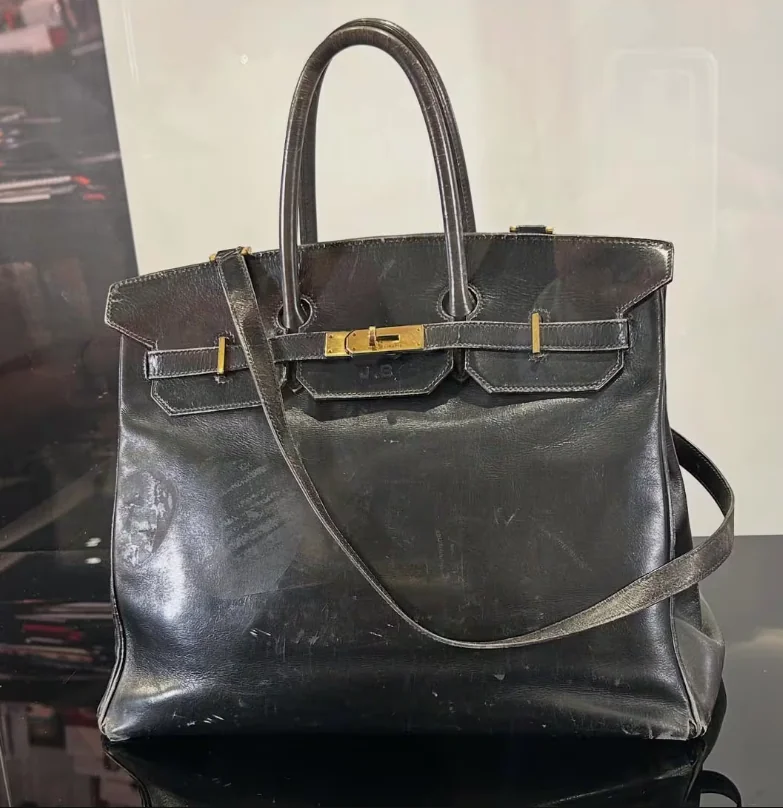
The payoff for buyers is durability that borderline defies logic. In July 2025, Sotheby’s auctioned one of the earliest known Birkin prototypes — Jane Birkin’s original 1984 bag, made before the model even had a name — for $10 million in under ten minutes, the highest price ever paid for a handbag. It wasn’t pristine. It showed wear consistent with decades of actual use. Collectors didn’t care. That sale is the clearest proof point of what this guide is really about: with Hermès, material and construction quality are the investment thesis, not just a comfort feature.
Iconic Hermès Leathers: Togo, Epsom, Clémence, Swift & Box #
These five leathers cover the vast majority of Hermès bags you’ll actually encounter in boutiques and on the resale market, and each one solves a different problem.
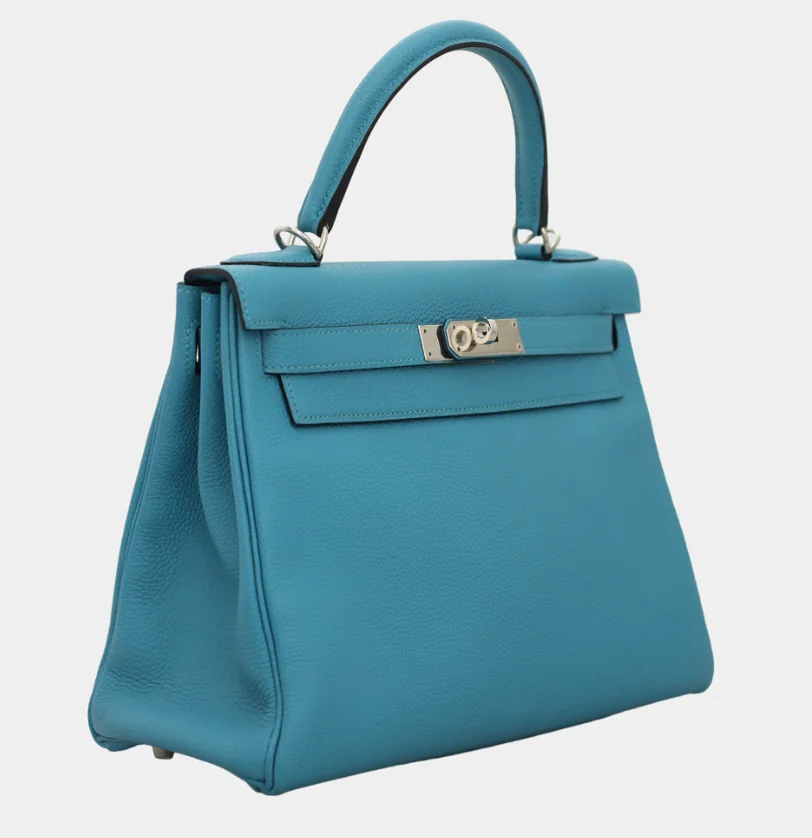
Togo is the leather most people picture when they think of a “practical” Birkin or Kelly. It’s full-grain calfskin with a pebbled, grainy texture and a soft, slouchy hand-feel. Hermès introduced it in the late 1990s, and the story that circulates among collectors — that it was developed partly in response to Jane Birkin using her original bag as a genuine everyday carry-all rather than a precious object — tracks with what the leather is actually good at: hiding scratches, resisting water spots, and holding its shape through daily abuse. The trade-off is structure. Togo slouches over time, which some buyers love and others find sloppy in larger sizes.
Epsom is Togo’s structured cousin — a stamped, textured calfskin that’s coated for extra durability. It holds its shape rigidly, resists scratching almost entirely, and is genuinely one of the most low-maintenance leathers Hermès makes. The visible embossed grain reads as slightly less “luxurious” to some purists, and it’s noticeably lighter and less plush to the touch than Togo or Clémence.
Clémence is Togo’s plusher, heavier sibling — a grained calfskin with no coating, so it’s softer, slouchier, and more prone to scratching and staining than Togo. It’s beautiful in hand but demands more careful use; I wouldn’t recommend it to someone who’s rough on their bags.
Swift is a smooth, lightweight calfskin with a fine grain and a noticeably soft drape. It photographs beautifully and comes in some of Hermès’s most saturated colors, but it’s genuinely delicate — prone to scratching and color transfer, and not a leather I’d choose for daily rotation.
Box calf is the heritage leather here, tracing back to Hermès’s 19th-century equestrian roots. It’s smooth, glossy, and rigid, with a vintage appeal that skews collector rather than casual buyer. It scratches easily and shows wear in a way that reads as “patina” to enthusiasts and “damage” to everyone else — know which camp you’re in before you buy it.
Exotic Skins: Crocodile, Alligator, Lizard & Ostrich #
Exotic skins are where Hermès pricing stops making intuitive sense to newcomers — and where [resale value](/buying-guides/sneaker-trends-2025-styles-worth-the-hype/) tends to climb fastest.
Crocodile comes primarily in two types: Niloticus (Nile crocodile), which Hermès sources from its own regulated farms in Zimbabwe, and Porosus (saltwater crocodile), generally considered the more prized and expensive of the two due to its finer, more uniform scale pattern. Both are CITES-regulated, meaning every skin is traceable and legally documented — a real point of transparency in an industry that doesn’t always have one. Crocodile bags command a significant premium over calfskin equivalents and are genuinely more delicate to care for; humidity control and professional conditioning aren’t optional, they’re mandatory.
Alligator, sourced mainly from American farms, has a squarer, more symmetrical scale pattern than crocodile and is often considered even rarer at the top grades. It’s less commonly seen than Niloticus crocodile in Hermès’s regular offering, which pushes desirability higher among specific collectors.
Lizard — typically Salvator or Niloticus lizard — offers a smaller-scale, more delicate texture, usually reserved for smaller accessories and bags rather than large totes. It’s beautiful but genuinely fragile, and I’d steer anyone who wants a hard-working everyday bag away from it entirely.
Ostrich, recognizable by its distinctive raised quill pattern, is actually one of the more forgiving exotics day-to-day — supple, resistant to cracking, and less precious in handling than crocodile or lizard, though it still carries an exotic-tier price.
The honest downside across all exotics: care is non-negotiable. Skip conditioning, expose them to direct sun or dry heat, or store them carelessly, and you’ll see cracking and discoloration far faster than with calfskin. If you’re not willing to baby a bag, exotics aren’t the category for you regardless of budget.
Rare Finishes: Himalaya, Ombré & Special Editions #
This is the tier where Hermès stops being about handbags and starts being about collecting as an asset class.
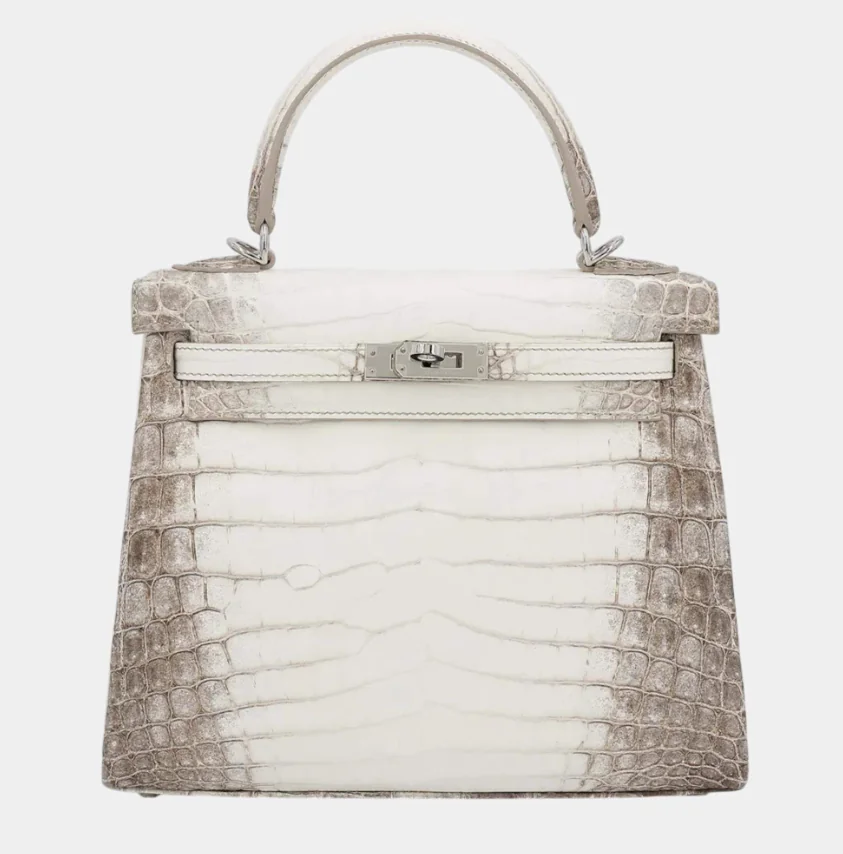
Himalaya — a hand-painted Niloticus crocodile finish that mimics the white-to-grey gradient of snow-capped mountains — is arguably the most coveted material Hermès produces. Each piece is individually painted, meaning no two are identical, and production is deliberately minuscule. Waitlists don’t really apply here; these bags surface almost exclusively through auction houses and private resale, often at multiples of retail.
Ombré finishes apply a similar gradient-dye technique across various exotic and exotic-adjacent leathers, creating a shaded, painterly effect that’s genuinely striking in person but far less “quiet luxury” than Hermès’s standard palette — worth knowing if you prefer materials that don’t announce themselves.
Beyond these, Hermès periodically releases special-edition materials and colorways tied to specific years or collections, which collectors track closely because scarcity, not craftsmanship alone, drives their premium. The risk buyers should understand: rarity-driven pricing is more volatile than craftsmanship-driven pricing. A rare finish that falls out of collector favor can see its premium shrink; a well-made Togo Birkin in a classic color rarely will.
How to Choose the Right Leather for Your Lifestyle #
Strip away the romance and this comes down to a fairly simple matching exercise.
If you’re buying a bag to actually use daily — school runs, office, travel — Epsom or Togo are the sensible choices. Epsom for structure and near-zero maintenance, Togo if you want a softer, more forgiving hand-feel and don’t mind some slouch developing over time.
If you want something plush and photograph-ready for occasional wear, Clémence or Swift deliver a more luxurious hand-feel, but budget in the extra care they demand — no tossing them on rough surfaces or letting them sit in a damp bag interior.
If you’re drawn to heritage and patina over pristine perfection, Box calf is a genuinely rewarding choice, but only if you’re comfortable with visible wear becoming part of the bag’s character.
If you’re considering an exotic, be honest about your actual handling habits before your budget. Ostrich is the most forgiving entry point into exotics for someone who still wants to carry the bag regularly. Crocodile and alligator reward careful owners and controlled environments — think climate-controlled storage, not a gym bag pocket. Lizard is best reserved for evening bags and small accessories rather than anything meant to earn its keep day to day.
My honest advice after handling dozens of these bags across leathers: buy for how you actually live, not for how the leather photographs on Instagram. The most “boring” Epsom Birkin that gets carried every week will serve you better than a delicate Swift bag that spends most of its life in a dust bag out of fear.
Investment Value: How Material Choice Affects Resale #
Material is arguably the single biggest lever on Hermès resale value — more than color, more than hardware, in many cases more than condition.
As a general hierarchy, exotic skins outperform standard leathers on resale, with crocodile and alligator commanding the highest premiums, followed by ostrich and lizard. Within standard leathers, Togo and Epsom tend to hold value more reliably than Clémence, Swift, or Box calf, largely because their durability means more of them survive in good condition, which sustains buyer confidence at resale — counterintuitively, being common and tough helps rather than hurts.
Rare finishes like Himalaya sit in their own category entirely, appreciating on scarcity and craftsmanship story more than practical merit, and can resell well above retail. But this tier carries real volatility — values are sentiment-driven and can shift with collector trends in a way mainstream leathers don’t.
One honest caveat rarely mentioned in glossy buying guides: condition still matters enormously, even within the “durable” leathers. A scratched, stained Togo bag will underperform a well-maintained Clémence bag despite Clémence’s reputation for being more delicate. Material sets the ceiling on resale value; care determines how close you actually get to it.
FAQs About Hermès Leathers and Materials #
What is the most durable Hermès leather? Epsom is generally considered the most scratch- and water-resistant standard leather due to its coated finish, followed closely by Togo, which is uncoated but naturally scratch-hiding thanks to its pebbled grain.
Is Togo leather good for a first Hermès bag? Yes. Togo is one of the most forgiving, low-maintenance choices for a first Birkin or Kelly, which is exactly why it’s so commonly recommended for daily use.
Why is Hermès crocodile leather so expensive? Pricing reflects genuine scarcity, CITES-regulated sourcing, and significantly more complex tanning and cutting processes compared to calfskin, not just brand markup.
Does Himalaya Birkin really sell for over $100,000? Yes, in many cases. Himalaya pieces routinely resell well above their original retail price at auction due to extremely limited production and hand-painted, one-of-a-kind finishes.
Which Hermès leather holds its value best on resale? Exotic skins, particularly crocodile and alligator, generally hold or exceed retail value most consistently, followed by durable standard leathers like Togo and Epsom.
How do I care for exotic Hermès skins? Avoid direct sunlight and dry heat, store in breathable dust bags away from humidity extremes, and have skins professionally conditioned periodically — DIY cleaning products can cause irreversible damage.
Is Clémence leather high maintenance? Relatively, yes. It’s softer and more scratch- and stain-prone than Togo or Epsom, so it suits careful owners more than daily hard-use carriers.
Related Articles #
- The Row Margaux Tote: Ultimate Quiet Luxury Bag Guide
- Hermès Leather Types: The Complete Buying Guide
- Exotic Skin Handbags: What You’re Really Paying For
- Sell Designer Handbags in 2025: Get Paid More, Faster
- History of Hermès: From Harness Workshop to Luxury Icon


Keyword index