Introduction: Why [[[[Hermès](/buying-guides/investment-handbags-worth-buying-2026-guide/)](/brands/kelly-vs-birkin-hermes-bags-compared/)](/services/sell-hermes-bag-the-luxury-closet/)](/brands/painted-birkin-bags-celebrity-trend/) Leathers Deserve a Guide of Their Own #
A Hermès bag is not a straightforward purchase. Unlike most luxury goods where you’re essentially paying for branding and construction quality, what you’re buying at Hermès is a specific material — and that material determines everything that follows: how the bag ages, whether it scratches, how it behaves in rain, what it commands on the secondary market in ten years, and whether an auction house will one day place it under glass.
The stakes became undeniable in July 2025, when Sotheby’s sold what is believed to be one of the earliest Birkins ever produced for $10 million — gavel down in under ten minutes. The buyer reportedly holds a collection of over 80Hermès pieces, more than 30 of them in rare or exotic leathers. That single sale wasn’t just a record; it was a clear signal that material choice is where Hermès value is made or lost.
If you’ve ever stood in a Hermès boutique (or, more realistically, spent months on a waiting list) and felt genuinely confused about whether you wanted Togo or Clemence, Niloticus or Porosus, this guide exists for you. It covers every significant Hermès leather type from the workhorses to the rarities, gives you honest trade-offs rather than marketing copy, and ends with a practical framework for matching material to lifestyle, budget, and investment goals.
One important caveat upfront: Hermès doesn’t publish a standardized leather catalogue. Names, textures, and availability change across seasons, regions, and craft directors. What you’ll read here is based on extensive hands-on experience with both new and pre-owned pieces, combined with what the secondary market has consistently demonstrated about durability and value retention.
The Classic Hermès Leathers: Togo, Epsom, Clemence, and the Everyday Icons #
These are the leathers you’re most likely to encounter in a Hermès boutique, and the ones that form the backbone of the brand’s bag production. Each has a distinct personality.
Togo #
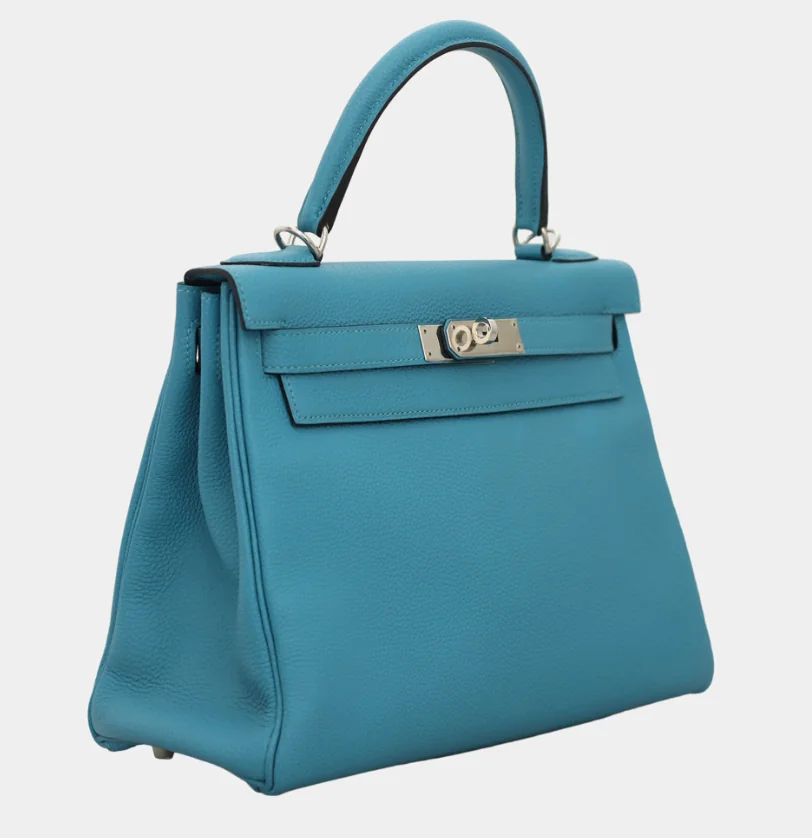
Togo is a pebbled calfskin with a fine, consistent grain and a slightly matte finish. It is, by most measures, the most versatile everyday Hermès leather in production — soft enough to feel luxurious, structured enough to hold its shape, and forgiving enough to survive actual use.
Texture and feel: Medium-soft. The pebbled surface is tactile but not coarse. It has visible grain without being loud about it.
Durability: Excellent. Togo resists everyday scratches well because the grain texture breaks up surface abrasions visually. Minor marks tend to buff out or blend in over time.
Water resistance: Good. Not waterproof, but light rain won’t stain or damage it. If soaked, let it dry naturally away from heat — no hairdryers.
Ideal for: Daily use, working professionals, anyone who plans to actually carry the bag rather than collect it.
Honest downside: Togo is slightly prone to slouching over time, particularly in larger sizes like the Birkin 35 or40. The structure softens with weight and use. Some owners love this; others find it frustrating. It also develops a patina more visibly than stiffer leathers, which is either a feature or a flaw depending on your preferences.
Investment tier: Mid. Togo Birkins and Kellys hold value reliably on the secondary market — especially in classic colors — but they don’t command the premiums of exotic skins or the Himalaya.
Epsom #
Epsom is a pressed calfskin with a cross-hatch embossed pattern. It’s firmer, lighter, and more structured than Togo, and it’s probably the most misunderstood leather in the Hermès lineup.
Texture and feel: Stiff and smooth. The embossed surface is almost paper-like in its crispness. Epsom bags are lighter than their Togo counterparts because the leather is thinner.
Durability: Very good, but with an important caveat. Epsom resists scratches and water exceptionally well — the pressed surface doesn’t absorb moisture easily. However, it’s more prone to corner wear than Togo, and because the grain is embossed rather than natural, deep creasing or cracking can occur over years of heavy use, particularly at stress points around the handles and corners.
Water resistance: Excellent. Better than Togo. Epsom is the leather that shrugs off light rain without so much as a water mark.
Ideal for: Occasion bags, lighter loads, anyone prioritizing structure and visual sharpness over softness. Also recommended for smaller bags like the Kelly25 or Constance 18, where Epsom’s lightness is an advantage.
Honest downside: Epsom doesn’t develop a patina the way natural-grain leathers do. To some, it always looks exactly the same — pristine but somewhat cold. It can also look less “premium” than Togo or Clemence to those who associate texture with quality. Corner wear, once it appears, is harder to conceal on Epsom than on a pebbled leather.
Investment tier: Mid. Epsom bags are plentiful on the secondary market, which keeps prices competitive rather than premium.
Clemence #
Clemence is a heavyweight, loosely grained calfskin with a matte, slightly velvety surface. It’s softer and more relaxed than Togo, with a larger, more visible grain pattern.
Texture and feel: Lush, almost buttery. Clemence is the leather that most often stops people cold in person — there’s a tactile richness to it that photographs don’t capture.
Durability: Good overall, but slouch is a real concern. Clemence is heavier than Togo, and in larger bags the weight accelerates shape loss. A Birkin 35 in Clemence will develop a relaxed, lived-in silhouette over time.
Water resistance: Good. Similar to Togo.
Ideal for: Those who prioritize feel and visual texture over strict structure. Collectors who carry their bags moderately, not daily.
Honest downside: The weight. Clemence is noticeably heavier than Epsom or even Togo, and in larger formats this becomes a real carrying consideration. The leather also shows pressure marks — if you set a full Clemence bag on its side repeatedly, you’ll see it.
Investment tier: Mid. Similar to Togo. Classic colorways in good condition hold value, but there’s no scarcity premium.
Swift (Box Calf’s Modern Sibling) #
Swift is a smooth, fine-grained calfskin with a slight sheen and almost no visible texture. It’s one of the most beautiful Hermès leathers to look at — colors appear extraordinarily vivid on Swift — and one of the most demanding to own.
Texture and feel: Silky smooth. Swift reflects light subtly and makes colors look saturated and almost lacquered.
Durability: Low. Swift is scratch-prone. It will show fingernail marks, key scratches, and surface abrasions clearly and quickly. This is not a leather for careless daily use.
Water resistance: Poor. Swift will water-stain, and conditioning is required more frequently than with pebbled leathers.
Ideal for: Occasional use and special occasions. Collectors who keep bags protected. Smaller styles like the Constance or Kelly Pochette, where the bag isn’t subjected to heavy loading and handling.
Honest downside: If you intend to actually use the bag, Swift will test your patience. It requires careful handling, regular conditioning, and more frequent professional spa treatment. The beauty is real; the upkeep cost is equally real.
Investment tier: Mid-to-high in certain colors. Vibrant or limited Swift pieces can command premiums, but the condition dependency is significant on resale.
Box Calf #
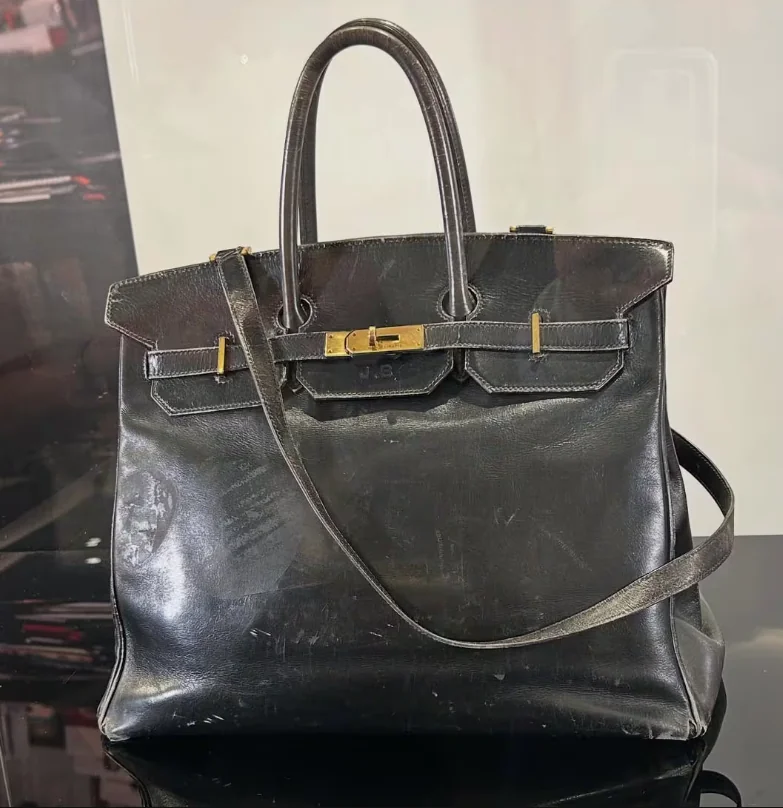
Box Calf is the heritage leather — the original, used by Hermès saddlers from the 19th century and still produced in limited quantities. It has a polished, almost glassy smooth finish and develops a deep, rich patina over decades of careful use.
Texture and feel: Smooth and firm. A properly cared-for vintage Box Calf bag has a depth and luster that no other Hermès leather can replicate.
Durability: Excellent structural durability, but very scratch-sensitive. Box Calf scratches show as matte lines against the polished surface. The difference from Swift is that Box Calf scratches can be partially polished out — the leather responds to conditioning in a way Swift doesn’t.
Water resistance: Poor. Water will leave marks on Box Calf. This is a leather that requires commitment.
Ideal for: Serious collectors and those with a long-term mindset. A Box Calf Kelly purchased and maintained well over20 years will look extraordinary. A Box Calf bag treated carelessly will look terrible.
Honest downside: Box Calf is becoming increasingly rare in production. When you do find it, the waiting lists and premiums reflect that scarcity. It also requires active maintenance — occasional conditioning and periodic professional polishing.
Investment tier: High for vintage pieces. New Box Calf bags in classic styles can command significant resale premiums, particularly Kelly28 and32sizes.
Chevre (Goatskin) #
Chevre refers to leathers made from goatskin. The two main varieties are Chevre Mysore (a soft, tight-grained goatskin with fine texture and slight sheen) and Chevre de Coromandel (firmer, with a more prominent grain). Chevre in general is noted for its exceptional durability and resistance to wear.
Texture and feel: Chevre Mysore is smooth and soft with a subtle natural grain. It’s one of the most pleasant leathers to touch repeatedly — handles and straps in Chevre age particularly well.
Durability: Among the best of the classic leathers. Goatskin is naturally tougher than calfskin, with good resistance to scratches, structure loss, and water.
Ideal for: Those who want the look of a smooth leather but need real-world durability.
Honest downside: Chevre is increasingly difficult to source in production. It’s also a leather that counterfeits attempt to mimic with embossed calfskin — knowing what authentic Chevre feels like requires handling genuine pieces.
Investment tier: Mid-to-high. Chevre bags, particularly vintage pieces, are sought after on the secondary market.
Barenia #
Barenia is a vegetable-tanned calfskin — one of the oldest leathers in the Hermès stable, originally used for saddles and equestrian equipment. It’s distinctive for its warm, natural honey tone (or, occasionally, Fauve), its smooth surface, and the rich patina it develops over time.
Texture and feel: Smooth and somewhat waxy when new. Over years of use, it develops a warm amber depth that other leathers simply don’t replicate.
Durability: Good structural durability; however, Barenia marks easily and permanently. Every scratch, every contact with a sharp edge, becomes part of the bag’s story. This is considered a feature by true devotees.
Water resistance: Low. Barenia and water are not friends.
Ideal for: Collectors and long-term owners who appreciate patina and have a philosophical tolerance for their bag showing its life. Not for the perfectionist.
Honest downside: Barenia is almost exclusively available in its natural honey/Fauve colorway — you cannot get a blue or red Barenia Birkin. It’s also produced in very limited quantities. And if you want pristine, Barenia will frustrate you within six months of ownership.
Investment tier: High. Vintage Barenia pieces in good-to-excellent condition command significant premiums. The patina of a well-cared-for Barenia bag is, to collectors, the most beautiful thing Hermès makes.
Veau Butler #
Veau Butler is a matte calfskin with fine horizontal striations — a subtle texture that gives it a slightly structured, linen-like appearance. It’s less commonly seen in boutiques than Togo or Epsom and has a quiet sophistication.
Texture and feel: Matte and structured, with a refined tactile quality that wears well.
Durability: Good. Similar to Epsom in scratch and water resistance.
Ideal for: Those who want something slightly off the beaten path without venturing into exotics.
Honest downside: Limited availability and limited color range compared to Togo or Epsom. Less recognized by non-Hermès specialists, which cuts both ways.
Investment tier: Mid.
Exotic Skins: Crocodile, Alligator, Ostrich, and Lizard Compared #
Exotic skins occupy an entirely different tier of the Hermès universe — in price, in scarcity, in investment performance, and in the level of care they demand. These are not everyday bags. They are, in the truest sense, rare objects.
A brief ethical note before diving in: Hermès sources all exotic skins from regulated farms in compliance with CITES (the Convention on International Trade in Endangered Species of Wild Fauna and Flora). The House operates its own Niloticus Crocodile farm in Zimbabwe and publishes sourcing transparency reports. Legitimate debate exists around the ethics of exotic skin production; buyers should research this dimension before purchasing and make an informed personal decision.
Niloticus Crocodile #
Nile crocodile skin — Niloticus — is the prestige exotic. The tiles are square, symmetrical, and highly consistent, creating that immediately recognizable geometric pattern associated with the most valuable Hermès bags in existence. Niloticus comes in both glossy (Lisse) and matte finishes.
Visual distinction: The tiles are relatively large and even. In glossy versions, the surface has a deep, almost mirrorlike luster. In matte, the same geometry reads as more discreet and modern — many collectors consider matte Niloticus to be the more sophisticated choice.
Durability: High for an exotic. Crocodile skin is inherently tough, but the surface — especially glossy — can scratch and lose luster if not handled carefully. It does not tolerate moisture, sunscreen, or perfume contact.
Price premium: Significant. A standard Niloticus Crocodile Birkin or Kelly starts in the €30,000–60,000+ range new (where available), and secondary market prices often exceed retail substantially.
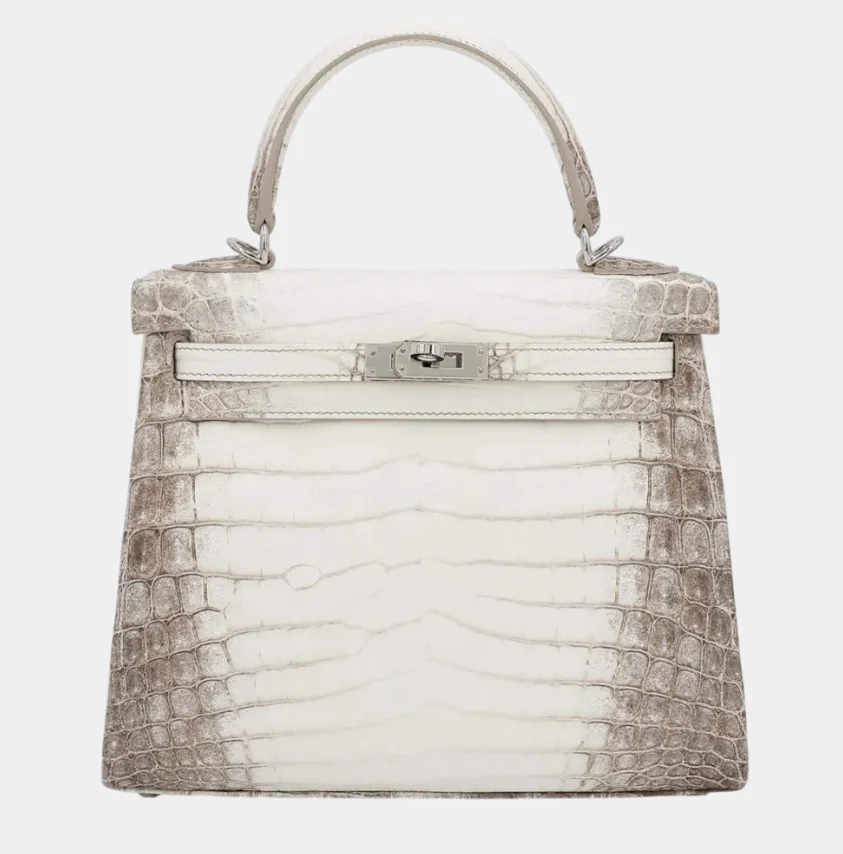
The Himalaya Niloticus Crocodile: This is in a category of its own. The Himalaya designation refers to a specific gradient treatment — a hand-applied fade from white-gray (resembling Himalayan snow) at the body to a light blush at the base. It is produced in extremely limited quantities and has become the single most sought-after configuration in Hermès history. The July 2025 $10M Birkin was confirmed to be a historic piece, but current Himalaya Niloticus Birkin 25 and Kelly 25 hardware bags have sold at auction for $350,000–$500,000 in recent years. The Himalaya is not merely the most expensive Hermès bag; it is the benchmark against which all luxury handbag investments are measured.
Honest downside: The price of entry is genuinely prohibitive. Crocodile bags are rarely offered at boutique retail without a very significant purchase history (what the community calls “spend”). Most new buyers will access Niloticus exclusively through the secondary market at meaningful premiums. The bags also require climate-controlled storage and cannot be used in any weather uncertainty.
Porosus Crocodile #
Porosus is the saltwater crocodile, native to Southeast Asia and Northern Australia. It produces smaller, more uniform tiles than Niloticus, with a tighter, more delicate scale pattern. Historically, Porosus was considered the premium crocodile — it appeared in vintage Hermès pieces and was the dominant exotic through much of the 20th century.
Visual distinction vs. Niloticus: Porosus scales are narrower and more closely spaced, creating a finer, more intricate texture. Whether Niloticus or Porosus is more desirable is a matter of ongoing debate among collectors — Niloticus has dominated recent auction records, but many vintage purists consider Porosus the superior skin.
Availability: Porosus is produced in smaller quantities than Niloticus and appears less frequently in current boutique production.
Investment tier: Very high. Vintage Porosus pieces in excellent condition command serious secondary market premiums.
Alligator (Mississippi Alligator) #
American alligator skin — farmed in Louisiana and other U.S. states — has a slightly different scale geometry than Niloticus. The tiles are somewhat rounder and less perfectly geometric, giving Alligator a warmer, more organic visual character. It’s considered slightly less prestigious than Niloticus by the current market consensus, though the difference is subtle to anyone not deeply familiar with both.
Honest downside: The market currently undervalues Alligator relative to Niloticus, which means resale performance doesn’t quite match. However, this also makes Alligator pieces somewhat more accessible at secondary market prices.
Ostrich (Autruche) #
Ostrich is the most recognizable non-crocodile exotic — the distinctive quill follicle bumps across the center of the hide (the “crown”) are unmistakable. Hermès sources African ostrich skin, and the leather has a warm, almost supple quality that crocodile doesn’t possess.
Texture and feel: Ostrich is, surprisingly, softer and more comfortable to handle than crocodile. The bumps are rounded and pleasant to touch.
Durability: Good for an exotic, but the raised follicle bumps are vulnerable to direct abrasion. Ostrich should not be set down on rough surfaces.
Color availability: Ostrich takes dye exceptionally well and is offered in a wider color range than crocodile. Some of the most visually striking Hermès bags ever produced have been in Ostrich — vibrant pinks, deep blues, and saturated reds that don’t appear in crocodile production.
Investment tier: High, but below crocodile. Ostrich Birkins and Kellys are strong secondary market performers, particularly in rare or discontinued colors.
Honest downside: The quill pattern means the bag looks visually distinctive — conspicuous in a way crocodile isn’t. For those who prefer quiet luxury, Ostrich can feel loud.
Lizard (Lézard) #
Lézard at Hermès typically refers to Varanus or similar lizard skins, offering the finest, most intricate scale pattern of any Hermès exotic. The result is an almost jewel-like texture — tiny, consistent scales that catch light beautifully.
Availability: Extremely limited. Lizard pieces appear rarely and are almost never offered at boutique retail to standard clients.
Size limitations: Lizard skin panels are small, which limits production to smaller bag formats. A Lizard Kelly 25 or Constance 18 is feasible; a Birkin 35 in full Lizard is essentially nonexistent.
Investment tier: Very high for the right pieces, but a thin market means finding buyers requires patience.
Honest downside: Lizard is extremely fragile. It does not tolerate rough handling, moisture, or contact with chemicals. It is a collector’s leather for display and special occasions only.
Specialty Materials: Toile, Doblis, and the Rarest of the Rare #
Not every significant Hermès material is a traditional leather. Several specialty and non-leather options deserve serious consideration — both for their practical characteristics and their collectibility.
Toile H Canvas #
Toile is Hermès’ signature cotton canvas, most commonly seen in the Herbag and in combination with leather on the Birkin and Kelly Toile. The canvas features the brand’s woven herringbone pattern and is made to the same exacting standards as the leathers.
Practical characteristics: Toile is durable, lightweight, and — in coarser weaves — surprisingly resistant to everyday wear. It is not, however, impervious to staining, and a Toile Kelly used without care will show marks around the handles and base.
Collectibility: Toile/leather combination bags (particularly Toile with natural Barenia leather trim) have a timeless, almost safari aesthetic that has maintained a dedicated collector following for decades. Vintage Toile pieces in good condition are sought after.
Honest downside: Toile is not water-resistant, stains can be difficult to remove without professional cleaning, and the canvas around handle attachment points is vulnerable to wear with heavy use.
Investment tier: Mid. Strong for vintage and combination pieces with Barenia trim; less so for contemporary simple Herbag formats.
Doblis Suede #
Doblis is Hermès’ designation for its high-quality suede — a reverse-napped calfskin with an extraordinarily soft, velvety surface. It is, visually, one of the most beautiful surfaces the House produces. It is also one of the most impractical.
Practical characteristics: Doblis does not tolerate rain, humidity, or contact with oils, perfume, or most cosmetics. It marks easily and cannot be wiped clean. It is strictly an occasion material — appropriate for an evening event where the bag is carried, not set down on restaurant floors.
Collectibility: Vintage Doblis pieces in unworn or near-mint condition are genuinely rare and command collector premiums precisely because of how difficult the material is to preserve.
Honest downside: A Doblis bag in daily or even monthly rotation will deteriorate noticeably within a year without professional care between uses. Budget for Hermès spa service every six months if you choose Doblis.
Investment tier: High for unworn or very well-preserved pieces. Worn or marked Doblis loses value quickly.
Veau Grainé and Limited-Edition Treatments #
Veau Grainé is a fine-grained calfskin used primarily in smaller accessories and some limited-edition bag runs. Hermès also periodically introduces special treatments, embossed prints (such as the alligator-embossed calfskin that mimics exotic texture at lower price points), and collaborative or artist-edition materials that don’t fall into standard categories.
These limited and special materials are of interest primarily to collectors. Their investment performance varies dramatically based on edition rarity, colorway, and market timing.
How to Choose the Right Hermès Leather for Your Lifestyle #
The honest answer to “which Hermès leather should I buy” is that it depends entirely on how you intend to use the bag, how much maintenance you’re willing to commit to, and what role you want the piece to play in your collection. Here is a practical framework.
Comparison Matrix: Classic Hermès Leathers #
| Leather | Durability | Scratch Resistance | Water Resistance | Ideal Use | Investment Tier | Care Difficulty |
|---|---|---|---|---|---|---|
| Togo | ★★★★ | ★★★★ | ★★★★ | Daily/Work | Mid | Low |
| Epsom | ★★★★ | ★★★★★ | ★★★★★ | Occasion/Structure | Mid | Low |
| Clemence | ★★★ | ★★★★ | Moderate Daily | Mid | Low-Med | |
| Swift | ★★ | ★★ | ★★ | Occasion | Mid-High | High |
| Box Calf | ★★★★ | ★★ | ★★ | Collection/Occasion | High | High |
| Chevre | ★★★★★ | ★★★★ | Daily/Moderate | Mid-High | Low-Med | |
| Barenia | ★★★★ | ★★ | ★★ | Collection/Patina | High | High |
| Veau Butler | ★★★★ | ★★★★ | ★★★★ | Daily/Moderate | Mid | Low |
Comparison Matrix: Exotic Skins #
| Exotic | Scarcity | Price Premium | Water Sensitivity | Investment Tier | Care Difficulty |
|---|---|---|---|---|---|
| Niloticus Crocodile | Very High | ★★★★★ | Very High | Very High | Extreme |
| Porosus Crocodile | Extremely High | ★★★★★ | Very High | Very High | Extreme |
| Alligator | High | ★★★★ | Very High | High | Extreme |
| Ostrich | High | ★★★★ | High | High | High |
| Lizard | Extremely High | ★★★★★ | Extreme | Very High | Extreme |
For First-Time Buyers #
If this is your first Hermès bag and you intend to carry it regularly, the answer is Togo or Epsom — and the choice between the two comes down to a single question: do you prefer a soft, relaxed feel or a structured, crisp silhouette?
Togo will feel more luxurious in hand and will develop character over time. Epsom will stay looking sharp longer with less maintenance. Both are excellent entry points and both hold value reliably on resale.
Avoid Swift, Box Calf, Barenia, and any exotic for a first bag if you plan to use it rather than collect it. The care requirements are genuinely demanding.
For Daily Use #
Togo, Epsom, Chevre, or Clemence in a Birkin 30, Birkin 25, or Kelly 28/32. Prioritize darker or neutral colors (black, gold, etoupe, gris tourterelle) that are more forgiving of minor wear.
For Travel #
Epsom or Togo. The scratch and water resistance of both make them the obvious choice when bags get loaded into overhead compartments and set on unfamiliar surfaces. Garden Party in Toile is also an excellent travel option.
For Occasional and Evening Use #
Swift, Box Calf, or Doblis if you’re willing to commit to careful handling and regular conditioning. The reward is a bag that looks extraordinary on those occasions. Constance 18 or Kelly Pochette in Swift is one of the most beautiful combinations Hermès makes.
For Investment Purposes #
Exotic skins — particularly Niloticus Crocodile in classic colors (black, gold, noir) with palladium or gold hardware — have historically outperformed classic leathers on appreciation. The Himalaya Niloticus is in a category of its own. Among classic leathers, Barenia and Box Calf in excellent condition offer stronger appreciation potential than Togo or Epsom.
Investment Value and Resale: Which Materials Appreciate Most #
The secondary market for Hermès bags is one of the most studied in luxury goods investment — and the data is consistent over time. Here is a frank assessment.
Tier 1: Himalaya Niloticus Crocodile #
Nothing else competes. Himalaya Birkin 25 and Kelly 25 bags have achieved price growth that outpaces virtually every other tangible asset class over the past fifteen years. The combination of extreme scarcity, iconic aesthetic, and the aspirational ceiling it represents makes the Himalaya a benchmark, not just a bag. That said: these bags now trade at such a premium that the realistic buyer pool is very thin. Liquidity matters in investment, and Himalaya pieces can take time to sell — even at auction — unless the configuration is exactly right.
Tier 2: Niloticus and Porosus Crocodile (Classic Colors) #
Black, gold/fauve, and rouge H (deep red) Niloticus or Porosus Birkins and Kellys consistently appreciate and are sought after at the major auction houses — Christie’s, Sotheby’s, Bonhams, and Phillips. Hardware matters significantly: diamond hardware commands the highest premiums; palladium is preferred over gold hardware in the current market.
Tier 3: Ostrich in Rare Colors #
Ostrich bags in discontinued or rare colorways (certain pinks, bright blues, violet) have demonstrated strong appreciation. The color premium can be as significant as the material premium.
Tier 4: Box Calf and Barenia (Vintage or Unworn) #
Among classic leathers, these two generate the most excitement among serious collectors. A1990s Box Calf Kelly 28 in excellent condition has sold for multiples of its original retail value. The patina of a well-maintained Barenia Birkin is considered — by those who know — one of the finest things Hermès produces.
Tier 5: Togo, Clemence, and Epsom (Classic Colors) #
These leathers hold value reliably — a well-maintained Togo Birkin 30 in black or gold will sell at or above retail on the secondary market, often quickly. But they don’t appreciate dramatically. Think of these as preservation of value rather than appreciation.
What the Secondary Market Cares About (Beyond Material) #
Material is one variable. Condition is another, equally significant one. A matte Niloticus Birkin with deep scratches and hardware scratches will underperform a pristine Togo Birkin at auction. The secondary market is ruthless about condition. Other factors that influence resale: hardware color and type, bag size (Birkin 25 currently commands the highest premiums by size), inclusion of original receipt and dustbag, and whether the bag came from Hermès directly or has a transfer history.
Honest caveat: The Hermès secondary market has experienced extraordinary growth over the past decade. While the structural case for exotics and classic Hermès as long-term stores of value is strong, past performance in any market doesn’t guarantee future returns. Buyers who view any luxury bag as a pure financial investment should consult with specialists in luxury asset management.
Care and Longevity: Protecting Every Leather Type #
Hermès materials require different care regimens. The common thread across all of them: prevention is cheaper and more effective than repair.
Togo, Clemence, and Veau Butler #
- Conditioning: Every six to twelve months with a leather conditioner approved for calfskin. Avoid anything containing silicone or petroleum.
- Rain exposure: Light rain is manageable. If the bag gets genuinely wet, blot gently with a soft cloth, stuff the bag with acid-free tissue paper to maintain shape, and allow it to dry at room temperature. Never use heat.
- Storage: Store in the original dustbag, stuffed to maintain shape, in a cool, dry environment. Avoid plastic bags (traps moisture) and direct sunlight (fades color).
- What never to do: Don’t use baby wipes, household cleaners, or alcohol-based products on any Hermès leather. Don’t compress the bag in a cramped shelf.
Epsom #
- Conditioning: Less frequently than Togo — Epsom’s pressed surface doesn’t absorb moisture as
Related Articles #
- Best It Bags to Buy This Year: A Definitive Guide
- Designer Handbag Trends 2025: What’s Actually Worth Buying
- Hermès Birkin Prices 2025: Where to Buy for Less
- 21 Most Expensive Handbags in the World (2026)


Keyword index