Introduction#
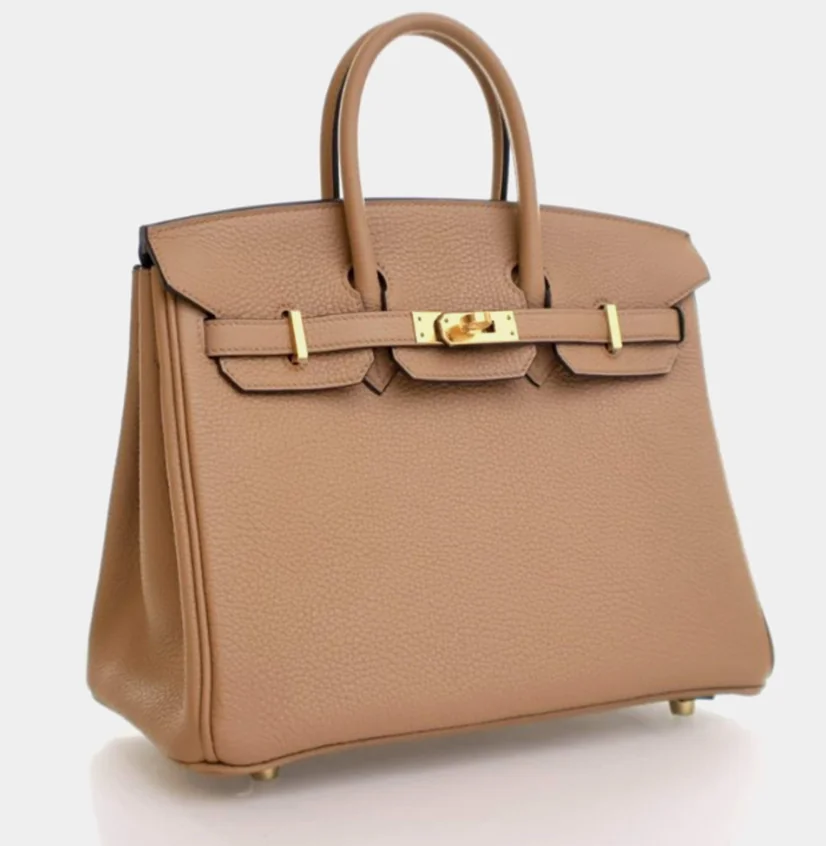

Ask anyone who has actually purchased a Hermès Birkin and they’ll tell you the hardest part isn’t finding the money. It’s finding the bag. But once you clear that hurdle, a second question kicks in immediately: did you just pay too much?
The Hermès Birkin price in 2025 isn’t a fixed number. It shifts depending on where you’re standing when you buy it. Currency swings, VAT refund schemes, import duties, and Hermès’s own annual price adjustments all stack on top of a base price that already starts around €8,950 for a Birkin 25 in Togo leather. Buy in the wrong city and you could pay 20-30% more than someone who bought the identical bag, in the identical leather, the same week. That’s not a rumor circulating on handbag forums. It’s arithmetic.
This guide breaks down what actually drives Birkin and Kelly pricing across major shopping destinations, where the real savings are hiding in 2025, and what tourists need to know before they walk into a boutique expecting a straightforward transaction.
Product Overview#
The Birkin remains Hermès’s flagship handbag, built by hand in the brand’s French ateliers and released in limited quantities relative to demand. Sizes range from the compact Birkin 20 up through the Birkin 35 and larger, with leathers spanning entry points like Togo and Epsom up through exotic skins such as crocodile and ostrich, which command significantly higher prices and are often reserved for established clients.
For 2025, Hermès pushed through price increases of roughly 6-7% in the United States and around 4.5% in Europe, continuing a pattern of annual hikes the brand has maintained for years. A Birkin 25 that hovered near €8,500 in 2023 now sits closer to €8,950-€9,000 in Paris, with U.S. retail prices climbing even faster once tariffs and sales tax are factored in.
What makes the Birkin unusual as a luxury product is that its retail price is only the starting point of the conversation. Availability, secondary market premiums, and regional tax structures matter just as much as the sticker price, sometimes more.
Design#
Part of what justifies the Birkin’s price, and what keeps demand outpacing supply, comes down to construction rather than branding. Each bag is assembled by a single craftsperson from start to finish, a practice Hermès has kept consistent even as production has modestly scaled up to meet demand. Saddle-stitching, hand-set hardware, and a structured silhouette that has barely changed since the bag’s 1984 debut are part of why resale values hold up better than almost any other handbag on the market.
That said, design consistency is also a limitation. Hermès moves slowly. If you’re looking for seasonal trend pieces or frequent silhouette updates, the Birkin isn’t built for that kind of shopper. Its value proposition is permanence, not novelty, and the design language reflects that deliberately conservative approach.
Materials#
Leather choice is the single biggest lever on price within the Birkin line, often more influential than the country you buy in. Togo leather, a grained calfskin, is the most common entry material and the one most price comparisons (including this guide) use as a baseline. Epsom offers a structured, textured alternative at similar price points. Above those, Clemence leather adds a softer, slouchier finish at a modest premium.
Exotic materials are where prices detach from the standard 2025 price list entirely. Crocodile and alligator Birkins can run three to five times the price of a standard Togo bag, and these are typically the hardest to access without an established purchase history with a specific Hermès boutique. If your goal is simply owning a Birkin at the most defensible price, sticking to Togo or Epsom in a standard colorway is the pragmatic choice. Exotics are a different game with different rules.
Pros and Cons#
Buying a Birkin in 2025, wherever you do it, comes with trade-offs worth being honest about.
Advantages:
- Strong resale value retention, with some colorways and sizes holding or exceeding original retail price on the secondary market
- Handcrafted construction that genuinely holds up to decades of use with proper care
- VAT and GST refund schemes in the EU, Dubai, and Singapore can meaningfully reduce the effective cost for tourists, sometimes by 10-14%
- Buying in Europe (particularly Spain or Italy) can beat Paris pricing after refunds, despite an identical French-made base price
Disadvantages:
- Boutique availability is not guaranteed anywhere, and walk-in purchases of a Birkin are genuinely rare regardless of budget
- U.S. buyers face no VAT-style refund at all, plus 2025 tariff increases of 4.4-5.9% stacked on top of sales tax
- London buyers lost VAT refund eligibility after Brexit, making it one of the least tax-efficient places to buy despite favorable exchange rate moments
- Latin American markets (Brazil, Mexico, Chile) can run 50-60% above Paris pricing once duties and luxury taxes are applied
- Annual price increases mean waiting rarely helps; the bag you’re saving for gets more expensive while you save
Who Should Buy#
If you’re a first-time buyer without an existing Hermès purchase history, be realistic about what “buying a Birkin” actually looks like in 2025. It usually means building a relationship with a boutique over time, often through smaller leather goods or accessory purchases, before a Birkin offer materializes. This makes location strategy less about walking into the cheapest city and more about where you can realistically build that relationship.
Frequent European travelers are in the best position to capture VAT refund savings, particularly if their itinerary already includes Spain, Italy, or France. For them, timing a purchase around existing travel plans, rather than booking a trip specifically for the bag, is the more sensible approach.
U.S.-based buyers who have no international travel planned should not assume domestic pricing is a lost cause. The absence of a refund is offset somewhat by not needing to factor in flights, and some buyers find domestic client relationships easier to build with consistent local boutique visits.
Buyers primarily interested in exotics or rare hardware combinations should expect Dubai, Paris, and top-tier U.S. boutiques to be the most realistic markets, given the client history typically required.
Alternatives#
Not every buyer needs a Birkin specifically, and the 2025 price climate has pushed some shoppers toward comparable alternatives worth knowing about.
The Hermès Kelly offers similar craftsmanship and material quality at a broadly comparable price point, with a structured, more formal silhouette and, in some boutiques, slightly better availability than the Birkin, since it draws a marginally smaller waitlist in certain markets.
Outside Hermès, Chanel’s Classic Flap and the [Louis Vuitton](/how-to-spot-a-fake-louis-vuitton-bag/) Capucines are the most commonly cited comparisons, though neither matches the Birkin’s resale performance or production scarcity. They’re worth considering for buyers who want recognizable luxury craftsmanship without the multi-year relationship-building that Hermès purchases often require.
For buyers specifically chasing value rather than brand cachet, the pre-owned and consignment market for Birkins themselves is also worth serious consideration. Authenticated pre-owned Birkins in popular colorways and standard leathers occasionally sell close to, or even below, current retail once you account for VAT, duties, and the opportunity cost of waitlisting. It won’t get you a brand-new bag, but it removes the availability bottleneck entirely.
FAQ#
What is the Hermès Birkin price in 2025? A Birkin 25 in Togo leather starts around €8,950 in Paris before any refund, with U.S. retail running higher once the 2025 tariff and price increases are applied. Larger sizes and exotic leathers increase the price substantially from there.
Where can I get a VAT refund on a Birkin? Non-EU residents can claim VAT refunds in France, Spain, and Italy, typically recovering 10-14% depending on the country and refund provider. Refunds are processed at the airport before departure, so keep all original receipts and allow extra time at customs.
Is it cheaper to buy a Birkin in Italy or Spain than in France? Often, yes, after refunds. Because the bag is made in France regardless of where it’s sold, the base price is nearly identical across the EU. Italy’s 22% VAT and Spain’s 21% VAT come with stronger refund percentages than France’s 20% VAT, which can translate to €100-200 more in savings on a €9,000 bag.
Can I get a VAT refund on a Hermès bag in London? No. Since January 2021, non-UK visitors can no longer reclaim VAT in-store or at the airport, making London one of the less tax-efficient European destinations post-Brexit.
Why did Hermès increase prices in 2025? Hermès cited rising production costs alongside its long-standing strategy of controlled annual increases, roughly 6-7% in the U.S. and 4.5% in Europe for 2025, which also reinforces the brand’s exclusivity positioning.
Is Dubai a good place to buy a Hermès bag for less? Not particularly. While Dubai’s 5% VAT is refundable for tourists, base prices run higher than Paris, so the tax advantage rarely offsets the price difference. It’s a stronger market for exotic leather selection than for value.
Final Thoughts#
There’s no single “cheapest” city to buy a Hermès Birkin in 2025, but there is a clear pattern: Europe, and specifically Spain and Italy after VAT refunds, offers the most consistent value for buyers who already have European travel on their calendar. Paris remains the emotional and cultural center of the Hermès world, but it’s no longer the automatic best deal once refund rates are compared honestly.
For most buyers, the smarter question isn’t “where’s it cheapest” but “where can I realistically buy one at all.” Availability, not price, is still the bigger obstacle for most people chasing a Birkin, and factoring that into your travel and purchase planning will matter more than shaving a few percentage points off the VAT refund.
Related Articles#


Keyword index