Introduction: Why the [[[[Hermès](/brands/kelly-vs-birkin-hermes-bags-compared/)](/services/sell-hermes-bag-the-luxury-closet/)](/buying-guides/hermes-leather-types-complete-buying-guide/)](/brands/painted-birkin-bags-celebrity-trend/) Story Still Matters#
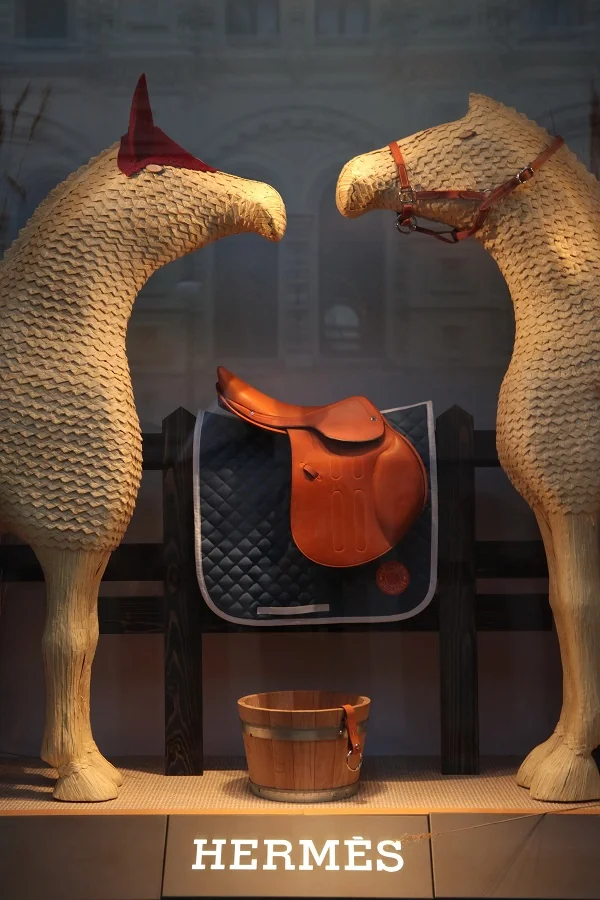
Walk into any Hermès boutique today and you will not find a Birkin on the shelf. You will not see a price tag on the most important items. And if you ask when you might be able to acquire one, the answer — politely delivered — is that it depends.
No other luxury house commands this dynamic so completely, and no other brand could sustain it without a credibility problem. The reason Hermès can is rooted entirely in history. Not in marketing mythology, but in nearly two centuries of documented craft, family stewardship, and an almost pathological refusal to dilute quality for volume. Understanding the history of Hermès is not a sentimental exercise. It is the most direct route to understanding why a pre-owned Birkin routinely sells above its original retail price — and why that trend shows no signs of reversing.
This is the story of a harness workshop in19th-century Paris that became the most financially resilient luxury brand in the world.
A Workshop in Paris: The Origins of Hermès (1837–1880)#
Thierry Hermès established his harness-making atelier in Paris in 1837, on the Grands Boulevards near the city’s fashionable centre. He was not launching a luxury brand in any contemporary sense. He was a craftsman responding to demand: European aristocracy and the military classes needed high-quality equestrian equipment, and skilled artisans who could produce it were not easy to find.
What distinguished Thierry from the outset was precision. His bridles, harnesses, and saddle fittings were constructed to meet the exacting standards of riders who trusted their lives and their horses to the equipment beneath them. The work was not decorative — it had to function. That functional rigour, the insistence that beautiful objects must also be built to last, became the founding philosophy of everything that followed.
The quality did not go unnoticed. Hermès harnesses won prizes at the Paris Expositions of 1855 and 1867, placing the atelier in direct competition with — and often above — the most established craftsmen of the era. The aristocratic and royal clientele expanded accordingly. By the time Thierry’s son, Charles-Émile Hermès, took over the business and made the consequential decision to relocate in 1880, the brand already carried a reputation earned through three decades of award-winning work.
That relocation — to 24 Rue du Faubourg Saint-Honoré — was not merely a change of address. It placed Hermès at the centre of Paris’s most prestigious commercial street, among the couturiers and jewellers who served the wealthiest clients in Europe. The building at number 24 remains the Hermès flagship to this day, a physical throughline connecting the harness workshop of1837 to the global luxury house of the present.
From Saddles to Handbags: Hermès Reinvents Itself (1880–1950s)#
The third generation of the Hermès family, Émile-Maurice Hermès, inherited a business that was thriving — and a world that was rapidly changing. The automobile was displacing the horse-drawn carriage across European cities, and an equestrian goods business that failed to adapt faced a slow decline. Émile’s response was to follow the customer rather than mourn the market.
He began expanding into personal leather accessories: small pouches, travel bags, and riding-adjacent items that the same aristocratic clients were still buying. Among the earliest of these was the Haut à Courroies — a tall, structured bag originally designed for riders to carry saddles, feed, and accessories on horseback. It is, by most accounts, the ancestor of every structured Hermès bag that followed, including the Birkin. (The Haut à Courroies is still produced today, for those who enjoy owning something with a lineage that predates most countries’ constitutions.)
The pivotal moment in the transition from equestrian specialist to personal accessories house came in 1922, and it arrived through domestic frustration. Émile’s wife found herself unable to locate a handbag that met her requirements. Émile, rather than directing her to a competitor, designed and made one for her himself. The resulting bag introduced something that had not been seen in French fashion before: a zip fastener. Émile had encountered the mechanism during his travels to North America and recognised immediately that it could transform how bags functioned. He acquired the rights to use it in France.
The zip, which Parisians initially referred to as the “Hermès fastener,” subsequently spread through European fashion from this single introduction. It is a telling detail: Hermès did not simply follow luxury trends, it created functional innovations that the rest of the industry then adopted.
Émile’s instincts extended beyond mechanics. Throughout his life he assembled an extraordinary personal archive of art, objects, textiles, and cultural artefacts gathered from his travels — a collection that the house still references as a creative source. When Hermès artisans reach for inspiration today, they are drawing on a physical library built by a man who died in 1951.
The Icons Are Born: Kelly Bag, Silk Scarves, and the Chaîne d’Ancre#
When Émile Hermès died, the house passed to his son-in-law Robert Dumas, a figure whose creative output during his tenure was, by any measure, extraordinary. Dumas was responsible for three of the most culturally durable objects in the history of luxury: the Kelly bag, the silk carré, and the Chaîne d’Ancre bracelet. Any one of them would have been a significant achievement. All three, in roughly a two-decade span, redefined what a leather goods house could be.
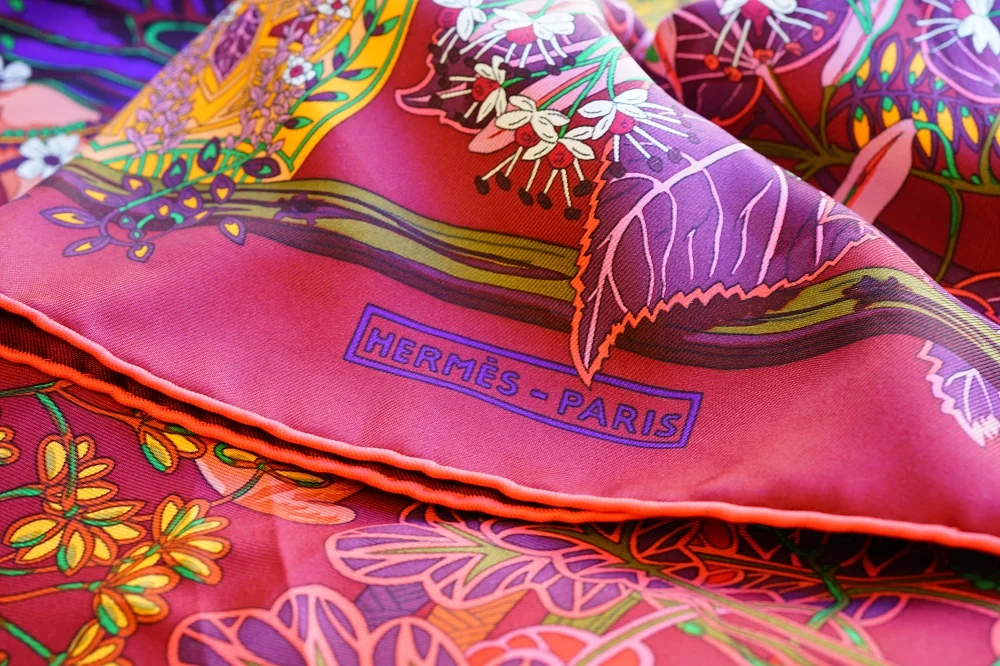
The silk scarf came first. In 1937, Hermès introduced its inaugural printed carré — a 90cm square of pure silk twill produced through a labour-intensive screen-printing process that can involve up to forty-five separate colour passes. The first design, “La Duchesse de Berry,” set the template: narrative imagery, rich colour saturation, a white border, and artisan finishing on every hem. The format has barely changed since. What has changed is the archive — now comprising over 70,000 designs — and the cultural weight of the object. A Hermès silk scarf sells, by the brand’s own estimates, at a rate approaching one every twenty seconds globally. It remains one of the most recognisable entry points into the Hermès universe for new collectors.
The Chaîne d’Ancre bracelet followed in 1938. Robert Dumas was inspired by the anchor chains he observed in the port of Saint-Malo, and translated the functional geometry of heavy marine hardware into a fine jewellery piece in sterling silver. It is a typical Hermès move: taking a working, utilitarian object and reinterpreting its form in precious materials without losing the underlying logic of the original. The bracelet has since been produced in gold and rose gold, and it remains among the brand’s most consistent jewellery references.
The Kelly bag’s origin requires a slightly longer explanation. The bag itself — originally called the Sac à dépêches — was designed in the 1930s as a structured, top-handle leather bag. It was a technically accomplished piece of leatherwork, but it became a cultural artefact through a single photograph. In 1956, Grace Kelly — then Princess of Monaco — was photographed on the cover of Life magazine using the bag to shield her pregnant silhouette from the press. The image circulated globally. Hermès renamed the bag the Kelly in her honour, and the rest is resale history. Today, a vintage Kelly in exceptional condition regularly outperforms contemporary retail pricing on the secondary market.
The Birkin Era and the Making of a Global Empire (1984–Present)#
The story of the Birkin bag begins on an Air France flight from Paris to London in 1984. Jean-Louis Dumas — Robert Dumas’s son and the fifth-generation leader of Hermès — found himself seated next to Jane Birkin, the British singer and actress who was then living in France. Birkin’s overstuffed straw bag had split open, scattering its contents. When she complained that she could not find a leather weekend bag that suited her, Dumas, characteristically, did not direct her to the Hermès catalogue. Instead, he sketched a solution on an Air France sick bag.
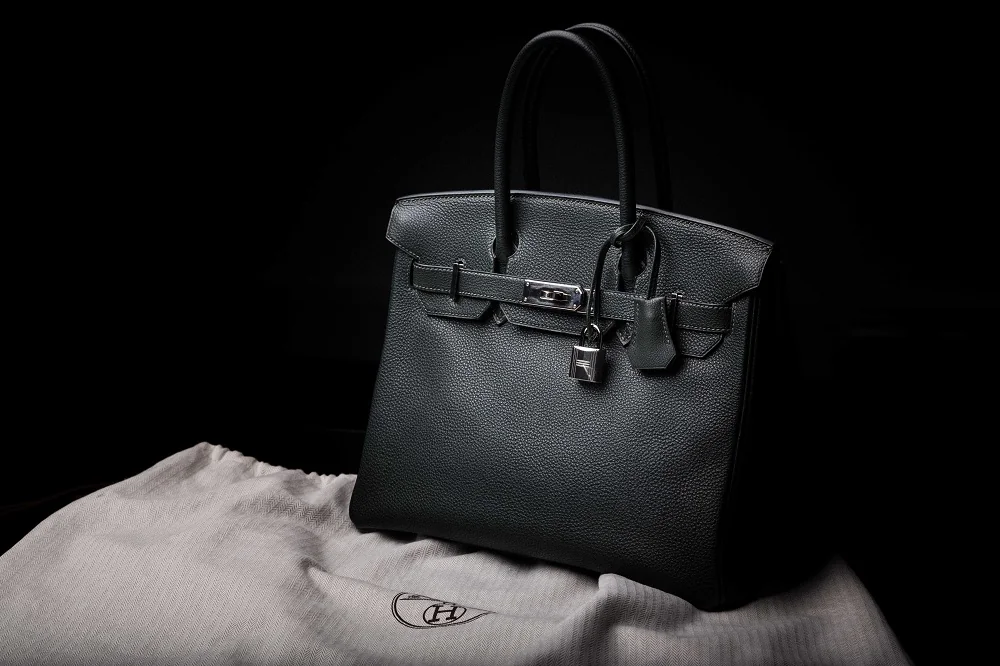
The resulting bag — larger and more structured than the Kelly, with a distinctive trapezoid silhouette and multiple exterior pockets — was introduced the same year. It was named the Birkin with Jane’s agreement and launched as a collaborative creation rather than a product designed in isolation. That origin story, with its specificity and its cast of real, nameable people, has proved remarkably durable. It is the kind of provenance that cannot be manufactured after the fact, and it contributes meaningfully to the Birkin’s cultural authority.
Jean-Louis Dumas used the Birkin’s success as a springboard for genuine international expansion. Under his leadership, Hermès opened boutiques across Asia, the Americas, and the Middle East, growing from a respected Parisian maison into a globally recognised luxury institution. The expansion was carefully managed: each boutique maintained the same spatial sensibility, the same artisan-crafted fixture quality, and — critically — the same controlled inventory that characterized the Faubourg Saint-Honoré flagship.
It is at this point worth being direct about the waitlist culture, because it is often discussed in terms that either romanticize or resent it without quite naming what it is. The scarcity of Hermès Birkins and Kellys is partly structural — a single bag requires fifteen to twenty-five hours of work by a single trained artisan, and that production speed cannot be meaningfully accelerated without compromising quality. But it is also partly strategic. Hermès manages allocation carefully, and gaining access to a coveted bag typically requires an established purchasing history with the brand. Whether you regard this as a preservation of craft values or a deliberate exclusivity mechanism probably depends on which side of the velvet rope you find yourself on. Both readings are defensible.
What is not in dispute is the result. The strategy has preserved desirability across multiple decades and economic cycles in a way that brands relying solely on marketing have consistently failed to replicate.
Why Hermès Heritage Translates to Investment Value#
The connection between the history of Hermès and its contemporary resale performance is not incidental — it is structural. Several specific features of that history create the conditions under which Hermès pieces appreciate rather than depreciate.
Family ownership and craft continuity. Hermès remains majority-owned and controlled by the Hermès family, with the sixth generation now active in the business. This matters because family ownership insulates the brand from the quarterly-earnings pressure that has led competitor houses to license aggressively, accelerate production, or dilute quality in pursuit of growth targets. When a luxury house is answerable primarily to institutional shareholders, the temptation to trade on heritage while quietly undermining it is significant. Hermès has largely avoided this.
Controlled production and genuine scarcity. Every Birkin and Kelly is assembled by a single artisan from start to finish — a production philosophy called sellier construction that has not changed in its fundamentals since the workshop era. The leather itself is sourced from a small number of dedicated tanneries, some of which Hermès has acquired outright to control quality at the raw material stage. This is not marketing language; it is a documented supply chain decision that limits how many finished pieces can exist at any given time.
Resale market performance. The secondary market for Hermès has consistently demonstrated resilience that most luxury categories do not match. Pre-owned Birkins in classic leathers — togo, epsom, box calf — in neutral colourways have historically maintained or exceeded their retail value. Exotic skin pieces in well-maintained condition have substantially exceeded it. This is not universal: condition, hardware colour, size, and provenance all affect outcome, and the resale market rewards collectors who understand these variables. But the baseline performance across the category is notable, and it reflects genuine demand that the brand’s controlled primary supply cannot satisfy.
The archive as asset. The creative archive assembled by Émile Hermès, expanded through subsequent generations, provides the house with a depth of reference that newer luxury entrants cannot replicate. When Hermès releases a new silk scarf motif drawing on a design element first used in 1952, it is not nostalgia — it is a demonstration that the brand’s creative identity predates current management and will outlast it. Buyers respond to that continuity, and the resale market prices it accordingly.
The honest caveat: heritage alone is not a guarantee of individual piece appreciation. Hermès items in poor condition, unusual colourways with limited appeal, or non-classic hardware finishes can underperform relative to retail. Buying Hermès as a pure financial instrument, rather than as an object you genuinely want to own, introduces risks that the headline resale figures tend to obscure.
Frequently Asked Questions About Hermès History#
Who founded Hermès and when was it founded? Hermès was founded in 1837 by Thierry Hermès in Paris. He established the house as a harness and bridle atelier serving European aristocracy and the military.
What was the first Hermès product? The earliest Hermès products were equestrian: harnesses, bridles, and riding equipment. The Haut à Courroies bag — a structured leather pouch designed for riders to carry saddle equipment — was among the first objects that bridged the gap between utilitarian riding gear and personal accessory.
When did Hermès move to its famous address? Charles-Émile Hermès relocated the business to 24 Rue du Faubourg Saint-Honoré in 1880. The address remains the Hermès world flagship.
When was the Birkin bag created? The Birkin was created in 1984 following a chance encounter between Jean-Louis Dumas, then head of Hermès, and actress and singer Jane Birkin on an Air France flight.
Why is the Birkin bag so expensive? Each Birkin is hand-constructed by a single artisan through a process requiring fifteen to twenty-five hours of skilled labour. The leather is sourced from a small number of controlled tanneries. Hermès deliberately limits production, meaning supply is structurally constrained relative to demand. Those factors combine to produce both high retail prices and strong secondary market performance.
When was the Kelly bag created? The bag was originally designed in the 1930s as the Sac à dépêches. It was renamed the Kelly after Grace Kelly was photographed carrying it on the cover of Life magazine in 1956.
When did Hermès introduce the silk scarf? The first Hermès silk carré was introduced in 1937. The inaugural design was titled “La Duchesse de Berry.” The format —90cm square, screen-printed silk twill, hand-rolled hem — has remained consistent ever since.
Why is Hermès so expensive compared to other luxury brands? Several factors combine: hand production by individual artisans, controlled raw material sourcing (including owned tanneries), strict limits on production volume, and family ownership that resists margin-driven shortcuts. Hermès also does not engage in the widespread licensing practices that allow other luxury brands to reach higher volumes. The prices reflect the actual cost of production at the quality level the brand maintains.
Is Hermès still family-owned? Yes. The Hermès family retains majority control through a holding structure that has consistently defended the brand’s independence, including a notable period in the 2010s when LVMH accumulated a significant stake that was ultimately unwound. The sixth generation of the Hermès family is currently active in the business.
What makes Hermès a good investment? Hermès pieces — particularly Birkins and Kellys in classic leathers and neutral colourways — have demonstrated consistent secondary market value that other luxury categories rarely match. This is driven by controlled supply, sustained demand, craft quality that resists dating, and the brand’s record of never discounting. That said, individual pieces vary significantly, and condition, provenance, and specific configuration all affect outcome. Heritage underpins the investment case, but it does not eliminate the need for informed buying.
Related Articles#
- Best It Bags to Buy This Year: A Definitive Guide
- History of Handbags: From Function to Fortune
- Hermès Birkin Prices 2025: Where to Buy for Less


Keyword index