Introduction: More Than an Accessory #
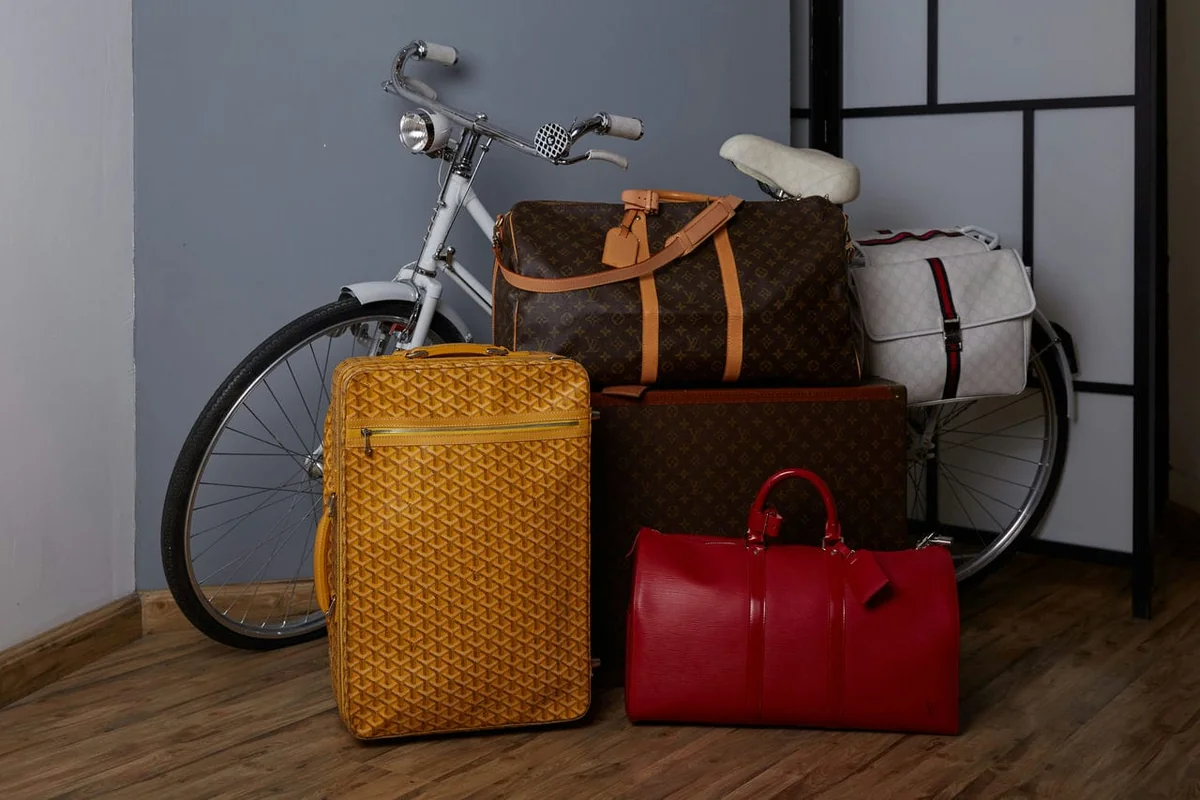
A handbag is never just a bag. That sounds like a line from a glossy editorial until you consider this: the Hermès Birkin has outperformed gold as an investment asset across multiple decades. A pre-owned [Chanel Classic Flap](/buying-guides/vintage-chanel-finds-top-picks/) routinely sells on the secondhand market for more than it did at retail in2015. And a single Kelly — worn by the right woman at the precise right moment — rewrote the rules of what an accessory could communicate culturally.
The history of handbags spans roughly seven centuries, and for most of that time, a bag was a purely functional object. What transformed it into one of the most loaded status symbols in human material culture is a story about industrialization, female independence, wartime ingenuity, and the extraordinary mechanics of branding. It’s also, frankly, a story about desire — and about how a well-made object can hold its meaning, and its monetary value, across generations.
This matters beyond the sentimental. If you’re here because you’re considering a significant purchase, or because you already own serious pieces and want to understand what you actually have, the historical context is the foundation. Heritage isn’t a marketing flourish that luxury houses paste onto their copy. It’s what separates a bag with a verifiable, defensible story from one that merely looks the part. The difference between those two things is increasingly measurable in resale premiums, authentication confidence, and long-term worth.
From Travel Companion to Fashion Statement: The 14th–19th Century #
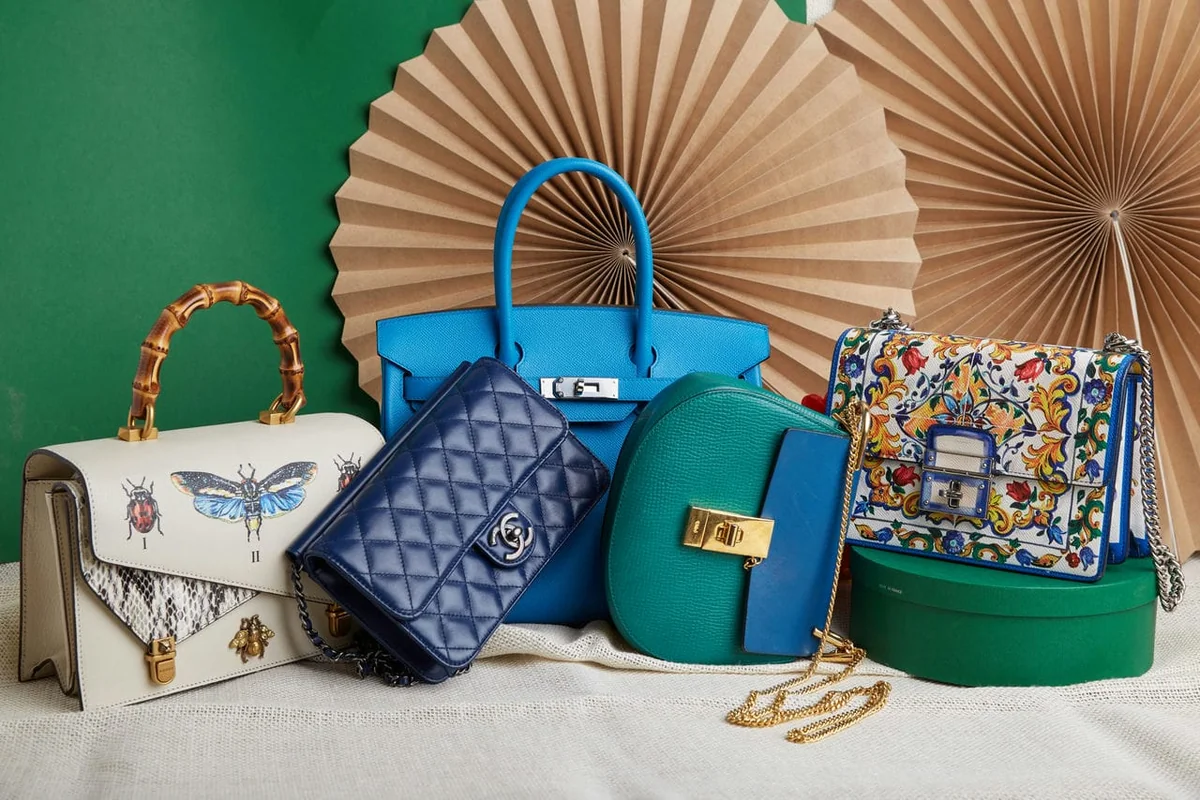
The earliest bags carried by Europeans were tools. Men and women alike wore small drawstring pouches — called girdle pouches or aumonières — tied at the waist to carry coins, herbs, and documents. They were practical, unembellished, and entirely without social pretension. For much of the medieval period, a bag was barely more personal than a belt buckle.
Key Milestones: Early Bag History
- 14th century — Drawstring girdle pouches worn at the waist by both sexes; purely functional
- 17th century — “Pockets” become hidden garments sewn into women’s petticoats; the visible bag temporarily loses relevance
- 1790s — The reticule emerges as women’s silhouettes slim under Neoclassical fashion and hidden pockets disappear entirely
- 1830s — Hermès founded in Paris as a harness and saddlery workshop; craft traditions that will define its bags are already in place
- 1850s–1880s — Railway expansion creates demand for structured travel luggage; smaller coordinating bags follow
The Industrial Revolution changed everything. When long-distance rail travel became accessible to the growing bourgeoisie in the mid-19th century, luggage became a distinct design category — and with it came a new vocabulary of craft. Trunks and portmanteaux were commissioned from specialist leather workers, built with precision metalwork, locks, and initials. Alongside them came smaller companion pieces: structured, secure, and designed as miniature counterparts to the larger cases.
These early structured bags weren’t fashion objects. They were organizational tools for a newly mobile population — a place for rail tickets, travel documents, and the small valuables that couldn’t be trusted to checked luggage. The craft traditions being applied to them, however, were already refined. Houses like Hermès — founded in 1837 to supply harnesses to European royalty — were building their material expertise precisely during this period. The hand-stitching, saddle leather, and artisanal hardware that would eventually define the Birkin were techniques honed across decades of equestrian goods.
As the century closed and women’s independence began its slow, contested expansion into professional life, the small structured bag found new meaning. Female doctors, educators, and working women needed a portable way to carry money, professional instruments, and personal items. The bag was no longer merely a luggage accessory. It was beginning to carry something beyond its contents.
The Birth of the Designer Handbag Industry (1900s–1930s) #
The early 20th century is where the modern luxury handbag industry properly takes shape — not through a single invention, but through a fundamental cultural shift. As women entered the workforce in meaningful numbers, gained suffrage across Western democracies, and moved through public space with a new autonomy, the handbag became an object of self-definition. Carrying one — rather than depending on a husband’s coat pocket — was itself a quiet, legible act of independence.
Key Milestones: The Industry Forms
- 1896–1907 — Louis Vuitton registers its [[Monogram canvas](/buying-guides/most-popular-louis-vuitton-bags-2026/)](/brands/louis-vuitton-neverfull-insider-retail-story/); the house begins formalizing its structured bag line
- 1910 — Chanel opens her first millinery shop in Paris; her design philosophy — functional, unornamented, anti-fussy — begins to take shape
- 1922 — Hermès introduces its first leather handbag, applying saddlery craft to a new category
- 1929 — The Great Depression begins; luxury spending consolidates around fewer, more durable investment-grade pieces
Hermès’s entry into handbags in 1922 is the pivotal event in designer handbag history. The timing was deliberate. The house already supplied leather goods to European courts and understood that its clientele was changing: the women of the 1920s were driving automobiles, traveling independently across borders, and building wardrobes with a new kind of intentionality. A structured leather bag, made with the precision of a riding saddle, fit perfectly into that world. Crucially, it came with the provenance of a house that had been making things properly for eighty-five years.
Chanel arrived at the handbag with a different philosophy. Where Hermès brought craft tradition, Chanel brought subversion. Her early bags — functional, clean-lined, deliberately stripped of the frills that had characterized Edwardian accessories — matched her broader program of liberating women’s dress from unnecessary complication. The fashion house as an institution, as a named arbiter of taste and quality, was consolidating its authority during this period. A bag from a named house carried different social weight than one from a department store — and that distinction, once established, has not weakened since.
By the 1930s, the designer handbag had become a deliberate status object. Not because of visible logos — that chapter comes later — but because of the specificity of its origin. The name on the bag, and the craft traditions behind that name, were themselves the signal.
War, Boom, and the Shrinking Clutch:1940s–1960s #
Few periods illustrate the relationship between geopolitics and fashion as directly as the 1940s. The Second World War imposed severe restrictions on materials across Europe and North America: leather was rationed for military production, metal fittings were limited, and the excess of prewar luxury became simultaneously impractical and socially inappropriate.
Key Milestones: Wartime and Postwar
- 1940–1945 — Material rationing drives canvas, cotton, and raffia designs; bags expand in size to carry wartime essentials
- 1947 — Dior’s New Look reintroduces structured femininity; structured bags begin their return
- 1950 — The Hermès “Sac à Dépêches” (future Kelly) is in full production in formal leathers
- 1955 — Coco Chanel launches the2.55 — named for its release date, February 1955 — with its chainstrap and quilted leather
- 1956 — Grace Kelly uses the Hermès “Sac à Dépêches” to shield her pregnancy; the image runs worldwide; the bag’s cultural status is permanently altered
- 1965 — The “It bag” logic begins crystallizing as celebrity association becomes a deliberate branding instrument
Designers responded to wartime material constraints with genuine ingenuity. Canvas, cotton, wicker, and raffia replaced leather. Bags grew dramatically in size — partly because women now managing households and working in new professional capacities needed to carry more, and partly for the grim practical reason that gas masks needed to fit inside. The wartime bag made no pretense of being decorative. It was, in its own way, one of the most honest moments in handbag history.
The postwar reversal was swift and comprehensive. Christian Dior’s 1947 New Look — cinched waists, full skirts, unapologetically luxurious materials — signaled that Western women, at least those with means, were reclaiming opulence. Bags followed immediately. The Hermès Sac à Dépêches, which had been in production since the 1930s, was now appearing in crocodile and box calf, refined and formal. When Grace Kelly used hers in 1956 to cover her pregnancy in a photograph that went around the world, the house didn’t manufacture that moment — but it understood it completely.
The Chanel 2.55 deserves particular attention here because it was designed with a specific, stated purpose: to free women from holding their bags in their hands. The chain strap — radical in 1955, when lady-like bags were held by handles or clutched against the body — was a functional innovation before it became a style statement. The burgundy grosgrain lining (said to reference the color of the Aubazine orphanage where Chanel was raised), the hidden lipstick pocket, and the Mademoiselle lock were details with intent. Chanel designed this bag in the same spirit she cut jersey suits and pearl necklaces — to be practical as well as beautiful. The design has not been fundamentally altered since 1955. For collectors today, that consistency is both a design statement and a strong argument for value retention.
The 1960s introduced irony and plurality. Pop art, space-age design, and the counterculture pushed fashion toward playful subversion. Bags appeared in patent vinyl, printed with graphics, and deliberately scaled for the miniskirt silhouette. The structured leather bag of the 1950s coexisted with something far less reverent — which is precisely what made the decade interesting. The handbag was fluent enough in the language of status to be played with, and that fluency sign
Related Articles #
- 10 Designer Handbags That Hold Their Value (2026)
- 10 Best Designer Handbags Worth the Investment (2026)
- Designer Handbag Trends 2025: What’s Actually Worth Buying
- History of Hermès: From Harness Workshop to Luxury Icon
- Best Investment Handbags to Buy in 2026 (Expert Guide)


Keyword index