Introduction: Why These 12 Handbags Are True Wardrobe Staples #
Not every designer bag earns “icon” status. Plenty of covetable pieces show up on a runway, sell out for a season, then fade from the resale market within a couple of years. The bags on this list have done the opposite: they’ve survived decades of trend cycles, multiple creative director changes, and in several cases, dozens of price increases, without losing their pull.
What separates an icon from a passing hit comes down to a few concrete things. Recognizability at a glance, even by people who don’t follow fashion. Construction that holds up to daily use rather than sitting in a closet as decoration. A resale market deep enough that you can actually sell the bag later, not just buy it. And in the case of the top-tier houses, waitlists or production caps that keep supply tighter than demand.
That last point is where “investment-worthy” gets thrown around loosely. A bag is only an investment if there’s documented evidence it holds or gains value over time, not just because it’s expensive. We’ll get into the actual numbers designer by designer, because the difference between a Hermès Birkin and a Céline tote on the resale market is not subtle.
Twelve bags, seven design houses, decades of combined history. Go through the list and count how many you actually own, or have owned. Most people who love bags will recognize at least half without needing a caption.
Louis Vuitton: Neverfull and Speedy — The Everyday Icons #
Louis Vuitton’s handbag business traces back to travel trunks built in 1858, engineered flat-topped and stackable so they’d survive being thrown around steamer ships. That engineering DNA, functional first, decorative second, still shows up in the two bags that carry the brand’s everyday business today.
Neverfull #
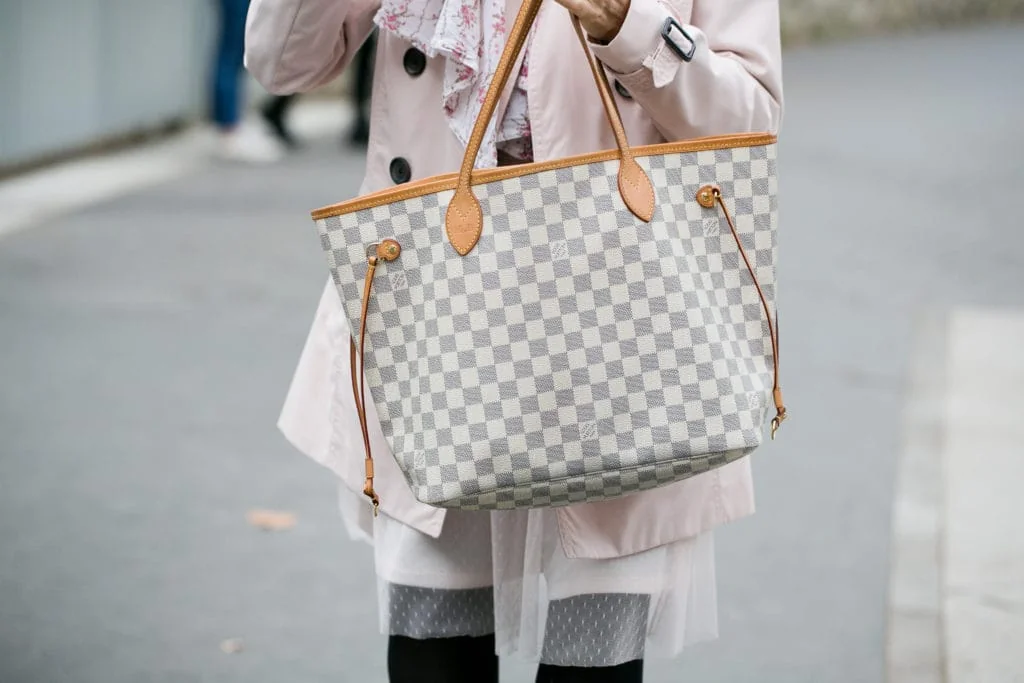
Launched in 2007, the Neverfull was designed as an open-top tote that could genuinely hold everything: laptop, gym clothes, a change of shoes. It comes in three sizes, PM, MM, and GM, and across four main material families: Monogram canvas, Damier Ebene, Damier Azur, and Epi leather. The PM works as a light daily bag; the GM is closer to an overnight or work bag.
Retail pricing currently runs roughly $1,700 to $2,300 depending on size and material, with canvas versions sitting at the lower end and Epi leather commanding a premium. Limited editions, like past Stephen Sprouse graffiti collaborations, trade well above retail on the secondary market because LV doesn’t reissue them.
The honest downside: the vachetta leather trim on canvas Neverfulls darkens with sun exposure and can stain if it contacts water or lotion before it patinas. That’s expected aging, not damage, but it does mean the bag looks noticeably different at year three than day one.
Speedy #
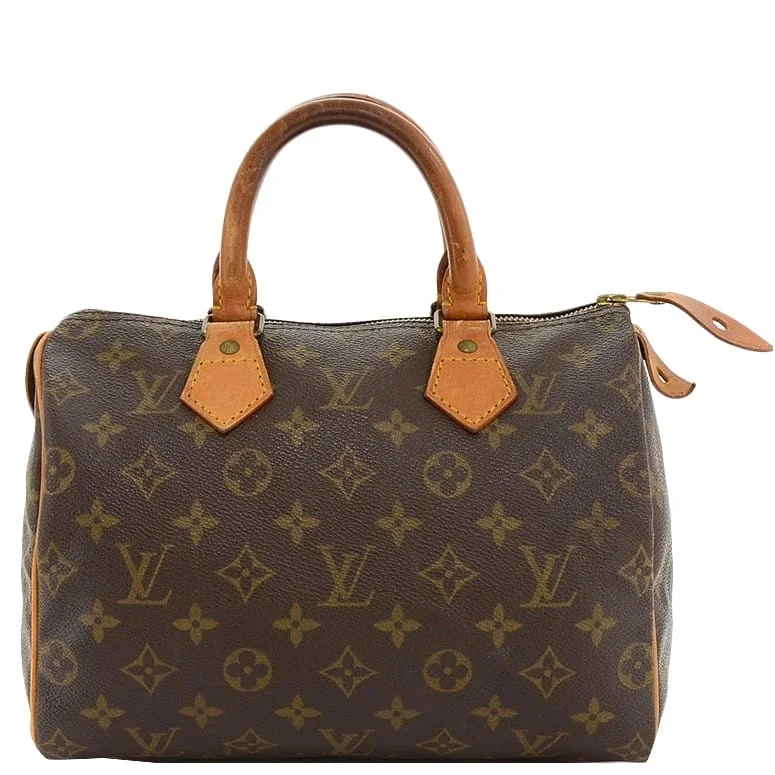
The Speedy’s origin story is well documented: Audrey Hepburn asked Louis Vuitton to scale down the larger Keepall into something she could actually carry by hand, and the brand obliged. It’s made in four sizes, 25, 30, 35, and 40, across Monogram canvas, Damier Ebene, Damier Azur, Epi leather, and the discontinued Mini Lin.
Current retail sits around $1,400 to $1,900 for canvas versions, with the 25 and 30 being the most practical for daily use. The rounded, structured silhouette is genuinely durable, the canvas resists scuffing far better than smooth leather, which is part of why it remains one of the most-carried bags in the secondary market.
Between the two, Neverfull holds up slightly better for buyers who want maximum capacity and a shape that stays wearable even half-empty. Speedy wins on structure and a more polished, less casual look. Both depreciate at a similar, moderate rate compared to the exotic-leather houses covered next.
French Heritage Houses: Hermès and Chanel Signature Bags #
This is where the site’s authentication expertise matters most. Hermès and Chanel sit at the top of the counterfeit target list precisely because their bags command the highest resale premiums, and that makes verifying hardware, stitching, and date codes non-negotiable before you buy pre-loved.
Hermès Birkin #
The story is famous enough to be almost folklore at this point: Jane Birkin sat next to Hermès CEO Jean-Louis Dumas on a 1984 flight, her bag spilled, and Dumas offered to design her something better. The Birkin launched shortly after and has never really left demand-exceeds-supply territory since.
It’s produced in Togo, Epsom, Clemence, and exotic skins including crocodile and ostrich, in sizes from 25 to 45. Togo leather Birkin 25 and 30 retail in the roughly $10,000 to $13,000 range at boutique price; exotic skins push well into five figures and can exceed $50,000 for rare crocodile colorways. Here’s the part that makes it a genuine investment case rather than marketing language: because Hermès controls production tightly and doesn’t sell to walk-ins on demand, quota bags routinely resell above their original retail price, sometimes 30 to 80% above depending on leather, color, and hardware.
Hermès Kelly #
Named for Grace Kelly, who used the bag to shield herself from paparazzi in the 1950s, the Kelly is the Birkin’s structured sibling: a flap closure, a top handle, and a more formal silhouette. Sizes run 20 to 35, with 25 and 28 being the most wearable day-to-day. Pricing tracks close to the Birkin, roughly $9,500 to $12,000 in Togo leather at retail, with the same exotic-skin premiums applying.
Authentication basics for both bags: check the blind stamp (a stamped letter/number code inside indicating the year and workshop), verify the saddle stitching is hand-done with slightly irregular but consistent tension, and weigh the hardware. Real Hermès palladium and gold-plated hardware has noticeable heft; counterfeit hardware often feels light and the plating wears through fast.
Chanel Classic Flap and Boy Bag #
The Classic Flap, introduced by Coco Chanel in 1955, is arguably the most price-tracked handbag in the industry. Chanel has raised prices on it multiple times a year for the last several years; a medium lambskin Classic Flap that retailed near $5,000 in 2015 now sits above $10,000. That price trajectory is exactly why the resale market absorbed it so well, buyers treat pre-loved Classic Flaps almost like a hedge against the next retail increase.
The Boy Bag, launched in 2011 under Karl Lagerfeld, offers a harder-edged alternative with a push-lock closure and more angular hardware. Medium Boy bags retail around $6,800 to $7,200.
Chanel discontinued its physical authenticity cards in 2021, moving toward serial number verification through boutiques and its own app-based systems. If you’re buying pre-loved, that means leaning more heavily on stitching count, hardware engraving depth, and lining quality than on a card that’s easy to fake.
Italian Icons: Gucci, Fendi and Prada Statement Pieces #
Where the French houses lean on scarcity and heritage leather work, the Italian names built their icon status on bold hardware and instantly readable logos, which has made them just as collectible, but with a different resale profile.
Gucci #
The Dionysus, launched in 2015 under Alessandro Michele, replaced the front closure with a tiger-head clasp instead of a traditional buckle. Available in GG canvas or leather, small sizes retail around $2,900 to $3,300. The Jackie 1961, a reissue of Gucci’s 1961 hobo, brought back the signature piston closure and sits in a similar $2,900 to $3,200 range for the medium size.
Both are well-made, but the coated canvas versions show corner wear faster than the leather ones, worth factoring in if you want the bag to still look sharp in five years.
Fendi Baguette #
Made famous by Sex and the City in the late 1990s and reissued into relevance again in the 2010s, the Baguette is compact, logo-forward, and produced in an enormous range of materials and prints, including collaborations. Retail for the standard medium size runs roughly $3,700 to $3,950. It’s more trend-sensitive than the other bags on this list, resale value tends to track pop-culture visibility rather than steady demand.
Prada Galleria #
Built in Saffiano leather, a cross-hatch textured leather engineered to resist scratches, the Galleria is the most practical daily bag of the three. Retail sits around $3,900 to $4,300 for the medium size. Its understated triangle logo plate makes it a favorite for buyers who want quality construction without loud branding.
Modern Classics: Dior, Céline and Contemporary Must-Haves #
Dior Lady Dior #
Commissioned as a gift for Princess Diana in 1995 and named after her the following year, the Lady Dior is recognizable by its cannage quilting (a diamond-stitch pattern referencing Napoleon III chairs) and its dangling Dior charms. Medium size retails around $5,700 to $6,500. It’s a structured, formal bag rather than an everyday workhorse, which keeps demand steady but not explosive on the resale market.
[Céline Luggage Tote](/brands/celine-luggage-tote-guide-sizes-history-resale-value/) #
Designed by Phoebe Philo in 2010, the Luggage Tote’s trapeze silhouette became one of the most copied shapes of the early 2010s. It’s worth including as a case study in trend risk: resale interest and pricing softened noticeably after Philo departed Céline in 2018 and the brand’s aesthetic shifted under Hedi Slimane. Current retail for smaller sizes runs roughly $2,700 to $3,600, but secondary market demand is more design-era-dependent than any other bag on this list, buyers specifically seek out Philo-era pieces.
That’s a genuinely useful lesson for anyone building a collection: a bag’s icon status can be tied to a specific designer’s tenure, not just the house name on the hardware.
How to Choose Your Next Investment Bag #
Craftsmanship #
Hermès bags are largely hand-stitched using a saddle stitch, two needles working in opposite directions through the same hole, which is stronger than a machine lockstitch and doesn’t unravel if a thread breaks. Chanel and Dior use a mix of hand-finishing and machine construction. Louis Vuitton, Gucci, Prada, and Fendi rely more heavily on machine construction with hand-finished edges. None of this makes the machine-made bags poorly built, but it does explain the price gap and why Hermès bags tend to survive decades of use better than most.
Resale value, ranked by what actually happens in the secondary market #
Hermès Birkin and Kelly bags are the only ones on this list that routinely sell above original retail. Chanel Classic Flap holds strong resale value largely because retail prices keep climbing. Louis Vuitton canvas bags (Neverfull, Speedy) depreciate moderately but sell reliably because demand is broad and consistent. Gucci, Prada, and Dior sit in the middle: solid resale for classic styles, weaker for seasonal colorways. Fendi Baguette and Céline Luggage Tote are the most trend- and era-dependent, values swing with cultural visibility rather than staying flat.
Versatility and budget #
If you’re buying one bag to use constantly, canvas or Saffiano leather (LV, Prada) shrugs off daily wear better than smooth calfskin. If you’re buying for resale security, Hermès and Chanel are the only two houses on this list with a track record of value retention strong enough to call “investment grade” without qualification.
Care basics that actually affect resale value later #
Store bags with stuffing (acid-free tissue or a bag pillow) to prevent creasing, not flat under other items. Keep vachetta leather trim away from direct sunlight and moisture until it patinas evenly. Avoid spraying perfume near leather, alcohol breaks down the finish. Rotate which bag you use rather than running one into the ground, corner and handle wear is the single biggest factor that tanks resale price. For structured bags (Kelly, Lady Dior), have the hardware and corners professionally checked every couple of years, a good bag spa can fix minor wear before it becomes a permanent flaw.
Authentication before you buy pre-loved #
Check date codes and blind stamps (Hermès), heat-stamped date codes inside the interior pocket (Louis Vuitton), and serial sticker or card verification through the brand’s own channels where available (Chanel). Weigh the hardware, real gold and palladium plating has heft that stamped brass fakes don’t replicate. Look at stitch count and consistency; hand-stitched brands should show slight, even irregularity, not machine-perfect uniformity, and definitely not sloppy, uneven spacing. When in doubt, use a third-party authentication service before completing a pre-loved purchase.
The counterfeit reality #
Louis Vuitton monogram canvas and Gucci GG canvas are the two most counterfeited patterns in the world, largely because the pattern itself is easy to print, even if it’s hard to construct correctly. Common tells: a strong glue smell, monogram or GG pattern that doesn’t align across seams, lightweight zipper pulls, and fonts on embossed logos that are slightly off in weight or spacing compared to an authenticated reference. If a “rare” Birkin or Kelly is being sold with no waitlist history and a price well under market, treat that as a red flag, not a deal.
Frequently Asked Questions #
Which designer handbag holds value best? Hermès Birkin and Kelly, by a wide margin. They’re the only bags on this list that regularly resell above their original retail price due to production caps and waitlists.
Is it safe to buy pre-loved designer bags? Yes, if you buy through a reseller with in-house authentication, or verify the bag yourself using date codes, stitching, and hardware weight before paying. Pre-loved is often the only realistic way to access Hermès bags without a multi-year waitlist.
What’s the actual difference between a Birkin and a Kelly? The Birkin is an open-top tote with a strap closure; the Kelly has a structured flap and a more formal silhouette with a top handle and optional shoulder strap. Both share the same leather and hardware quality tiers.
Do designer bag prices really increase every year? For Chanel and Hermès, yes, both have raised retail prices multiple times over the past several years, well documented across their release cycles. Louis Vuitton and the Italian houses increase prices too, but less predictably and less frequently.
Is a canvas bag ever a good investment? Canvas bags like the Neverfull and Speedy hold moderate resale value because of broad, consistent demand, but they don’t appreciate the way Hermès or Chanel can. Buy canvas for daily use and reliability, not for value growth.
Designer-by-Designer Breakdown with Signature Bags #
Louis Vuitton — Neverfull (tote, everyday capacity) and Speedy (structured, travel-friendly). Entry point around $1,400. Best for buyers who want a durable daily bag with broad resale liquidity.
Hermès — Birkin (open tote) and Kelly (structured flap). Entry point around $9,500, often higher on resale. Best for buyers prioritizing long-term value retention over immediate access.
Chanel — Classic Flap (quilted, chain strap) and Boy Bag (structured, push-lock). Entry point around $6,800. Best for buyers who want strong resale tied to consistent retail price increases.
Gucci — Dionysus (tiger-head clasp) and Jackie 1961 (piston closure). Entry point around $2,900. Best for buyers who want distinctive hardware at a mid-tier price.
Fendi — Baguette (compact, logo-forward). Entry point around $3,700. Best for buyers drawn to trend-driven pieces and print variety.
Prada — Galleria (Saffiano leather, understated logo). Entry point around $3,900. Best for buyers who want scratch-resistant materials for daily use.
Dior — Lady Dior (cannage quilting, charms). Entry point around $5,700. Best for buyers who want a formal, structured bag with heritage detail.
Céline — Luggage Tote (trapeze silhouette). Entry point around $2,700. Best for buyers who specifically want the Phoebe Philo-era design language.
Investment Value Comparison Table #
| Brand | Signature Bag | Retail Price Range | Resale Value Retention | Craftsmanship Highlight | Best For |
|---|---|---|---|---|---|
| Louis Vuitton | Neverfull | $1,700–$2,300 | Moderate | Durable canvas, vachetta trim | Daily capacity |
| Louis Vuitton | Speedy | $1,400–$1,900 | Moderate | Structured cylindrical shape | Everyday + travel |
| Hermès | Birkin | $10,000–$13,000+ | Above retail (quota bags) | Hand saddle-stitching | Long-term value |
| Hermès | Kelly | $9,500–$12,000 | Above retail (quota bags) | Structured flap, hand-finished | Formal, structured use |
| Chanel | Classic Flap | $8,000–$10,500 | High, tracks price hikes | Quilted lambskin, CC lock | Value security |
| Chanel | Boy Bag | $6,800–$7,200 | Moderate-high | Angular hardware, push-lock | Edgier daily use |
| Gucci | Dionysus | $2,900–$3,300 | Moderate | Tiger-head clasp | Distinctive hardware |
| Gucci | Jackie 1961 | $2,900–$3,200 | Moderate | Piston closure, reissue design | Retro-leaning buyers |
| Fendi | Baguette | $3,700–$3,950 | Trend-dependent | Compact frame, print variety | Statement pieces |
| Prada | Galleria | $3,900–$4,300 | Moderate | Saffiano scratch resistance | Scratch-resistant daily bag |
| Dior | Lady Dior | $5,700–$6,500 | Moderate | Cannage quilting, charms | Formal occasions |
| Céline | Luggage Tote | $2,700–$3,600 | Design-era dependent | Trapeze structure | Philo-era design fans |
Prices reflect approximate current retail and shift with material, size, and market conditions, always confirm live pricing directly with the brand or a vetted reseller before purchasing.
Related Articles #
- 5 Iconic Bags Named After Famous Women (Buying Guide)
- Hermès Retail vs. Resale: Which Should You Choose?
- 5 Iconic Phoebe Philo-Era Celine Bags Worth Owning
- Chanel Handbag Prices: Iconic Styles & What They Cost
- Fendi First Bag Guide: History, Design & Resale Value
Related guides
- Online Bag Authentication: What Photos Can and Cannot Prove
- How to Spot a Fake Designer Bag: Authentication Guide
- So Kate Pumps Authentication Guide: Spot Real vs Fake
- Blue Crocodile Lady Dior Tote: Buying Guide
- How to Buy an Authentic Luxury Bag from China Safely
- New vs Pre-Owned Luxury Bags: Which Route Is Right for You?
- Chanel Bag Guide: What to Know Before You Buy
- Luxury Bag Houses


Keyword index