Introduction: A Rare Find in Exotic Leather #
Every so often a bag comes through that isn’t really for sale in the traditional sense — it’s for viewing, for coveting, for understanding what “one of one” actually means in leather goods. The Blue Crocodile Lady Dior Tote is that kind of piece. It was made-to-order, meaning a client worked directly with Dior’s ateliers to specify the skin, the color, and the finish, and the result never touched a retail shelf. No boutique carried this blue. No lookbook featured it. It exists because someone commissioned it, and now it’s circulating in the resale market as a genuine collector’s item.
For readers who follow exotic leather and authentication closely, pieces like this are worth studying even if you never plan to buy one. They set the benchmark for what “real” craftsmanship and “real” rarity look like — a useful reference point the next time you’re evaluating a crocodile bag that claims to be special but doesn’t quite add up.
What Makes This Lady Dior Tote One of a Kind #
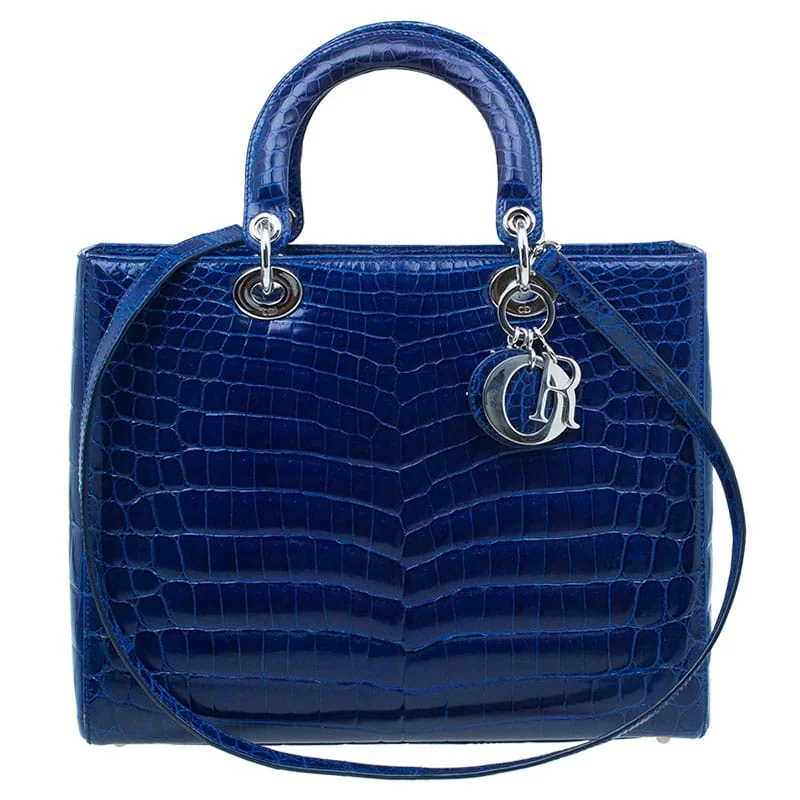
Standard Lady Dior bags are produced in seasonal colorways across lambskin, patent, and occasionally exotic skins, but the made-to-order program operates differently. A client selects the hide, works with the house on color development, and waits — often many months — for a single bag to be built by a small team of specialized artisans. The Blue Crocodile Lady Dior Tote came out of that process, and the blue itself is the tell: it doesn’t match any shade Dior has released in its regular Lady Dior lines, past or present.
That distinction matters more than it might seem. Custom colorways aren’t achieved by simply special-ordering a stock hue in a different leather. Crocodile skin takes dye unevenly compared to calfskin, so matching a bespoke pigment across the scales requires a level of hand-finishing that adds real time and cost to production. The cannage stitching, the Dior charm, and the tote silhouette stay consistent with the line’s DNA, but the skin and color make this a genuinely singular object rather than a limited edition with a higher price tag.
The tote’s proportions follow the Large Lady Dior format — roomy enough for daily use, structured enough to hold its shape, with the double top handles and optional shoulder strap that the silhouette is known for. What changes with an exotic, made-to-order build is everything underneath the surface: reinforced panel construction to support the heavier skin, hardware fitted individually to account for slight variations in hide thickness, and an interior lining chosen to complement a color that doesn’t exist elsewhere in the catalog.
Crocodile Leather: Craftsmanship, Care, and Authentication #
Genuine crocodile leather has a few non-negotiable physical markers, and knowing them is the fastest way to separate real exotic skin from a good embossed imitation.
What genuine crocodile scales look like #
Real crocodile hide has an irregular, organic scale pattern — no two rows are perfectly identical in size or spacing, and the scales taper naturally toward the belly and flank of the skin. Embossed leather, by contrast, is stamped, so the pattern repeats with mechanical precision. Hold the bag under raking light: authentic scales catch light unevenly because the surface has natural texture and slight dimension, while embossed leather reflects light in a flatter, more uniform way.
Pore structure and follicle marks #
Every individual scale on a genuine crocodile skin has a small, off-center pore or follicle mark — a tiny natural imperfection. This is one of the hardest things for counterfeiters to replicate convincingly at scale, and it’s the detail I check first on any exotic-skin bag before looking at stitching or hardware.
Weight and hand-feel #
Crocodile leather is denser and heavier than calfskin or embossed cowhide of the same size. A Lady Dior tote in genuine crocodile will feel noticeably more substantial in hand than the lambskin version, and the leather has a cooler, firmer touch rather than the soft give of embossed cattle hide.
Hardware and construction cues #
On authentic Dior exotics, hardware is fitted with visible attention to the skin’s natural belly scales at symmetrical panel points, stitching is tight and even despite the material’s thickness, and the interior stamping (date code, made-in label) matches the font, spacing, and placement used across genuine production for that era. Sloppy stitching around panel seams, glue residue, or a hardware finish that doesn’t match Dior’s typical palladium or gold-tone plating are red flags worth walking away from.
Care basics #
Crocodile leather is more moisture-sensitive than most calfskins and shouldn’t be treated with generic leather conditioners. Store it away from direct heat and humidity swings, keep it stuffed to hold shape when not in use, and have any deep cleaning or scale repair done by a specialist familiar with exotic skins — a standard leather-care shop can do real damage here.
Price and Investment Value of Exotic Lady Dior Bags #
Exotic-skin Lady Dior bags carry a substantial premium over their calfskin counterparts, and that gap is wider than most buyers expect. A standard Large Lady Dior in lambskin typically retails in the $6,000–$7,500 range depending on hardware and season. Crocodile versions in Dior’s regular exotic offerings have historically retailed well above $30,000, and made-to-order pieces — where the client is paying for skin selection, custom color development, and a dedicated production slot — push higher still, often landing in the $35,000–$50,000+ range depending on the skin’s grade and the complexity of the commission.
A few factors drive that price beyond the base cost of the skin itself:
- Skin grade and scale uniformity — smaller, tighter, more evenly spaced scales are rarer in nature and command a premium
- Color development cost — a bespoke shade like this blue requires dye testing and finishing work that a stock colorway skips entirely
- Production exclusivity — made-to-order pieces typically come with a longer atelier wait and limited artisan availability, which the house factors into pricing
- Condition — because exotic skins are more vulnerable to scratching, drying, and color transfer than calfskin, condition grading swings [resale value](/brands/celine-luggage-tote-guide-sizes-history-resale-value/) more dramatically than it does with standard leather bags
On the resale side, exotic Lady Dior pieces tend to hold value better than mainstream colorways, largely because supply is genuinely limited rather than artificially scarce. A well-documented, well-conditioned exotic in an unusual colorway can retain 60–75% of its original retail price years after purchase, compared to the steeper depreciation curve typical of standard leather handbags. That said, a made-to-order piece built around one client’s exact color spec is a narrower market — you’re not buying something with broad brand-catalog demand, you’re buying something whose value depends on finding a buyer who wants that specific, unrepeatable object. That’s a real tradeoff, not a guaranteed upside, and it’s worth being honest about before treating any exotic bag purely as an investment vehicle.
Styling the Look: Pairing the Tote with Statement Pieces #
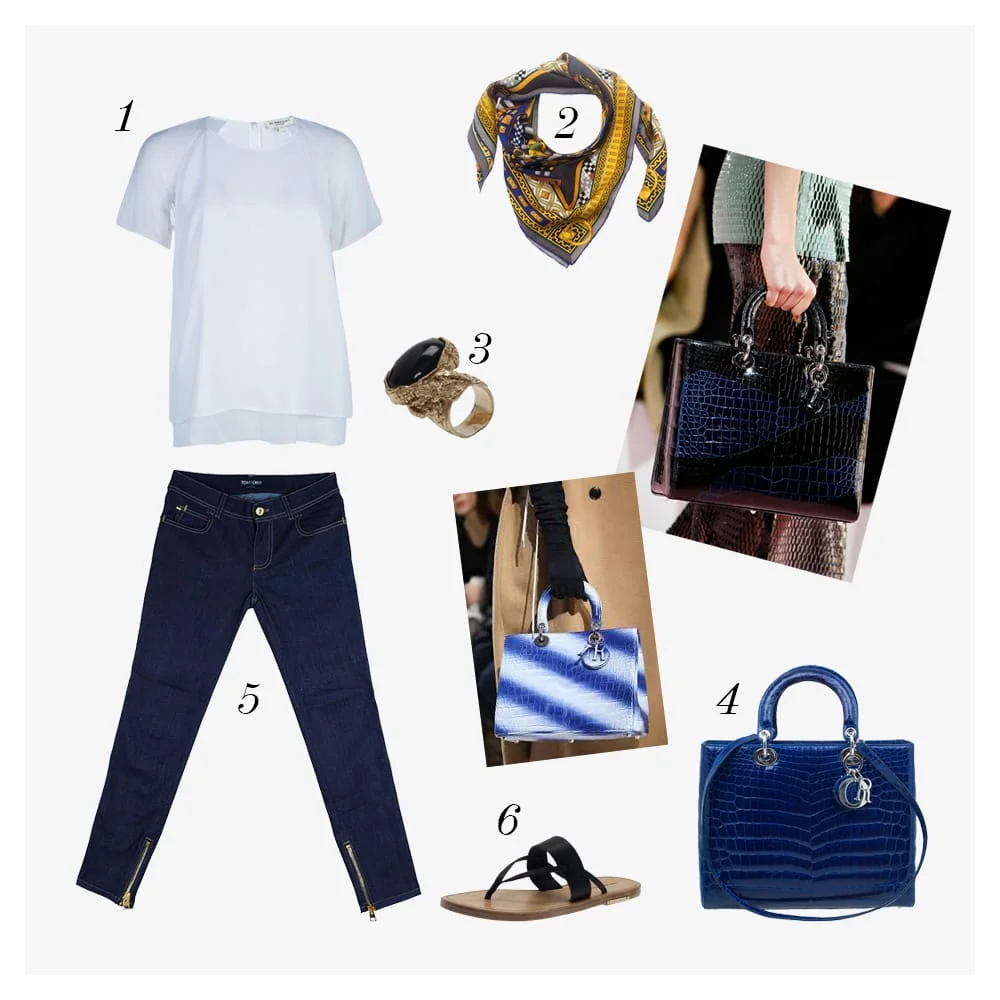
A bag this saturated in color and texture works best when the rest of the outfit gives it room to lead. A crisp white blouse — something structured like a classic short-sleeve style — keeps the palette clean and lets the blue crocodile do the talking. Add a printed silk scarf in a complementary blue, whether tied to the handle or worn at the neck, to echo the tote’s color without competing with its texture.
For bottoms, skinny denim in a coordinating blue creates a tonal moment that reads as intentional rather than matchy. Ground the look with black leather sandals or a simple heel — the crocodile texture is enough visual weight on its own, so footwear should stay understated. A single statement ring in black and gold-tone metal adds a bit of edge without pulling focus from the bag.
The general principle with exotic-skin pieces: they’re the anchor of the outfit, not an accent. Treat everything else as supporting cast, and stick to solid colors or subtle prints elsewhere on the body so the scale pattern and color of the skin stay the visual focal point.
Where to Shop Authentic Exotic Leather Bags #
Made-to-order and exotic-skin pieces are exactly where counterfeiting risk runs highest, because the rarity itself is what buyers are paying for — and what sellers exploit. A few practical guardrails before you buy:
- Buy from platforms with in-house authentication teams, not just seller-reputation scores. Exotic skins require specialist knowledge that generic authentication services often lack.
- Ask for the CITES documentation (more on this below) alongside the bag’s provenance — a legitimate exotic-skin bag purchased through proper channels should have a paper trail, even in the resale market.
- Request close-up photos of the interior stamping, hardware engraving, and scale pattern before purchase, and compare them against verified reference images from the same production era.
- Be wary of prices that seem too low for the skin type — a genuine crocodile Lady Dior at a fraction of expected market value is a bigger warning sign than an inflated price.
- Confirm return and authentication-guarantee policies in writing before paying, especially for a high-value single piece like this.
If you’re specifically hunting for exotic-skin handbags — crocodile, alligator, or otherwise — prioritize sellers who specialize in luxury resale with documented authentication processes over general marketplaces. The premium you pay for that verification is small compared to the risk of an unverified exotic purchase going wrong.
Ethical and Sourcing Considerations for Exotic Leather #
Crocodile leather sits under some of the strictest international trade regulation of any material used in luxury goods, and that’s worth understanding before you buy — not as a disclaimer, but as part of genuinely evaluating what you’re paying for.
Crocodilians are regulated under CITES (the Convention on International Trade in Endangered Species), and legitimate hides come with certification documenting the species, the farm or source, and the export/import chain. Dior, along with most major houses, sources exotic skins from CITES-registered farms rather than wild-caught animals, and a farm-raised, properly certified skin is both the ethical baseline and the legal requirement for international resale. A crocodile bag without any CITES paperwork isn’t just an ethical gray area — in many jurisdictions, it’s not legal to resell or import across borders.
This is also a practical authentication point: sellers of genuine exotic-skin goods should be able to produce or reference this documentation. Its absence isn’t automatically proof of a fake, since paperwork can be lost over a bag’s resale history, but it’s a legitimate question to ask before buying, and a reputable exotic-leather specialist will expect you to ask it.
Beyond the legal framework, the broader conversation around exotic skins in luxury has shifted noticeably over the past several years — some houses have scaled back exotic offerings, and buyer sentiment increasingly favors traceable, farm-certified sourcing over anonymous supply chains. If sourcing ethics matter to you as a buyer, ask sellers directly about farm origin and certification rather than assuming CITES compliance equals full transparency. The two aren’t always the same thing.
FAQ: Buying and Caring for Crocodile Leather Handbags #
Is the Blue Crocodile Lady Dior Tote available to purchase again? No. Made-to-order pieces are built to a single client’s specification and aren’t reproduced. What comes up in the resale market is the only way to acquire this exact bag; if it sells, that particular color and configuration won’t be remade.
How can I tell if a crocodile bag is genuine before buying online? Look for irregular scale patterns, individual pore marks on each scale, consistent interior stamping matched to the correct production era, and hardware finish consistent with the brand’s known plating. Ask sellers for close-up, unedited photos of these details, and buy only from platforms offering specialist authentication.
Why are exotic-skin Lady Dior bags so much more expensive than the standard version? The skin itself is costly and harder to source than calfskin, cutting and matching scale patterns requires more skilled labor, and production runs are far smaller. Made-to-order pieces add custom color development and dedicated atelier time on top of that.
Do exotic-skin handbags hold their value better than calfskin bags? Generally, yes, due to genuine supply scarcity, though condition matters more with exotic skins since they’re more prone to visible wear. A one-of-a-kind, made-to-order piece is a narrower resale market than a standard exotic colorway, which can affect how quickly it sells even if it holds value well.
What is CITES certification and why does it matter for crocodile leather? CITES is the international treaty regulating trade in endangered species, including crocodilians. Certification documents that a skin came from a legal, regulated source. It’s both a legal requirement for cross-border resale and a useful authenticity and ethics checkpoint when buying exotic leather goods.
How should I care for a crocodile leather bag day to day? Avoid moisture and direct heat, store the bag stuffed and away from humidity swings, and skip generic leather conditioners. Any cleaning or scale repair should go to a specialist experienced with exotic skins rather than a standard leather-care service.
Related Articles #
- Celine Triomphe Bag Guide: Sizes, Price & Real vs Fake
- Lady Dior Python Bag: Dior’s Rarest Exotic Find
- Hermès Crocodile vs Alligator Bags: Buyer’s Guide
- Dior 61 Crocodile Hobo: What to Know Before You Buy
- Exotic Skin Handbags: What You’re Really Paying For
Related guides
- Online Bag Authentication: What Photos Can and Cannot Prove
- Chanel Vintage Flap Bag Buying Guide: Navy Lambskin
- Louis Vuitton Palm Spring Backpack: Complete Buyer's Guide
- Lady Dior Bag: How It Became a Royal Icon
- How to Buy an Authentic Luxury Bag from China Safely
- New vs Pre-Owned Luxury Bags: Which Route Is Right for You?
- Chanel Bag Guide: What to Know Before You Buy
- Luxury Bag Houses


Keyword index