Introduction: Meet the Multicolour Python Lady Dior #
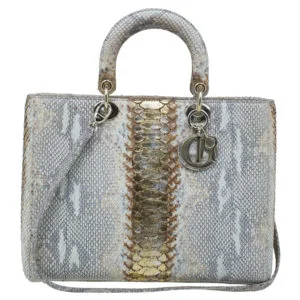
Most people can spot a Lady Dior at twenty paces. The quilted cannage stitching, the dangling D-I-O-R letter charms, the structured trapeze silhouette — it’s one of the most recognizable bag shapes in the world. What far fewer people have actually held in their hands is the multicolour python version of it.
This isn’t a seasonal colorway or a runway-only sample. It’s a genuine exotic-skin execution of one of Dior’s most historically important bags, and it rarely surfaces on the secondary market in wearable, well-priced condition. If you collect exotic leathers, track Hermès and Chanel resale trends, or simply want a Lady Dior that nobody else at the dinner party is carrying, this is the bag worth understanding before it disappears entirely from pre-owned listings.
A Royal Legacy: The Lady Dior’s Rise Since 1995 #
The Lady Dior wasn’t named for the House of Dior. It was named for a person — Princess Diana, who was gifted the bag by Bernadette Chirac in 1995 and was photographed carrying it so often that Dior formally renamed it in her honor. That’s not marketing spin invented decades later; it’s the actual origin story, and it’s part of why the bag carries weight that most “it-bags” never earn. Dior itself leans into this, describing the piece as having a “royal destiny.”
Three decades on, the Lady Dior has done what the Kelly and the Classic Flap have done for their respective houses: it has stayed relevant by being reinvented constantly while keeping its bones untouched. Cannage quilting, top handles, the charm hardware — all present since 1995. What changes is the execution: mini and micro sizes for a younger customer, embellished and beaded versions for runway drama, and exotic skins like python and alligator for the top of the pyramid. That last category is where things get genuinely scarce, and where this piece sits.
Why Exotic Dior Bags Are Getting Harder to Find #
If it feels like there are fewer Dior bags floating around than there used to be, that’s not nostalgia talking. It’s a deliberate business decision.
For years, Dior bags were available through third-party department stores — Neiman Marcus, Saks Fifth Avenue, and similar wholesale accounts carried them alongside dozens of other designer labels. That’s no longer the case. Dior has walked away from wholesale distribution almost entirely, moving toward the model Hermès and Chanel have used for decades: sell directly, control inventory tightly, and let scarcity do the work that advertising used to do. Dior bags aren’t sold through its own e-commerce site anymore either, and even walking into a boutique doesn’t guarantee you’ll find what you’re after.
The practical effect for collectors: exotic skins were already the rarest tier of Lady Dior production, and now they’re being funneled through even fewer sales channels. A python or alligator Lady Dior was never an easy grab at retail. Today it’s closer to a waiting-list item, if it’s offered to you at all. That scarcity is exactly why the pre-owned market has become the realistic path to ownership for most buyers — and why prices on well-documented exotic pieces have held up better than the broader “logo bag” resale category, which has softened in the last few years as designer resale supply increased across the board.
Design and Craftsmanship: What Sets This Python Lady Dior Apart #
This particular tote is built from python skin in a multicolour treatment — meaning the scales themselves carry a blended palette rather than a single dyed tone, which is significantly harder to execute cleanly than dyeing calfskin. Python is naturally irregular; matching color across panels while keeping the scale pattern aligned is a skilled, slow process, and it’s part of why exotic Lady Diors command a premium over their lambskin and calfskin counterparts even before you factor in the cost of the skin itself.
The bag carries the details that define the Lady Dior line:
- Double top handles, sized for a comfortable hand-carry
- A removable, adjustable shoulder strap for crossbody or shoulder wear
- The signature D-I-O-R letter charm hardware suspended from the top
- A top zip closure — worth noting, since some Lady Dior variants use a snap or open top instead
- A fully leather-lined interior with enough room for daily essentials: phone, wallet, keys, a slim pouch
This is the Large Lady Dior silhouette, which typically runs in the range of roughly 24cm wide by 20cm tall by 11cm deep — sized more for daily use than the Mini or Medium, which lean decorative. In python, that structured size reads even more substantial, since exotic skin holds shape differently than smooth leather. If you’re deciding between sizes, the Large is the one that functions as a genuine everyday tote rather than an occasion bag.
Condition Check: What to Look for Before Buying Pre-Owned #
Buying exotic skins pre-owned requires a different eye than buying calfskin. Python and alligator show wear in ways that are less forgiving — and less obvious in photos — than smooth leather.
What to inspect before buying #
- Scale lifting or drying — python scales can lift, crack, or curl at edges if the bag was stored poorly or exposed to heat and dry air. Run your eye (or ask the seller to run a camera) along handles and corners specifically, where friction is highest.
- Color consistency — on multicolour pieces, check whether fading has hit some panels harder than others. Uneven sun exposure is common on bags that were displayed rather than stored.
- Hardware condition — the D-I-O-R charms and zip pull should have consistent plating with no green tarnish or pitting, which signals age, poor storage, or low-grade hardware on a counterfeit.
- Stitching around the handles — this is a stress point on any structured tote, and exotic skin doesn’t flex the way calfskin does, so tension cracks show up here first.
- Interior wear — lining stains, especially ink, are common and, importantly, not usually a dealbreaker on price if disclosed honestly. The specific piece we’re discussing here has a documented pen ink stain at the base — cosmetic, not structural, but it should be reflected in the asking price, and it’s the kind of flaw a reputable seller discloses upfront rather than you discovering after purchase.
Authentication red flags specific to python #
Counterfeiters generally use embossed leather rather than real python because genuine exotic skin is expensive and difficult to source legally. That actually works in your favor: a fake “python” Lady Dior often reveals itself through scale patterns that repeat too perfectly (real python is irregular by nature), skins that feel plasticky rather than having the slight give of genuine leather, and CITES documentation that’s missing entirely, since a legitimate exotic-skin item should have a paper trail. If a seller can’t speak to the skin’s origin or authentication at all, that’s a bigger warning sign on python than it would be on a standard calfskin bag.
Buying Advice: Where to Shop Pre-Owned Exotic Dior Bags #
Pricing context #
Retail pricing on exotic Lady Diors, when available at all, typically starts well into five figures — often $15,000 to $30,000+ depending on skin type and size, and that’s assuming your boutique has stock or will place a special order, which for exotics is increasingly the norm rather than the exception. Against that backdrop, a pre-owned multicolour python Large Lady Dior tote listed around $6,000 represents a substantial discount, even accounting for the disclosed condition issue. That gap is the core argument for buying pre-owned exotics: you’re not just saving money, you’re accessing inventory that may not be orderable new right now at any price.
For comparison, resale platforms have shown alligator and python Lady Diors trading in a fairly wide band — roughly $4,500 to $9,000 depending on skin quality, hardware condition, and size — while comparable Hermès exotic pieces (a python or lizard Birkin or Kelly) start multiples higher, often $20,000 to $40,000+ even pre-owned. That pricing gap is worth sitting with: Dior’s exotics are, at least for now, a meaningfully more accessible entry point into exotic-skin ownership than the Hermès equivalent, without giving up craftsmanship or scarcity.
Where to actually shop #
Stick to resale platforms that authenticate in-house rather than relying on seller self-reporting — The RealReal, Fashionphile, Rebag, and The Luxury Closet all fall into this category and typically publish their authentication process. Look specifically for:
- A stated authentication guarantee, ideally with a named process (not just “verified” with no explanation)
- Buyer protection or return policy in case authentication is later disputed — most reputable platforms offer a defined return window (commonly 3 to 14 days) specifically for authenticity concerns, separate from general returns
- Full photo documentation of flaws, not just marketing shots
- A clear return policy for reasons beyond authenticity, since exotic skins in particular can look different in hand than in photos
Negotiating room exists on exotics more than people assume, particularly when a flaw like an ink stain is disclosed — sellers often price in some cushion for that exact conversation. Don’t be shy about asking for a small reduction, especially on a piece that’s been listed for a while.
CITES Compliance and Traveling With Your Python Lady Dior #
Python skin is regulated under CITES (the Convention on International Trade in Endangered Species), which most commonly places python species under Appendix II. That doesn’t mean the trade is illegal — it means it’s regulated, and legitimate sellers should be able to show documentation tracing the skin’s legal sourcing.
A few practical things this means for you as an owner:
- Buy from sellers who can produce or reference CITES documentation. Reputable resale platforms handling exotic skins are generally aware of this requirement; if a seller shrugs off the question, treat it as a red flag alongside the authentication concerns above.
- International travel can require permits. Crossing certain borders with a CITES-listed exotic skin item, even a used personal handbag, can technically require a CITES permit depending on the countries involved. In practice, personal-use handbags are rarely stopped, but the risk isn’t zero, and enforcement varies by country and changes over time.
- Domestic sale restrictions exist in some U.S. states. A handful of states have their own restrictions on python and other exotic skins that go beyond federal CITES rules. If you’re buying to resell later, this is worth knowing before you commit.
- Keep your paperwork. If your bag comes with any certificate of authenticity or origin documentation, hold onto it. It protects your [[resale value](/brands/celine-luggage-tote-guide-sizes-history-resale-value/)](/buying-guides/best-time-to-buy-a-luxury-handbag-1/) and makes any future travel questions far easier to resolve.
This is a genuinely under-discussed part of exotic-skin ownership, and it’s worth taking seriously rather than treating as a footnote.
FAQ: Buying a Python Lady Dior Pre-Owned #
Is the multicolour python Lady Dior a good investment? Exotic-skin Dior bags have held resale value better than the brand’s calfskin logo bags, which have softened in a crowded resale market. That said, “investment” is a strong word — treat it as a bag that depreciates slowly and holds a premium due to scarcity, not as an appreciating asset the way a handful of Hermès exotics have become.
How does the price compare to a python Hermès bag? Significantly lower. A pre-owned python Lady Dior in the $4,500–$9,000 range sits well under even entry-level pre-owned exotic Birkins or Kellys, which routinely start above $20,000. You’re getting genuine exotic-skin craftsmanship from a major house at a fraction of the Hermès price point.
Why aren’t these available at Dior stores or online anymore? Dior has shifted away from wholesale and broad online distribution toward the tighter, boutique-controlled model Hermès and Chanel use. Exotic skins were always limited production; now they’re distributed through fewer channels entirely, making pre-owned the realistic path for most buyers.
Does the ink stain on this specific bag affect value? Yes, but not dramatically if disclosed and priced accordingly. It’s a cosmetic interior flaw, not a structural issue with the skin or hardware. It should show up as a discount versus a flawless comparable, which is exactly what you’re seeing at the current asking price.
What authentication guarantees should I expect buying pre-owned? A reputable platform should offer in-house authentication (not just seller claims), a written guarantee, and a defined return window specifically for authenticity disputes. If a listing doesn’t mention any of this, ask before you buy.
Do I need special documentation to own or travel with this bag? Python falls under CITES regulation. Domestic ownership is straightforward as long as the skin was legally sourced, which documentation should confirm. International travel can occasionally require permits depending on destination, so check current rules before crossing borders with it.
Related Articles #
- 5 Iconic Bags Named After Famous Women (Buying Guide)
- Hermès Retail vs. Resale: Which Should You Choose?
- Chanel Flap Bag Buying Guide: Sizes, Prices & Deals
- Why the Chanel Crossbody Bag Never Goes Out of Style
- Popular Handbag Brands: Which One Is Right for You?
Related guides
- Online Bag Authentication: What Photos Can and Cannot Prove
- Blue Crocodile Lady Dior Tote: Buying Guide
- Chanel Vintage Flap Bag Buying Guide: Navy Lambskin
- Louis Vuitton Palm Spring Backpack: Complete Buyer's Guide
- How to Buy an Authentic Luxury Bag from China Safely
- New vs Pre-Owned Luxury Bags: Which Route Is Right for You?
- Chanel Bag Guide: What to Know Before You Buy
- Luxury Bag Houses


Keyword index