Introduction: The Bag Born for Royalty #
Some handbags take decades to earn icon status. The Lady Dior did it in a single photograph. When Christian Dior introduced the bag in 1995, nobody could have predicted that a gift given to Princess Diana would turn a seasonal design into one of the most recognizable silhouettes in luxury leather goods. Thirty years on, the Lady Dior sits in the same conversation as the Hermès Kelly and Birkin, not because it’s the oldest or the hardest to get, but because it managed to fuse royal provenance with genuinely distinctive craftsmanship.
That combination matters for buyers today. The Lady Dior isn’t just a status symbol you recognize from a distance, it’s a bag with specific construction details that separate a well-made original from the flood of convincing fakes on the resale market. If you’re shopping pre-owned, which is where most collectors eventually end up given the House’s pricing trajectory, understanding both the history and the hardware is what protects your money.
From Chouchou to Lady Dior: A Design Legacy #
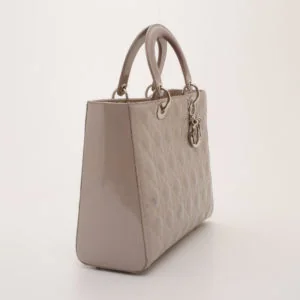
Before it was the Lady Dior, the bag was called the Chouchou, a boxy, structured tote designed under Gianfranco Ferré, who served as Dior’s creative director through most of the 1990s. Ferré came from a background in architecture, and it shows in the bag’s silhouette: rigid trapeze sides, a flat base, and a top handle construction that reads more like a piece of hardware engineering than a soft accessory. That structural discipline is part of why the bag has aged so well. It doesn’t slouch, and it doesn’t date.
The renaming happened almost by accident. Princess Diana was photographed carrying the bag repeatedly through the mid-1990s, and the House capitalized on the association, officially rechristening it Lady Dior in her honor. What’s easy to miss in the shorthand version of this story is that the bag wasn’t built as a celebrity tribute piece from day one. It earned the association through visibility, then had the marketing built around it after the fact. That’s a meaningfully different origin story than most “royal” handbags, which are often designed and gifted with the connection already baked in.
Signature Details: Cannage Stitching and Dior Charms #
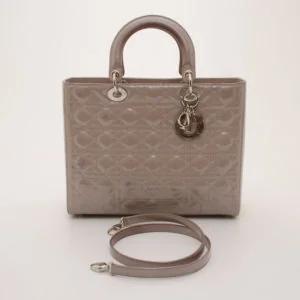
The single most identifiable feature of the bag is Cannage quilting, a diamond-stitch pattern lifted directly from the woven cane chairs used at Christian Dior’s original fashion shows in the 1950s. It’s not a generic quilted pattern borrowed from elsewhere in the industry, it’s a deliberate reference to the House’s own furniture, and that lineage is worth knowing because it explains why the stitch spacing and angle are so specific. Genuine Cannage stitching is even, tight, and symmetrical across every panel, with no puckering at the seams.
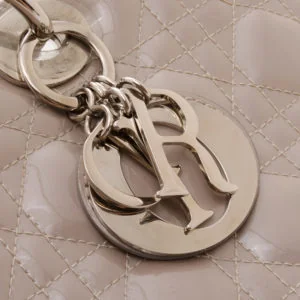
Then there are the charms, three small metal letters spelling “D-I-O-R” that hang from the top handle on a leather strap. These aren’t decorative afterthoughts. On an authentic bag, the lettering is crisply die-struck, the metal has real weight to it, and the attachment strap is stitched, not glued. Hardware finish is where a lot of counterfeits fall apart under close inspection, weak plating, mushy letter edges, or charms that feel hollow and light in the hand. The hardware also includes the four metal feet on the base and, depending on the year, either a single top handle or the double handle plus optional shoulder strap seen on later reissues like the My Lady Dior and Mini Lady Dior lines.
Leather quality is the other tell. The original bags used a lambskin that’s noticeably softer and more delicate than most competitor bags in this price tier, which is a genuine tradeoff buyers should know going in. Lambskin Lady Diors show wear faster than calfskin equivalents from Chanel or Hermès. Dior has since expanded into cannage-embossed calfskin, patent leather, and exotic skins like crocodile, partly in response to durability complaints from long-term owners.
Spotting a Genuine Lady Dior: Authentication Basics #
The Lady Dior ranks among the most counterfeited designer bags on the resale market, right alongside the Kelly and the [[[Chanel Classic Flap](/buying-guides/classic-and-chic-handbags-style-icons/)](/buying-guides/luxury-handbags-for-ramadan-2025/)](/buying-guides/chanel-flap-bag-buying-guide/), which makes authentication non-negotiable if you’re buying pre-owned outside of Dior boutiques or vetted resellers.
Start with the Cannage stitching itself. On authentic bags, each diamond is uniform in size and the stitching never crosses over itself at the points. Counterfeits frequently get the spacing close but not exact, or the diamonds shrink and stretch inconsistently across a single panel.
Check the D-I-O-R charms under strong light. Real charms have crisp, deep letter engraving and a consistent finish across all three or four pieces, on some versions there’s a fourth blank charm. Fakes often show soft, shallow lettering or slightly mismatched finishes between charms because they’re cast rather than properly stamped.
Look inside at the leather tag or embossed stamp. Since around 2012, most Lady Diors carry a heat-stamped “Christian Dior Paris Made in Italy” plus a date code rather than the older removable leather tags. The font, spacing, and depth of this stamp are frequently wrong on fakes, either too shallow, too bold, or slightly misaligned.
Examine the base feet and zipper pulls. Genuine hardware has a specific gold or palladium tone that doesn’t tarnish unevenly, and zipper pulls (on styles that have them) move smoothly with branded pull tabs. Cheap zinc alloy hardware on fakes tends to feel light and often discolors within months.
If you have any doubt after checking these points yourself, get a third-party authentication before paying. It’s a small cost against a five-figure mistake.
Is the Lady Dior Worth the Investment? #
Here’s the honest answer: it depends on what you’re comparing it to. Against an Hermès Kelly, the Lady Dior loses on long-term resale retention. A Kelly in good condition regularly holds or exceeds its original retail price on the secondary market, particularly in exotic skins or sought-after colors. The Lady Dior, by contrast, typically resells at 40-60% of current retail for the lambskin versions, with better retention on limited editions, exotic leathers, and the smaller mini and micro sizes that turn over faster with younger buyers.
That doesn’t make it a bad purchase, it makes it a different kind of purchase. The Kelly is a store-of-value bag. The Lady Dior is closer to a design-and-heritage bag, one you buy because you want the Cannage detailing, the royal history, and a recognizable silhouette that isn’t Chanel or Hermès. If resale value is your primary goal, the Lady Dior is not the strongest choice in its price bracket. If you want a distinctive, well-constructed bag with genuine cultural weight behind it and you plan to keep it long term, the calculation looks better.
Fluctuating exchange rates and periodic Dior price increases (the House has raised prices multiple times over the past several years, in line with the broader luxury sector) also mean buying pre-owned from a reputable, authenticated source is often the more rational entry point than retail, especially for the medium and large sizes.
The Royal Origin Story: How Princess Diana Named the Lady Dior #
It’s worth separating fact from folklore here, since this bag’s history gets embellished often. Princess Diana was gifted the bag, then known as the Chouchou, by Bernadette Chirac, then First Lady of France, in 1995. Diana was photographed carrying it on multiple public occasions afterward, and the visibility was significant enough that Christian Dior renamed the bag in her honor, cementing the “Lady Dior” name that’s used to this day.
What makes this story genuinely rare in handbag history is the sequence. Most heritage naming stories, the Hermès Kelly included, involve a design that already existed being associated with a public figure who simply carried it well. The Lady Dior’s renaming happened at the House level, as a direct commercial response to Diana’s patronage. It’s one of the few instances where a royal figure’s influence changed a product’s actual name rather than just its reputation. That distinction is part of why Dior leaned into the royalty narrative so heavily in later marketing, including a 2010 short film built around the bag itself.
Lady Dior Sizes and Price Guide (Updated) #
Dior currently produces the Lady Dior across four main sizes, with pricing that varies by leather, hardware finish, and region. Treat the figures below as general current-market ranges rather than fixed numbers, Dior adjusts pricing periodically and exotic or limited editions run well above standard retail.
- Mini Lady Dior: roughly $3,300-$3,900 in calfskin. Compact, best suited as a crossbody or evening piece rather than daily carry.
- Small Lady Dior: roughly $4,700-$5,400. The most practical everyday size for most buyers, holds a phone, cardholder, and small essentials.
- Medium Lady Dior: roughly $5,900-$6,700. The size most associated with the original Princess Diana photographs and the House’s classic proportions.
- Large Lady Dior: roughly $6,800-$7,800. More of a statement or occasion bag given the scale, less practical for daily use.
Exotic skins (crocodile, python), special embellishments, and collaboration editions can run two to four times these figures. Pre-owned pricing on the authenticated resale market typically sits 30-55% below current retail depending on condition, leather type, and hardware wear, with exotic and limited pieces holding value noticeably better than standard lambskin.
FAQ: Common Questions About the Lady Dior #
What’s the difference between the Lady Dior and the My Lady Dior? The My Lady Dior, introduced in 2016, added a detachable shoulder strap and a slightly softer, more rounded silhouette compared to the structured original. Hardware and Cannage detailing remain consistent between the two lines.
Which leather holds up best for everyday use? Cannage-embossed calfskin outperforms lambskin significantly in durability. Lambskin is softer and arguably more elegant, but it scratches and shows corner wear faster, which matters if you’re carrying the bag daily rather than for occasions.
Do all Lady Dior bags come with the D-I-O-R charms? Most do, but some limited editions, collaborations, and micro sizes omit them or replace them with alternative branding. Their absence isn’t automatically a red flag, but their presence and quality should always be checked against known authentic references if you’re relying on them for authentication.
How has the bag’s design changed since 1995? The core Cannage stitching and charm concept have stayed consistent, but hardware finishes, interior stamping, strap options, and available leathers have expanded considerably, particularly after 2012 when Dior updated its authentication stamping and introduced newer size and strap variations.
Is the Lady Dior a good first luxury handbag purchase? It’s a reasonable one if you value design heritage and recognizable detailing over resale performance. If maximizing resale value matters more to you, a Kelly or a Chanel Classic Flap in a popular size and color will generally serve that goal better.
Related Articles #
- Lady Dior Bag: The Story Behind Princess Diana’s Icon
- 5 Iconic Bags Named After Famous Women (Buying Guide)
- Dior Granville Bag Review: Honest Take After Years
- Replica vs Pre-Owned Bags: Which Is the Smarter Buy?
- Fendi First Bag Guide: History, Design & Resale Value
Related guides
- Online Bag Authentication: What Photos Can and Cannot Prove
- Blue Crocodile Lady Dior Tote: Buying Guide
- Chanel Vintage Flap Bag Buying Guide: Navy Lambskin
- Louis Vuitton Palm Spring Backpack: Complete Buyer's Guide
- How to Buy an Authentic Luxury Bag from China Safely
- New vs Pre-Owned Luxury Bags: Which Route Is Right for You?
- Chanel Bag Guide: What to Know Before You Buy
- Luxury Bag Houses


Keyword index