Introduction #
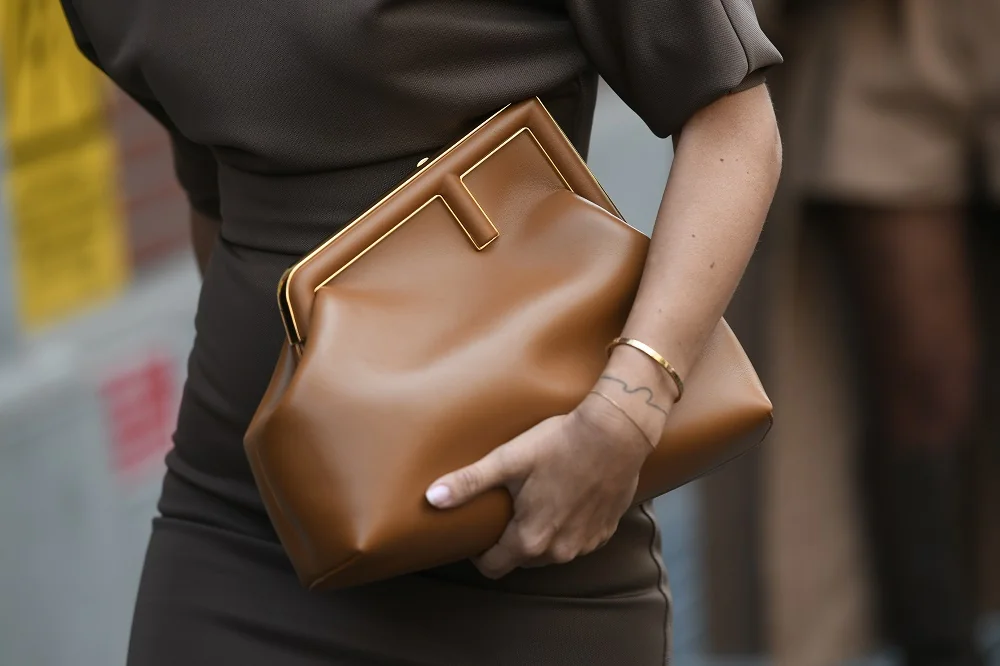
Fendi’s story starts in a small leather goods shop in Rome, not on a runway. That distinction matters, because it explains why the house has always treated hardware, stitching, and structure as the point of the design rather than an afterthought. Adele and Edoardo Fendi built a reputation on craftsmanship first; their daughters, and later Silvia Venturini Fendi as the family’s third generation, pushed that foundation into fashion territory, giving the world the Baguette and the Peekaboo along the way.
When Kim Jones stepped into the role of Artistic Director of Couture and Womenswear in 2020, following Karl Lagerfeld, the pressure to produce something new but recognizably Fendi was significant. The Fendi First bag was his answer, and it’s worth understanding on its own terms rather than as “the new Baguette” or “the next Peekaboo.” Among the handbag houses that built their identity on a single hardware signature, Fendi’s F-clasp now sits alongside Hermès’ Kelly lock and Chanel’s CC turn-lock as an instantly recognizable closure. For buyers weighing a Fendi First purchase, that hardware-first design language is exactly what drives both its desirability and its resale performance.
The Story Behind the Fendi First Bag #
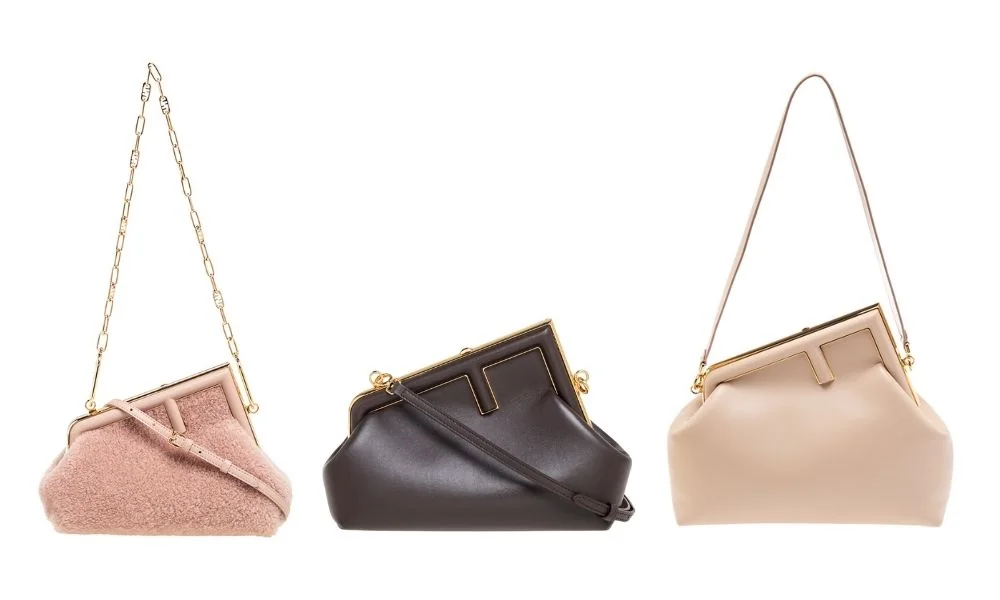
The Fendi First made its debut at Fendi’s Autumn/Winter 2021 show, one of Kim Jones’ early collections for the house and a moment where he worked directly alongside Silvia Fendi rather than around her. That collaboration shows in the final product: Jones brought a structured, architectural sensibility from his menswear and ready-to-wear background, while Silvia Fendi’s decades of handbag design experience kept the silhouette wearable rather than purely sculptural.
The name itself is a statement of intent. Fendi didn’t position this as a seasonal It-bag riding on a single collection’s hype; it was introduced as a foundational piece meant to sit alongside the Baguette and Peekaboo as a long-term pillar of the handbag lineup. Whether it earns that status the way the Baguette did in the late ’90s is still being decided in real time by resale demand, but the ambition behind the launch was clear from the first show images.
Design Details and Craftsmanship #
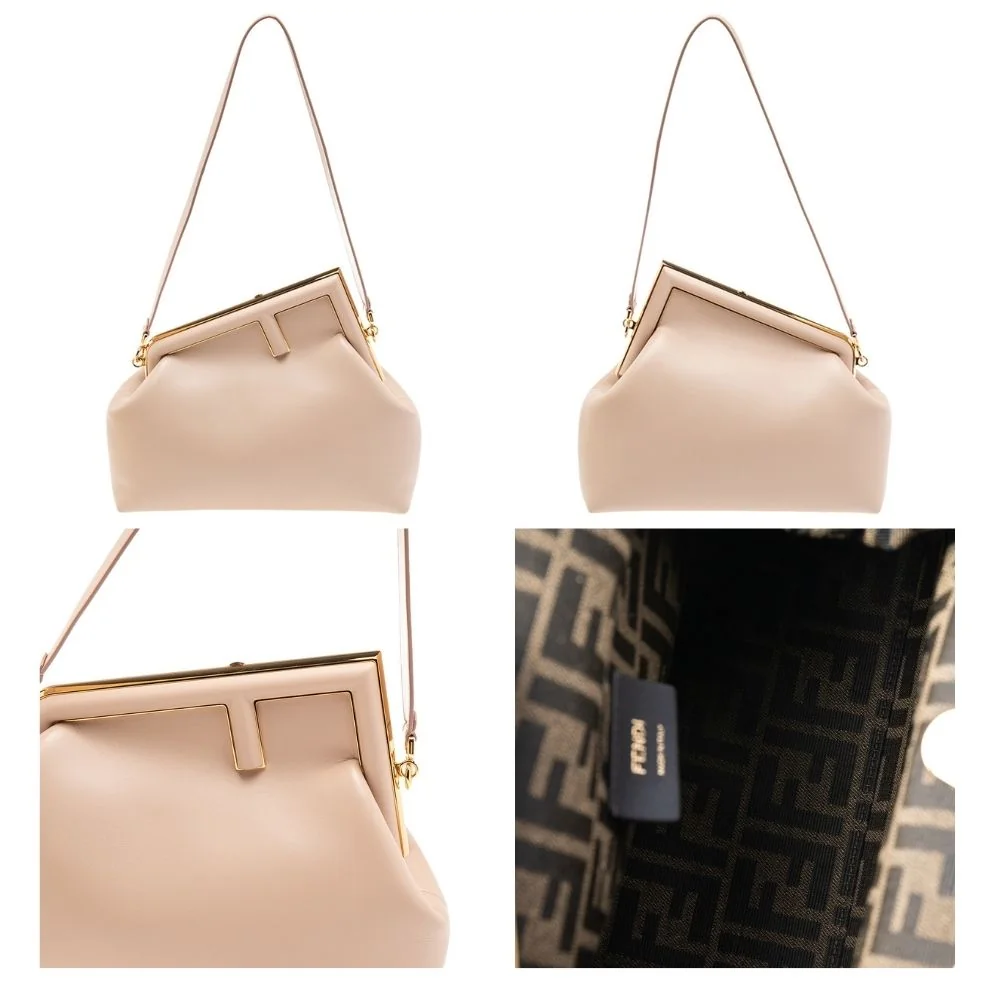
The Fendi First’s calling card is its oversized F-shaped metal clasp, mounted across the top of the bag rather than tucked into a flap or side closure. It’s a deliberately architectural piece of hardware, not a discreet logo, and it functions as the bag’s actual closure mechanism, not decoration layered on top of a zip.
Underneath that hardware, the silhouette is a soft, slightly slouched half-moon shape, which is a departure from the structured, boxy Peekaboo and gives the First a more relaxed hand-feel despite its polished materials. That slouch is achieved through a lightly gusseted base and unstructured sides, meaning the bag will soften and mold slightly with wear. That’s worth flagging as an honest trade-off: if you’re used to the rigid corners of a Peekaboo or a Kelly, the First’s shape-shifting nature takes some adjustment, and it will look different loaded light versus loaded full.
Construction quality is consistent with Fendi’s Italian ready-to-wear leather goods rather than its haute couture Baguette limited editions: clean edge-painting, tight stitch density around the hardware mounts (where stress is highest), and a fabric-lined interior stamped with the FF motif on most versions. The detachable 43cm shoulder strap is a genuinely useful design choice rather than a gimmick — it lets the bag convert from an under-arm clutch to a shoulder bag, which matters more on this silhouette than on structured top-handles because the First doesn’t have a rigid handle to fall back on.
Sizes, Colors and Material Options #
The Fendi First was released across a spread of sizes and material stories wide enough that shoppers should decide on function before falling for a colorway.
- Mini First: Closer to a going-out bag than a daily carry. Fits a phone, cards, and lipstick — that’s about it.
- Small First: The most practical everyday size for most buyers. Holds a compact wallet, phone, sunglasses case, and a small pouch.
- Medium First: Sized for daily use with room for a light cardigan, water bottle, or A5 notebook. This is the size most often seen on the runway and in retail campaigns.
Material-wise, Fendi has produced the First in smooth Nappa leather (the most common and most practical for daily wear), exotic skins including crocodile and python for higher price tiers, and print-heavy fabric versions using the FF jacquard motif, which trade some durability for a bolder visual statement. Colorways range from Fendi’s signature neutrals — camel, black, pale pink — to seasonal brights introduced in later collections. If you’re buying pre-owned, Nappa leather in a neutral tone is the safest bet for both wearability and resale liquidity; heavily printed fabric versions and exotic skins are harder to move secondhand simply because the buyer pool is smaller.
Price and Resale Value #
At retail, the Fendi First in Nappa leather typically starts in the $3,300–$4,000 range for the small size, with the medium size running somewhat higher, generally $3,800–$4,600 depending on hardware finish and region. Exotic skin versions climb substantially, often into the $8,000–$12,000+ bracket, and limited fabric or embellished editions can sit anywhere between those two brackets. These figures move with Fendi’s seasonal price increases, so treat them as a directional range rather than a fixed number, and always confirm current pricing directly with an authorized Fendi boutique or verified reseller before buying.
On the resale market, the Fendi First hasn’t (yet) built the appreciation track record of an Hermès Kelly or Birkin, and it shouldn’t be bought with that expectation. In good condition, Nappa leather versions in neutral colorways tend to retain roughly 40–55% of retail value on the pre-owned market, which is respectable for a contemporary designer bag but well below hard-currency pieces from Hermès or vintage Chanel. Exotic skin versions hold value more consistently in percentage terms, largely because the raw material cost puts a floor under resale pricing, but they’re also slower to sell due to a smaller buyer pool. The honest takeaway: buy the Fendi First because you want to wear it and you like the design story, not as a value-storage play.
How to Style the Fendi First Bag #
The First’s slouched, semi-structured shape makes it more forgiving to style than a rigid top-handle, which is part of its appeal.
- Daytime/office: Carry the medium size on the shoulder strap over tailored trousers or a midi skirt. The neutral Nappa colorways read as polished without being flashy, which suits a professional wardrobe better than the more overt Baguette.
- Evening: Detach the strap and carry the small or mini size under the arm as a clutch. The oversized F clasp does the visual work, so keep the rest of the outfit simple — a slip dress or monochrome tailoring.
- Casual/weekend: Pair the medium size with denim and a structured jacket. Because the silhouette softens with use, it actually looks more at home dressed down than a Peekaboo does.
- Seasonal note: Fabric and printed versions read more casual by nature; save Nappa or exotic skin versions for outfits where you want the bag to be the elevated element.
Sizes, Prices, and Materials Compared #
| Bag | Silhouette | Signature Detail | Starting Retail Price (Nappa leather, USD) | Resale Value Retention | Best Suited For |
|---|---|---|---|---|---|
| Fendi First | Soft, slouched half-moon | Oversized F-shaped metal clasp | ~$3,300 (small) | ~40–55% | Buyers wanting a modern, statement-hardware bag |
| [[[Fendi Baguette](/brands/fendi-colibri-sandals-review/)](/brands/fendi-baguette-review-worth-buying-2024/)](/brands/fendi-baguette-buying-guide/) | Structured, flat rectangular | Detachable shoulder strap, embellished versions | ~$2,900 | ~45–60% (higher for limited editions) | Buyers wanting Fendi’s most recognized heritage shape |
| Fendi Peekaboo | Structured, boxy top-handle | Half-open/half-closed twist-lock closure | ~$4,200 | ~50–60% | Buyers wanting a rigid, office-ready top-handle |
| Fendi 2Jours | Structured tote | Double top handles, FF hardware plaque | ~$2,600 | ~35–45% | Buyers wanting a work tote with logo detailing |
Figures are approximate starting points for base leather versions and will vary by size, hardware finish, and season — treat them as a comparison guide, not a price quote.
FAQ #
When was the Fendi First bag released? It debuted at Fendi’s Autumn/Winter 2021 runway show, one of Kim Jones’ early collections as Artistic Director, designed in collaboration with Silvia Fendi.
What makes the Fendi First bag different from the Baguette or Peekaboo? The First is built around a soft, slouched silhouette closed by an oversized F-shaped metal clasp, rather than the Baguette’s flat rectangular structure or the Peekaboo’s rigid twist-lock top-handle design.
Is the Fendi First bag a good investment? It’s a well-made contemporary design piece, but it doesn’t currently show the appreciation or resale demand of Hermès’ hard-currency bags. Expect moderate value retention (roughly 40–55% for leather versions in good condition), not appreciation.
How can I authenticate a Fendi First bag? Check the F-clasp closely: authentic hardware has a precise, weighted feel with clean engraving and no rough edges around the mounting points. Examine the interior lining for a correctly proportioned FF motif print (counterfeits often stretch or misalign the pattern), and check for a serial/date code tag inside, consistent with genuine Fendi production standards. Stitching should be dense and even, particularly around the hardware anchors, since that’s a high-stress point that cheap replicas often get wrong. When buying pre-owned, favor sellers who provide clear macro photos of the hardware stamping, interior tags, and stitching, and be wary of prices significantly below the going resale range — that’s the most common red flag for counterfeits.
What sizes does the Fendi First bag come in? Primarily mini, small, and medium, with the medium sized for practical daily use and the mini functioning more as an evening bag.
What materials was the Fendi First bag made in? Smooth Nappa leather, exotic skins such as crocodile and python, and fabric versions featuring the FF jacquard motif, across a range of neutral and seasonal colorways.
Related Articles #
- Why the Chanel Crossbody Bag Never Goes Out of Style
- How to Style a Chanel Bag: Outfit Guide
- 5 Fendi Baguette Bags Worth Buying Secondhand
- Chanel Flap Bag Buying Guide: Sizes, Prices & Deals
- Grace Kelly: Style Icon Behind the Hermès Kelly Bag
Related guides
- Online Bag Authentication: What Photos Can and Cannot Prove
- Luxury Handbag Authentication Process Explained
- China TikTok Luxury Factory Claims: Fact vs Fiction
- Chanel 2.55 History, Details & How to Spot a Fake
- How to Buy an Authentic Luxury Bag from China Safely
- New vs Pre-Owned Luxury Bags: Which Route Is Right for You?
- Chanel Bag Guide: What to Know Before You Buy
- Luxury Bag Houses


Keyword index