Introduction: The Baguette Bag Is Back #
Fendi didn’t quietly reissue an old favorite for Spring 2019. It threw a full campaign behind it, complete with the #BaguetteFriendsForever film series and a tagline that told you exactly how the house sees this bag: “It’s not a bag, it’s a Baguette.” That’s a bold claim for an accessory, but the Baguette has earned the ego. Few handbags get a proper noun treatment in fashion vocabulary, and even fewer get resurrected two decades later to a market that still remembers them.
For buyers, the revival changes the calculus. New Baguettes are back on runways and in boutiques, but the pre-owned market — built over years of resale, vintage sourcing, and estate sales — is where the real variety lives. If you want a piece of Baguette history rather than a current-season reissue, secondhand is often the only route. That also means authentication, condition assessment, and price benchmarking matter more than ever, which is the ground we’re covering here alongside five styles worth chasing.
The History and Legacy of the Fendi Baguette #
Silvia Venturini Fendi designed the Baguette in 1997, and the name came from its shape: tucked under the arm like a loaf of bread, not swung from the shoulder. That detail mattered more than it sounds. Through most of the ’90s, the dominant bag silhouette was the hands-free, sporty nylon backpack — Prada had made minimalism and function the story of the decade. The Baguette went the opposite direction: small, decorative, meant to be seen rather than practical for carrying anything substantial.
It worked because of timing and because of television. Sarah Jessica Parker’s Carrie Bradshaw carried a Baguette on Sex and the City, and the character’s line about the bag being stolen — treated with the gravity of a real crime — turned an accessory into a plot point. That kind of cultural placement is basically unbuyable now; brands spend enormous marketing budgets trying to manufacture what happened organically in the late ’90s. The Baguette is frequently cited as one of the first true “It bags,” a term that didn’t even exist in common usage before it.
Fendi has never let the silhouette fully disappear, releasing capsule versions and collaborations over the years, but the Spring 2019 relaunch was the first time the house treated it as a flagship revival rather than a nostalgia nod. That’s worth knowing as a buyer: some of the most interesting Baguettes in circulation predate the relaunch by a decade or more, which is exactly why the secondhand market is so fragmented in terms of era, materials, and condition.
Classic and Logo-Print Baguettes Worth Owning #
Not every Baguette is meant to shout. The Mama Baguette line, in particular, leans into Fendi’s house codes rather than novelty embellishment, and these are usually the easiest entry points for someone new to the silhouette.
Embroidered Mama Baguette #
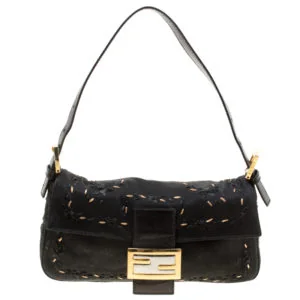
Constructed in fabric with embroidery worked across the entire exterior, this version keeps the FF lock in gold-tone hardware and pairs a fabric lining with a leather flat handle. It reads as dressed-up daywear rather than a statement piece, which makes it more versatile across outfits than the brand’s louder capsule editions. The tradeoff is that fabric exteriors show wear at the corners and handle drop points faster than canvas or leather, so condition inspection matters more here than on structural leather styles.
Zucchino Mama Baguette #
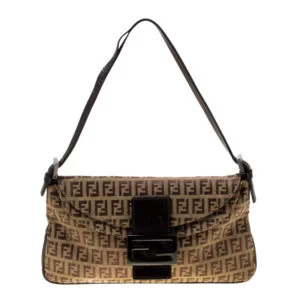
This is the Baguette most people picture when they think of Fendi’s monogram era. Rendered in Zucchino canvas with the FF logo printed across the entire surface, it carries black-tone hardware on the lock and buckles and a leather shoulder strap. It’s a more traditional, logo-forward design, and because Zucchino canvas pieces were produced in high volume through the 2000s, this is also one of the more heavily counterfeited Baguette patterns — which makes authentication diligence especially relevant if you’re shopping this print.
Bold and Playful Baguette Editions #
The Baguette’s other identity is maximalist and a little irreverent, and Fendi has never been shy about using the silhouette as a testing ground for texture, embellishment, and collaboration-style capsules.
QuTweet Bird Baguette #
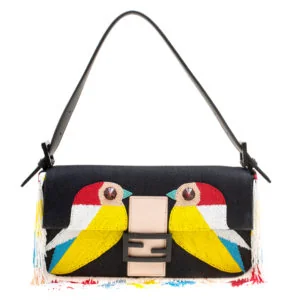
Part of Fendi’s 2014 QuTweet capsule, inspired by tropical bird plumage and origami folding, this bag is built on a denim base and covered in multicolor beadwork that forms two birds across the front, finished with fringe trailing along the outline. It’s a genuine conversation piece and, because the capsule was limited, it tends to command a premium over more common Baguette styles when it surfaces in the resale market.
Fur Monster Baguette #
Drawn from Fendi’s Fur Monster line, this leather Baguette adds the brand’s signature monster-eye appliqué to the front and trims the edges in soft fur. It’s playful in a way few structured handbags manage, and it wears well as a statement piece precisely because the base shape is so recognizable — the embellishment reads as intentional rather than costume-y.
Convertible Shoulder Baguette #
The fifth pick breaks from novelty entirely. Made in tan leather with a roomy fabric interior, this version has a flat handle long enough to carry over the shoulder or crossbody, addressing the original design’s biggest practical complaint — the classic Baguette’s short handle drop. If you want the silhouette’s history without sacrificing everyday usability, this is the more functional choice, and it’s also generally more forgiving to authenticate since it avoids the elaborate embellishment that counterfeiters have a harder time replicating convincingly.
How to Authenticate a Genuine Fendi Baguette #
Baguette counterfeits range from obvious to genuinely difficult to spot on a photo alone, so plan on a hands-on inspection whenever possible.
- Hardware weight and finish. Genuine FF locks and buckles have real heft and a consistent, evenly applied plating. Counterfeit hardware often feels light, or the gold-tone finish shows brassy inconsistency or early wear at the edges.
- Stitching. Authentic Fendi stitching is tight, even, and follows a consistent stitch count per inch along seams and handle attachment points. Loose threads, uneven spacing, or visible glue residue near seams are red flags.
- Logo placement and proportion. On Zucchino and FF [[[monogram canvas](/authentication/how-to-spot-a-fake-neverfull-authentication-guide/)](/buying-guides/louis-vuitton-neverfull-buying-guide/)](/authentication/how-to-spot-a-fake-louis-vuitton-bag/), the logo repeat should be symmetrical and aligned at the seams — counterfeits frequently mismatch the pattern where panels meet, especially on the gusset.
- Interior lining and stamping. Check the interior tag for the “Fendi” stamp and, where applicable, a serial number tag. Font weight, spacing, and stamp depth should be crisp, not shallow or smudged.
- Leather and fabric feel. Genuine leather has a specific weight and grain consistency; canvas should feel structured, not flimsy. If a listing photo can’t confirm texture, ask the seller for close-up shots under natural light.
- Zipper and clasp branding. Zippers on authentic pieces are almost always branded (Fendi or a known supplier like Lampo/Riri depending on era) — unbranded, plastic-feeling zippers are a common tell on fakes.
If you’re not confident after a visual check, third-party authentication services (physical or photo-based) are worth the fee, particularly for embellished capsule pieces like the QuTweet or Fur Monster editions, where the added detailing gives counterfeiters more surface area to get wrong — and gives buyers more surface area to miss something.
Buying Guide: Where and How to Shop Pre-Owned Fendi Baguettes #
Buying pre-owned isn’t just a budget decision, it’s often the only way to access certain eras and capsules of the Baguette. A few things to weigh before purchasing:
Condition over cosmetics. Corners, handle drop, and interior lining wear faster than the exterior body on most Baguettes, especially the fabric and embroidered versions. A bag with a pristine-looking front but a worn-through lining or cracked handle leather is a worse buy than one with light exterior patina and an intact structure.
Buy from platforms with in-house authentication. Curated resale marketplaces that physically inspect items before listing (rather than pure peer-to-peer marketplaces) significantly reduce counterfeit risk. It costs a small premium over unverified listings, but for a bag category with as much counterfeit volume as the Baguette, that premium is generally worth it.
Understand price against original retail. New Baguettes from Fendi’s current lineup typically retail well into four figures depending on material and size, with embellished or exotic-skin versions running higher. Pre-owned Baguettes, particularly from older capsules like QuTweet or earlier Zucchino runs, often trade below current retail for comparable new pieces — sometimes substantially so for canvas versions with visible wear, and closer to retail (or above, for rare capsules) for pristine limited editions in high demand. As a rule of thumb: common canvas Mama Baguettes in good condition tend to sit in the low-to-mid hundreds to low thousands (USD) on the resale market, while embellished or capsule pieces (Fur Monster, QuTweet) can command noticeably more due to scarcity, not just materials.
Ask for full documentation. Original dust bag, authenticity card, or receipt aren’t dealbreakers if absent, but they add resale value later and give you extra authentication signal now.
Sizes, Materials, and Colorways Explained #
The Baguette has never been a single fixed silhouette — Fendi has run it through nearly every material treatment the house works with, from printed canvas to exotic leather to fur trim. Size-wise, most vintage and Mama Baguettes sit in a compact under-arm format, while later reissues occasionally scale up slightly or add crossbody-length straps like the Convertible Shoulder version.
| Bag | Primary Material | Typical Resale Price Range (USD)* | Best Use Case |
|---|---|---|---|
| Embroidered Mama Baguette | Embroidered fabric, leather handle | $500–$1,200 | Dressed-up daywear, statement without heavy logo |
| QuTweet Bird Baguette | Denim, beadwork, fringe | $1,200–$2,500+ | Collector piece, rare capsule investment |
| Zucchino Mama Baguette | Zucchino canvas, leather strap | $400–$1,000 | Everyday logo-forward classic |
| Fur Monster Baguette | Leather with fur trim | $900–$2,000 | Statement/seasonal accessory |
| Convertible Shoulder Baguette | Leather, fabric interior | $500–$1,300 | Practical daily carry with vintage styling |
*Ranges reflect general secondhand market patterns and vary with condition, completeness (box, dust bag, cards), and platform. Always confirm current pricing against comparable sold listings rather than asking prices alone.
Care and Maintenance for Pre-Owned Baguettes #
Buying vintage or pre-owned means you’re inheriting whatever care history came before you, so start with a reset:
- Leather versions benefit from a leather-specific conditioner applied sparingly every few months, and should be stored stuffed (acid-free tissue works better than newspaper) to prevent creasing.
- Fabric and embroidered styles are more fragile — avoid direct spot-cleaning with water, and take embellished or beaded pieces to a specialist rather than attempting DIY cleaning, since loose beadwork or fringe is easy to damage further.
- Fur trim should be brushed gently and kept away from humidity and direct sunlight, which flattens and discolors fur over time.
- Hardware stays brighter longer if you keep the bag away from direct spray perfume or lotion contact, and wipe FF locks and buckles with a soft, dry cloth rather than metal polish, which can strip plating.
- Storage matters more for resale value than most owners realize — keeping the original dust bag and storing the Baguette upright, away from direct light, preserves both structure and color for a future resale.
The Sustainability Case for Buying Secondhand #
Every pre-owned Baguette in circulation is one fewer new bag manufactured, and given how leather-heavy the Baguette line is, that has real environmental weight. But the more practical argument for most buyers is value retention: because the Baguette has proven cultural staying power for over 25 years, it holds resale value better than most contemporary “it bag” alternatives that cycle out of relevance within a few seasons. Buying secondhand isn’t a compromise here — for a bag with this much history, it’s often the smarter purchase, sustainability aside.
FAQ #
When was the Fendi Baguette originally released, and why the comeback in 2019? The Baguette launched in 1997, designed by Silvia Venturini Fendi. Fendi relaunched it for Spring 2019 with the #BaguetteFriendsForever campaign, both to capitalize on renewed 2000s nostalgia in fashion and to reassert the bag’s place in the house’s design history.
Why is it called the Baguette? The name comes from how it’s carried — tucked under the arm like a loaf of French bread, rather than worn on the shoulder like most bags of its era.
Is the Fendi Baguette a good investment secondhand? Rare capsule pieces (QuTweet, Fur Monster) tend to hold or increase in value due to scarcity. Common canvas and fabric Mama Baguettes are more accessible entry points but appreciate less dramatically — they’re a better buy for personal use than pure resale speculation.
How do I know if a Fendi Baguette is authentic before buying online? Request close-up photos of the interior stamp, zipper branding, hardware finish, and logo alignment at seams. If those details can’t be confirmed, buy only from platforms offering in-house authentication or a return policy contingent on verification.
Do vintage Baguettes need special care compared to newer bags? Yes — older leather and fabric pieces are more prone to dryness, cracking, and lining wear. Conditioning leather, avoiding water on fabric and beadwork, and proper stuffed storage all extend the life of a pre-owned piece significantly.
Related Articles #
- How to Buy & Authenticate Pre-Owned Louis Vuitton Bags
- Fendi First Bag Guide: History, Design & Resale Value
- Louis Vuitton Alma Bag: The Ultimate Buying Guide
- Why the Chanel Crossbody Bag Never Goes Out of Style
- Louis Vuitton Twist Bag: Design, Style & Buying Guide
Related guides
- Online Bag Authentication: What Photos Can and Cannot Prove
- Luxury Handbag Authentication Process Explained
- China TikTok Luxury Factory Claims: Fact vs Fiction
- Chanel 2.55 History, Details & How to Spot a Fake
- How to Buy an Authentic Luxury Bag from China Safely
- New vs Pre-Owned Luxury Bags: Which Route Is Right for You?
- Chanel Bag Guide: What to Know Before You Buy
- Luxury Bag Houses


Keyword index