Introduction #
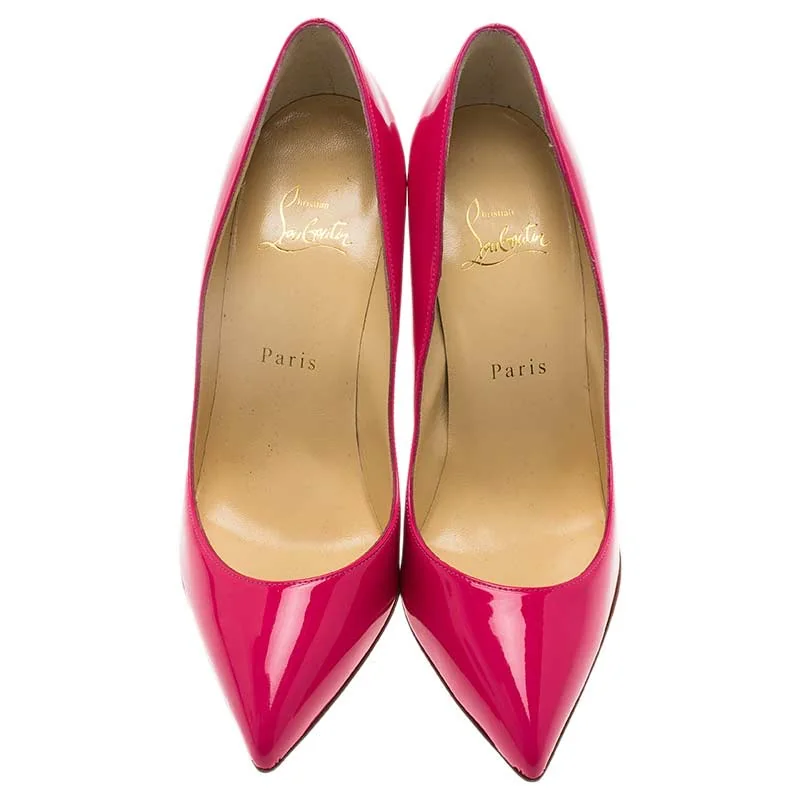
The So Kate has earned its place as one of the most recognizable pumps in modern fashion, thanks to a pointed toe that pushes the limits of what a last can do and a stiletto heel that photographs like a weapon. It’s also, unfortunately, one of the most copied shoes in the resale market. The combination of a lacquered red sole, a four-figure price tag, and instant brand recognition makes it a prime target for counterfeiters who’ve gotten disturbingly good at mimicking the surface details.
Having handled and authenticated dozens of pairs across patent, suede, and metallic finishes, I can tell you the fakes have improved a lot in the last five years — the crude “madeinitaly” typos are still out there, but so are much more convincing pairs that require checking construction, not just labels. This guide walks through the physical checkpoints that actually matter: the sole finish, the box and packaging, the stitching and materials, the internal stamping, sizing accuracy, pricing behavior, and finally the insole details that most guides skip entirely.
Check the Red Sole and Sole Lettering #
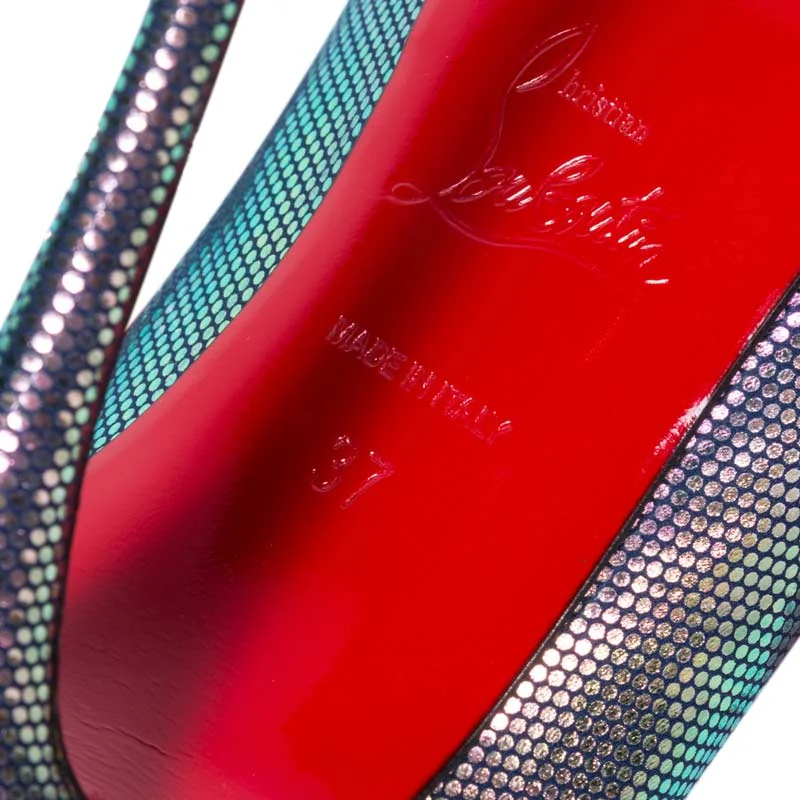
Everything about the So Kate starts and ends at the sole, so this is where I look first, every time.
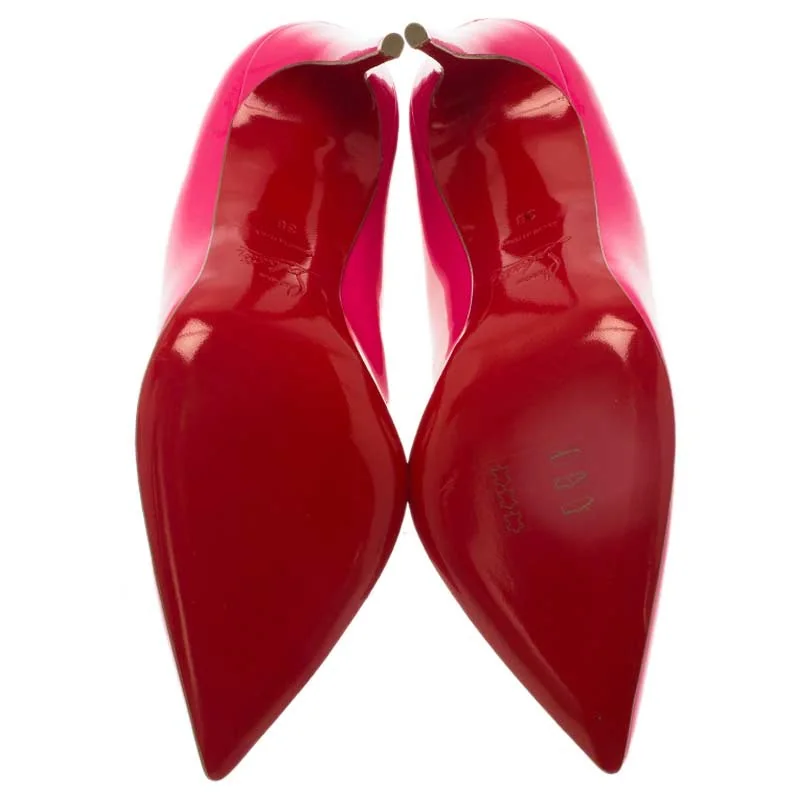
An authentic Louboutin sole is painted, not molded or dyed into the material. That matters because painted leather behaves differently than a synthetic coating: it has depth, a slight unevenness under raking light, and it scuffs the moment it meets pavement. If a seller is showing off a sole that looks flawless and mirror-glossy after supposed wear, that’s a flag, not a selling point. Real soles pick up scratches fast, and the red underneath any scratch should still read red, not reveal a different base color or plastic sheen.
The shade itself is notoriously hard to replicate. Louboutin’s red sits in a specific warm, slightly orange-leaning red — not the cooler, darker maroon-red that shows up on a lot of counterfeit pairs. Hold the sole next to a verified reference photo if you can; the difference is subtle in isolation but obvious side by side.
Then check the lettering stamped into the sole. Genuine pairs read “Made in Italy” as three clearly spaced words with clean, even letterforms. Counterfeits frequently compress this into “madeinitaly” with no spacing, or use a font that’s slightly too bold or too thin compared to the brand’s actual stamp. I’ve also seen fakes where the text is stamped at an angle or sits unevenly on the sole — a sign of a rushed production line, not a luxury workshop.
Inspect the Packaging and Documentation #
Packaging is where I catch a surprising number of fakes, mostly because counterfeiters assume buyers will over-trust anything that looks “official” — including a card that shouldn’t be there at all.
This is a detail that trips up a lot of buyers: [Christian Louboutin](/brands/christian-louboutin-brand-history/) does not include an authenticity card in the box. Brands like Chanel or Dior often do, but Louboutin has never adopted that practice. So if a seller is holding up a laminated “authenticity card” as proof the pumps are real, treat it as the opposite — it’s a sign someone copied a convention from another brand without knowing Louboutin doesn’t use one.
The box itself is sturdy but has some give to it — not flimsy, but not rigid cardboard either. On genuine boxes, the “Paris” text sits close to the logo, centered on the lid, and the box color runs darker than most counterfeit versions, which tend to print on a noticeably lighter shade. There’s also a small sticker on the side of the box listing the style, size, and color — check that this information matches what’s printed on the shoe’s own size tag. A mismatch between the box sticker and the insole stamp is one of the fastest ways to catch a repackaged fake or a mixed-and-matched pair.
Open the box and check what’s inside. Authentic So Kate pumps ship with a large red dust bag in a substantial cotton material — not the thin felt often used on replicas — plus a smaller red pouch of the same cotton meant to hold spare heel taps. If the dust bag feels closer to a cheap gift bag than a garment bag, or there’s no small pouch for heel taps at all, that’s a meaningful gap, not a minor omission.
Examine Materials, Stitching, and Craftsmanship #
Louboutin’s reputation rests on construction quality that’s genuinely difficult to fake convincingly at scale, which is exactly where mass-produced counterfeits fall apart under close inspection.
Stitching should be straight, tight, and evenly spaced, with no loose threads or skipped stitches, and — importantly — it should look identical on the interior and exterior of the shoe. A lot of counterfeits clean up the outside stitching for photos but get sloppy on the inside lining, where quality control is harder to fake and cheaper to skip.
Material feel is where experience pays off more than any single checklist item. Genuine patent leather has a deep, almost wet-look shine with real flexibility — it bends without creasing sharply or cracking at the toe box. Suede should have a consistent, fine nap with no patchy or matted areas. Fakes often use a stiffer, plasticky patent finish that creases visibly after minimal wear, or a suede that feels papery rather than plush. Pick the shoe up: genuine pairs have real heft from solid leather insoles and a properly built shank, while replicas frequently feel noticeably lighter and hollow, especially in the heel.
The heel itself deserves specific attention because the So Kate silhouette depends on very particular proportions — that’s the whole point of the style. It runs at 120mm, and the heel is a slim, sharply tapered stiletto set at a slightly forward angle to accommodate the extreme point of the toe. Counterfeits often get the toe shape close but miss the heel: too thick at the base, insufficiently tapered, or set at an angle that throws off the shoe’s balance. If the silhouette looks slightly “off” compared to reference images — chunkier heel, blunter toe, different rake — trust that instinct before you trust the seller’s description.
Verify Logo Placement, Sizing, and Price Red Flags #
The interior of the shoe carries some of the clearest tells, along with the sizing and pricing behavior that surrounds the sale itself.
Inside the shoe, check the stamped lettering below the Christian Louboutin logo. It should read “Paris” with visible, deliberate spacing from the logo above it — not crowded directly underneath. The font throughout should be clean and thin, with no overlapping characters and no thick, blobby lettering, which is a common giveaway on lower-quality fakes where the stamping die wasn’t precise.
Size tags matter more than buyers usually assume. Cross-check the size printed inside the shoe against both the box sticker and the listing description — all three should match exactly, including the size format (EU sizing, typically). Sellers repackaging counterfeits or mixing inventory sometimes let these details drift out of sync, and it’s an easy thing to verify before you commit to a purchase.
Then there’s price, which deserves to be treated as a genuine authentication signal, not just a budgeting question. So Kate pumps retail in the $700–$1,000 range depending on material, and resale pricing on legitimately pre-owned pairs generally holds in the $350–$650 range depending on condition and finish. A “new with box” listing priced at $150–$200 isn’t a lucky find — it’s a counterfeit, full stop. Counterfeiters rely on the emotional pull of a steep discount to short-circuit the skepticism that a slower, more careful buyer would otherwise apply.
Where to Buy Authentic So Kate Pumps Safely #
The single most effective authentication strategy is buying from a platform that authenticates before the shoes ever reach you, rather than relying entirely on your own inspection after the fact.
Established resale platforms that specialize in luxury goods — The RealReal, Fashionphile, Vestiaire Collective (with its Authenticate, All service), and The Luxury Closet among them — run physical authentication checks against manufacturer construction standards before listing an item. That’s a meaningfully different risk profile than buying from a general marketplace listing or a social media seller with no accountability if the item turns out to be fake.
If you’re buying somewhere without built-in authentication — a peer-to-peer marketplace, a private seller, or an auction site — it’s worth paying for an independent authentication service (Entrupy, Real Authentication, or LegitGrails are commonly used for footwear) before finalizing the purchase, especially at the price point So Kate pumps command. Ask sellers for unedited photos of the sole lettering, the interior stamping, and the size tag before you buy, and be wary of anyone unwilling to provide them or unwilling to accept return terms if authentication fails after delivery. A legitimate seller has nothing to lose by giving you time to verify.
Red Sole Test: Color, Gloss, and Wear Patterns #
Because the red sole gets searched and screenshotted more than any other detail on this shoe, it’s worth a second, more focused pass beyond the initial check.
Look at how the gloss behaves across the sole rather than just its overall color. Authentic soles have a lacquered finish that catches light unevenly — brighter where the leather is smooth, duller in spots where it’s absorbed slightly more pigment. A uniformly glassy, plastic-like shine across the entire sole, with no variation, usually points to a synthetic coating rather than painted leather.
Wear patterns tell an honest story too. On a used pair, genuine paint wears down at the ball of the foot and heel first, exposing a paler red or the tan leather underneath — not a gray or black base layer, which is what shows up under some counterfeit coatings once they scratch through. If a “gently worn” pair shows suspiciously even, unscratched red across the whole sole despite claimed wear, either the wear claim or the sole itself is suspect.
Reading the Insole: Fonts, Size Stamps, and Country of Origin #
This is the section most guides skip, and it’s often the fastest way to settle a close call.
The insole stamping follows a consistent pattern on genuine pairs: the Christian Louboutin logo sits centered, “Paris” is stamped below it with clear separation rather than crowding the logo, and the size is stamped separately, usually near the arch, in a clean sans-serif font with consistent letter weight throughout. None of the characters should overlap or bleed into each other, and the depth of the stamp should be even — a shallow, inconsistent stamp on one letter and a deep one on the next suggests a low-quality die used in a counterfeit operation rather than a factory press.
Country of origin marking appears on the sole itself (“Made in Italy”) rather than the insole on most So Kate pairs, so if you see country-of-origin text stamped into the insole instead of the sole, or duplicated in both places with inconsistent fonts, treat that as a mismatch worth investigating further before buying.
A few honest caveats: no single checkpoint here is foolproof on its own — high-end counterfeits have gotten sole color and box printing close enough to fool a casual glance. The strength of this method is in checking multiple points together; a pair that passes the sole test but fails on stitching or stamping is still a fake. And even experienced resellers occasionally get a borderline call wrong, which is exactly why paying for third-party authentication on a purchase this size is rarely money wasted.
FAQ
Do all Christian Louboutin shoes have the same red sole shade? Broadly yes, the brand maintains a consistent proprietary red across most styles, though slight variations occur between production years and leather types.
Can a real sole be repainted, and would that fool this check? Yes — Louboutin sells official “red sole spray” for touch-ups, and some sellers repaint worn soles before resale. A repainted sole doesn’t make the shoe fake, but it does mean the sole test alone won’t confirm authenticity; lean on stitching, stamping, and box details in that case.
Is it safe to buy a So Kate pump with no box at all? It’s higher risk, not automatically fake. Focus extra scrutiny on the sole, stitching, and internal stamping, and lean toward third-party authentication if the price still seems close to retail.
Related Articles #
- How to Spot Fake Christian Louboutin Shoes: Guide
- Kate Spade Bags Under $300: 7 Real Deals Worth Buying
- Chanel 2.55 History, Details & How to Spot a Fake
- How to Spot a Fake Burberry Bag: Full Guide
- Black Friday 2025: Real Luxury Deals Without Fakes
Related guides
- Online Bag Authentication: What Photos Can and Cannot Prove
- Blue Crocodile Lady Dior Tote: Buying Guide
- Chanel Vintage Flap Bag Buying Guide: Navy Lambskin
- Louis Vuitton Palm Spring Backpack: Complete Buyer's Guide
- How to Buy an Authentic Luxury Bag from China Safely
- New vs Pre-Owned Luxury Bags: Which Route Is Right for You?
- Chanel Bag Guide: What to Know Before You Buy
- Luxury Bag Houses


Keyword index