Introduction: The Legacy of the King of Jewellers #
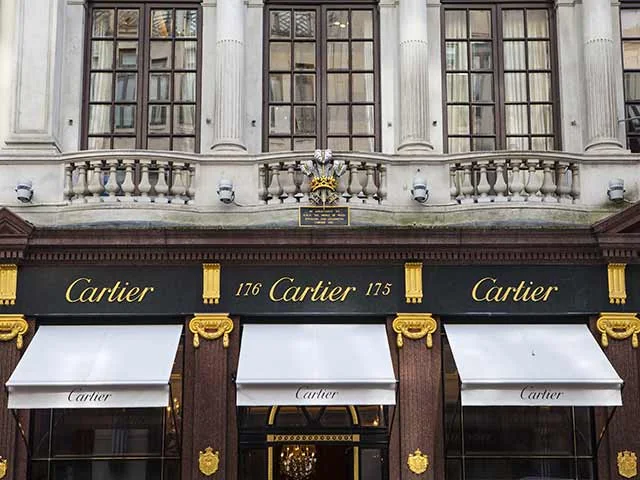
Ask any specialist who spends their days authenticating pre-loved luxury pieces which name commands instant trust across categories, and Cartier comes up almost every time. It’s the rare maison that built its reputation on jewellery, then watches, then extended that same credibility into leather goods and accessories, all while keeping a single design language intact for over 150 years.
That’s not a small feat. Most heritage brands drift. Cartier didn’t so much drift as expand deliberately, adding categories only when the craftsmanship could match the name already stitched into royal courts across Europe. Understanding how that happened, from a single workshop on a Parisian side street to a fixture in Richemont’s portfolio, gives buyers real context for what they’re paying for today, whether that’s a vintage Tank on the secondary market or a current-season Love bracelet. [Brand history](/brands/trussardi-brand-history/) isn’t trivia here. It’s the backbone of resale value and the first thing a serious buyer should understand before spending real money.
The Founding of the House of Cartier #
Cartier’s origin story is smaller and less glamorous than the brand it produced. In 1847, a 29-year-old jeweller named Louis-François Cartier took over the workshop of his master, Adolphe Picard, on Rue Montorgueil in Paris. There was no grand unveiling. It was a modest transfer of a small business, the kind of succession that happened constantly in the Parisian trade at the time.
What set Louis-François apart was the quality of his output relative to his scale. Word travelled through Paris’ moneyed circles that this jeweller’s work had a finish and boldness that competitors lacked, and that reputation is what allowed the business to survive its first difficult decades rather than dissolve into obscurity like so many contemporaries did.
The real inflection point came under his son, Alfred Cartier, who took the reins in the 1870s and pushed the business toward the next tier of Parisian jewellery houses. Alfred moved the maison to increasingly prestigious addresses, culminating in the now-legendary 13 Rue de la Paix in 1899, a location that put Cartier on the same street as the city’s most exclusive couturiers and jewellers. It was Alfred’s three sons, Louis, Pierre, and Jacques Cartier, who then split responsibilities across Paris, London, and New York, effectively internationalising a family business at a moment when most competitors were still thinking locally.
Royal Patronage and Global Expansion #
Cartier’s growth wasn’t organic in the modern marketing sense. It was built on royal endorsement, which functioned in the early 1900s the way celebrity ambassadorship does now, except with far more staying power and none of the disposability.
In 1904, Cartier was named official purveyor to King Alfonso XIII of Spain and to King Edward VII of the United Kingdom. Edward VII’s patronage in particular mattered enormously; he is widely credited with coining the phrase “the jeweller of kings, the king of jewellers,” a description that stuck to the house permanently and still appears in nearly every serious writeup of the brand’s history.
Royal warrants were not symbolic gestures. They opened doors across European aristocracy, and Cartier capitalised on that access by physically expanding. London followed in 1902 with a boutique that eventually settled on New Bond Street in Mayfair, still one of the most recognisable Cartier storefronts in the world. New York came in 1909, with Pierre Cartier eventually acquiring a Fifth Avenue mansion from Morton F. Plant in 1917 in a deal that’s become part of Cartier folklore: a double-strand natural pearl necklace, reportedly valued at close to $1 million at the time, exchanged for the building that still houses the New York flagship today.
This is the piece of Cartier’s story that tends to get flattened into a sentence or two, but it deserves more weight: Cartier wasn’t just favoured by one or two monarchs. Across the early twentieth century, the house held warrants from more than a dozen royal houses across Europe, Asia, and the Middle East, giving it a client base that no single celebrity endorsement could replicate. That breadth is a big part of why the brand’s cultural weight has outlasted competitors who leaned on one relationship at a time.
The Birth of Cartier Watches #
Cartier’s entry into watchmaking has one of the best origin stories in the entire luxury industry, and it’s worth telling properly because it explains the design logic behind pieces still sold today.
In 1904, Brazilian aviator Alberto Santos-Dumont complained to his friend Louis Cartier that pocket watches were useless mid-flight. He needed to check the time without letting go of the controls. Louis Cartier’s response was the Santos, a square-bezelled wristwatch with exposed screws on the bezel, a radical departure from the ornate pocket watches of the era and arguably the first modern men’s wristwatch designed with function as the starting point rather than an afterthought.
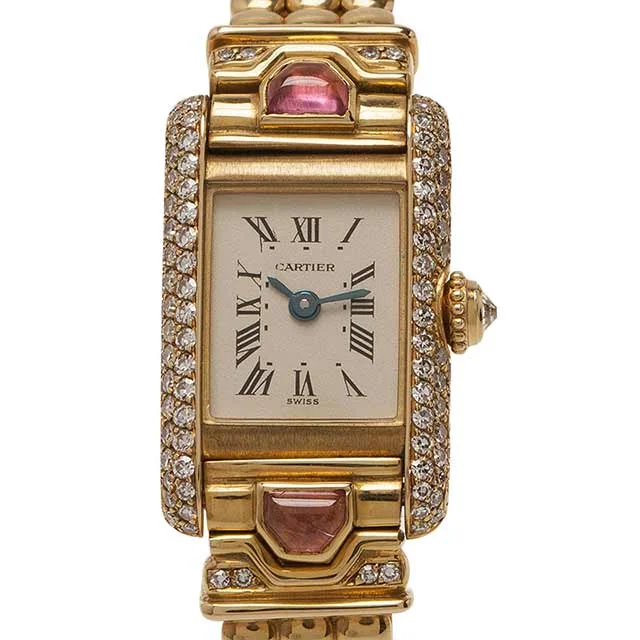
That functional-first philosophy resurfaced in 1917 with the Tank, inspired by the aerial view of Renault’s armoured tanks on the WWI front. Louis Cartier translated the tank’s rectangular chassis and parallel tracks directly into the case and integrated brancards, a shape so architecturally distinct that the Tank has barely changed in silhouette for over a century. That’s rare in watchmaking. Most designs evolve; the Tank has essentially stayed put because the original proportions were already correct.
For buyers navigating the pre-loved watch market, this matters practically. Because the Tank’s design has stayed so consistent, dating a piece and confirming authenticity relies heavily on movement details, case back engravings, and clasp construction rather than obvious stylistic shifts, which makes expert authentication genuinely more important than with brands that redesign frequently.
Iconic Cartier Jewellery Collections #
Cartier’s jewellery output between 1900 and 1930 produced the design vocabulary the brand still relies on, and three pieces in particular deserve more than a passing mention.
The Panthère Motif #
The panther first appeared in Cartier’s work in 1914, but it became a true house signature after 1933, when Jeanne Toussaint was appointed director of fine jewellery. Toussaint, nicknamed “the Panther” by Louis Cartier himself, pushed the motif into full three-dimensional jewellery and watch designs. The look reached peak visibility in 1949 when the Duke of Windsor commissioned a panther brooch for Wallis Simpson, cementing the animal as shorthand for Cartier boldness. The Panthère de Cartier line remains one of the most recognisable and consistently strong performers on the resale market today.
Trinity, 1924 #
The Trinity ring, three interlocking bands in rose, white, and yellow gold, was designed by Louis Cartier, reportedly at the suggestion of writer and artist Jean Cocteau. The colour symbolism, pink for love, white for friendship, yellow for fidelity, gave the piece emotional shorthand that’s still used in marketing a century later. It’s a good example of Cartier’s broader design philosophy: take a simple geometric idea, execute it with absolute precision in materials, and let the concept do the storytelling.
Love, 1969 #
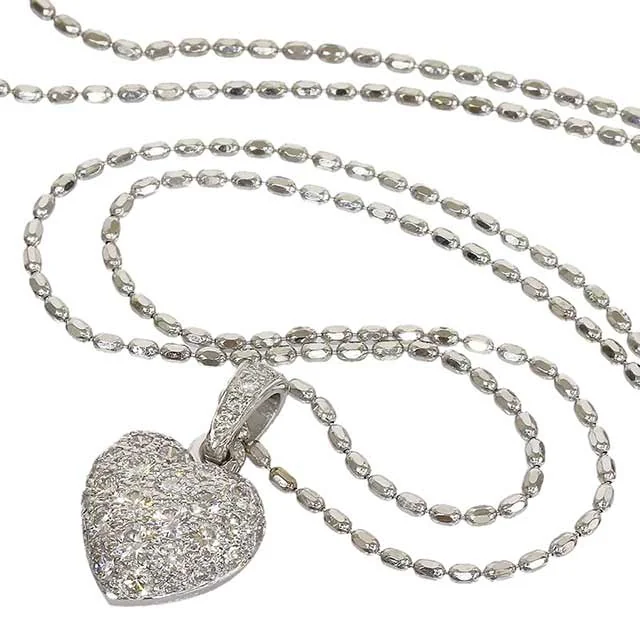
Decades later, Italian-American designer Aldo Cipullo created the Love bracelet for Cartier, built around a deceptively simple idea: a bracelet fastened with actual screws, requiring a special screwdriver to remove, worn as a symbol of permanent commitment. It launched at a moment when jewellery was becoming more personal and less purely decorative, and it remains one of Cartier’s best-selling pieces, with the resale market treating well-kept examples almost like a commodity given how consistently they hold value.
The Patiala Necklace and Cartier’s Craftsmanship Standard #
In 1925, the Maharaja of Patiala commissioned Cartier to reset his vast jewel collection, resulting in a ceremonial necklace containing nearly 3,000 diamonds along with the “De Beers” diamond, one of the largest coloured diamonds in the world at the time. The commission illustrates something important about Cartier’s working method: the house didn’t just design from scratch, it also had the technical confidence to disassemble, reset, and reimagine some of the most valuable gemstones on earth without damaging their integrity. That’s a craftsmanship standard, not a marketing claim, and it’s the same in-house setting and stone-selection rigor that still underpins quality control at Cartier’s ateliers today.
Cartier was also an early and aggressive adopter of platinum in fine jewellery, a metal that was harder to work with than gold or silver but allowed for the finer, nearly invisible settings that defined the Belle Époque “garland style” the house pioneered. That technical choice, prioritising a harder metal for a cleaner visual result, tells you a lot about Cartier’s design philosophy generally: form follows what the metal and stone actually allow, not the other way around.
Cartier Today: A Modern Luxury Icon #
The ownership history is less romantic than the design history, but it matters for understanding how Cartier operates now. In 1972, a group of investors led by Joseph Kanoui bought Cartier Paris, later reacquiring the London and New York branches and consolidating all three under one structure by 1979. That consolidated entity eventually became part of the Vendôme Luxury Group, which merged into what is now Richemont, the Swiss conglomerate that also owns Van Cleef & Arpels, Piaget, and IWC among others.
Being part of Richemont has given Cartier the capital and distribution muscle of a modern conglomerate while its creative direction has largely preserved the historical design vocabulary rather than chasing trend cycles. That’s a deliberate strategy, and it’s a big reason the brand’s resale market behaves differently from more trend-driven luxury houses.
Cartier has also built cultural authority beyond retail. The Fondation Cartier pour l’art contemporain, established in 1984, has functioned for decades as a serious contemporary art patron, commissioning work and building a permanent collection independent of any commercial tie-in. Its Paris building on Boulevard Raspail, designed by architect Jean Nouvel and opened in 1994, is itself considered a piece of architectural significance, a glass-and-steel structure that deliberately doesn’t try to look like a jewellery house. That kind of long-term, non-commercial art patronage is unusual for a jewellery brand and adds a layer of institutional credibility that pure luxury marketing can’t buy.
The flagship boutiques carry similar weight. The New Bond Street store in Mayfair and the Fifth Avenue mansion in New York aren’t just retail addresses, they’re treated as landmarks in their respective cities, part of the reason Cartier’s physical presence still reads as establishment rather than trend-chasing.
For buyers, this heritage translates directly into resale performance. Cartier jewellery and watches, particularly the Love bracelet, Trinity ring, and Tank watch, tend to hold value more consistently than category peers because demand isn’t tied to seasonal collections. As a rough current-market guide: a small classic yellow gold Love bracelet retails in the region of $7,000-$7,500 new, with well-maintained pre-loved examples typically trading at 65-80% of that depending on condition and papers; entry Tank watches run from roughly $3,000 upward new, with vintage examples from the mid-century sometimes commanding a premium over current production due to case proportions collectors prefer. These figures move with gold and market conditions, so treat them as a starting point for negotiation, not gospel, and always weight authentication and condition over sticker price when buying pre-loved.
Cartier and Royalty: ‘Jeweler of Kings, King of Jewelers’ #
The phrase itself is worth unpacking rather than treating as a slogan. It’s generally attributed to King Edward VII around the time of Cartier’s 1904 royal warrant, and it captures something specific: Cartier wasn’t serving one royal house, it was serving the concept of European monarchy broadly, at a moment when royal endorsement was the single most valuable form of brand validation available.
The client list beyond the early warrants is long and genuinely global. Grace Kelly’s engagement ring from Prince Rainier of Monaco, a 10.47-carat emerald-cut diamond, was a Cartier piece, and it remains one of the most referenced engagement rings in jewellery history. Richard Burton’s gift to Elizabeth Taylor of the 69.42-carat diamond, purchased through Cartier and briefly renamed the “Cartier diamond” during the transaction, is another case where the house’s name became attached to a piece of celebrity and cultural history rather than just a commercial sale.
Beyond individual pieces, Cartier supplied jewellery to more than a dozen royal households across Europe and the Middle East through the early twentieth century, a client roster broad enough that “jeweller of kings” reads as literal description rather than hyperbole. That royal foundation is also why Cartier pieces show up so consistently in museum retrospectives and auction house catalogues; provenance research on Cartier jewellery often intersects with actual royal and aristocratic ownership records, something few competing houses can claim at the same scale.
FAQ: Common Questions About Cartier’s History #
When was Cartier founded? Cartier was founded in 1847 in Paris by Louis-François Cartier, who took over his master’s jewellery workshop on Rue Montorgueil.
Who designed the Cartier Tank watch? Louis Cartier designed the Tank in 1917, inspired by the aerial silhouette of Renault tanks used on the WWI front lines.
What does the Cartier Trinity ring symbolize? The three interlocking bands, introduced in 1924, represent love (rose gold), friendship (white gold), and fidelity (yellow gold).
Why is Cartier called the “jeweller of kings”? The phrase is attributed to King Edward VII around 1904, reflecting Cartier’s royal warrants from over a dozen European and Middle Eastern royal households in the early twentieth century.
Who owns Cartier today? Cartier operates under the Richemont Group, the Swiss luxury conglomerate that also owns Van Cleef & Arpels, Piaget, and IWC.
Does Cartier jewellery hold its resale value? Generally, yes. Signature pieces like the Love bracelet and Trinity ring tend to retain a higher percentage of retail value on the pre-loved market than trend-driven jewellery, largely because Cartier rarely discontinues its core designs. Condition, original packaging, and proof of authenticity still significantly affect resale price.
Related Articles #
- 6 Iconic Cartier Watches That Hold Their Value
- Grace Kelly: Style Icon Behind the Hermès Kelly Bag
- Ralph Lauren Brand History: The Story Behind the Icon
- 5 Iconic Bags Named After Famous Women (Buying Guide)
- Fendi First Bag Guide: History, Design & Resale Value
Related guides
- Online Bag Authentication: What Photos Can and Cannot Prove
- So Kate Pumps Authentication Guide: Spot Real vs Fake
- Blue Crocodile Lady Dior Tote: Buying Guide
- Chanel Vintage Flap Bag Buying Guide: Navy Lambskin
- How to Buy an Authentic Luxury Bag from China Safely
- New vs Pre-Owned Luxury Bags: Which Route Is Right for You?
- Chanel Bag Guide: What to Know Before You Buy
- Luxury Bag Houses


Keyword index