Introduction: A Crocodile Icon Spotted on Victoria Beckham #
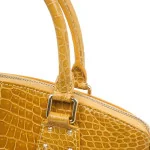
Victoria Beckham has never been shy about her Hermès collection, so when she stepped out carrying a Louis Vuitton in orange crocodile leather, the handbag world took notice. The bag wasn’t a seasonal It-bag or a collaboration piece. It was a Louis Vuitton Crocodile Lockit PM, a limited-edition exotic-skin release from 2007 that rarely surfaces at auction, in resale boutiques, or on the arms of anyone outside a small circle of serious collectors.
That rarity is the whole story here. Louis Vuitton produces exotic leather pieces in far smaller runs than its canvas icons, and the Lockit silhouette in particular has always sat at the quieter, more architectural end of the house’s output. Pair that limited production with a saturated orange porosus crocodile skin, and you get a bag that’s less “collect the trend” and more “collect the piece before it disappears entirely.” If you’re considering buying one, this guide covers what the bag actually is, how to verify it’s genuine, what it costs to own and maintain, and where it sits in the exotic-skin resale market.
Design and Heritage of the Crocodile Lockit PM #
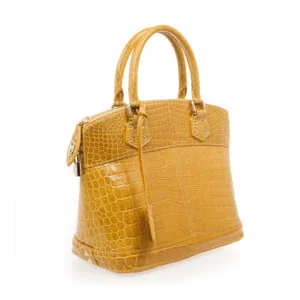
The Lockit has been part of Louis Vuitton’s leather goods lineup since the 1950s, originally conceived as a structured top-handle bag with a distinctive padlock closure, a detail that gives the style its name. Unlike the Speedy or Alma, which have been reissued constantly across materials and sizes, the Lockit has stayed a relatively niche offering, produced in smaller numbers and periodically revived in premium leathers and exotic skins rather than mass-market canvas.
The 2007 Crocodile Lockit PM sits at the top of that hierarchy. Louis Vuitton released the style in a limited run using porosus crocodile leather, a skin prized for its fine, even scales and glossy finish once polished. The orange colorway seen on Beckham’s bag was one of the more striking options in that release, chosen precisely because saturated exotic skins in bold colors are technically harder to produce and dye evenly than black or cognac. PM size keeps the silhouette compact and structured rather than slouchy, which is consistent with the Lockit’s identity as a polished, semi-formal bag rather than a casual carryall.
Because production numbers were low even by exotic-skin standards, most examples that circulate today are pre-owned pieces changing hands through specialist resellers, auction houses, or private sales, not retail stock. That scarcity is the primary driver of both desirability and price, which we’ll get into further down.
Craftsmanship and Key Features #
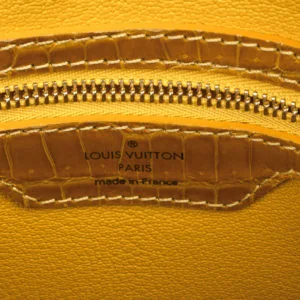
The Crocodile Lockit PM’s design details are what separate it from a standard leather Lockit, and they’re also the details worth inspecting closely before you buy:
- Leather clochette with keys and lock – The Lockit’s signature padlock hardware is functional, not decorative. On this piece, the clochette (the small leather tab holding the key) is crafted in matching crocodile leather rather than smooth calfskin, which is a meaningful upgrade in both cost and construction complexity.
- Dual leather handles – Structured top handles in the same crocodile leather, sized for hand-carry rather than shoulder wear, in keeping with the Lockit’s more formal positioning.
- Zipper closure – A top zip runs the width of the bag, giving it more day-to-day security than the padlock alone, which functions more as a design signature than the primary closure mechanism.
- Interior configuration – Expect a fabric or leather-lined interior with a single main compartment and typically one interior slip pocket, consistent with the PM size’s role as a compact daily bag rather than an organizer-heavy tote.
- Scale consistency – On a well-preserved example, the crocodile scales should run in even, graduated rows across every visible panel, including the handles and clochette. Mismatched scale size or direction between panels is one of the clearest tells of a lower-grade skin or a reworked piece.
Handled in person, the weight difference between this bag and a canvas Lockit is immediately obvious. Crocodile leather is dense, and Louis Vuitton didn’t line the PM with extra padding to compensate, so the bag carries firm and substantial rather than light.
Authenticating Exotic Leather Louis Vuitton Bags #
Exotic-skin Louis Vuitton pieces are counterfeited less often than canvas monogram bags simply because faking convincing crocodile leather is expensive and technically difficult. That said, “less often” doesn’t mean “never,” and the pieces that do circulate as fakes tend to be well-made enough to fool casual buyers. A few checkpoints matter specifically for skins:
Scale pattern and symmetry. Genuine crocodile and alligator leather from Louis Vuitton is cut and matched so that scale rows align across seams wherever possible, particularly on the front and back panels. Cheap embossed “croc-print” leather shows repeating, mechanically stamped patterns with no natural variation. Real skin has subtle irregularities scale to scale.
Hardware stamps. Check the lock, keys, and any metal hardware for crisp, evenly spaced engraving. Louis Vuitton’s stamping on exotic pieces should match the depth and font consistency found on the brand’s leather-goods hardware more broadly. Shallow, blurry, or inconsistently spaced lettering is a red flag.
Date codes and interior stamping. Look for a heat-stamped date code on the interior leather, typically near a seam or pocket. Cross-reference the code format against the era the bag claims to be from (2007-dated codes follow a two-letter, four-digit format under Louis Vuitton’s older system). A code that doesn’t match the claimed production year is disqualifying.
Stitching. Exotic leather requires different stitching tension and needle spacing than calfskin because the skin doesn’t stretch the same way. Stitches should be tight, uniform, and free of any puckering around the scales. Loose or uneven stitching around panel seams suggests either a poor-quality counterfeit or a heavily repaired bag.
Smell and texture. This sounds unscientific, but it’s one of the fastest tells in person. Genuine crocodile leather has a distinct, slightly earthy scent and a cool, dense feel. Bonded or printed leather feels comparatively light and slightly tacky, even when well-finished.
Given how much money is at stake with a piece like this, in-person or professional third-party authentication is worth the fee, and any reputable exotic-skin reseller should be able to provide condition grading and authentication documentation on request.
Caring for Crocodile Leather #
Crocodile leather ages well when it’s cared for properly, but it’s less forgiving of neglect than calfskin. A few care fundamentals matter more here than on a standard leather bag:
Storage. Keep the bag stuffed lightly with acid-free tissue or a soft cotton form to hold its shape, stored in its dust bag away from direct light and away from extreme humidity swings. Crocodile leather can dry out and crack in low humidity, or develop mold in overly damp conditions, so a stable, moderate environment matters more than with canvas pieces.
Cleaning. Never use household leather cleaners or baby wipes on exotic skins. Crocodile leather should be cleaned only with products formulated specifically for exotic leathers, and ideally by a professional familiar with skin conservation. Wipe away surface dust with a dry, soft cloth between uses.
Conditioning. Exotic skins benefit from occasional conditioning to prevent the scales from drying and lifting, but over-conditioning is a real risk, it can darken the leather unevenly or leave a tacky residue. When in doubt, have conditioning done professionally rather than experimenting at home.
Hardware maintenance. The lock and key mechanism on a Lockit is functional, so keep it lightly used rather than forced if it’s stiff. A jammed or forced lock is a common source of damage on older Lockit bags, and repair parts for exotic-leather clochettes are not easy to source.
Handling the exotic-leather reality. Crocodile leather sourced by Louis Vuitton for pieces like this is subject to CITES (Convention on International Trade in Endangered Species) regulations, since most crocodilian species used in luxury leather goods are CITES-listed. That means legitimate exotic-skin pieces should be traceable to farmed, not wild-caught, sources, and cross-border resale or shipping of exotic-skin bags can require CITES documentation depending on the countries involved. If you’re buying or reselling internationally, confirm with the seller whether CITES paperwork is available, particularly for shipping into the US, EU, or UK, where enforcement is active.
Price and Investment Value #
Pricing on a piece like the Crocodile Lockit PM is driven almost entirely by three factors: skin quality and color, condition, and documented rarity. Because Louis Vuitton no longer produces this exact combination, and because exotic-skin PM Lockits were a limited run even in 2007, prices sit well above the brand’s canvas equivalents and generally track closer to entry-level Hermès exotic pricing than to standard Louis Vuitton resale values.
At the time of writing, well-preserved exotic Lockit pieces from this era typically transact in the low-to-mid five-figure range on the specialist resale market, with condition, skin color rarity, and completeness of accessories (working lock, both keys, clochette) all moving the number significantly. A bag with a jammed lock, dry or cracked scales, or a missing key set will price meaningfully below a comparable piece in excellent condition.
As an investment, exotic-skin Louis Vuitton holds value better than the brand’s canvas lines, though it doesn’t behave like Hermès exotics, which have a much deeper and more liquid resale market. The honest read: this is a piece to buy because you want it and will use or display it, not a guaranteed appreciating asset. Liquidity is thinner than canvas Louis Vuitton or Hermès Kelly and Birkin bags, meaning it may take longer to find the right buyer if you decide to resell, even though the per-unit price can be strong.
How to Authenticate a Louis Vuitton Crocodile Lockit #
For buyers specifically vetting a Crocodile Lockit before purchase, run through this checklist in order:
- Request the date code and cross-check the format. Confirm it matches Louis Vuitton’s 2007-era coding convention, and that the location on the interior lining matches known placement for Lockit PM bags from that period.
- Inspect scale alignment across every panel, including handles and the clochette. Look for natural, slightly irregular scale sizing rather than a uniform, repeating pattern.
- Examine all hardware markings under strong light or magnification. Check the lock, keys, and any zipper pulls for consistent, crisp engraving depth.
- Check stitch count and spacing along every seam. Exotic leather stitching should be tight and even, with no visible skipped stitches or thread fraying.
- Confirm the lock and key function properly. A working lock mechanism is both a usability detail and a subtle authenticity marker, since replacement locks on counterfeit or heavily repaired bags often don’t match factory tolerances.
- Ask for provenance and prior ownership history, especially for a rare piece like this. A seller who can provide purchase history, prior authentication certificates, or CITES documentation adds meaningful confidence.
- Get a third-party authentication. For a piece in this price bracket, the cost of a professional authentication service is negligible against the risk of buying an unverified exotic-skin counterfeit.
FAQ #
Is the Louis Vuitton Crocodile Lockit PM still available new? No. It was released as a limited edition in 2007 and has not been reissued in this exact skin and colorway. Any bag available today is a pre-owned or vintage-market piece.
How much does a Louis Vuitton Crocodile Lockit PM cost? Prices vary by condition and skin color, but well-kept examples typically sell in the low-to-mid five-figure range through specialist exotic-leather resellers. Damaged or incomplete pieces (missing keys, non-functioning lock, dry leather) sell for meaningfully less.
Is crocodile leather on Louis Vuitton bags legal to buy and own? Yes, provided the skin was sourced from a CITES-compliant, typically farmed source, which is standard practice for major luxury houses. If you plan to ship or resell across borders, confirm whether CITES documentation is included, since some countries require it for legal import or export.
How can I tell if a Crocodile Lockit is fake? Focus on scale pattern irregularity, hardware stamp quality, date code accuracy, and stitching precision. Given the value at stake, a professional third-party authentication is strongly recommended before purchase.
How do I store a crocodile leather bag long term? Keep it lightly stuffed in its dust bag, away from direct light and humidity extremes, and have it professionally conditioned occasionally rather than using household leather products.
Does the Crocodile Lockit PM hold its value? Exotic-skin Louis Vuitton pieces generally hold value better than canvas lines, but the resale market is thinner and less liquid than Hermès exotics. Buy it for the piece itself, with resale value as a secondary consideration.
Related Articles #
- Louis Vuitton Alma Bag: The Ultimate Buying Guide
- Hermès Crocodile vs Alligator Bags: Buyer’s Guide
- How to Buy & Authenticate Pre-Owned Louis Vuitton Bags
- Louis Vuitton Saumur Bag Guide: History, Value & Tips
- Popular Handbag Brands: Which One Is Right for You?
Related guides
- Online Bag Authentication: What Photos Can and Cannot Prove
- Blue Crocodile Lady Dior Tote: Buying Guide
- Chanel Vintage Flap Bag Buying Guide: Navy Lambskin
- Louis Vuitton Palm Spring Backpack: Complete Buyer's Guide
- How to Buy an Authentic Luxury Bag from China Safely
- New vs Pre-Owned Luxury Bags: Which Route Is Right for You?
- Chanel Bag Guide: What to Know Before You Buy
- Luxury Bag Houses
Keyword index