Introduction: Why a Hermès Scarf Is a Wardrobe Investment #
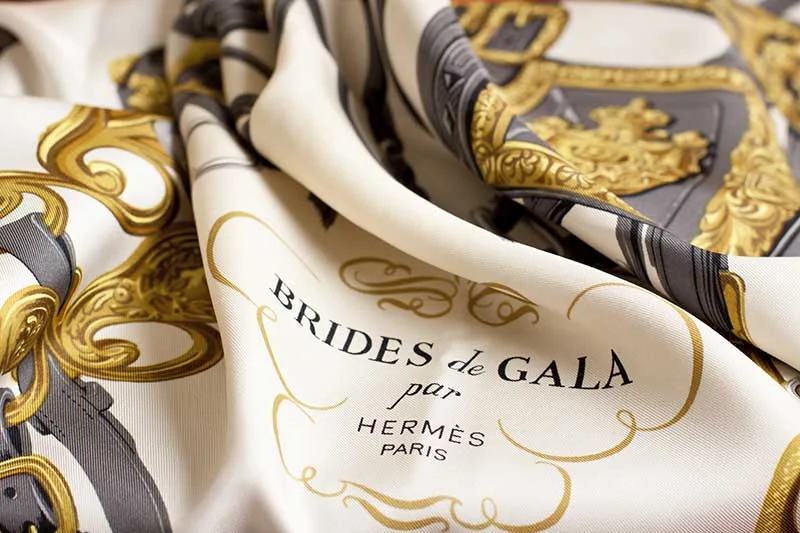
Ask anyone who has spent time around Hermès and they’ll tell you the same thing: the carré is the brand’s quietest flex. It doesn’t announce itself the way a Birkin or Kelly does, but it does something a bag can’t — it reinvents itself daily. Tied around the neck, knotted through a Kelly’s handle, folded into a headband, or looped through denim as a belt, the same 90cm square of silk can shift a look from office-ready to weekend-easy in under a minute.
That versatility is exactly why it holds value. Hermès has produced thousands of carré designs since 1937, and certain editions now trade well above their original retail price on the resale market — not unlike a well-kept Kelly. For readers building a collection around a Hermès bag, a scarf is often the smartest entry point: lower cost of admission, easier to authenticate than hardware or leather, and genuinely wearable from day one.
This guide covers how to choose one worth owning, the styling techniques that actually work (not just the neck knot everyone already knows), how to pair it with a handbag without looking costume-y, and how to tell a real one from the flood of convincing fakes currently circulating on resale sites.
What to Look for When Choosing a Hermès Scarf #
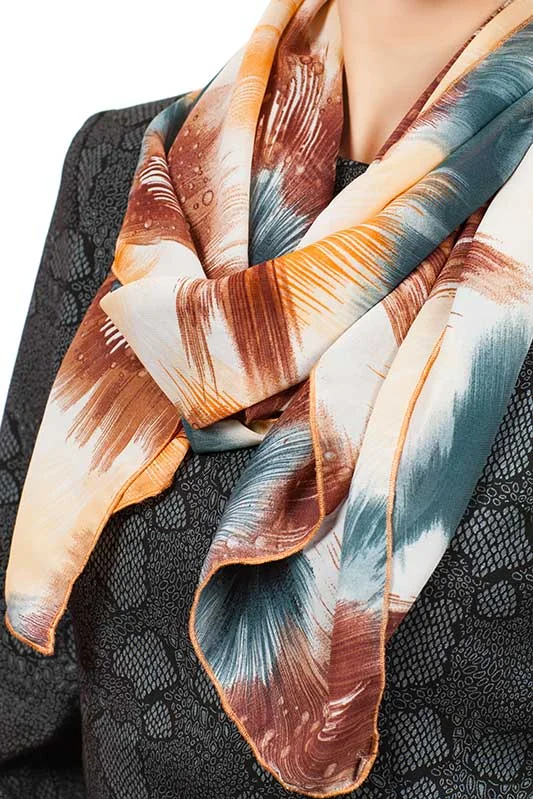
A carré is a manufacturing showcase before it’s a fashion item, and that’s worth understanding before you spend the money.
Material: silk vs. cashmere vs. wool #
Hermès works primarily in three fibers, and each behaves differently:
- Silk twill is the house signature — a tightly woven twill weave that gives the scarf its structure, sheen, and that distinctive rolled hem. It drapes rather than clings, holds a knot well, and works in every season indoors, though it’s not warm enough on its own for a cold outdoor commute.
- Cashmere and cashmere-silk blends show up in the cooler-weather collections (the CSGM line, for instance). They’re heavier, matte rather than glossy, and genuinely function as a layering piece in autumn and winter — closer to a wrap than an accessory.
- Wool and wool-silk muslers sit between the two: warmer than pure silk, less precious than cashmere, and a reasonable everyday option if you’re worried about snagging your good silk carré on a coat zipper.
If you only own one, buy the silk twill. It’s the most photographed, the most liquid on the resale market, and the one most buyers mean when they say “Hermès scarf.”
Print, size, and edition #
Standard carrés run 90x90cm; smaller “gavroche” versions (around 45x45cm) are built for bag-and-hair styling rather than neck wear, and the pocket-square-sized “twilly” (roughly 4.5cm x 110cm) exists specifically for handle wraps — more on that shortly.
Print matters more than most first-time buyers expect. Limited editions and designs tied to a specific artist or anniversary hold value better than reissued classics. Hand-rolled hems, stitched by a single artisan in roughly 8 to 20 minutes per scarf, are a hallmark of the real thing — machine-rolled hems are a red flag we’ll come back to in the authentication section.
Price range across brands #
For readers comparing before they commit, here’s roughly where things sit at retail:
| Brand | Silk scarf (approx. retail) |
|---|---|
| Hermès | $435–$730 for a 90cm carré |
| Dior | $350–$550 |
| Gucci | $340–$480 |
| [[Dolce & Gabbana](/brands/dolce-gabbana-floral-design-sicilian-story/)](/brands/dolce-gabbana-miss-sicily-leopard-bag-style-guide/) | $300–$450 |
Hermès sits at the top of that range and, unlike most of the others, tends to hold or appreciate on resale — a genuine point of difference if you’re thinking about this as a small investment rather than a purchase that depreciates the moment you leave the store.
Classic Ways to Wear a Silk Scarf #
The neck knot gets all the attention, but it’s genuinely the least interesting way to use a carré. Here’s the full range, grouped by how much effort each takes.
Around the neck (the six knots worth knowing) #
Hermès itself has taught these techniques for decades, and they still hold up:
- The Cold Shoulder — roll the scarf diagonally, wrap once loosely around the neck, and tie the ends off-center at one side. Fastest option, works with any collar.
- The French Girl Twist — fold into a simple double knot at the front of the neck. Sits well with both open necklines and collared shirts, and it’s the one that photographs best on camera.
- The Cowgirl — fold into a triangle, wrap once around the neck, bring both ends to the front and knot. More coverage than the twist, good under a jacket.
- The Bowtie — roll diagonally, bring around the neck front to back, and tie into a bow. Leans dressier; pairs well with a blazer.
- The Tie — roll diagonally so both ends hang even, cross right over left twice, then tuck the front end under the fold so it reads like a men’s necktie. Sharpest, most tailored option of the six.
- The Plaited Spiral — fold into a triangle, fold the point back on itself, roll tightly, and wind around the neck. The most technical of the group and worth practicing on a cheaper scarf before you try it on silk, since repeated folding on the same crease can weaken the fabric over time.
Video tutorials from Hermès and stylists on YouTube walk through each of these in real time if you want to watch the hand movements — worth it before attempting the Plaited Spiral especially.
Beyond the neck #
This is where a carré earns its price tag. A few ways to use it that don’t involve your throat at all:
- As a headband — fold into a long band, place it at the hairline, and tie at the nape or in a small bow at the crown. Works especially well with a bob or shoulder-length cut where it frames the face rather than getting lost.
- As a belt — fold into a long strip, thread through denim or trouser loops, and knot at the hip. A cheap, reversible way to add print to an otherwise plain outfit.
- Over the shoulders — drape unfolded over both shoulders like a light shawl and pin or knot loosely at the front. Best with the cashmere or wool weight rather than thin silk, since silk tends to slide.
- In the hair — tie around a ponytail or bun instead of an elastic, or use a gavroche as a bandana knotted at the back. Low commitment, high impact, and a good way to introduce a bold print without it dominating your face.
- As a bag accessory — covered in detail below, since this is the pairing most readers are here for.
Matching pattern and color to what you’re wearing #
A few rules that actually hold up in practice: a busy, multicolor print works hardest against a solid, neutral outfit — black, camel, and white all let the scarf be the focal point without competing. If your outfit already has pattern or color, reach for a scarf in a tonal or muted colorway instead.
For face shape, the neck knot’s positioning matters more than the print. A knot sitting close to the throat (Cold Shoulder, French Girl Twist) elongates a rounder face; a looser drape or the Cowgirl style, which adds volume at the chest, balances a longer face by drawing the eye outward rather than down.
Pairing Your Scarf with a Hermès Kelly or Handbag #
This is where a scarf stops being just an accessory and starts functioning as part of your bag’s styling — and it’s one of the most common questions we get from Kelly owners looking to refresh an older bag without buying a new one.
There are three practical ways to do it:
- Handle wrap. A twilly (the narrow 4.5cm x 110cm strip) wraps neatly around a Kelly’s handle, tied off in a simple knot or bow at one end. This is purely cosmetic — it adds color and a bit of grip — and it’s reversible, so it doesn’t affect resale value the way an actual alteration would.
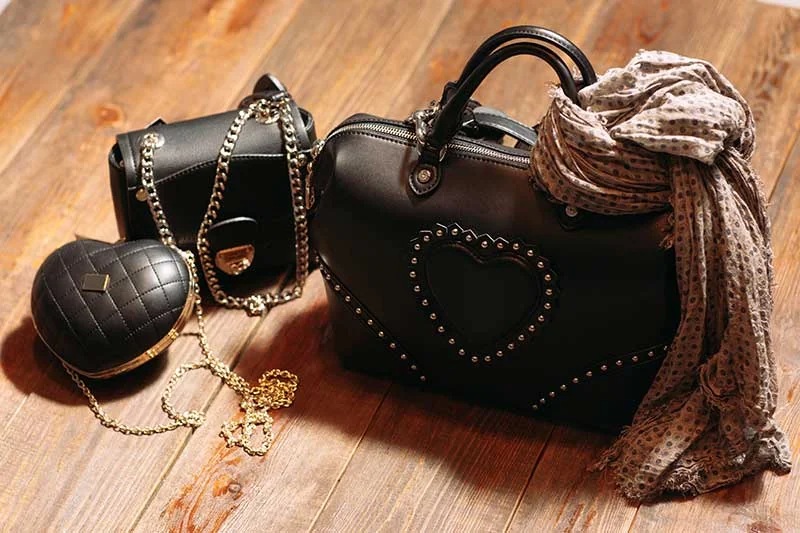
- Bag charm knot. Loop a gavroche or folded twilly through a hardware ring or the strap attachment point and knot it loosely so it hangs alongside the bag rather than around it. This is the look most associated with “Hermès girl” styling on Instagram, and it works on non-Hermès bags too if you want the aesthetic without the price tag.
- Shoulder-strap wrap. For bags with a longer strap, wind a full 90cm carré around the strap itself, securing the ends with a small knot underneath. More coverage, more color, and a good option if the bag’s leather has some wear you’d rather not have front and center.
One honest caveat: repeatedly tying and untying the same silk scarf around metal hardware will eventually show wear at the fold points, especially on delicate prints. Rotate which scarf you use for handle duty rather than committing one permanently, and inspect the fabric near the hardware every so often for thinning.
Caring for Your Silk Scarf #
Silk twill is tougher than people assume, but it’s not indestructible, and poor care is the single biggest thing that tanks resale value on an otherwise desirable print.
- Storage. Fold along the original crease lines where possible and store flat or loosely rolled in a drawer, away from direct sunlight. UV exposure fades printed silk faster than almost anything else, and a faded scarf loses most of its resale appeal regardless of edition.
- Cleaning. Hand wash in cold water with a mild, pH-neutral soap if you must wash it yourself, but for anything you plan to keep long-term or resell, professional dry cleaning that specifically handles silk is the safer call. Avoid wringing — press water out gently between towels instead.
- Ironing. Iron on the reverse side, on a low silk setting, with a pressing cloth between the iron and the fabric. Never iron directly on a printed surface; the heat can dull or crack the dye.
- Everyday wear. Keep silk away from perfume and hairspray applied directly before tying it — the alcohol in both can spot the fabric. Spray first, wait for it to dry, then put the scarf on.
- Snag repair. A small pull in silk twill can often be worked back into the weave with a fine needle rather than cut, which is worth knowing before you panic over a minor snag.
Treat it the way you’d treat the leather on a Kelly: gentle products, no direct sun, no rushing the cleaning process.
Buying Advice: Spotting an Authentic Hermès Scarf #
The resale market for Hermès scarves is flooded with convincing counterfeits, more so than almost any other category in the brand’s range, because a flat printed square is easier to fake than a structured bag. A few checks that consistently separate real from fake:
- The hem. Genuine carrés have a hand-rolled hem, sewn by a single craftsperson, which means it’s never perfectly uniform — you’ll see tiny irregularities in the stitch spacing. A hem that’s machine-rolled, glued, or suspiciously perfect all the way around is a strong warning sign.
- Print alignment. Authentic Hermès printing is sharp and fully saturated, with the pattern running cleanly to the very edge of the fabric and lining up correctly at the corners. Faded, blurry, or off-center prints point to a fake or a very degraded reproduction.
- The signature and copyright mark. Genuine scarves carry a designer’s signature within the print and a small copyright symbol, usually worked subtly into the design rather than stamped on separately. Check it against the same print on Hermès’s own archive or a trusted reseller’s listing.
- Fabric weight and feel. Real silk twill has a specific density — it feels substantial, not flimsy, and it doesn’t cling with static the way cheaper polyester imitations do.
- Labeling and packaging. Authentic scarves ship in an orange box with a care card and a fabric composition label sewn into one corner, printed in clean, correctly spaced typography.
- Price. If a “vintage silk Hermès scarf” is listed well under $150 for a common print, that’s the biggest red flag of all. Genuine pre-owned carrés in good condition rarely dip much below $200 to $250, even for common designs.
When in doubt, buy from a platform or dealer that offers third-party authentication, and ask for close-up photos of the hem and signature before paying — legitimate sellers won’t hesitate to provide them.
How to Tie a Hermès Scarf on Your Handbag #
If you searched for “twilly on a bag,” here’s the version that actually works without unraveling by lunchtime:
- Choose the right strip. A twilly or a gavroche folded lengthwise into a narrow band both work; a full 90cm carré is too bulky for handle wrapping unless you’re doing a loose shoulder-strap version.
- Anchor one end. Lay the strip flat against the handle or hardware ring and hold one end in place with your thumb.
- Wrap on a diagonal. Wind the fabric around the handle at a slight angle, overlapping each pass by about a third, working down toward the other end. A straight, flat wrap tends to slip; the diagonal grips better and looks more deliberate.
- Finish with a knot, not a bow, for security. A simple overhand knot at the end holds through a day of handling; save the decorative bow for a charm-style loop rather than a functional wrap, since bows work loose faster.
- For the bag-charm look, skip the wrap entirely and instead fold the strip in half, thread the looped end through the hardware ring, and pull the two loose ends through the loop to secure it — the same mechanic as a lark’s head knot. Let the ends hang loose or tie them in a soft double knot.
- Adjust and settle. Give the finished wrap or knot a gentle tug to check it’s secure, then let the fabric relax into place — freshly tied silk looks stiffer than it will after 20 minutes of wear.
If you’re using a print you also plan to rotate onto your neck or hair, tie it loosely enough on the bag that you’re not creasing it into a permanent fold.
FAQ: Common Questions About Hermès Scarves #
How much does a real Hermès scarf cost? New silk carrés retail between roughly $435 and $730 depending on size and edition. Pre-owned prices vary by condition and rarity, but expect to pay at least $200 to $250 even for common designs in good shape — anything lower is a red flag.
What size Hermès scarf should I buy for bag styling? A twilly (about 4.5cm x 110cm) is purpose-built for handle wraps and small bag knots. A gavroche (roughly 45x45cm) works for slightly larger bag-charm looks or as a headscarf. The standard 90x90cm carré is really built for neck and shoulder styling, not bag accessorizing.
Is silk or cashmere better for everyday wear? Silk twill is more versatile across seasons and easier to knot tightly, making it the better everyday choice. Cashmere and wool blends are warmer and suit colder months but are bulkier to style into the tighter neck knots.
Are Hermès scarf-tying techniques hard to learn? The Cold Shoulder and French Girl Twist take a few tries and are genuinely easy once you’ve done them twice. The Plaited Spiral and The Tie take more practice — give yourself a few attempts on a less precious scarf before wearing the technique out with your best silk.
How do I know if my Hermès scarf is authentic? Check the hand-rolled hem for slight irregularity, confirm the signature and copyright mark are sharp and correctly placed, and verify the print aligns cleanly at the edges and corners. If any of those look off, or the price seems too good to be true, treat it as a likely fake and ask for third-party authentication before buying.
Related Articles #
- Dolce Gabbana Miss Sicily Bag: Why It Still Wins
- Authentic vs Fake Hermès Kelly Bag: How to Tell
- Pre-Loved Handbag Buying Guide: Save Big, Buy Smart
- Handbag Trends 2024: The Bags You’ll Actually Wear
- Best Time to Buy a Luxury Handbag: Save More in 2025
Related guides
- Online Bag Authentication: What Photos Can and Cannot Prove
- So Kate Pumps Authentication Guide: Spot Real vs Fake
- Blue Crocodile Lady Dior Tote: Buying Guide
- Chanel Vintage Flap Bag Buying Guide: Navy Lambskin
- How to Buy an Authentic Luxury Bag from China Safely
- New vs Pre-Owned Luxury Bags: Which Route Is Right for You?
- Chanel Bag Guide: What to Know Before You Buy
- Luxury Bag Houses


Keyword index