Introduction: A Bag That Refuses to Go Out of Style #
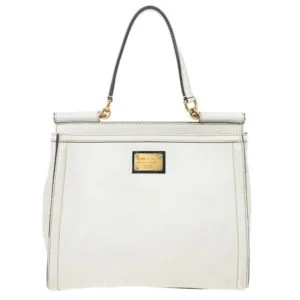
Some handbags peak for a season. The Dolce Gabbana Miss Sicily bag has been doing the opposite for over a decade, quietly resurfacing on the arms of A-listers, in resale listings, and now in winter capsule wardrobes built around ivory and cream. If you’ve spent any time researching Hermès Kelly alternatives or structured top-handle bags that hold their value, the Miss Sicily deserves a spot on your shortlist. It’s got the lineage, the hardware, and the resale demand to back it up.
This piece breaks down where the bag came from, what it’s actually made of, what it costs across leathers and sizes, and — because this is a Winter Whites feature — which colorway makes the most sense if you’re buying one for the season ahead.
The Origin Story: From Milan Runway to Wardrobe Staple #
The Miss Sicily debuted on the Spring/Summer 2010 runway, styled against black lace dresses with silk fringing — a deliberate push and pull between masculine structure and feminine detail that became the bag’s visual signature. It wasn’t a quiet launch. The front row that season included Scarlett Johansson, Jennifer Lopez, Kate Hudson, Eva Mendes, and Claudia Schiffer, which meant the bag had celebrity association baked in before it ever hit a store shelf.
What’s easy to miss, especially if you’re only encountering the bag now, is that it’s not a new release with a viral moment behind it. It’s been reworked across seasons in different fabrics, sizes, and prints for well over ten years, which is precisely why it reads as a “wardrobe staple” rather than a trend piece. Longevity like that is rare for a bag that launched mid-recession, and it says something about how well the design has aged.
Design and Craftsmanship: Sicilian Heritage in Every Stitch #
The name isn’t incidental. Miss Sicily was built as a tribute to the women of Sicily, and by extension to the Italian heritage of co-founders Domenico Dolce and Stefano Gabbana, both of whom have leaned heavily on southern Italian identity throughout the brand’s history. The bag’s linear, boxy silhouette and use of traditional materials — lace overlays, macramé panels, and structured leather — were designed to evoke handcrafted bags from the 1950s, the era of home-sewn textiles and regional craft traditions rather than mass production.
Functionally, the bag is more adaptable than its old-world references suggest. A detachable shoulder strap converts it from a rigid top-handle piece into something you can wear crossbody or on the shoulder, which is part of why it’s stayed relevant through so many seasonal reinventions.
On dimensions: the Miss Sicily has shipped in multiple sizes over the years, but the most common structure runs medium (roughly 27–30cm wide, 20–22cm tall, 10–13cm deep) and large (up to 35cm wide). Interior configuration is simple by design — a single main compartment, a zippered or slip interior pocket, and a padlock-style closure at the top that’s become the bag’s most recognizable hardware detail. There’s no multi-compartment complexity here, which is worth knowing if you’re used to bags like the Birkin’s more segmented interior. This is a single-cavity bag that relies on structure, not internal organization.
Celebrity Style Moments: Who’s Carrying the Sicily Bag #
Beyond the original FROW lineup, the bag picked up serious cultural momentum when Taylor Swift and Karlie Kloss were photographed together carrying Dolce Gabbana pieces — Swift with the brand’s Agata bag, Kloss with a Sicily — during their early 2010s friendship era. Those images circulated widely enough that the Sicily bag became shorthand for a certain kind of polished, off-duty celebrity styling: tailored separates, sunglasses, minimal jewelry, one structured bag doing all the work.
That’s the throughline across every celebrity sighting of this bag, from Eva Mendes to Claudia Schiffer: it’s rarely styled as a statement piece on its own. It’s the anchor in an otherwise pared-back outfit, which is a big part of why it photographs so consistently well and why it’s held resale interest longer than more logo-forward bags from the same era.
Buying Advice: Is the Miss Sicily Bag Worth the Investment #
Pricing on the Miss Sicily varies significantly by leather and size, and this is where buyers need to pay attention. Entry points in canvas or lace versions can start around $700–900 — the East-West Shopper Satchel in canvas, for example, has retailed and resold in the $897 range. Full calfskin or crocodile-embossed leather versions climb considerably higher, often into the $2,000–4,000 range depending on hardware finish and exotic material use. Genuine exotic-skin versions (crocodile, python) can exceed $5,000–8,000 on the secondary market.
A few things I’d flag before buying, especially secondhand:
- Hardware weight and finish: authentic padlock hardware has real heft and a cool metal temperature; lightweight or warm-to-touch hardware is a common counterfeit tell.
- Stitching on lace and macramé panels: these are the most labor-intensive parts of the bag and the hardest for counterfeiters to replicate cleanly. Uneven spacing or fraying at the edges is a red flag.
- Interior lining and stamping: check for a consistent Dolce Gabbana logo stamp, matching serial/authenticity card where applicable, and clean interior seams.
- Resale liquidity: the Miss Sicily doesn’t hold value the way an Hermès Kelly or Birkin does, but it resells more consistently than most contemporary-designer bags from the same period, particularly in white, black, and neutral leather.
If you’re buying for investment purposes specifically, this isn’t a Kelly-tier hold. If you’re buying for a bag that’s genuinely wearable, has a story, and resells better than average, it’s a reasonable call.
Why the Miss Sicily Bag Works for Winter Whites #
White handbags get dismissed as summer-only pieces, which is a mistake with a bag this structured. The Miss Sicily’s boxy, architectural shape reads differently in winter than a soft slouchy tote would — it looks intentional against wool coats, cashmere, and heavier winter textures rather than seasonal or flimsy. The detachable strap also matters more in cold weather: crossbody wear under a coat is more practical than a hand-carried top handle when you’re managing gloves, layers, and outerwear.
White leather in particular contrasts well against the deeper, muted palette most people default to in winter (camel, charcoal, black), which makes it a more versatile “winter white” choice than an all-white outfit would be. It’s a highlight piece, not a full monochrome commitment.
Best Miss Sicily Colorways for a Winter White Palette #
Not all “white” is equal here, and the leather finish changes how each shade wears:
- Optic white calfskin: the crispest option, best for a clean, minimal winter look. Shows scuffing and color transfer from denim most easily, so it needs the most maintenance.
- Ivory/bone leather: slightly warmer undertone, more forgiving of minor wear, and pairs more naturally with camel and cream outerwear than true white does.
- Cream lace or macramé versions: textured, less formal, better suited to daytime styling than evening. These show soiling in the woven detailing faster than smooth leather.
- White with gold padlock hardware: the most classic combination and generally the easiest to resell, since it’s the most recognizable version of the bag.
For anyone buying with resale in mind, ivory calfskin with gold hardware is the safest choice — it’s flattering, versatile, and the least likely to show visible wear in listing photos years down the line.
Care and Maintenance #
White and cream leather demand more upkeep than colored leather, full stop. A few practical habits:
- Apply a leather protectant spray before first wear, and reapply every few months with regular use.
- Wipe down after each outing with a dry microfiber cloth to catch surface dust before it sets in.
- Avoid direct contact with raw denim, dark leather jackets, and newsprint — dye transfer on white leather is one of the most common (and hardest to reverse) damage patterns.
- Store stuffed with acid-free tissue in a breathable dust bag, away from direct sunlight, to prevent yellowing.
- For macramé and lace panels, avoid saturating with cleaner; spot-clean only, and consider professional handbag cleaning for anything beyond light surface dust.
Styling for Different Occasions #
- Daytime/errands: strap detached, worn as a top-handle with a wool coat and jeans — the boxy shape does the visual work without needing much else.
- Office: paired with tailored trousers and a blazer, the structured silhouette reads as polished rather than casual.
- Evening: smooth calfskin versions in white or ivory work as an alternative to a clutch when carried by the top handle only, strap removed.
- Travel: crossbody strap attached, worn under a coat, keeps the bag secure and hands-free in transit.
Comparing the Miss Sicily to Other Iconic Structured Bags #
For readers weighing this against other structured, top-handle icons:
- Hermès Kelly: the Kelly has stronger resale value retention and a more established authentication market, but at a significantly higher price point and with waitlist friction. The Miss Sicily is more accessible and easier to actually purchase.
- [Chanel Flap Bag](/buying-guides/chanel-flap-bag-buying-guide/): softer construction, chain strap as standard rather than detachable — a different styling category entirely, more evening-leaning.
- Céline Box Bag: closer in spirit — similarly boxy, minimal hardware — but lacks the textile heritage detailing (lace, macramé) that gives the Sicily its Italian craft identity.
The honest takeaway: the Miss Sicily won’t out-resell a Kelly, but it’s also a fraction of the cost and far easier to source authentically, which matters if you’re buying a first structured designer bag rather than chasing appreciation.
FAQ #
When was the Dolce Gabbana Miss Sicily bag released? It debuted on the Spring/Summer 2010 runway and has been reissued across seasons since, in varying leathers, sizes, and prints.
Why is it called Miss Sicily? The name references the style and heritage of Sicilian women, tying into Domenico Dolce and Stefano Gabbana’s own Italian roots and the brand’s broader Sicilian design references.
What’s the price range for a Miss Sicily bag? Roughly $700–900 for canvas or lace versions, $2,000–4,000 for calfskin or embossed leather, and $5,000+ for genuine exotic skins like crocodile.
Does the Miss Sicily hold resale value? It resells better than most contemporary-designer bags from its era, particularly in white, black, and neutral leather, but it doesn’t hold value the way an Hermès Kelly or Birkin does.
How can I tell if a Miss Sicily bag is authentic? Check hardware weight and finish (the padlock should feel substantial and cool to the touch), stitching consistency on lace/macramé panels, interior logo stamping, and overall leather grain quality. Buying from a reputable authenticator or resale platform is the safer route for exotic-skin versions.
Is white a practical color for everyday use? With regular care — protectant spray, dry-cloth wipe-downs, avoiding dye-transfer materials like raw denim — yes, though it requires more maintenance than black or brown leather.
Related Articles #
- Dolce & Gabbana Miss Sicily Bag: The Ultimate Guide
- 5 Iconic Bags Named After Famous Women (Buying Guide)
- Why the Chanel Crossbody Bag Never Goes Out of Style
- Dolce & Gabbana Floral Design: The Sicilian Story Explained
- Hermès Kelly Clutch: Smartest Entry Into Luxury Bags
Related guides
- Online Bag Authentication: What Photos Can and Cannot Prove
- Blue Crocodile Lady Dior Tote: Buying Guide
- Chanel Vintage Flap Bag Buying Guide: Navy Lambskin
- Louis Vuitton Palm Spring Backpack: Complete Buyer's Guide
- How to Buy an Authentic Luxury Bag from China Safely
- New vs Pre-Owned Luxury Bags: Which Route Is Right for You?
- Chanel Bag Guide: What to Know Before You Buy
- Luxury Bag Houses


Keyword index