Introduction: Meet the Miss Sicily #
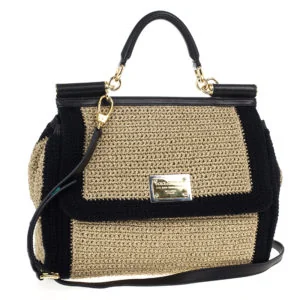
Say 2.55, Lady Dior, or Alma, and most handbag people picture the exact bag instantly. That’s the shorthand of a true IT-bag: a silhouette so specific it doesn’t need the house name attached. [Dolce & Gabbana](/brands/dolce-gabbana-miss-sicily-leopard-bag-style-guide/)’s Miss Sicily earned that same shorthand, just a decade or two later than Chanel and Dior did theirs.
The bag debuted for Fall/Winter 2009, built around a structured top-handle shape and named for the island that anchors the entire Dolce & Gabbana aesthetic. It didn’t arrive quietly. Within a couple of seasons it was showing up on Madonna, Victoria Beckham, and Monica Bellucci, and it settled into the same conversation as the era’s other status bags: Louis Vuitton’s Alma, Prada’s Saffiano totes, Hermès’ Jackie. What makes Miss Sicily worth a closer look now, especially for resale buyers, is that it never had one single “correct” version. It shapeshifted every season, which is exactly why authenticating one is trickier than authenticating a bag that’s stayed visually static for 60 years.
Origins and Design Heritage of the Miss Sicily #
Domenico Dolce and Stefano Gabbana have never been shy about mining their own biography for design cues, and Miss Sicily is the clearest handbag example of that. The name references Sicily, Dolce’s home region and the emotional core of the brand’s collections since its founding, and multiple house profiles have tied the bag specifically to Dolce’s mother as the personal inspiration behind it. Whether you read that as marketing polish or genuine sentiment, it fits a brand that has built entire runway shows around Sicilian widows, saints, and citrus groves.
Structurally, the bag follows what’s often called a “doctor bag” or “Gladstone” silhouette: a rigid, boxy body that opens wide from the top, held together with a metal frame or turn-lock closure rather than a soft flap. That shape is deliberately old-world. It reads more like a piece of vintage medical or travel luggage than a contemporary fashion accessory, and that’s the point. Against the sleeker, more minimal bags dominating the late-2000s market (think the early Céline boom), Miss Sicily’s stiff structure and ornate detailing were a statement of maximalism.
The debut FW09 pieces were done in ayers (stingray) and glove leather, two materials that immediately signaled where this bag sat in the hierarchy: not a canvas logo bag, but a top-tier leather-goods piece meant to sit next to the house’s eveningwear. That positioning is why the bag was priced and marketed closer to Hermès and Chanel territory than to D&G’s more accessible lines.
Materials and Seasonal Variations #
This is the detail that trips up a lot of buyers: there is no single “standard” Miss Sicily. Instead of iterating on one fabric, Dolce & Gabbana treated the bag as a canvas for whatever the runway was doing that season, which means the material tells you almost as much about the bag’s era and price bracket as the size does.
Broadly, the variations fall into a few families:
- Fine leathers and exotics — ayers, crocodile, python, and glove-soft calfskin, usually the most expensive tier and closest to the bag’s original FW09 positioning.
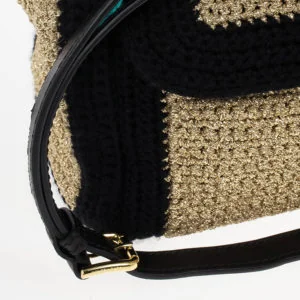
- Textural craft pieces — raffia weave, macramé, and crochet versions, often in neutral tones like beige and black, aimed at resort and summer collections. These lean casual but are labor-intensive to produce, which keeps resale demand steady.
- Embellished eveningwear versions — sequins, lace overlays, animal-print pony hair, and jeweled clasps, built for cocktail and event use rather than daily carry.
- Printed and logo canvas — later, more accessible iterations using D&G’s signature prints, which sit at the lower end of the price spectrum and are, frankly, the least collectible of the bunch.
If you’re buying for investment rather than just for the look, the exotic-skin and early leather pieces hold value better than the printed canvas versions, which were produced in far higher volume.
Celebrity Following and Cultural Status #
A bag doesn’t get grouped with the Alma and the 2.55 on styling alone. Miss Sicily’s cultural traction came fast, helped by a wardrobe of women who were already synonymous with the D&G “Sicilian widow” glamour the house was selling. Madonna carried it repeatedly during her Sticky & Sweet-era press cycles, Victoria Beckham was photographed with it enough times in 2010 that fashion press started calling it a personal signature, and Monica Bellucci, arguably the most literal embodiment of the brand’s Sicilian-icon imagery, wore it around Milan Fashion Week appearances.
That celebrity pattern matters for authentication and resale for a practical reason: it created a long tail of demand across sizes and materials, not just for one “hero” version. Unlike bags that became famous through a single viral moment, Miss Sicily’s fame is spread across a decade of red carpets and street-style shots, which is part of why counterfeit versions cover such a wide range of colors and fabrics rather than clustering around one design.
How to Authenticate a Miss Sicily Bag #
Authenticating Miss Sicily is harder than authenticating a Kelly or a Speedy for one reason: the sheer variety of seasonal materials means you can’t rely on a single “look” being correct. What stays consistent, though, is construction quality. Here’s what to actually check.
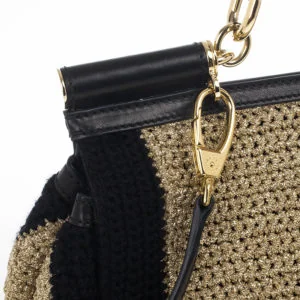
Hardware. Genuine Miss Sicily bags use substantial, cool-to-the-touch metal hardware, typically in gold or aged brass tones, with the D&G lock/clasp or handle fittings feeling solidly attached rather than glued or riveted through thin metal. Loose plating, hardware that feels light or hollow, or a lock mechanism that doesn’t click firmly shut are red flags.
Stitching. Look at the seams around the base and where the handles meet the body. Authentic construction shows even, tight stitching with no visible thread tails, no glue seepage at the edges, and consistent stitch length. Fast-turnaround counterfeits almost always show slightly uneven spacing under close inspection, even when the leather itself looks convincing.
Leather and material quality. On leather versions, genuine glove leather or ayers should feel supple with a natural grain pattern, not a printed or embossed texture layered over cheap hide. On raffia and crochet versions, the weave should be tight and uniform. Loose fibers, visible glue, or an uneven weave pattern are common tells on replicas, since hand-weaving is one of the hardest things to fake convincingly at scale.
Logo and branding details. Interior stamping should be crisp, evenly spaced, and correctly sized, not faint, smudged, or oddly kerned. Check the font weight against verified reference images from the same era, since D&G’s stamping style shifted slightly across seasons.
Interior and lining. Authentic bags use a consistent, well-finished lining with clean edge-binding around pockets. Sloppy pocket stitching or a lining that doesn’t match the era’s typical material is worth flagging.
If you’re not confident after a visual check, get a third-party authentication service or a specialist reseller to physically inspect the bag before you commit, especially for the exotic-skin versions where the price gap between real and fake is largest.
Price and Resale Value Guide #
Retail pricing for Miss Sicily varied enormously depending on material, which is unusual for an IT-bag. At launch, leather and ayers versions were priced in the low-to-mid four figures, broadly comparable to a mid-size Chanel flap or an Alma BB in exotic leather, while raffia and crochet versions sat lower, and the more casual printed-canvas pieces were the most accessible entry point into the line.
On the resale market today, that spread has narrowed in an interesting way. Exotic leather and early ayers pieces tend to command the strongest resale value relative to their original price, since production of exotic-skin bags has tightened industry-wide and D&G has scaled back that category. Raffia and crochet pieces hold up reasonably well too, partly because they photograph distinctly and read as “collection pieces” rather than basics. The printed canvas and heavily logoed versions, by contrast, depreciate the most, similar to what happens with entry-level [monogram canvas](/authentication/how-to-spot-a-fake-louis-vuitton-bag/) pieces from other houses.
Condition matters more here than with a structured Chanel flap, because several of the materials (raffia, sequins, lace) show wear far more visibly than smooth calfskin. A raffia bag with fraying edges or a sequined piece missing sequins will take a real resale hit, so factor material fragility into what you’re willing to pay, not just the size or color.
How to Spot a Fake Miss Sicily Bag #
Beyond the authentication checkpoints above, a few practical scenarios come up constantly when buyers get burned on Miss Sicily specifically.
The most common trap is with raffia and crochet versions sold as “vintage resort pieces.” Because the weave styles were produced across several seasons and counterfeiters know these versions are harder to scrutinize than smooth leather, you’ll see a disproportionate number of fakes in this category on secondary marketplaces. If a raffia listing has stock photos that don’t match the actual item, or the seller can’t provide close-up shots of the interior stamping and hardware, walk away.
Second, watch pricing that’s too good relative to material. A “python Miss Sicily” or genuine ayers piece priced like a canvas one is the single biggest tell that something’s off, since exotic skins simply cost more to produce and that cost doesn’t disappear on the resale market.
Third, check proportions against verified reference photos for that specific size and season. Because Miss Sicily came in multiple sizes across a decade of collections, counterfeiters sometimes get the overall shape close but slightly miss the handle drop, base width, or lock placement. A side-by-side comparison against catalog images from the matching season is one of the fastest ways to catch a fake before you even get to stitching detail.
Finally, ask for the original dust bag, authenticity card, or receipt where possible. It’s not proof on its own, but its absence combined with any of the above issues should raise your guard significantly.
FAQ #
When was the Miss Sicily bag released? It launched with Dolce & Gabbana’s Fall/Winter 2009 collection, originally in ayers and glove leather.
Why is it called Miss Sicily? The name references Sicily, the region central to Domenico Dolce’s upbringing and the house’s design identity, and the bag is widely reported to have been inspired by Dolce’s mother.
What shape is the Miss Sicily bag based on? It follows a “doctor bag” or Gladstone-style silhouette: a rigid, boxy body with a wide top opening and a metal frame or turn-lock closure, giving it a vintage, structured look.
Is Miss Sicily a good investment bag? Exotic leather and early leather versions hold resale value reasonably well, comparable to other exotic-skin top-handle bags from that era. Printed canvas and logo-heavy versions depreciate faster and shouldn’t be bought expecting appreciation.
What’s the biggest authentication risk with this bag? The material variety. Because raffia, crochet, sequined, and exotic-leather versions all exist, buyers can’t rely on one “standard” look the way they might with a more static design, so hardware, stitching, and stamping checks matter more than silhouette alone.
How does Miss Sicily compare to bags like the Alma or Lady Dior? It sits in similar price and prestige territory but leans more maximalist and seasonal, with far more material variation than the relatively fixed designs of the Alma or Lady Dior. That variety is part of its appeal, but it also means resale values swing more depending on which version you own.
Related Articles #
- Louis Vuitton Alma Bag: The Ultimate Buying Guide
- 5 Iconic Bags Named After Famous Women (Buying Guide)
- Louis Vuitton Saumur Bag Guide: History, Value & Tips
- Louis Vuitton Crocodile Lockit PM: Rare Bag Buying Guide
- Grace Kelly: Style Icon Behind the Hermès Kelly Bag
Related guides
- Online Bag Authentication: What Photos Can and Cannot Prove
- Blue Crocodile Lady Dior Tote: Buying Guide
- Chanel Vintage Flap Bag Buying Guide: Navy Lambskin
- Louis Vuitton Palm Spring Backpack: Complete Buyer's Guide
- How to Buy an Authentic Luxury Bag from China Safely
- New vs Pre-Owned Luxury Bags: Which Route Is Right for You?
- Chanel Bag Guide: What to Know Before You Buy
- Luxury Bag Houses


Keyword index