Introduction #
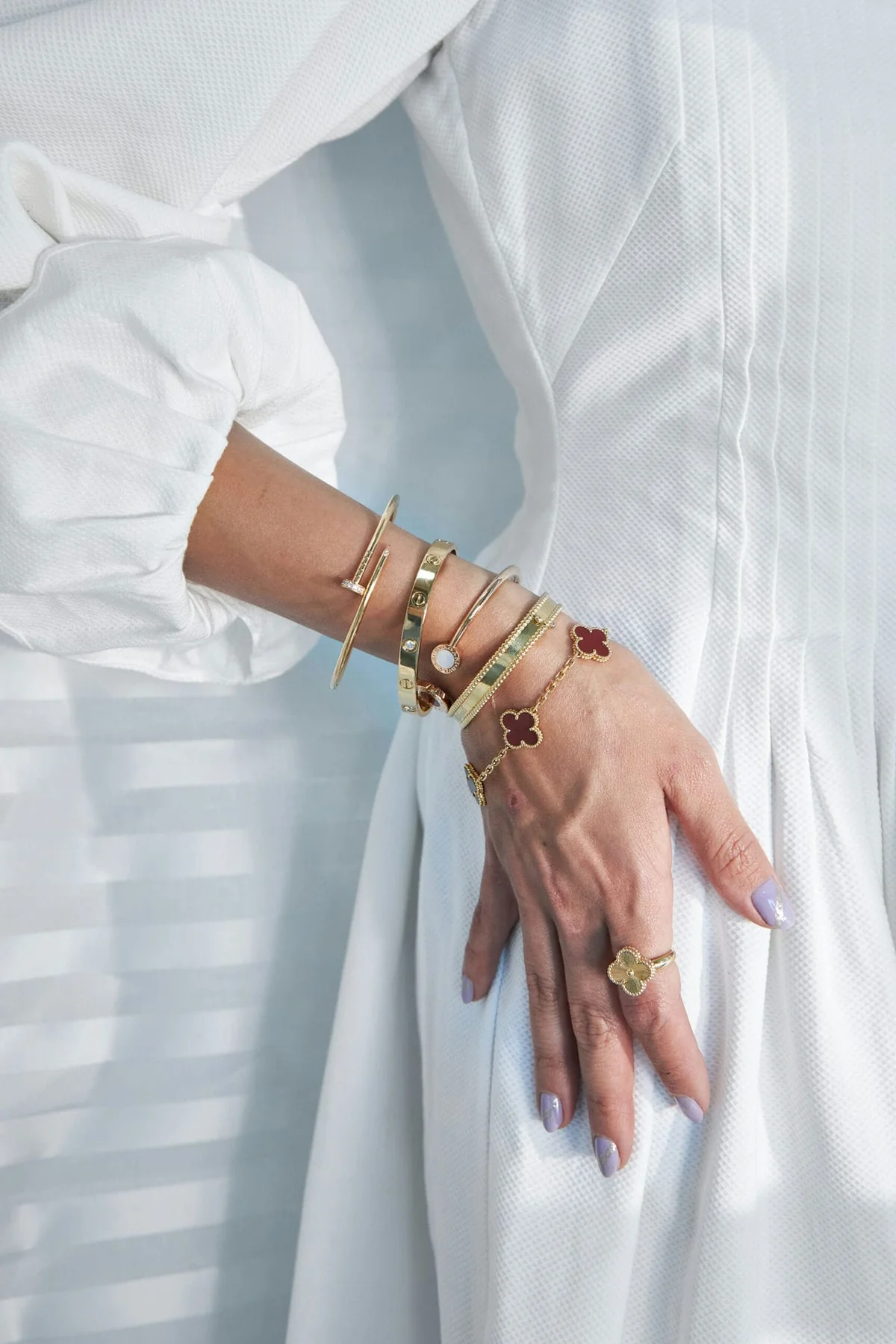
Trend jewelry has a shelf life. It looks sharp for a season, then sits in a drawer once the next micro-trend takes over. Classic jewelry pieces don’t work that way. A well-made gold band, a pair of diamond hoops, a tennis bracelet with good stone quality — these hold their shape, their sparkle, and often their [[[resale value](/prices-and-value/luxury-price-hikes-2026-resale-impact/)](/brands/celine-luggage-tote-guide-sizes-history-resale-value-1/)](/brands/celine-luggage-tote-guide-sizes-history-resale-value/) for decades, not months.
That staying power comes down to two things: construction and design restraint. A piece built with solid metal, well-set stones, and a secure clasp survives daily wear. A design that isn’t chasing a moment doesn’t age out of your wardrobe. Put those together and you get jewelry you can wear with a T-shirt on Tuesday and a cocktail dress on Saturday, without ever feeling like you’re wearing “an investment piece” — you’re just wearing your jewelry.
This edit is built around that idea. We’re covering the pieces worth owning first, how to judge quality and authenticity whether you’re buying new or pre-owned, what different budgets actually get you, and how to keep these pieces looking sharp for the long haul. If you’re building a collection from scratch or replacing costume pieces with the real thing, start here.
Designer Band Rings #
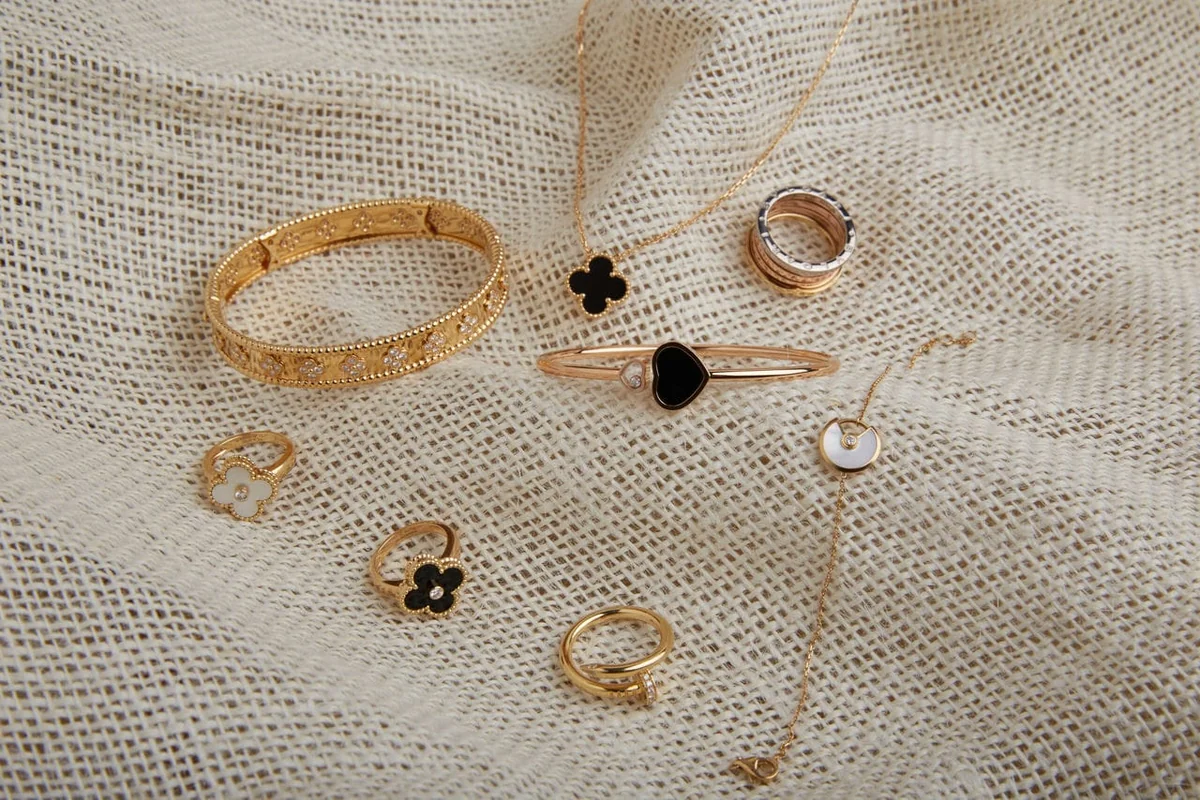
A simple band ring is the most underrated piece in fine jewelry. It stacks, it layers, it works alone, and unlike a cocktail ring, it never reads as “trying too hard.” Designer bands from houses like Cartier, Van Cleef & Arpels, and Bvlgari have stayed in continuous production for 30-plus years for exactly this reason — the design does the work without shouting.
A few worth knowing:
- Cartier Trinity — three interlocking bands in yellow, white, and rose gold. Wears well alone or stacked with thinner bands.
- Van Cleef & Arpels Perlée — beaded gold band, reads as delicate but photographs as substantial.
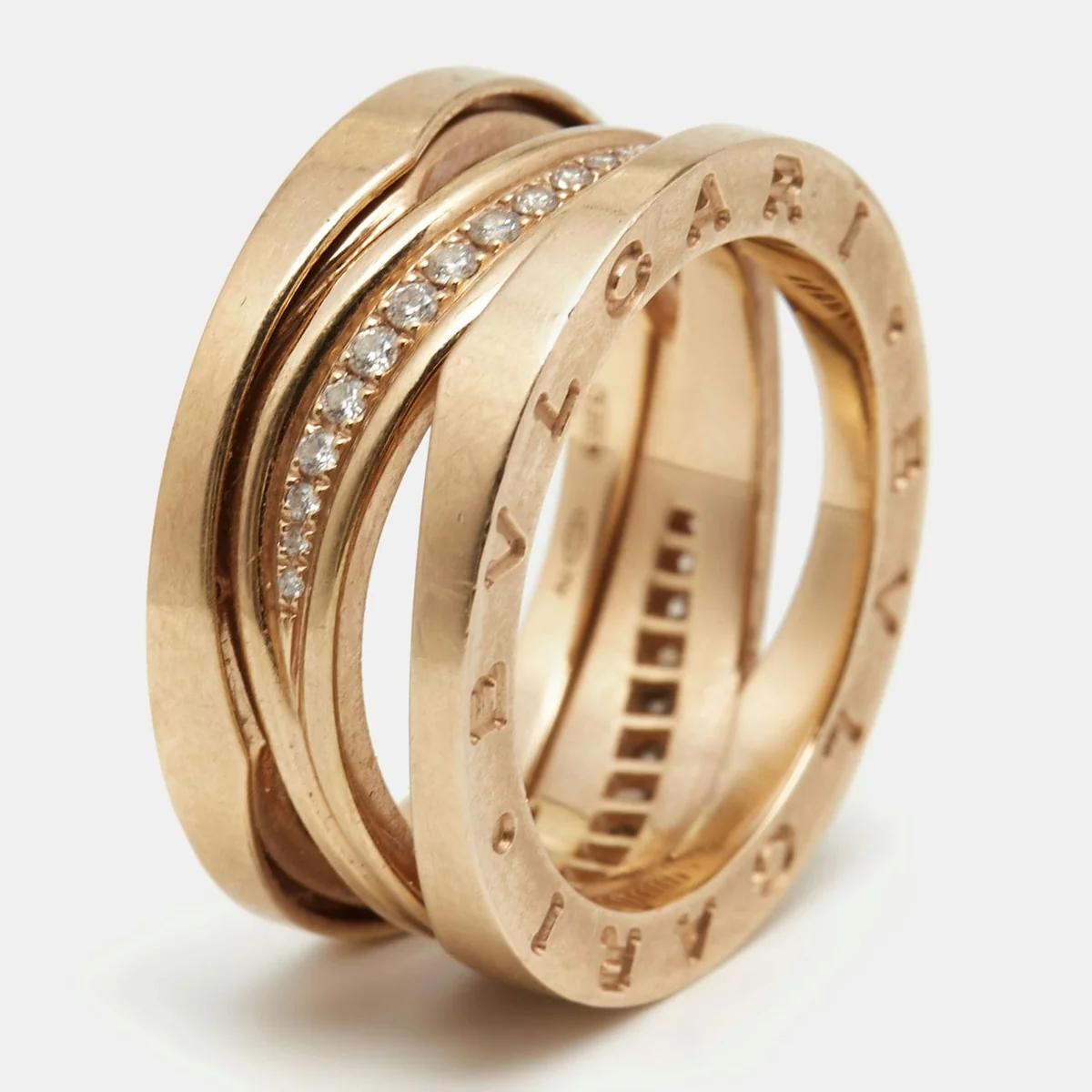
- Bvlgari B.Zero1 — a bolder, architectural band for readers who want a statement without a stone.
- Chaumet Josephine — more ornate, gemstone-set bands for readers who want a hint of color.
Sizing it right #
Ring sizing is the most common mistake in fine jewelry purchases, especially buying pre-owned or online. Fingers swell slightly in heat and shrink in cold, so size at room temperature, ideally in the afternoon. If you’re between sizes, size up — a ring that’s slightly loose can be resized down more easily and cheaply than one that’s too tight. Note that pavé or eternity bands with stones set all the way around are harder and more expensive to resize than plain bands, since resizing can loosen stone settings. If a pre-owned ring doesn’t fit and you don’t want to resize, the source material’s trick still holds: slide it onto a chain and wear it as a pendant rather than forcing a fit.
Diamond Hoop Earrings #
Diamond hoops do more heavy lifting than almost any other earring style. They elongate the face, they catch light without being flashy, and — unlike drop earrings — they don’t swing or snag on hair, scarves, or turtlenecks. That’s why they’ve become the default “everyday diamond” for people who want to wear real jewelry daily without babysitting it.
Size and hinge type matter more than most buyers realize. Smaller huggie hoops (10-15mm) sit close to the earlobe and read as a subtle upgrade from studs — good for offices and daily wear. Mid-size hoops (18-25mm) are the versatile middle ground, dressy enough for evening, casual enough for daytime. Anything larger starts moving into statement territory and pairs better with simpler outfits.
On construction: check whether stones are set into the metal band (more secure, better for daily wear) or on a separate pavé strip soldered to the hoop (can be more fragile over time). A continuous line of pavé diamonds should feel smooth to the touch with no visible glue or loose settings — run a finger along the front and back before buying, especially pre-owned.
Graceful Tennis Bracelets #
The tennis bracelet is arm candy that never actually looks like a costume piece, which is rare. A well-made one — even a slim, delicate line of diamonds rather than a chunky version — reads formal enough for evening and understated enough to wear stacked with everyday jewelry or even a watch.
Styling-wise, tennis bracelets do best in one of two modes: worn alone as the statement on that wrist, or stacked with thin bangles and chain bracelets of varying textures on the other wrist. Wearing multiple tennis bracelets together tends to compete rather than complement.
What actually affects value #
Not all tennis bracelets are created equal, and this is where a lot of buyers overpay or underbuy:
- Total carat weight (TCW) matters more than stone count. A bracelet with fewer, larger stones generally holds value better than many small melee stones of the same total weight.
- Metal purity — 18k gold or platinum settings hold up better long-term and resell better than 14k or gold-plated versions.
- Clasp security — box clasps with a safety latch are the standard for a reason. A tennis bracelet without a secondary safety catch is a real loss risk; this is one category where a missing clasp detail is a legitimate dealbreaker, not a nitpick.
Sizing #
Measure your wrist with a soft tape or string, add half an inch for comfortable movement, and go slightly longer if you plan to wear it over long sleeves or layered with other bracelets. A tennis bracelet that’s too tight will unclasp itself from tension over time — that’s not a flaw in the piece, it’s a fit issue.
Pendant Necklaces and Chains #
Necklaces are where layering skills actually pay off, and it’s also where most buyers get chain length wrong before anything else.
Chain length cheat sheet:
- 14-16 inches (choker/collar) — sits at the base of the neck, good as the first, tightest layer
- 18 inches (princess) — the most universally flattering single-necklace length
- 20-24 inches (matinee) — sits at or below the collarbone, good for pendants and layering
- 28+ inches (opera/rope) — long enough to double up or wear alone over higher necklines
Layering technique that actually works #
Layer three lengths, not three necklaces of similar length — that just looks tangled. A classic stack is a 14-16" choker, an 18" pendant piece, and a 24"+ longer chain. Keep metals consistent (all yellow gold, or all white gold/platinum) unless you’re intentionally going for a mixed-metal look, which is trickier to pull off and dates faster.
Pendant styles worth prioritizing: a simple diamond or gemstone solitaire pendant, a signed logo pendant from a house like Van Cleef & Arpels (Alhambra) or Tiffany (T or Elsa Peretti collections), and a plain chain with no pendant for layering flexibility. The plain chain is the piece people skip and then regret — it’s the connective tissue that makes layering look intentional rather than accidental.
How to Build a Timeless Jewelry Collection #
Buy in this order: earrings and a band ring first (lowest cost of entry, worn daily, hardest to go wrong), then a bracelet, then necklaces last, since layering pieces benefit from having other jewelry already in rotation to build around.
Authenticating pre-owned fine jewelry #
Buying pre-owned is how most collectors stretch their budget into higher-tier brands, but it’s also where risk concentrates. A few checks that matter more than people expect:
- Hallmarks and stamps. Check for metal purity stamps (750 for 18k gold, 950 for platinum) and maker’s marks. Cartier pieces carry serial numbers; Van Cleef & Arpels Alhambra pieces are typically signed and numbered on the clasp or reverse.
- Weight. Fine jewelry has heft. A gold band that feels suspiciously light for its size may be hollow, plated, or lower karat than claimed.
- Clasp and setting quality. Cheap reproductions cut corners on the parts buyers don’t inspect closely — clasps, prongs, the back of pendant bails. Wobbly prongs or a clasp that feels flimsy relative to the piece’s supposed tier is a red flag.
- Papers and boxes help but aren’t proof. Original boxes and certificates can be faked or mismatched. They support authenticity, they don’t establish it on their own.
- Third-party authentication. For anything above a few thousand dollars, get an independent appraisal or use a platform that authenticates in-house before listing. This is standard practice for pre-owned handbags and it applies just as much to fine jewelry — don’t skip it because the item is smaller.
Care that actually extends a piece’s life #
- Store pieces separately in soft pouches or lined compartments — diamonds scratch other jewelry, including other diamonds.
- Remove rings and bracelets before swimming, gym sessions, or applying lotion and perfume; chlorine and chemicals degrade gold alloys and can loosen glued elements over time.
- Have prong settings checked annually by a jeweler. Loose stones are the single most common cause of lost diamonds, and it’s a free or low-cost check most jewelers will do.
- Clean gold and platinum with warm water, mild soap, and a soft brush. Skip ultrasonic cleaners on emeralds, opals, or pearls — they can crack or cloud softer stones.
Resale value, honestly #
Not every “classic” piece resells equally. Cartier, Van Cleef & Arpels, and Tiffany & Co. tend to hold value best in the pre-owned market because of consistent demand and recognizable design codes — a Love bracelet or Alhambra pendant is identifiable at a glance, which drives resale demand. Diamond studs and plain gold bands, while less brand-recognizable, hold value reliably because the underlying material (gold, diamond) has intrinsic worth independent of the maker. Where resale value drops fastest: heavily trend-driven statement pieces, gold-plated or vermeil items, and jewelry with sentimental engraving, which limits the resale pool.
The Essential Classic Jewelry Pieces Everyone Should Own #
If you’re starting from zero, this is the shortlist before anything else:
- A pair of diamond studs or small hoops — the most worn piece in most people’s collection, by far.
- A plain gold band ring — stacks, layers, works alone.
- A tennis bracelet, even a slim one — the easiest way to elevate a casual outfit in ten seconds.
- An 18-inch pendant necklace — the most universally flattering length, works with nearly every neckline.
- A plain layering chain — unremarkable alone, essential once you start stacking.
- A signet or statement ring — for texture and stacking variety against plain bands.
Everything after this list is refinement, not necessity. Colored gemstones, statement earrings, and cocktail rings are where personal taste comes in — but the six above are the pieces that get worn on a random Tuesday just as often as a wedding.
Classic Jewelry by Budget: Entry-Level to Investment Pieces #
Budget tiers in fine jewelry aren’t just about how much you spend — they determine what you can reasonably expect in terms of materials, durability, and resale.
Entry-level ($150-$800) Demi-fine jewelry: solid gold (not plated) in thinner gauges, smaller diamond studs (0.10-0.25ct total), simple sterling silver or gold-vermeil bands. Good for building daily-wear basics without a major commitment. Resale value here is minimal — you’re paying mostly for design and craftsmanship, not material value.
Mid-tier ($800-$3,000) This is where pre-owned designer pieces become realistic — a pre-owned Cartier Trinity band, a Tiffany solitaire in a smaller carat weight, or a mid-size diamond hoop from a recognized house. Material value starts contributing meaningfully to resale, and brand recognition starts to matter.
Upper-mid ($3,000-$10,000) Tennis bracelets with better total carat weight, signed Van Cleef & Arpels Alhambra pieces, Cartier Love bracelets and rings in gold. These hold value well if condition and authenticity are solid, and they’re liquid enough to resell through consignment or pre-owned platforms without major loss.
Investment tier ($10,000+) Larger diamond solitaires, high-carat tennis bracelets, fully iced-out Love bracelets, signature pieces from Van Cleef & Arpels or Cartier’s higher jewelry lines. At this tier, buy from reputable dealers with authentication guarantees and keep all paperwork — resale at this level depends heavily on documented provenance.
Frequently Asked Questions #
Is it worth buying fine jewelry pre-owned instead of new? Yes, in most cases — pre-owned designer pieces let you access higher-tier brands at 30-50% below retail, and fine jewelry doesn’t depreciate as sharply as new-car-style purchases once it’s been authenticated. The risk is entirely in verification, so buy from sellers who authenticate in-house or provide independent appraisals.
What’s the biggest risk with buying tennis bracelets or hoops secondhand? Clasp integrity. Stones and metal purity get most of the attention, but a worn or non-secure clasp is the most common reason pre-owned pieces get lost or damaged after purchase. Always test the clasp mechanism in person or ask for video confirmation before buying online.
How often should fine jewelry be professionally cleaned or inspected? Once a year for pieces worn regularly, especially rings and bracelets, since they take the most physical contact. Necklaces and earrings worn less frequently can go every 18-24 months.
Do classic jewelry pieces actually appreciate, or just hold value? Most classic pieces hold value rather than appreciate significantly, with the exception of rare vintage or discontinued designs from houses like Van Cleef & Arpels and Cartier, where scarcity has driven real price growth over the past decade. For most buyers, “holds value well and resells easily” is the realistic expectation, not “appreciates like an asset.”
Related Articles #
- Bvlgari Resale Value: Best Pre-Owned Pieces to Buy
- Does Cartier Jewelry Hold Its Value? Resale Guide
- Luxury Casual Wardrobe 2025: Trends, Outfits & Key Pieces
- Classic and Chic Handbags: Timeless Style Icons
- Pre-Owned Luxury Gold Jewelry: Smarter Than Bullion?
Related guides
- Online Bag Authentication: What Photos Can and Cannot Prove
- Inside a Million-Dollar Closet: Pre-Loved Hermès & More
- Meet Marwa Azzam Aldabbagh: Kelly Bag Authentication Expert
- Luxury Handbag Authentication Process Explained
- How to Buy an Authentic Luxury Bag from China Safely
- New vs Pre-Owned Luxury Bags: Which Route Is Right for You?
- Chanel Bag Guide: What to Know Before You Buy
- Luxury Bag Houses

Keyword index