Introduction #
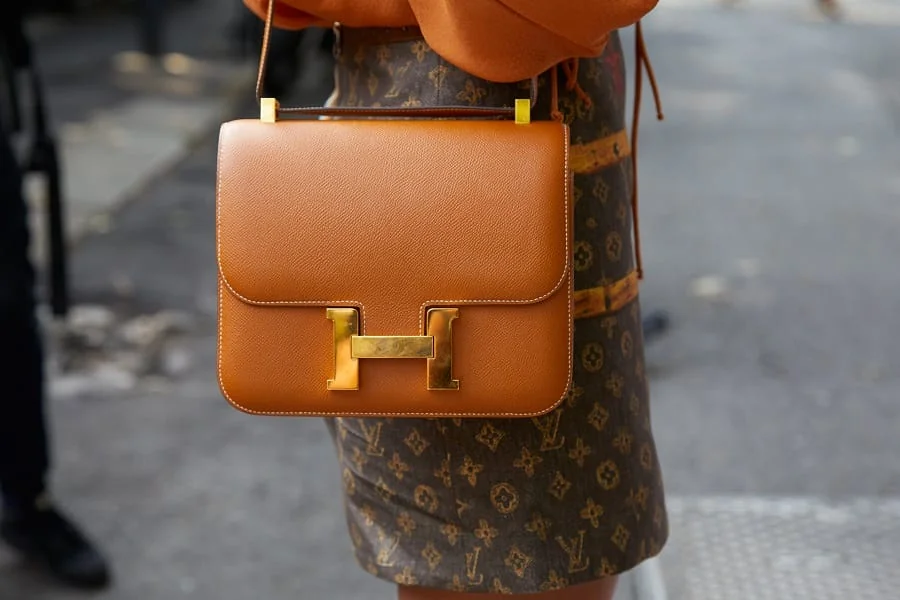
Ask ten Hermès collectors to rank the house’s “Holy Trinity” and you’ll get ten different answers, but Constance almost always comes up as the pick for someone who already owns a Birkin and a Kelly and wants something less expected. It’s the quietest of the three names, and also the one most likely to be misunderstood by people who haven’t handled one in person. Photos flatten it into a flap bag with a metal clasp. In hand, it reads completely differently: architectural, a little stiff at first, and built with a confidence that doesn’t ask for a second look because it isn’t trying to get one.
This piece is a full walkthrough of what makes the Constance worth understanding on its own terms rather than as “the other Hermès bag.” We’ll cover where it came from, what separates a genuine one from the flood of convincing fakes now on the market, how it actually compares to the Birkin and Kelly in daily use and resale, and what buyers should realistically expect to pay across sizes, leathers, and hardware finishes.
The Origins of the Hermès Constance #
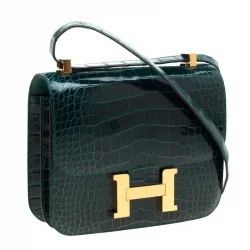
The Constance arrived in 1967, roughly a decade after the Kelly had already cemented Hermès’ reputation for structured, ladylike leather goods. Jean-Louis Dumas, who would go on to lead the house and is widely credited with modernizing it during a period when Hermès risked feeling static, pushed for something with a different attitude. The Kelly was elegant and controlled. Dumas wanted a bag that carried the same craftsmanship but moved with a bit more attitude.
The design itself came from Catherine Chaillet, an in-house designer working on the project while pregnant. She named the bag after her daughter, Constance, a detail that’s more than trivia — it explains why the bag has always carried a slightly personal, almost domestic warmth compared to the Kelly’s regal reserve or the Birkin’s celebrity-driven mythology. Where the Birkin’s origin story is a famous in-flight conversation, the Constance’s is quieter, born out of studio work rather than a marketing moment. That distinction still shapes how the bag is perceived: fewer headlines, more substance.
Design and Details That Define the Constance #
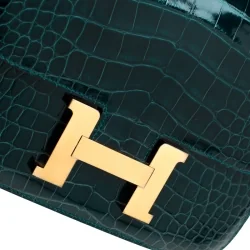
Strip away the branding and the Constance is, structurally, a flap bag. What elevates it is execution. The silhouette sits between rectangular and rounded — corners are softened but the body holds its shape without the boxiness of a briefcase. The clasp is the real signature: an H-shaped metal closure mounted flush on the front flap, engineered to sit flat rather than protrude, which is harder to achieve than it looks and is one of the first things worth checking when evaluating quality.
A few construction details worth knowing before you buy:
- The gussets at the sides expand the bag’s usable depth without disrupting the flat-front look, a very Hermès solution to the tension between minimalism and function.
- The strap is long enough to wear cross-body or over the shoulder, sliding through metal hasps rather than fixed rings, which lets it adjust more than people expect from a structured bag.
- The interior is split into two compartments plus a zipped pocket, which in practice means you can separate a phone and cards from loose items without carrying a second pouch.
- The stitching is saddle-stitched by hand, visible at the edges as slightly uneven, evenly spaced holes rather than the mechanically perfect line a machine produces.
That last point is where authentication conversations should start.
Authenticating a Genuine Constance vs. a Counterfeit #
Because the Constance’s design is simpler than the Kelly’s (no turn-lock, no separate straps to fumble with), it’s become a popular target for counterfeiters who assume a plain silhouette is easier to fake. It isn’t, and the tells are consistent if you know where to look.
- Blind stamp and date stamp: Genuine bags carry a craftsman’s blind stamp and a date stamp (a letter inside a shape denoting the production year) stamped into the leather itself, not printed on. On fakes, this is often smudged, off-center, or uses the wrong letter-year for the claimed production date.
- Hardware weight and finish: Authentic gold and palladium hardware is solid-feeling, with plating that doesn’t chip or yellow quickly. Counterfeit hardware often feels light, has visible seams, or shows plating wear within months.
- The H clasp fit: On a real Constance, the clasp sits flush and closes with a light, precise click. On fakes, it’s common to see a gap, wobble, or a clasp that requires force to seat.
- Stitching and smell: Hand saddle-stitching should show tiny irregularities; a perfectly uniform machine line is a red flag. A strong glue or chemical smell on a “new” bag is another.
- Interior lining and serial consistency: Check that the lining color, stamp placement, and serial numbers match verified references for that specific leather and year — counterfeiters frequently get the bag right but the small print wrong.
None of these checks are foolproof in isolation. The honest advice is to combine several, and if you’re spending five figures on a pre-owned exotic-skin piece, pay for a third-party authentication service before finalizing the purchase. It’s a small cost relative to the risk.
Constance vs. Kelly and Birkin #
Put all three side by side and the differences aren’t subtle once you’ve carried each for a day.
The Birkin is the most recognized silhouette globally and carries the highest resale premium on rare colors and exotic skins, but its open-top, handle-carry design makes it less secure for daily commuting and its size options (25 to 35) can feel bulky for smaller frames. The Kelly splits the difference — a top handle plus a removable strap, a turn-lock closure that feels more ceremonial, and a silhouette that reads more formal, sometimes described by owners as “put together” even with jeans.
The Constance is the practical outlier. It’s the only one of the three built primarily as a cross-body from the start, which matters more than it sounds for anyone who actually needs both hands free. It’s also, size for size, usually less expensive at retail than an equivalent Kelly or Birkin, though the gap narrows sharply once you move into exotic skins.
Where it loses ground is brand recognition. Outside of the resale and collector world, plenty of people don’t immediately identify a Constance the way they’d spot a Birkin’s silhouette or a Kelly’s handle-and-lock. For buyers chasing visible status, that’s a downside. For buyers who want the craftsmanship and investment profile without the immediate “which It-bag is that” conversation, it’s the entire appeal.
Sizes, Materials, and Hardware Variations #
The Constance has expanded well beyond its original 23cm proportions over five decades. Current and recent sizing includes Mini/18, 24, and Élan, with the original 23 now largely retired from regular production, which makes vintage 23s a small niche of their own on the resale market.
Leathers run the full Hermès range: Togo and Epsom for everyday durability and structure, Box calf for a smoother vintage look, Swift for a softer drape, and the exotic tier — primarily crocodile (porosus and niloticus) and alligator — for the bags that carry serious resale weight. Box leather, notably, has been phased out of most current production, which has quietly increased demand for older Box Constances among collectors.
Hardware comes in gold-tone, palladium (silver-tone), and occasional rose gold or Permabrass finishes in limited runs. Gold hardware tends to be the more commonly requested option in-store, but palladium has a loyal following, particularly on cooler leather tones like blue or gris, and doesn’t carry a meaningful price difference on standard leathers. Where hardware does move price is on exotic skins, where certain finish-and-skin pairings become genuinely scarce and command a premium on the secondary market simply because so few were produced.
What the finish signals #
Buyers sometimes assume gold hardware signals a “dressier” bag and palladium a more casual one, but that’s more habit than rule at this point. The more useful distinction is condition-related: palladium hardware shows scratches more visibly against most leather tones, while gold hardware tends to hide light wear a bit longer, which matters if you’re buying to use daily rather than store.
Why the Hermès Constance Remains a Worthwhile Investment #
Set against the Birkin and Kelly, the Constance has historically appreciated more slowly and less dramatically, and any honest breakdown should say that upfront. It doesn’t carry the same waitlist mythology, and Hermès doesn’t restrict allocation of standard leather Constance bags the way it does Birkins in popular sizes. That lack of artificial scarcity is exactly why it trades at a lower resale premium in leather versions.
Where the calculation changes is with exotic skins and discontinued combinations — a Box leather Constance from an earlier production run, or a crocodile Constance in a retired color, behaves much more like a Birkin on the resale market, holding or exceeding retail depending on condition and rarity. For buyers looking at Togo or Epsom in current colors, treat the Constance as a very good, well-made bag with modest resale upside rather than a guaranteed appreciating asset — which, frankly, is a more honest framing than most of what circulates about Hermès bags generally.
Celebrity Ownership and Pop Culture Influence #
The Constance has never had a defining pop-culture moment the way the Birkin did with Jane Birkin herself, or the Kelly did with Grace Kelly. That’s arguably part of its identity: it’s the bag favored by people already deep into Hermès rather than newcomers chasing the most photographed silhouette. Victoria Beckham, who has spoken publicly about the depth of her Hermès collection, is one of the more consistently cited Constance owners, and the bag shows up regularly in street-style coverage among stylists and editors rather than in blockbuster celebrity paparazzi shots. For buyers who find the Birkin’s visibility exhausting, that lower profile is a selling point, not a gap.
[[[Buying Guide](/buying-guides/iconic-bags-named-after-famous-women/)](/buying-guides/hermes-retail-vs-resale/)](/bag-care/hermes-leathers-guide/): Pre-Owned Channels, Waitlists, and Quota Bags #
Buying new means building a relationship with a sales associate at a boutique, since walk-in availability for anything beyond entry leathers is inconsistent and varies heavily by store and market. Exotic skins and rare hardware combinations are typically what’s referred to informally as “quota bags” — allocated at the boutique’s discretion, generally to clients with an established purchase history rather than through any public waitlist.
For most buyers, pre-owned is the realistic path to a specific size, leather, or color:
- Established resale platforms (The Luxury Closet, Fashionphile, Vestiaire Collective) offer authenticated inventory with return policies, generally at a premium over less formal channels but with far less risk.
- Auction houses (Sotheby’s, Christie’s) surface the rarest exotic pieces, usually at the top of the market, and are worth watching if you’re after a discontinued colorway or Box leather 23.
- Private sales and consignment boutiques can undercut platform pricing but shift authentication risk almost entirely onto the buyer — this is where the checks covered earlier matter most.
Whichever channel you use, request close-up photos of the blind stamp, date stamp, and interior stitching before committing, and don’t skip a paid authentication check on anything exotic.
Price ranges by size, material, and hardware (gold/palladium) #
These are approximate current-market figures and will shift with Hermès’ periodic price increases, which the house has implemented almost every year recently, so treat them as a snapshot rather than a fixed number.
Retail, standard leathers (Togo/Epsom, gold or palladium hardware):
- Mini/18: roughly $8,000–$9,500
- Constance 24: roughly $9,300–$11,000
- Élan: roughly $9,500–$11,500
Hardware finish (gold vs. palladium) makes negligible difference in retail pricing on standard leathers — the leather and size drive the number far more than the metal.
Retail, exotic skins (crocodile/alligator):
- Mini/18 and 24: roughly $30,000–$60,000+, with matte alligator generally commanding more than shiny crocodile, and price climbing further for rare colors or diamond-encrusted clasp editions.
Pre-owned/resale, standard leathers:
- Typically 70–90% of current retail for well-kept bags in popular colors (black, gold, étoupe), with rare or discontinued colors occasionally trading at or slightly above retail.
Pre-owned/resale, exotics:
- Highly variable, but well-preserved crocodile or alligator Constances in sought-after colors have been known to sell at or above original retail, particularly for discontinued Box leather pieces or vintage 23s in strong condition.
If a listing price seems noticeably below these ranges for a claimed exotic skin, treat that as a red flag rather than a bargain.
Investment value and resale/appreciation trends #
Compared directly with the Birkin, the Constance’s resale market is less liquid — there are simply fewer buyers actively hunting a Constance at any given time, which means longer time-to-sell even for desirable pieces. That’s the tradeoff for a lower entry price and easier boutique access on standard leathers.
Appreciation is concentrated at the extremes: entry-level Togo or Epsom bags in common colors tend to depreciate modestly like any well-made luxury good, while exotic skins, discontinued Box leather, and rare hardware pairings have shown genuine appreciation over the past several years, tracking (though usually not matching) the pace seen in comparable Birkin and Kelly exotics. Condition matters more here than with mass-produced goods — because the Constance’s flat front and visible clasp make wear more noticeable than a Birkin’s rounded body, corner scuffing and clasp scratching disproportionately affect resale value.
The realistic takeaway: buy the leather and size you’ll actually use if your goal is enjoyment, and buy exotic or discontinued if your goal is value retention. Expecting a standard-leather Constance to behave like a Birkin, financially, sets up disappointment that has nothing to do with the bag’s quality and everything to do with market dynamics outside your control.
Frequently Asked Questions #
Is the Constance a good “first Hermès bag”? It’s a reasonable one if cross-body carry matters to you day to day, and it’s typically more attainable in-store than a Birkin. It’s a less obvious choice if brand recognition or resale liquidity is the priority.
Does the Constance hold value as well as the Birkin? Generally not on standard leathers. Exotic skins and discontinued materials close that gap considerably.
What’s the fastest authentication check for a quick in-person look? The H clasp fit and the blind/date stamp combination catch the majority of counterfeits without needing specialized tools.
Is palladium or gold hardware the better resale choice? Neither reliably outperforms the other on standard leathers; on exotics, whichever finish is scarcer for that particular skin and color tends to command the premium.
Related Articles #
- Hermès Leathers Guide: Togo, Epsom, Exotic Skins Explained
- 4 Reasons Bally Bags Are Worth Buying: A Buying Guide
- Louis Vuitton Alma Bag: The Ultimate Buying Guide
- Popular Handbag Brands: Which One Is Right for You?
- Hermès Niloticus Crocodile Lindy 26: Bag of the Week
Related guides
- Online Bag Authentication: What Photos Can and Cannot Prove
- Private Bag Edit: Hermès Kelly Authentication Blog
- Hermès Date Codes & Stamps Explained: Full Guide
- Hermès Crocodile vs Alligator Bags: Buyer's Guide
- How to Buy an Authentic Luxury Bag from China Safely
- New vs Pre-Owned Luxury Bags: Which Route Is Right for You?
- Chanel Bag Guide: What to Know Before You Buy
- Luxury Bag Houses


Keyword index